Whether a Doberman Needs Boots in Snow
Doberman paw care in winter conditions helps owners decide if boots protect paws from snow, ice balls, and chemical de-icing salts.
The daily stuff, done right.
Feeding amounts by life stage, coat and skin routines, dental and nail care, exercise needs, and what changes as they age.
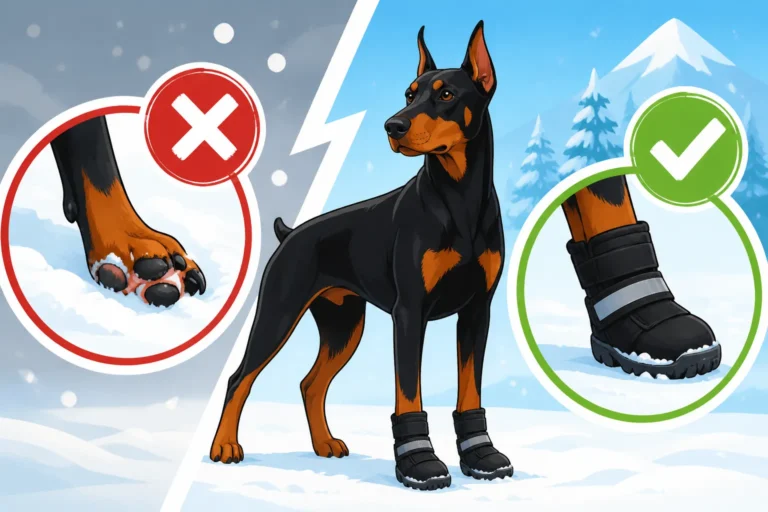
Doberman paw care in winter conditions helps owners decide if boots protect paws from snow, ice balls, and chemical de-icing salts.
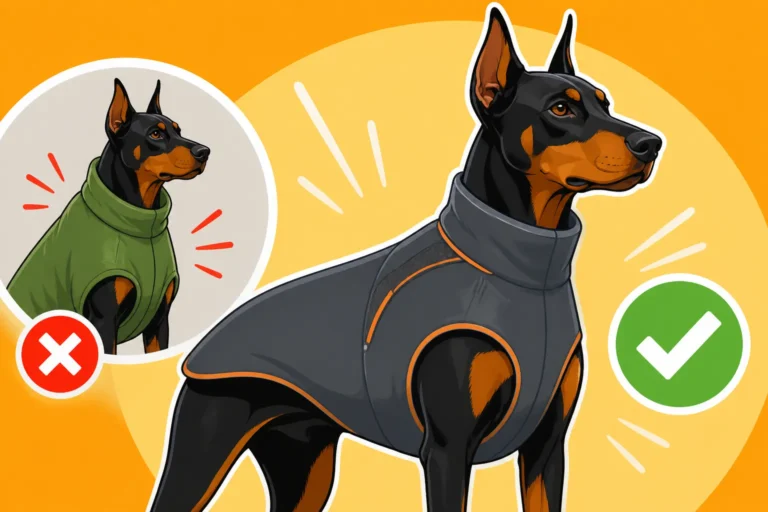
Doberman dog coats provide warmth for pets with deep chests, slender waists, and short hair facing cold weather conditions.

Thirty-five degree weather tolerance for a Doberman depends on single-layer coat limits, body fat, wind chill, and activity level.
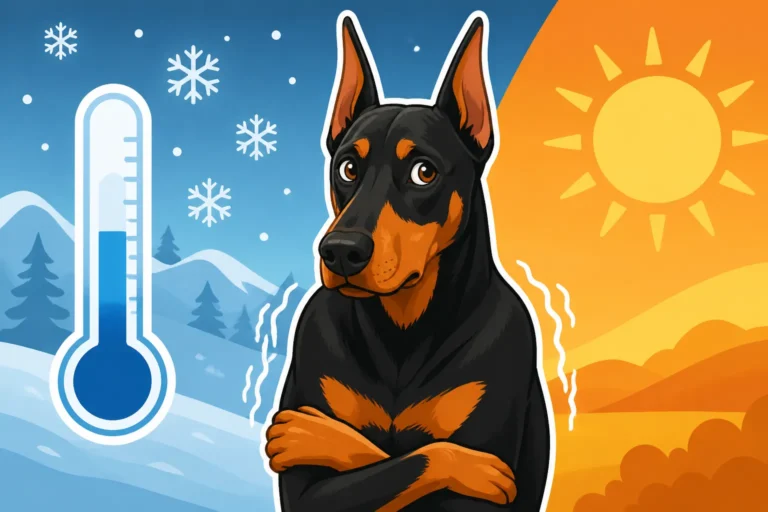
Doberman shivering temperatures and cold weather sensitivity explained using single coat genetics, lean body fat, and specific behaviors.
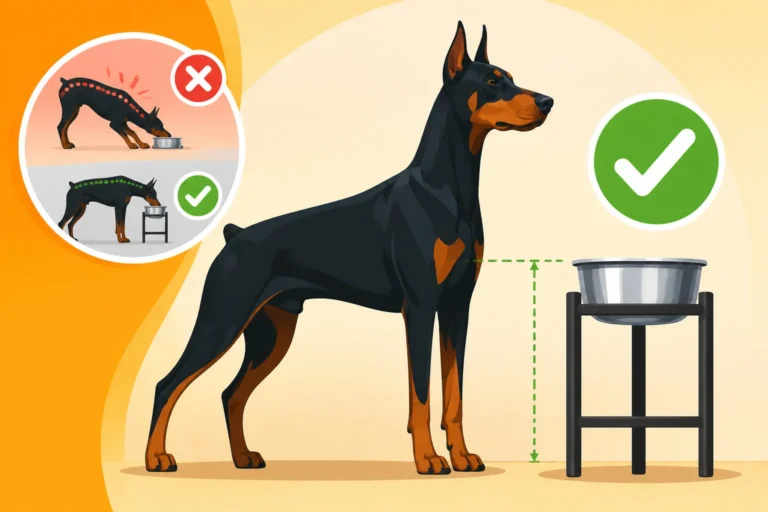
Purdue University research shows elevated food bowls increase bloat risk for tall Dobermans, making floor feeding safer.
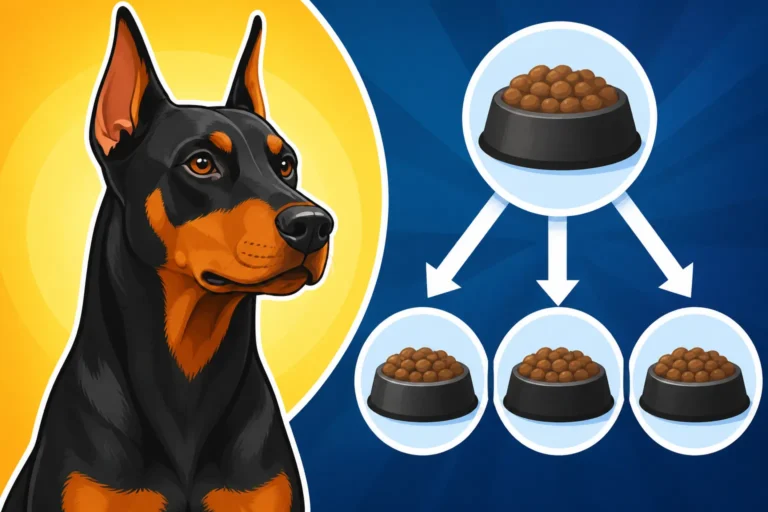
Splitting a Doberman daily food ration into three smaller meals lowers bloat risks, stabilizes digestion, and maintains steady energy levels.

Post-meal rest for Dobermans prevents stomach twisting and fatal bloat by keeping deep-chested dogs calm during digestion.
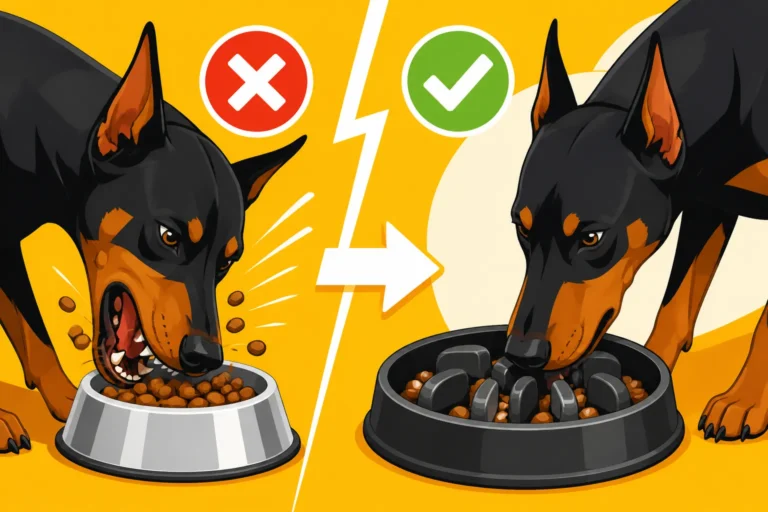
Slow feeder bowls feature ridges and mazes that force fast eating Dobermans to navigate obstacles, preventing dangerous bloat and choking.
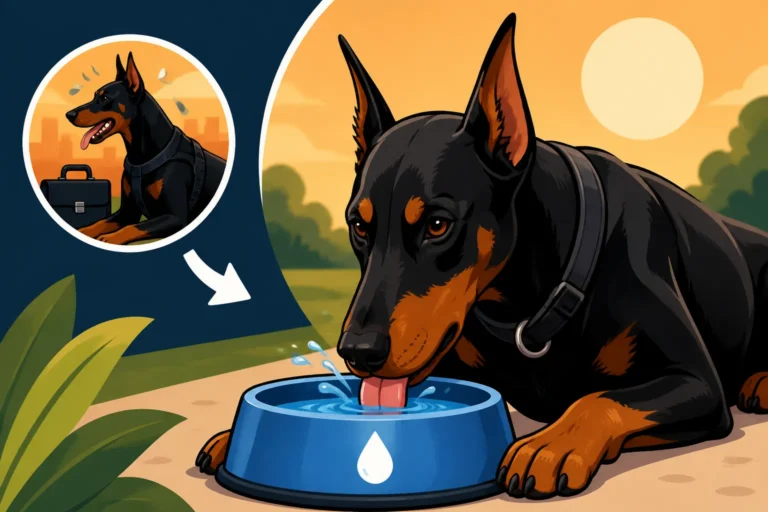
Post-exercise water intake for an eighty pound Doberman requires ten cups daily to safely prevent dangerous dehydration.

Doberman treat selection based on daily calorie needs and the ten percent rule helps maintain a lean athletic build and health.