What Doberman Owners Wish They Had Started Earlier
Early socialization and consistent positive reinforcement training help Doberman puppies build lifelong confidence, resilience, and good social etiquette.
Work with the temperament you have.
House-training and crate work, recall, leash manners, separation anxiety, and the behaviors this breed is wired for.
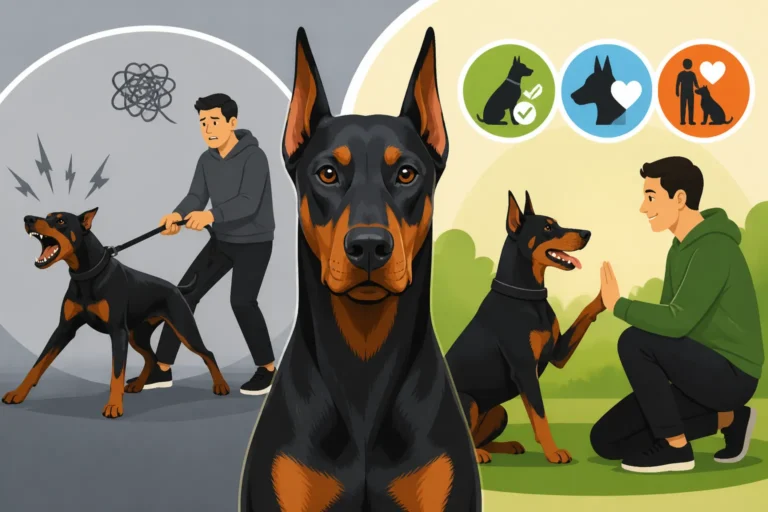
Early socialization and consistent positive reinforcement training help Doberman puppies build lifelong confidence, resilience, and good social etiquette.

The Rule of Threes framework explains how a rehomed Doberman adjusts across three days, weeks, and months in a new home.
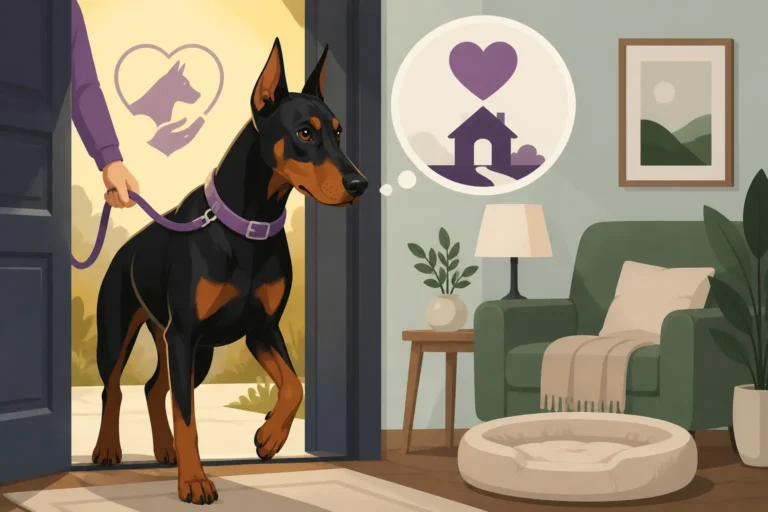
Rescue Dobermans often find sudden quiet homes unsettling, requiring observation of stress signs and triggers to build stability.
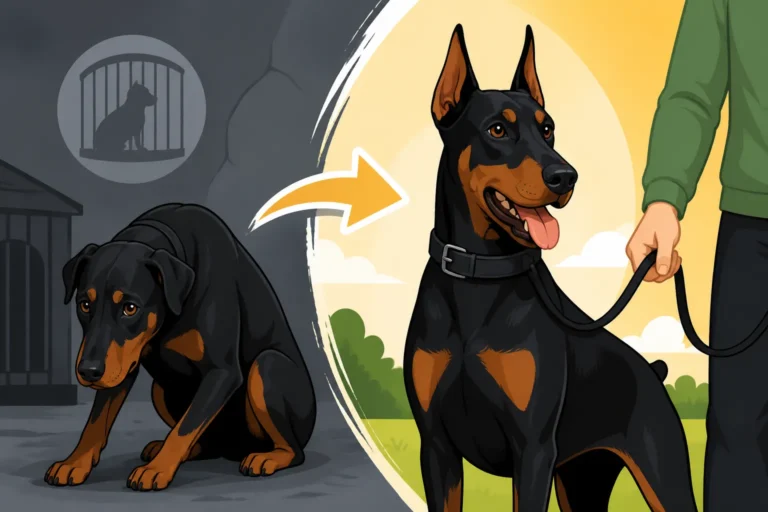
Practical steps for retraining an adult rescue Doberman, navigating unknown pasts, and managing behavioral issues like separation anxiety.

Physical pain in Dobermans often causes sudden behavioral changes, and recognizing subtle signs helps owners identify discomfort.

Sudden behavioral changes in a Doberman often indicate medical issues or pain that requires immediate veterinary attention.

Doberman yawns signal stress, anxiety, or tiredness, helping owners recognize anxiety during vet visits or training sessions.

Doberman stiffening is a rigid silent stress signal preceding a growl, helping owners interpret canine body language to prevent a bite.

Doberman whale eye exposes the sclera when dogs turn their heads away, signaling stress, anxiety, pain, or resource guarding.

Cropped ears alter canine communication, but Doberman owners can read full body language to understand the true mood of a dog.