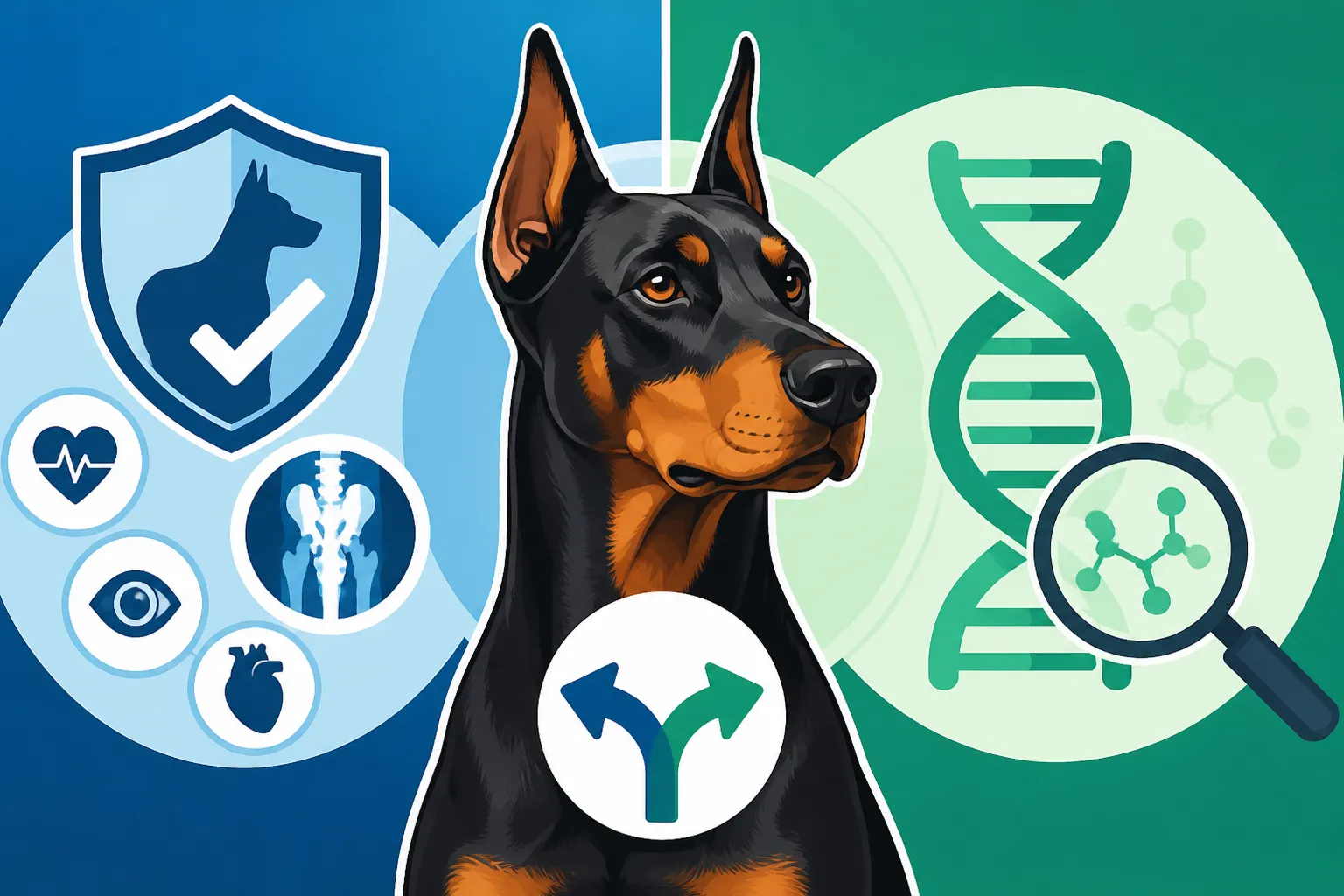
Whether a Doberman DNA Panel Replaces Screening
It's incredibly frustrating when you're doing everything you can to protect your beloved Doberman, pouring over articles and talking to breeders, and you come across a topic as confusing as genetic testing for heart disease. You might hope that a simple DNA panel could give you a definitive "all clear" for Dilated Cardiomyopathy (DCM), saving you from years of expensive and stressful cardiac screenings. But the truth, unfortunately, isn't quite that straightforward, and this guide aims to clarify why DNA panels are a piece of the puzzle, not the whole picture.
Understanding the Landscape of Doberman Health Challenges
Living with a Doberman means living with the ever-present shadow of health concerns, particularly when it comes to their hearts. It's a heavy burden for any owner, knowing that your vibrant, loyal companion could be silently developing a life-threatening condition. The breed's genetic predisposition to certain ailments makes us constantly seek out every possible tool to keep them healthy.
The Persistent Threat of Dilated Cardiomyopathy DCM
For Doberman owners, the words "Dilated Cardiomyopathy" (DCM) carry a unique weight of dread. This is the single most common cause of death in the breed, a silent thief that often gives no warning until it's too late. It's the heart disease that reaches most Dobermans, turning a strong, athletic heart into a weak, enlarged organ incapable of pumping blood efficiently.
Imagine your dog, full of life, romping in the yard one day, and then suddenly collapsing or showing signs of breathlessness. This devastating progression is the reality for many Doberman owners. The insidious nature of DCM means that for years, your dog might appear perfectly healthy, showing no outward symptoms even as their heart subtly deteriorates. This period is often referred to as the "occult phase" or the silent years before a Doberman's heart shows signs of trouble. It’s during this time that regular screenings become so critical, because once symptoms appear, the disease is typically much more advanced and harder to manage effectively. The emotional toll of knowing this is hanging over your dog is immense, and it drives many of us to explore every diagnostic avenue available.
Why We Seek Clear-Cut Answers
In an age where genetic testing is becoming increasingly prevalent in human and veterinary medicine, it's only natural to hope for a simple blood test that can tell us definitively if our Doberman will get DCM. We want a clear-cut answer, a binary "yes" or "no" that can put our minds at ease or, at least, give us a solid plan of action. The idea of a one-time, relatively inexpensive DNA test replacing costly annual cardiac exams like echocardiograms and Holter monitors is incredibly appealing.
Think about it: the time commitment, the travel to specialist veterinarians, the stress on your dog during examinations, and of course, the financial strain. Annual echo and Holter screening for a Doberman can quickly add up, easily costing hundreds to thousands of dollars over their lifetime. If a simple cheek swab or blood draw could provide all the answers, wouldn't that be a blessing? This desire for a definitive, easy solution is entirely understandable given the emotional and financial investment we pour into our dogs' health. We're looking for certainty in an area fraught with uncertainty, hoping technology can provide the peace of mind we crave.
The Role and Limitations of Doberman DNA Panels
While DNA panels offer incredible insights and are a vital tool in responsible breeding and disease management, it's crucial to understand what they can and cannot tell us about your Doberman's heart health. They are not a crystal ball, nor a complete substitute for clinical observation.
What Doberman DCM Gene Tests Actually Identify
Currently, there are a couple of well-researched genetic markers associated with an increased risk of DCM in Dobermans. The two Doberman DCM gene tests primarily focus on these: the PDK4 gene mutation, often called DCM1, and the DCM2 Titin variant. The DCM1 gene test explained for Doberman owners involves identifying a specific deletion in the PDK4 gene, which has been linked to an increased risk of developing the disease. Similarly, the DCM2 Titin variant in Dobermans identifies another genetic alteration also associated with heightened risk.
A DNA panel will tell you if your dog carries one or both of these known mutations. If your dog tests "clear," it means they don't carry these specific mutations. If they test "positive" or are a "carrier," it means they do. This information is invaluable for breeders striving to reduce the prevalence of DCM in future generations by making informed breeding decisions. However, and this is a critical point, these tests only identify known genetic risk factors. They are not diagnostic for the disease itself; they indicate a predisposition or increased risk. Think of it like a family history of heart disease in humans – it means you should be more vigilant, but it doesn't mean you will get heart disease, nor does it rule out other forms of heart disease.
Why a Clear DNA Panel Doesn't Guarantee a Healthy Heart
Here's where the hope for a simple solution often clashes with the complex reality of genetics. Receiving a "clear" result on a Doberman DNA panel for the known DCM genes does not mean your Doberman is immune to DCM. This is one of the most disheartening truths for owners: a Doberman that tests clear and still gets DCM is a reality that cardiologists and dedicated Doberman enthusiasts encounter regularly.
There are several reasons for this frustrating discrepancy:
- Polygenic Nature: DCM is not caused by a single gene. It's considered a polygenic disease, meaning multiple genes, potentially dozens or even hundreds, interact to contribute to its development. The current DNA panels only test for a few of the most strongly associated genes. There are likely many other genetic factors, some still unknown to science, that play a role.
- Environmental Factors: Genetics aren't the whole story. Environmental factors like diet, exercise, stress, and other underlying health conditions can influence whether a genetically predisposed dog actually develops DCM and how severely. For example, some research has explored whether grain-free food adds to Doberman DCM, highlighting the potential impact of diet, although this remains a complex and debated topic.
- Penetrance: Even if a dog carries a "DCM gene," the gene might not always express itself, or it might express itself differently in various individuals. This concept, known as penetrance, means that not every dog with the genetic mutation will necessarily develop the disease.
- New Mutations: Genetics are constantly evolving. New mutations could arise, or existing, less common mutations might not be included in standard panels.
So, while a clear DNA panel is certainly good news, it provides a partial picture. It eliminates some known risks but cannot predict with 100% certainty that your dog will never develop this complex disease. It means your dog is at a lower genetic risk for those specific mutations, but it doesn't offer a blanket guarantee of a healthy heart.
The Indispensable Value of Traditional Cardiac Screening
Given the limitations of DNA panels, it becomes clear why traditional, clinical cardiac screening remains the cornerstone of proactive Doberman heart health management. These methods provide real-time information about your dog's actual heart function, not just their genetic predisposition.
The Gold Standards: Echo and Holter Monitoring
When it comes to understanding the physical state of your Doberman's heart, nothing beats an echocardiogram and a Holter monitor. These are truly the "gold standards" for early detection of DCM.
- Echocardiogram (Echo): Think of an echo as an ultrasound for the heart. What a Doberman echo actually measures is the size of the heart chambers, the thickness of the heart walls, how well the valves are functioning, and the efficiency of the heart's contractions. A board-certified veterinary cardiologist will look for subtle changes, such as mild enlargement of the left ventricle, even before your dog shows any symptoms. These early changes, detectable in the occult phase, are crucial for identifying the disease when potential treatments can be most effective. It's a non-invasive procedure that provides a detailed anatomical and functional assessment.
- Holter Monitor: A Holter monitor is a wearable ECG device that records your Doberman's heart rhythm for 24 hours. Twenty-four hours of Holter on a Doberman can reveal arrhythmias (irregular heartbeats), especially ventricular premature contractions (VPCs), which are often an early indicator of DCM in Dobermans. These arrhythmias might not be present during a brief vet visit or even during an echo, making the extended monitoring invaluable. Reading a Doberman's Holter result involves counting the number of abnormal beats; typically, how many abnormal beats worry a Doberman cardiologist can be hundreds or thousands within a 24-hour period.
These clinical screenings are not about predicting if your dog might get DCM, but about detecting if your dog has started developing it, even in its earliest, asymptomatic stages. This distinction is paramount for intervention and management.
Crafting a Comprehensive Screening Schedule
So, if DNA panels aren't enough, what should a Doberman owner do? The answer lies in a proactive and consistent clinical screening schedule. The age to start screening a Doberman's heart typically begins around 2-3 years old, and then annually. Some cardiologists might suggest starting even earlier if there's a strong family history of early-onset DCM.
Here’s a typical comprehensive screening schedule:
- Initial Baseline: Around 2-3 years of age, your Doberman should have their first full cardiac workup, including an echocardiogram and a 24-hour Holter monitor. This establishes a baseline for their heart health.
- Annual Screenings: From that point forward, annual echo and Holter screenings are recommended for the rest of your Doberman's life. This allows your cardiologist to monitor for any progressive changes over time. Many owners wonder whether one clear echo is enough for a Doberman. The resounding answer from experts is no; DCM can develop quickly, and yearly checks are vital.
- Specialist Care: These screenings should ideally be performed by a board-certified veterinary cardiologist, who has specialized training and experience in identifying the subtle signs of DCM. They are best equipped to interpret the results accurately and recommend appropriate action.
The financial aspect of these screenings can be daunting, but it’s a necessary part of responsible Doberman ownership. This is where pet insurance can be a lifesaver. Companies like Healthy Paws, if you enroll your Doberman before any signs or diagnoses of heart conditions appear, can help cover a significant portion of these recurring costs, easing the burden and allowing you to prioritize your dog's health without financial stress. Planning for these expenses, whether through savings or insurance, is crucial.
Integrating DNA Results with Clinical Management
While a DNA panel doesn't replace clinical screening, it absolutely has a place in the overall picture of Doberman health. It's another piece of information that, when combined with clinical findings, can help both breeders and owners make more informed decisions.
How DNA Information Informs Breeding Decisions
For responsible Doberman breeders, DNA panels are an invaluable tool in their arsenal against DCM. Knowing the genetic status of potential breeding dogs allows them to make calculated mating decisions aimed at reducing the prevalence of known DCM genes in future generations.
For example, a breeder might choose not to breed two dogs both positive for the DCM1 gene. They might pair a positive dog with a clear dog to minimize the risk of producing affected offspring. This doesn't eradicate the problem overnight, but it's a critical step in a long-term strategy for improving breed health. The Doberman Pinscher Club of America (DPCA) and other breed clubs strongly advocate for genetic testing as part of a comprehensive health testing regimen for breeding stock. It’s an ethical imperative to use all available tools to ensure the healthiest possible puppies. However, breeders must remember that even with careful genetic selection, annual cardiac screening of all breeding dogs is still necessary, as genetics are not the only factor, and not all DCM-related genes are known.
Tailoring Individual Dog Management Plans
For individual Doberman owners, knowing your dog's DNA panel results can influence how you approach their health management, but it rarely changes the need for regular clinical screening.
If your Doberman tests positive for one or both of the known DCM mutations, it means they are at a higher genetic risk. This information should prompt you to be even more diligent with their annual echocardiograms and Holter monitoring. You and your cardiologist might decide to start annual screenings earlier than the typical 2-3 years, or schedule them every 6-9 months instead of annually, particularly as your dog approaches the Doberman years when everything shows up.
While there's no "preventative" medication solely based on a positive DNA test in an otherwise clinically clear Doberman, knowing the genetic risk does create a heightened sense of awareness. It means you’ll be on the lookout for even the most subtle signs of trouble, such as coughing and breathlessness in a Doberman, or a Doberman that tires faster than it used to. If clinical signs of DCM begin to appear, or if an echo reveals early changes, the fact that your dog carries a known genetic risk factor might reinforce the decision to start medication for a Doberman in the occult phase, such as pimobendan before a Doberman shows signs. This is a conversation you'll have with your cardiologist, weighing the benefits against the potential costs and side effects.
Ultimately, DNA panels are a powerful screening tool for breeders and a valuable piece of information for owners, but they cannot replace the regular, hands-on assessment of your Doberman's heart by a veterinary cardiologist. It's about combining all available information to give your Doberman the best chance at a long, healthy life.
| Feature | DNA Panel (e.g., DCM1, DCM2) | Clinical Screening (Echo & Holter) |
|---|---|---|
| What it measures | Genetic markers (risk factors) associated with DCM | Actual heart size, function, and electrical activity |
| Primary purpose | Identify genetic predisposition for disease (breeding tool) | Detect presence and progression of disease |
| Result interpretation | Indicates genetic risk (carrier, affected, clear) | Diagnoses presence/stage of DCM; monitors changes |
| When to perform | Typically once in a dog's lifetime (before breeding) | Annually, starting at 2-3 years old (for life) |
| Cost | Generally lower (e.g., What a Doberman DCM gene test costs) | Generally higher (repeated annual costs) |
| Detects occult phase | No (only risk) | Yes (can detect changes before symptoms) |
| Guarantees health | No | No, but provides real-time health status |
| Replaces other methods | No, complements clinical screening for comprehensive view | No, but is the only way to clinically diagnose early DCM |
Disclaimer
This article is intended for informational purposes only and is not a substitute for professional veterinary advice. Always consult with a qualified veterinarian or a board-certified veterinary cardiologist for any health concerns or before making any decisions about your Doberman's care, including genetic testing and treatment protocols.