The Cost of a Doberman Genetic Panel
It’s a situation many Doberman owners find themselves in: you love your majestic companion fiercely, but the constant worry about their breed-specific health issues can feel like a heavy cloud. We hear stories, we read the statistics, and we know that Dobermans, as wonderful as they are, come with a predisposition to certain serious conditions. This guide is here to walk you through the ins and outs of genetic panels for Dobermans, helping you understand what these tests are, what they cost, and how they can offer invaluable insights into your dog's future health.
Demystifying Doberman Genetic Panels: What Are They Anyway?
The world of canine health can feel like a minefield, especially with a breed like the Doberman Pinscher, known for its incredible loyalty but also its unfortunately common genetic predispositions. When we talk about "genetic panels" for Dobermans, we're really discussing a crucial tool that empowers owners and breeders to peer into their dog's biological blueprint, giving them a heads-up on potential health challenges lurking in their DNA. It's a proactive step that can save a lot of heartache and expense down the line, even if it feels daunting to contemplate at first.
More Than Just a "DNA Test" – Understanding the Purpose
For many, the term "DNA test" might conjure images of ancestry kits for humans, telling you where your family came from. While canine DNA tests can do that to some extent, a genetic health panel is far more profound. For Dobermans, it's about identifying specific genetic mutations that are known to cause severe, sometimes life-threatening, diseases. This breed, admired for its elegance and protective nature, carries a heavy burden of inherited conditions, most notably Dilated Cardiomyopathy (DCM), Von Willebrand's Disease (vWD), and others that can significantly impact their quality and length of life.
The frustration of an unexpected health crisis hitting your beloved Doberman is immense. Imagine your seemingly healthy dog suddenly collapsing on a walk, or exhibiting unexplained bleeding. These aren't just random occurrences; often, they are the manifestation of underlying genetic conditions that have been silently ticking away. A genetic panel aims to remove some of that terrifying uncertainty by providing a roadmap. It’s not a crystal ball that guarantees perfect health, but it offers a crucial piece of the puzzle, allowing you to prepare, mitigate, and provide the best possible care for your Doberman. It moves you from a reactive stance, waiting for symptoms to appear, to a proactive one, where you are armed with information. This can be especially important given that Doberman lifespan and why it is short is often tied to these inherited conditions.
The Science Behind the Swab: How Genetic Testing Works
So, how does all this magic happen? It’s surprisingly simple from the owner's perspective, though incredibly complex scientifically. Most genetic panels start with a simple cheek swab. You’ll receive a kit from a reputable lab, often containing sterile swabs that you gently rub on the inside of your Doberman's cheek for a minute or so. This collects epithelial cells, which contain your dog's DNA. Some labs might prefer a blood sample, which a veterinarian would collect, but the cheek swab is quite common and convenient for at-home collection.
Once the sample arrives at the lab, their expert scientists go to work. They extract the DNA from the cells and then use advanced molecular techniques to screen for specific genetic markers or mutations associated with various diseases. For instance, they'll look for the specific gene deletions linked to DCM1, or the variant for vWD. They’re not just looking for "any" DNA; they're looking for very particular sequences known to be problematic in Dobermans. The results are then compiled into a report that details your dog's genetic status for each condition tested – whether they are clear, a carrier, or affected. For a breeder, this information is paramount for making responsible breeding decisions, ensuring they don't unwittingly pass on detrimental genes to future generations. For a pet owner, it's about understanding potential risks and working with their vet to establish a tailored wellness plan.
Diving Deep into Doberman-Specific Health Concerns and Their Genetic Tests
When you decide to invest in a genetic panel for your Doberman, you’re not just getting a general health check; you're often getting a targeted examination of the conditions that most plague this particular breed. It's an acknowledgment of the unique genetic challenges Dobermans face, and an attempt to get ahead of them.
The Big One: Dilated Cardiomyopathy (DCM1 and DCM2)
If there's one health concern that weighs most heavily on a Doberman owner's mind, it's usually Dilated Cardiomyopathy, or DCM. This devastating heart disease is incredibly prevalent in the breed, often striking seemingly healthy dogs in their prime. It's a cruel reality that the heart disease that reaches most Dobermans is DCM, where the heart muscle thins and weakens, becoming unable to pump blood efficiently. Many Dobermans develop DCM silently, with no outward symptoms until the disease is far advanced, making genetic testing a critical early warning system.
There are two major genetic variants currently recognized as contributing significantly to DCM in Dobermans: DCM1 and DCM2. The DCM1 gene test explained for Doberman owners identifies a specific deletion in the PDK4 gene. While a Doberman positive for this gene isn't guaranteed to get DCM, it indicates a significantly increased risk. Then there's the DCM2 titin variant in Dobermans, which targets a different genetic mutation. Dogs testing positive for this variant also show a higher propensity for developing the disease. The heartbreak of watching a Doberman's heart fails before anyone notices is a feeling no owner wants to experience, and these genetic tests offer a glimmer of hope for early intervention or prevention through careful breeding. It's this high incidence of DCM that drives many owners to seek out these panels, hoping to gain some control over such an insidious disease.
Beyond the Heart: Von Willebrand's Disease and Other Important Tests
While DCM rightfully gets a lot of attention, Dobermans are unfortunately susceptible to other serious genetic conditions. One of the most common, and often overlooked until an emergency arises, is Von Willebrand's Disease (vWD). This is a hereditary bleeding disorder where the dog lacks or has insufficient Von Willebrand factor, a protein essential for proper blood clotting. Imagine your Doberman getting a simple cut, or needing a routine surgery like a spay or neuter, only for the bleeding to be difficult to control. Bruising and bleeding in a Doberman due to vWD can be terrifying. The Von Willebrand DNA test for Dobermans is incredibly valuable, as it allows owners to understand if their dog is clear, a carrier, or affected, enabling proactive management and precautions before any surgical procedure.
Beyond DCM and vWD, a comprehensive Doberman genetic panel often includes tests for other conditions that, while perhaps less common, are still important for overall breed health. For example, Narcolepsy, a neurological disorder characterized by sudden sleep attacks, can be identified genetically. Degenerative Myelopathy (DM), a progressive disease of the spinal cord that leads to weakness and paralysis, is another one. You might also find tests for Copper Liver Disease in Doberman females, which identifies a genetic predisposition to copper accumulation in the liver, or Color Dilution Alopecia in blue and fawn Dobermans, a skin condition leading to hair loss and recurrent infections in dilute colored dogs. These tests provide a more complete picture of your Doberman's genetic health, offering insights that can guide preventative care, dietary choices, and even grooming routines.
Emerging Research and Future Genetic Markers
The field of canine genetics is constantly evolving, and what we know today might be expanded upon tomorrow. It’s important to remember that genetic panels are based on current scientific understanding. While we have robust tests for DCM1 and DCM2, researchers are actively looking for other genetic factors that contribute to the disease. We're starting to hear about the DCM3 and DCM4 Doberman variants from Europe, for example, indicating the complexity and multi-faceted nature of many inherited conditions.
This ongoing research means that while a genetic panel offers incredible insight now, it's not necessarily the final word for all time. New markers may be discovered, refining our understanding and potentially leading to even more accurate risk assessments. For committed Doberman owners and ethical breeders, staying informed about these advancements is part of responsible ownership. It underscores the value of choosing a reputable lab that invests in research and regularly updates its panels, ensuring you're getting the most current and comprehensive genetic picture available for your beloved companion.
Breaking Down the Costs: What Influences Doberman Genetic Panel Prices?
One of the first questions most Doberman owners have when considering a genetic panel is, understandably, "How much does this actually cost?" It’s a valid concern, as canine health expenses can add up quickly. The truth is, the cost of a Doberman genetic panel isn't a single, fixed number; it varies based on several factors, making it essential to do your homework.
Variability in Lab Fees and Panel Options
The price you'll pay for a Doberman genetic panel largely depends on the laboratory you choose and the scope of the panel itself. There are several reputable labs offering canine genetic testing, and their pricing structures can differ significantly. Companies like Embark, Wisdom Panel (which acquired Optimal Selection), and university-affiliated labs such as the Veterinary Genetics Laboratory (VGL) at UC Davis, are popular choices. Each offers different "packages" or panels.
For example, a basic panel might only cover the most common Doberman issues like DCM1, DCM2, and vWD. These tend to be on the lower end of the price spectrum. However, more comprehensive panels will test for dozens, sometimes hundreds, of genetic conditions, including those less common in Dobermans but present in other breeds, along with coat color genetics and breed ancestry. These comprehensive panels, while offering a wealth of data, naturally come with a higher price tag. The temptation to opt for a cheaper, less comprehensive test can be strong, especially when budgeting, but it's crucial to ensure that any panel you choose includes the primary Doberman health concerns. Skipping essential tests to save a few dollars now could lead to significant financial and emotional costs if a preventable or manageable condition manifests later. Some labs also offer à la carte testing, allowing you to select specific tests if you already know which conditions are relevant to your dog's lineage, or if you're looking to confirm a specific gene.
Breeder vs. Individual Owner Testing: Different Scenarios, Different Costs
The cost of genetic testing can also be influenced by who is doing the testing and when. Ethical Doberman breeders routinely test their breeding stock before puppies are conceived. This proactive approach helps them make informed breeding decisions, aiming to produce puppies as genetically sound as possible. Many breeders factor these testing costs into their puppy prices, and a responsible breeder will readily provide reading a Doberman puppy's test certificates, including genetic panel results for the parents. When you acquire a puppy from such a breeder, a significant portion of the genetic testing work has already been done, providing you with invaluable peace of mind. They usually perform the DCM gene tests as well as the Von Willebrand DNA test for Dobermans, ensuring they are not pairing carriers for these serious conditions.
However, if you're an individual owner with a Doberman whose genetic history is unknown, or if you adopted from a rescue, you might be testing your dog as a one-off. In this scenario, you'll typically pay the full retail price for the panel of your choice. While this might seem like an added expense, it’s an investment in your dog’s future. The cost of a genetic panel pales in comparison to the potential veterinary bills that can accrue from managing an undiagnosed genetic condition, or the emotional toll of uncertainty. Understanding the health testing a Doberman breeder must show can help you gauge if a puppy has already been well-vetted, or if you need to take on the responsibility yourself.
Beyond the Basic Fee: Hidden Costs and Considerations
While the advertised price of a genetic panel is often the first thing you see, there can be a few additional costs and considerations that aren't immediately obvious.
- Shipping Fees: Most labs require you to ship the sample back to them. While some kits include pre-paid shipping labels, others may require you to pay for postage, especially if you're shipping internationally. Always check the fine print.
- Veterinarian Collection Fees: If you opt for a blood sample rather than a cheek swab, or if you prefer your vet to perform the cheek swab to ensure proper collection, there will be an associated veterinary fee for their time and services. For most simple cheek swabs, this isn't necessary, but it's an option.
- Retesting Fees: In rare cases, a sample might be insufficient or contaminated, requiring a retest. While many reputable labs offer a free retest, it's worth clarifying their policy before purchasing.
- The Emotional Cost of Uncertainty: This isn't a monetary cost, but it's perhaps the heaviest. The anxiety of not knowing if your Doberman carries genes for serious diseases can be immense. The investment in a genetic panel, while financial, often yields a priceless return in terms of peace of mind. Even if the results reveal a predisposition, knowing allows you to be prepared, to monitor more closely, and to work proactively with your vet.
Choosing the Right Panel: Navigating the Options
With multiple labs and various panel options available, selecting the right genetic panel for your Doberman can feel overwhelming. It’s not just about the cost, but about ensuring you get the most relevant and comprehensive information for your beloved dog.
Researching Reputable Labs and Their Offerings
The first step in choosing a genetic panel is to research the labs themselves. Not all canine genetic testing labs are created equal. You want a lab that is well-established, uses scientifically validated methods, and ideally, focuses on or has extensive experience with Doberman-specific health conditions.
- Embark Veterinary: Known for its comprehensive panels, offering tests for over 200 genetic conditions, breed identification, and even genetic trait information. They have a strong reputation for scientific accuracy and continuously update their offerings based on new research. Many Doberman owners swear by Embark for its depth.
- Wisdom Panel (Optimal Selection): Another highly respected company offering various health panels, including specific breed-focused panels. Their Optimal Selection Doberman panel often covers key Doberman health concerns like DCM and vWD, along with others.
- UC Davis Veterinary Genetics Laboratory (VGL): A university-affiliated lab that offers individual tests for specific conditions, including vWD and Narcolepsy in Dobermans. They are known for their academic rigor and reliable results, though their panels may be less "bundled" than commercial offerings.
When comparing labs, look at what specific Doberman health conditions are included in their standard panels. Check their average turnaround time for results – some can be much faster than others. Read customer reviews, and ideally, seek recommendations from experienced Doberman breeders or veterinarians who have utilized these services. A good lab will also have excellent customer support to help you understand your results.
Understanding the Scope of Testing: Comprehensive vs. Targeted
Once you’ve identified a few reputable labs, you’ll need to decide on the scope of testing. Do you need a comprehensive panel that screens for everything under the sun, or a more targeted approach?
- Comprehensive Panels: These are fantastic for gaining a full picture of your Doberman’s genetic health. They’re especially recommended if you have limited information about your dog’s lineage, or if you plan to breed your Doberman. A comprehensive panel will typically include all the major Doberman concerns like DCM1, DCM2, vWD, DM, and Narcolepsy, plus a multitude of other conditions. The benefit is catching potential issues you might not have even considered. For a breeder, this is a non-negotiable step to ensure they are fulfilling the health testing a Doberman breeder must show.
- Targeted Panels/Individual Tests: If you know your Doberman's pedigree is clear for most common conditions, or if you're only concerned about a specific issue (perhaps because a relative was affected), you might opt for individual tests. For example, if you know your dog's parents were clear of DCM1 and DCM2, but you want to confirm vWD status before a spay, you could order just the Von Willebrand DNA test for Dobermans. This can be more cost-effective but carries the risk of missing other predispositions. This approach is more suited for informed owners who have a strong understanding of their dog's family history.
The decision often comes down to budget and your specific goals. For the most thorough understanding, a comprehensive panel is usually the best bet, providing peace of mind and actionable information across the board.
Deciphering the Fine Print: What to Ask Before You Buy
Before you commit to a genetic panel, take a moment to read the fine print and ask any lingering questions. Don's hesitate to reach out to the lab's customer service if anything is unclear.
- What exactly is included in this panel? Confirm that the Doberman-specific diseases you are most concerned about (DCM1, DCM2, vWD, etc.) are explicitly listed.
- What is your policy on inconclusive results or retests? If a sample is too degraded or yields unclear results, will they provide a free retest kit?
- How are the results reported? Will you receive a clear, easy-to-understand report, or will it be highly scientific jargon? Do they offer genetic counseling or interpretive resources?
- What is the estimated turnaround time? Knowing when to expect results helps manage expectations.
- Are there any known limitations to the tests? For example, genetic tests for DCM are not 100% predictive, as DCM is a complex disease influenced by multiple factors. Understanding these nuances is important.
Asking these questions upfront ensures that you’re fully informed and confident in your choice, setting you up for a smoother experience and clearer understanding of your Doberman's genetic blueprint.
Making Sense of the Results and Their Impact on Your Doberman's Life
Receiving the results of your Doberman's genetic panel can be a moment of both anticipation and anxiety. It’s natural to feel a mix of hope and apprehension, especially given the serious conditions this breed faces. But understanding these results is the key to unlocking their true value.
Interpreting "Clear," "Carrier," and "Affected" Results
Genetic panel reports typically categorize your Doberman’s status for each condition into one of three main categories:
- Clear: This is the best-case scenario. It means your Doberman does not carry the tested genetic mutation for that specific disease. For instance, if your Doberman is "clear" for DCM1 and DCM2, it significantly reduces their genetic risk for developing those forms of the disease. However, remember that "clear" only applies to the genes tested and doesn't guarantee your dog will never develop that condition from other, unknown genetic factors or environmental influences. It does, however, offer immense relief.
- Carrier: A "carrier" Doberman possesses one copy of the mutated gene but usually does not exhibit symptoms of the disease itself. They are "carrying" the gene silently. For diseases like vWD, a carrier typically leads a normal life without any bleeding issues. However, if bred with another carrier, their offspring could be "affected." This is why understanding whether a carrier Doberman should be bred is so critical for responsible breeders to prevent passing on these traits. For a pet Doberman, being a carrier usually has no health implications, but it's important information for potential future breeding decisions, if that were ever a consideration.
- Affected: An "affected" Doberman has two copies of the mutated gene (one from each parent) and is at a high risk of developing the disease, or is already showing symptoms. For example, a Doberman affected with vWD Type I is highly likely to experience bleeding issues, while one affected with DCM1 or DCM2 has a significantly elevated risk of developing heart disease. This result can be distressing, but it provides crucial information for proactive management. It empowers you to work closely with your veterinarian to monitor for symptoms and potentially implement early interventions.
Proactive Health Management Based on Genetic Predispositions
The real power of a genetic panel lies in its ability to inform proactive health management. These results are not just facts on a piece of paper; they are actionable insights that can directly influence your Doberman's care plan.
If your Doberman tests "affected" or high-risk for DCM, this doesn't mean immediate despair. Instead, it means you can establish an aggressive cardiac screening protocol. This might involve starting annual echo and Holter screening for a Doberman much earlier than standard recommendations. For example, a cardiologist might recommend starting screenings at two or three years old, rather than four or five. The age to start screening a Doberman's heart is a critical discussion point with your vet. This early monitoring can help detect the subtle changes of the silent years before a Doberman's heart shows signs, potentially allowing for early medication.
Similarly, if your Doberman tests "affected" for Copper Liver Disease, you and your vet can discuss starting a low-copper feeding for a Doberman, potentially using prescription diets or carefully curated homemade meals, to mitigate the risk of copper accumulation and liver damage. If vWD affected, you'd ensure your vet is fully aware before any surgery, allowing them to take necessary precautions like administering desmopressin or having clotting factors on hand. This shift from reactive treatment to proactive prevention or early intervention can make a monumental difference in your Doberman’s quality of life and potentially their longevity. It also helps you have more informed conversations with your pet insurance provider like Healthy Paws, understanding how genetic predispositions might impact coverage or future claims.
The Emotional Rollercoaster of Doberman Health Testing
Let’s be honest: waiting for and receiving genetic test results for your beloved Doberman can be an emotional rollercoaster. You’re pouring over the reports, hoping for a "clear" across the board, but bracing yourself for anything less ideal. The anxiety is palpable, especially with conditions like DCM that carry such a heavy weight in the Doberman community.
It's okay to feel this way. These dogs are family members, and their health is a deep concern. If the results come back indicating a carrier status or an affected status for a serious condition, it can feel like a punch to the gut. You might feel guilt, worry, or even anger. But remember, this information is a gift. It's not a death sentence; it's knowledge. This knowledge empowers you. It allows you to:
- Plan: You can budget for future screenings, research specialists, and modify your Doberman’s lifestyle if necessary.
- Prevent/Mitigate: For some conditions, you can take steps to prevent the disease from manifesting or slow its progression.
- Communicate Effectively: You can have more targeted and informed discussions with your veterinarian, who can then provide the most tailored care plan.
- Find Peace of Mind: Even if the news isn't perfect, knowing is often better than constantly worrying about the unknown. It allows you to focus on enjoying your Doberman, knowing you’re doing everything you can to support their health.
The goal isn't necessarily to eliminate all risk, but to understand it and manage it responsibly. You're giving your Doberman the best chance at a long, healthy, and happy life, armed with the power of information.
Is a Doberman Genetic Panel a Smart Investment?
Given the costs and the emotional weight involved, it's natural to ask: is a Doberman genetic panel truly a smart investment? When we look at the bigger picture, considering both the financial implications and the profound impact on your dog's well-being, the answer for many Doberman owners is a resounding yes.
Preventing Heartache and Saving on Future Vet Bills
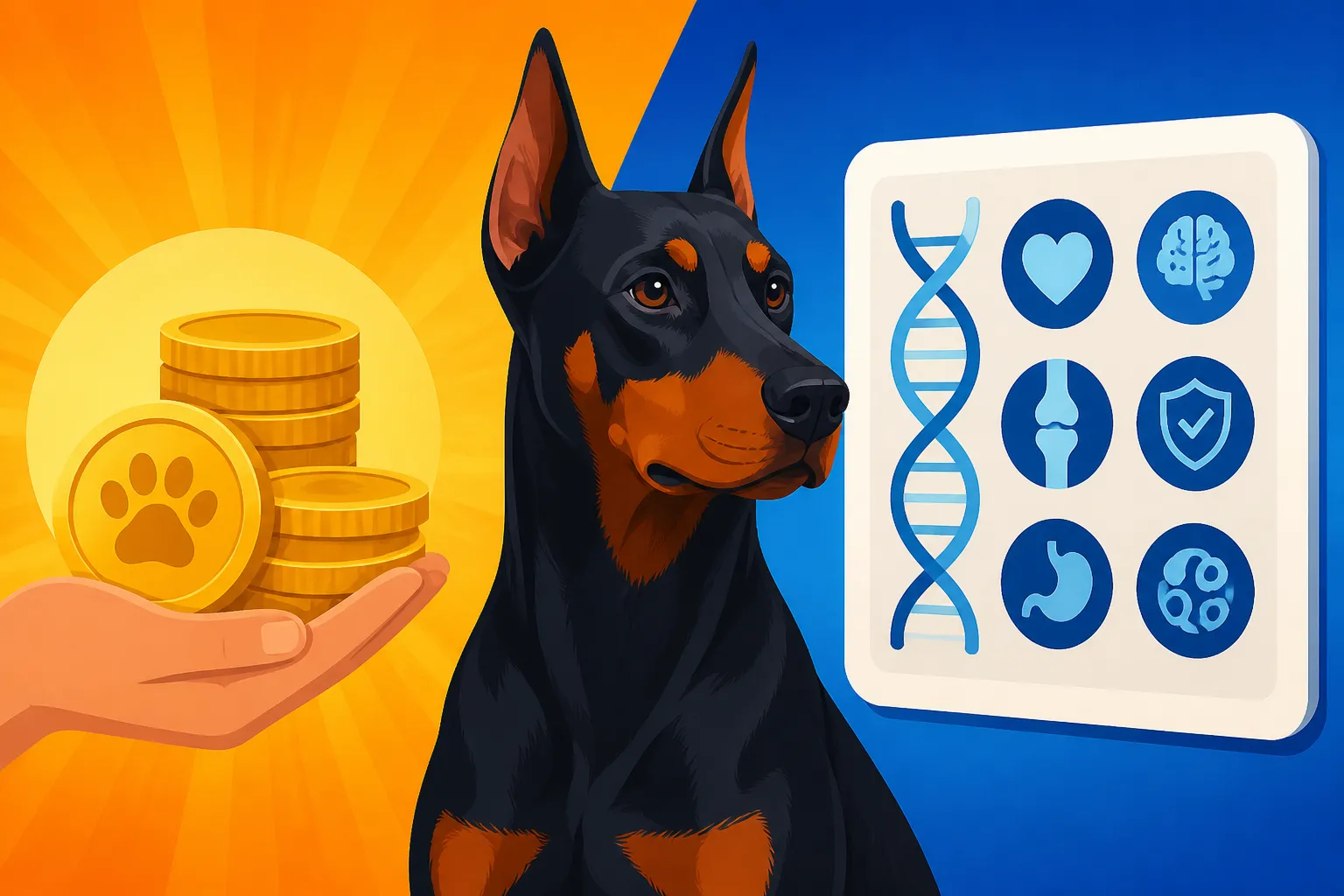
One of the most compelling arguments for investing in a genetic panel is its potential to prevent significant heartache and save you money in the long run. The cost of a Doberman genetic panel, which can range from a few hundred dollars for targeted tests to upwards of $200-$300 for comprehensive panels, pales in comparison to the expenses associated with managing a chronic genetic disease.
Consider Dilated Cardiomyopathy: if your Doberman develops DCM and it's diagnosed in an advanced stage, the treatment can be incredibly expensive. Diagnostic tests like echocardiograms and Holter monitors are recurring annual expenses. Then there are lifetime medications, which can run hundreds of dollars a month. Emergency vet fees for a collapsing Doberman due to heart failure can easily be thousands of dollars for stabilization, overnight care, and diagnostics. Knowing your Doberman's predisposition early allows for early intervention, which can sometimes slow the disease's progression, potentially reducing the intensity or frequency of crises. For example, if you know your dog is at high risk, you might proactively manage their diet, perhaps incorporating supplements like taurine and carnitine, or considering a fresh food option like Ollie that prioritizes heart health. Similarly, managing Von Willebrand's Disease involves careful planning for surgeries and avoiding certain medications. The upfront cost of testing is a small price to pay to potentially avoid the crushing financial burden and emotional stress of advanced disease treatment. Many specialized diets or supplements recommended based on genetic predispositions can be conveniently sourced from online retailers like Chewy, making it easier to manage your Doberman's specific needs.
Contributing to the Future Health of the Breed
Beyond the individual benefits for your Doberman, genetic testing plays a vital role in the broader health of the Doberman breed. Every test, especially from breeding animals, contributes to a larger database of knowledge that helps breeders make more informed decisions. When breeders test their dogs and use the results responsibly – for example, by not breeding two carriers together – they are actively working to reduce the incidence of debilitating genetic diseases in future generations.
If you have a Doberman from a reputable breeder, they would have likely performed extensive genetic testing on the parents to ensure they are making responsible breeding choices. This collaborative effort amongst responsible breeders and owners is how we slowly chip away at the prevalence of genetic diseases like DCM, which has haunted the Doberman breed for decades. By testing your Doberman, you become part of this collective effort, helping to shine a light on genetic predispositions and contribute to a healthier future for these magnificent dogs.
Peace of Mind: The Priceless Aspect
Ultimately, one of the most significant, albeit intangible, benefits of a Doberman genetic panel is the peace of mind it offers. The worry about Doberman health can be constant. Knowing whether your dog carries the gene for DCM, vWD, or other serious conditions allows you to stop guessing and start planning.
The relief that comes from a "clear" result is immense, allowing you to enjoy your Doberman without that underlying knot of anxiety. If the results indicate a predisposition, while initially difficult, it empowers you to be proactive. You can monitor more closely, discuss preventative measures with your vet, and prepare for potential challenges. This knowledge transforms helplessness into preparedness. For many Doberman owners, this ability to be fully informed and actively participate in their dog's health journey is truly priceless, solidifying the genetic panel as a worthwhile investment in a long, happy life together.
Understanding the Landscape of Doberman Genetic Health Panels
To help you visualize the options and costs involved, here's a comparative overview of typical genetic tests and some popular lab offerings. Please note that prices are estimates and can vary based on promotions, package deals, and individual lab policies.
| Genetic Disease/Condition | Specific Gene/Test | What It Checks For | Typical Individual Test Cost (Estimate) |
|---|---|---|---|
| Dilated Cardiomyopathy | DCM1 (PDK4) | Predisposition to DCM (specific variant) | $80 – $120 |
| Dilated Cardiomyopathy | DCM2 (Titin) | Predisposition to DCM (specific variant) | $80 – $120 |
| Von Willebrand's Disease | vWD Type I | Risk of bleeding disorder | $60 – $90 |
| Degenerative Myelopathy | DM (SOD1) | Predisposition to progressive spinal cord disease | $60 – $80 |
| Narcolepsy | Doberman Narcolepsy | Predisposition to sleep disorder | $60 – $80 |
| Copper Toxicosis | ATP7B, ATP7A | Predisposition to copper accumulation in liver | $70 – $100 |
| Color Dilution Alopecia | D-Locus | Hair loss in blue/fawn Dobermans | $50 – $70 |
Note: Most comprehensive Doberman panels bundle these and many other tests, offering better value than individual tests.
| Lab Name | Key Doberman Tests Included (Typical Panel) | Typical Comprehensive Panel Price Range | Average Turnaround Time |
|---|---|---|---|
| Embark Vet | DCM1, DCM2, vWD, DM, Narcolepsy, CDA, +200 other conditions, breed ID, traits | $179 – $249 | 2-4 Weeks |
| Wisdom Panel | DCM1, DCM2, vWD, DM, Narcolepsy, CDA, + other breed-relevant conditions, breed ID | $129 – $199 | 2-3 Weeks |
| UC Davis VGL | Individual tests for vWD, Narcolepsy, Copper Toxicosis, etc. (no bundled DCM panel) | Varies per test ($60-$100 each) | 2-4 Weeks |
These prices are subject to change and may vary with sales or specific panel inclusions.
Disclaimer
The information provided in this article is for general informational purposes only and is not a substitute for professional veterinary advice. Always consult with a qualified veterinarian or a board-certified veterinary cardiologist regarding your Doberman's health, diagnosis, and treatment plan, especially concerning genetic test results and health management.