Overnight Care for a Doberman in Heart Failure
The sound of your Doberman shifting restlessly in the dead of night, followed by a soft cough or an unusual pant, can send a jolt of pure panic through you. Living with a Doberman diagnosed with heart failure, specifically Dilated Cardiomyopathy (DCM), means every quiet moment, especially overnight, can feel like walking on eggshells. This guide is here to walk you through the practical steps and emotional preparedness needed to provide the best overnight care for your beloved Doberman when their heart is failing, helping you recognize critical signs and respond effectively.
Recognizing the Urgency: Signs of Worsening Heart Failure Overnight
When your Doberman is battling heart failure, the night can be particularly challenging. During the day, distractions and activity might mask subtle signs, but in the quiet hours, new or worsening symptoms often become much more apparent and, frankly, terrifying. It's during these times that your keen observation skills become their lifeline.
The Subtle Shifts in Breathing Patterns
One of the most critical things to monitor overnight is your Doberman's breathing. In the stillness of the house, you might notice changes that are harder to detect amidst daytime noises. Normal resting respiratory rate for a dog is typically between 10 to 30 breaths per minute. If you see your Doberman consistently breathing faster than this, even when completely at rest and asleep, it's a huge red flag. You might also notice an increased effort in their breathing – their chest and abdomen might heave more noticeably, or they might seem to be using their stomach muscles excessively to exhale. Sometimes, it's not just the speed but the quality: shallow, rapid breaths, or gasping, can indicate fluid buildup in the lungs, a serious complication of heart failure. Keep an eye out for a persistent open-mouth breathing when they aren't hot or exercising, as this is often a sign of distress. You can learn more about Coughing and Breathlessness in a Doberman in our detailed article.
Restlessness and Inability to Settle
A Doberman in discomfort due to heart failure often struggles to find a comfortable position. You might observe them pacing, frequently changing spots, standing up and lying down repeatedly, or even sitting up with their head and neck extended. This restlessness isn't just a behavioral quirk; it can be a desperate attempt to ease respiratory distress. Imagine trying to sleep when you can't quite catch your breath—it's a truly miserable experience. Your Doberman might whine softly, sigh heavily, or try to get your attention in ways they usually don't overnight. They might even try to sleep in unusual places, like a cooler, harder floor, or near an open window, seeking relief. This inability to settle can escalate quickly, turning into full-blown agitation as their oxygen levels potentially drop.
Other Red Flags: Coughing, Weakness, and Fainting
Beyond breathing and restlessness, there are other tell-tale signs that warrant immediate attention. A persistent cough, especially one that sounds wet or gurgling, can indicate pulmonary edema, or fluid on the lungs. While a little cough here and there might be benign, a sustained bout of coughing, particularly if it seems to worsen when they lie down, is serious. You might also notice sudden weakness or wobbliness, especially if they try to stand up or move around. In the worst-case scenario, your Doberman might experience a sudden collapse or fainting episode, often referred to as syncope. This occurs when the heart isn't pumping enough blood to the brain. If you find your Doberman collapsed or unresponsive, even for a moment, it's an emergency. Even if they recover quickly, this is a symptom that demands immediate veterinary intervention. Such events are incredibly frightening and are often described in our article A Doberman That Faints on a Walk.
Preparing for the Night: Proactive Steps for Doberman Heart Care
The best defense against overnight crises is a good offense. Being proactive about your Doberman's care before bedtime can make a world of difference in their comfort and your peace of mind. This involves a careful routine of medication, environmental adjustments, and mental preparation for what might come.
Administering Evening Medications Consistently
Medication is the cornerstone of managing heart failure in Dobermans. Most Dobermans with heart conditions, such as the widely prevalent The Heart Disease That Reaches Most Dobermans, will be on a regimen that includes diuretics (to reduce fluid), ACE inhibitors (to manage blood pressure), and sometimes pimobendan (to improve heart contractility). It's absolutely crucial to administer these evening doses precisely as prescribed by your veterinary cardiologist. Missing a dose or giving it late can lead to fluid buildup and a worsening of symptoms overnight. Set alarms, create a visible checklist, or use a pill organizer to ensure consistency. If your Doberman is fussy about taking pills, consider using pill pockets or hiding them in a small, appealing treat. Making this routine calm and positive can also help reduce stress for your dog. For more on this, check out Medication for a Doberman in the Occult Phase.
Creating a Calm and Accessible Sleeping Area
Your Doberman's sleeping environment plays a significant role in their comfort, especially when they have heart failure. Ensure their bed is easily accessible, comfortable, and away from drafts or excessive heat. Many Dobermans with heart failure prefer to sleep on a cooler surface or with their head slightly elevated. A firm, orthopedic bed can provide support without making it difficult for them to adjust positions. Avoid making them navigate stairs or jump onto high furniture, especially late at night when they might be weaker or disoriented.
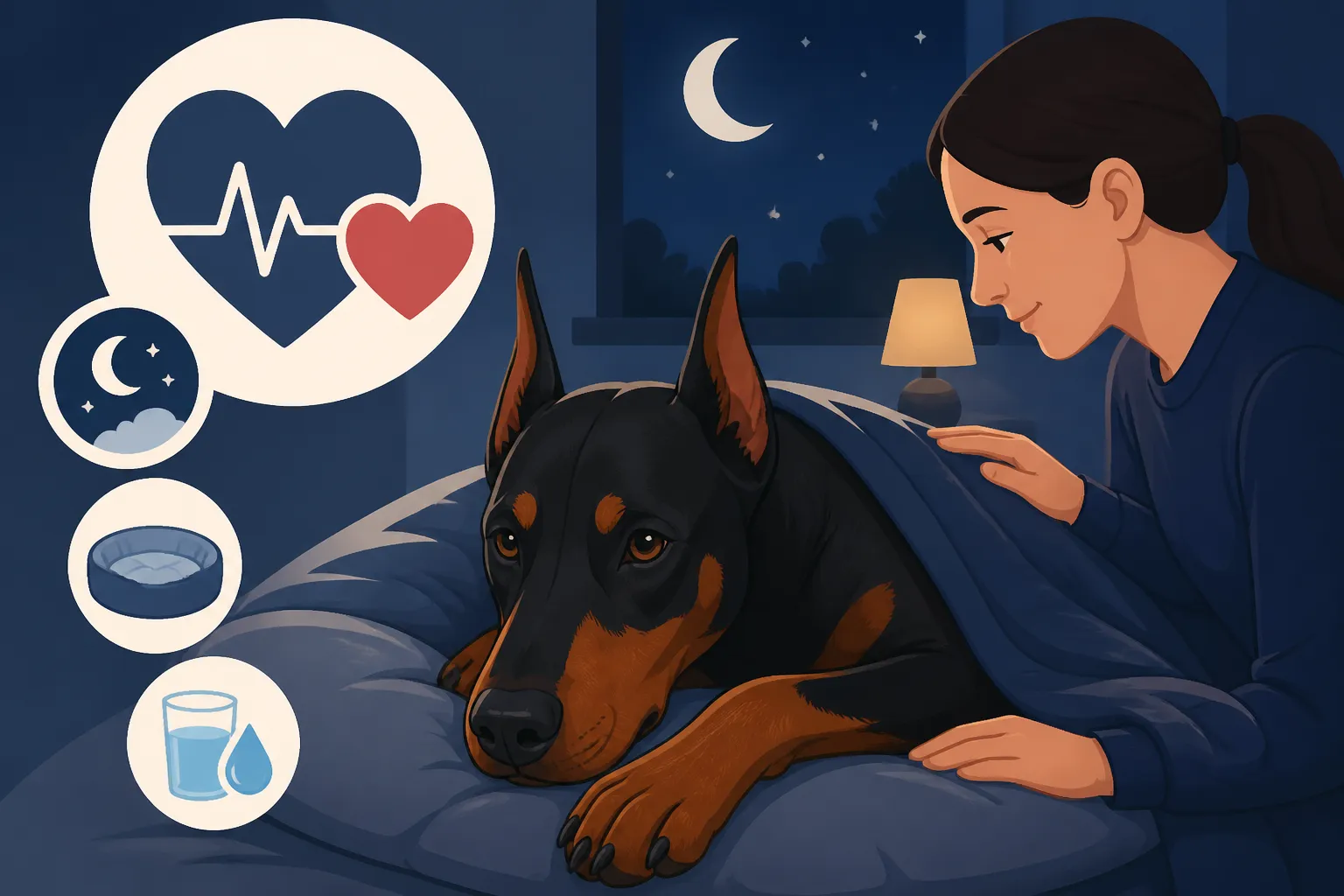
Consider setting up their sleeping area in your bedroom or a nearby space where you can easily hear any changes in their breathing or movements. Some Dobermans might find comfort in having a nightlight or a gentle fan for air circulation (not directly blowing on them to avoid chills). If your dog has a favorite blanket or toy, ensure it's clean and readily available. Think about ways to make their space serene and familiar, as anxiety can exacerbate heart issues. You might even consider specialized feeders or water bowls that are easy for them to access without stooping too low, which can put pressure on their chest. Chewy offers a wide range of orthopedic beds and easy-access bowls that can make a difference in your Doberman's nightly comfort.
Having Emergency Contacts and Supplies Ready
In an emergency, every second counts. Before you settle down for the night, ensure you have a clear plan. Keep a list of emergency veterinary clinics, including their addresses and phone numbers, prominently displayed or saved in your phone. If you have a veterinary cardiologist, know their emergency contact procedure as well. It's also wise to have a "go-bag" ready for your Doberman, just in case. This could include:
- Their current medications, clearly labeled.
- A copy of their medical records or a summary of their condition.
- A favorite blanket or toy.
- Water and a collapsible bowl.
- Any special diet food they might need – some Dobermans might be on specific low-sodium diets. For dogs with reduced appetite, considering fresh food options like Ollie could be beneficial for tempting them to eat their evening meal.
Having these items prepared means you won't be scrambling in a moment of panic, allowing you to focus entirely on your Doberman.
Managing Overnight Crises: When to Contact Your Emergency Vet
It's a tough line to walk: you want to be vigilant, but you also don't want to overreact to every little twitch. However, with a Doberman in heart failure, erring on the side of caution is always best. Knowing when to pick up the phone and head to the emergency clinic is paramount to their survival.
Assessing Respiratory Distress and Gum Color
When you notice a change in your Doberman's breathing, it’s time to act quickly. Count their breaths per minute when they are truly resting or sleeping. If it's consistently above 30-35 breaths per minute, even for a short period, and they aren't dreaming, it's a serious concern. Beyond counting, observe the effort of their breathing. Are their nostrils flaring? Is their abdomen heaving dramatically? Are they open-mouth breathing or gasping without having exercised?
Another vital sign is their gum color. Gently lift their lip and look at their gums. They should be a healthy bubblegum pink. If they are pale, bluish, or grey, it indicates a lack of oxygen, which is an immediate emergency. Press your finger gently on their gum and release; the color should return within 1-2 seconds. If it takes longer, this is also concerning. Don't delay contacting your vet if you observe any of these critical signs. This could be a symptom of Fluid on a Doberman's Lungs and How It Is Cleared.
Here's a quick reference table for overnight monitoring:
| Symptom Category | Normal (at rest) | Concerning | Emergency (Call Vet Immediately) |
|---|---|---|---|
| Breathing Rate | 10-30 breaths/minute | 30-35 breaths/minute (consistent, at rest) | >35 breaths/minute (consistent, at rest), gasping |
| Breathing Effort | Calm, barely noticeable | Noticeable abdominal effort, occasional open-mouth | Heavy heaving, sustained open-mouth breathing, labored |
| Gum Color | Bubblegum pink | Slightly pale | Blue, grey, or very pale |
| Capillary Refill | < 2 seconds | 2-3 seconds | >3 seconds |
| Restlessness | Settled, occasional shifts | Frequent position changes, difficulty settling | Pacing, agitation, unable to lie down, whining |
| Coughing | Occasional, dry hack | Frequent, persistent, wet/gurgling | Severe, choking, producing fluid |
| Behavior/Alertness | Responsive, sleeping deeply | Lethargic, disoriented, weak, sudden collapse/fainting | Unresponsive, seizing, prolonged collapse |
The Critical Role of Your Emergency Veterinary Hospital
Your relationship with your emergency veterinary hospital is invaluable when your Doberman has heart failure. Don't hesitate to call them the moment you suspect something is wrong. Describe your Doberman's symptoms clearly and calmly. They can provide immediate guidance over the phone and tell you if you need to bring your Doberman in. Even if it turns out to be a false alarm, it’s always better to consult with them than to wait and regret it. They are equipped with oxygen therapy, advanced diagnostics, and critical care staff who can stabilize your Doberman during a crisis. Remember, Emergency Vet Fees for a Collapsing Doberman can be substantial, but knowing you have support for those unforeseen moments is priceless.
Supporting Your Doberman Through a Crisis
If you find yourself needing to transport your Doberman to the emergency vet overnight, try to remain as calm as possible. Your Doberman will pick up on your stress, and that can elevate their own heart rate and worsen their condition. Move them gently, supporting them if they are weak. If you have oxygen at home (which some owners of severely affected Dobermans might), administering it during transport can be life-saving. Keep the car cool and quiet. If they are coughing or struggling to breathe, try to keep their head slightly elevated if it seems to offer them any relief. Talk to them in a soothing voice. Your presence and calm demeanor are the most comforting things you can offer them in such a scary situation.
Beyond the Immediate: Long-Term Overnight Comfort and Care
Living with a Doberman in heart failure is a marathon, not a sprint. While emergency preparedness is vital, so is ensuring their long-term comfort and managing the emotional toll it takes on everyone in the household.
Adjusting the Environment for Chronic Conditions
As heart failure progresses, your Doberman's needs will likely change. Continue to adapt their environment to make it as easy and comfortable as possible. This might mean adding ramps to help them get on and off furniture, ensuring water bowls are always close by, or adjusting their exercise routine to short, frequent, low-impact walks, especially at night when it's cooler. They might need more frequent potty breaks overnight due to diuretics, so ensuring easy access to an outdoor area or pee pads can be helpful.
Consider adding extra soft bedding layers, perhaps even a heated bed in colder months, as Dobermans are known for feeling the cold due to their thin coats. Investing in quality bedding is a small price to pay for their comfort. Many pet supply stores like Chewy offer a variety of supportive beds suitable for senior or ailing dogs. Keeping their living space consistently clean is also important, as compromised immune systems can make them more susceptible to infections.
Emotional Support for Your Doberman (and Yourself)
A Doberman with heart failure needs immense emotional support. They are highly attuned to their owners' feelings. Your calm, reassuring presence can do wonders. Spend quality time with them, offering gentle petting, soft words, and quiet companionship. Don't feel guilty about things they can no longer do; focus on enriching their lives in ways that are still safe and enjoyable, even if that's just a quiet cuddle on the sofa.
This journey is also incredibly hard on you. It's okay to feel overwhelmed, sad, and anxious. Seek support from your family, friends, or even online communities dedicated to Doberman owners or pet parents managing chronic illness. Talking about your feelings can help you process the stress. Remember, you're doing an incredible job, and your Doberman feels your love deeply. Our article on Keeping a Failing Doberman Comfortable at Home offers more on this topic.
Financial Realities of Ongoing Heart Care
Let's be realistic: managing a Doberman with heart failure involves significant financial commitment. The cost of medications, frequent veterinary visits, specialist consultations, and emergency care can quickly add up. Understanding What a Doberman Costs Month to Month often doesn't prepare you for the expenses of a serious chronic illness.
This is where pet insurance, if obtained early enough, can be a lifesaver. Companies like Healthy Paws are often mentioned by Doberman owners for their comprehensive coverage options. If your Doberman was insured before their diagnosis, your policy might cover a substantial portion of these ongoing costs, easing the financial burden and allowing you to focus on their care without added stress. Even without insurance, budgeting for these expenses and exploring options like payment plans with your vet or seeking assistance from charitable organizations for pet care can help. Planning ahead, even for a few months, can provide some breathing room.
This path is not easy, but with vigilance, preparation, and an abundance of love, you can ensure your Doberman receives the best possible overnight care, allowing them to live out their remaining time with dignity and comfort.
Disclaimer
This article is for general informational purposes only and does not constitute professional advice. Laws, prices and regulations vary by location and change over time. Consult a qualified professional for guidance on your specific situation.