Customs and Health Papers for an Imported Doberman
Bringing an imported Doberman into the United States can feel like navigating a dense jungle of paperwork, regulations, and unforeseen hurdles. Many aspiring Doberman owners find themselves overwhelmed by conflicting information or simply don't know where to start. This comprehensive guide aims to demystify the customs and health paper requirements, offering a clear, step-by-step path to successfully unite you with your new Doberman companion from abroad.
Navigating the Initial Bureaucracy of Importing a Doberman
The journey of importing a Doberman, especially one from a reputable European kennel, begins long before your new puppy or adult dog sets paw on American soil. It's a process steeped in careful planning, meticulous record-keeping, and close collaboration with your chosen breeder. The paperwork trail starts in the country of export, and any misstep here can cause significant delays, added costs, or even heartbreak at the border. Many people underestimate the sheer volume and precision required, assuming a simple vaccination record will suffice. That couldn't be further from the truth when dealing with international pet travel.
The Importance of a Reputable Breeder and Their Role
When you decide to import a Doberman, your breeder in the exporting country becomes an indispensable partner. A truly reputable breeder won't just hand you a puppy; they will actively guide you through the export process, often having established relationships with veterinarians and export agencies. They understand the nuances of international travel and the specific health protocols required for their country to release the dog and for the United States to accept it. They'll know about the required microchip standards (ISO compliant, typically), the timing of vaccinations, and the specific format of health certificates. Without a breeder who is well-versed in these procedures, you'll find yourself scrambling to gather information and ensure compliance, often from a distance, which is incredibly stressful. This is also where you should be carefully vetting your breeder for their practices and ensuring they provide proper documentation, including information on common breed health issues, similar to those covered in articles like The Health Testing a Doberman Breeder Must Show or Reading a Doberman Puppy's Test Certificates.
A good breeder will also provide you with copies of the dog's pedigree, any working titles earned by the parents or the dog itself, and detailed health records from their veterinary team. These aren't just for show; they become part of the larger dossier proving your Doberman's identity and health status. They can also advise on the best time for your Doberman to travel, considering age and completion of all necessary vaccinations, especially for a puppy that might still be developing. For anyone considering Buying a Doberman From a European Kennel, this relationship is paramount.
Key Documents from the Exporting Country
Before your Doberman can even think about leaving its home country, a stack of crucial documents must be prepared. These are typically organized by the breeder or their designated export agent and are essential for both the exporting country's animal welfare authorities and the receiving country's import regulations.
- Pedigree and Registration Papers: These documents confirm your Doberman's lineage and registration with their national kennel club (e.g., FCI in Europe). While not directly a health document, they establish the dog's identity, breed, and often indicate whether it's an American or European against American Dobermans.
- Vaccination Records: A complete and verifiable record of all vaccinations, especially rabies. The rabies vaccine is non-negotiable for entry into the United States. It must be administered by a licensed veterinarian at least 28 days before entry if it's the first rabies vaccine, or it must be a booster given before the previous one expired. The dog must be at least 12 weeks old when vaccinated for rabies.
- Microchip Documentation: Proof that your Doberman has an ISO-compliant microchip. This is crucial for identification and must be scanned and verified by the veterinarian signing the health certificate.
- Export Permit/Certificate: Some countries require an export permit issued by their agricultural or veterinary authority, confirming the dog meets their exit requirements.
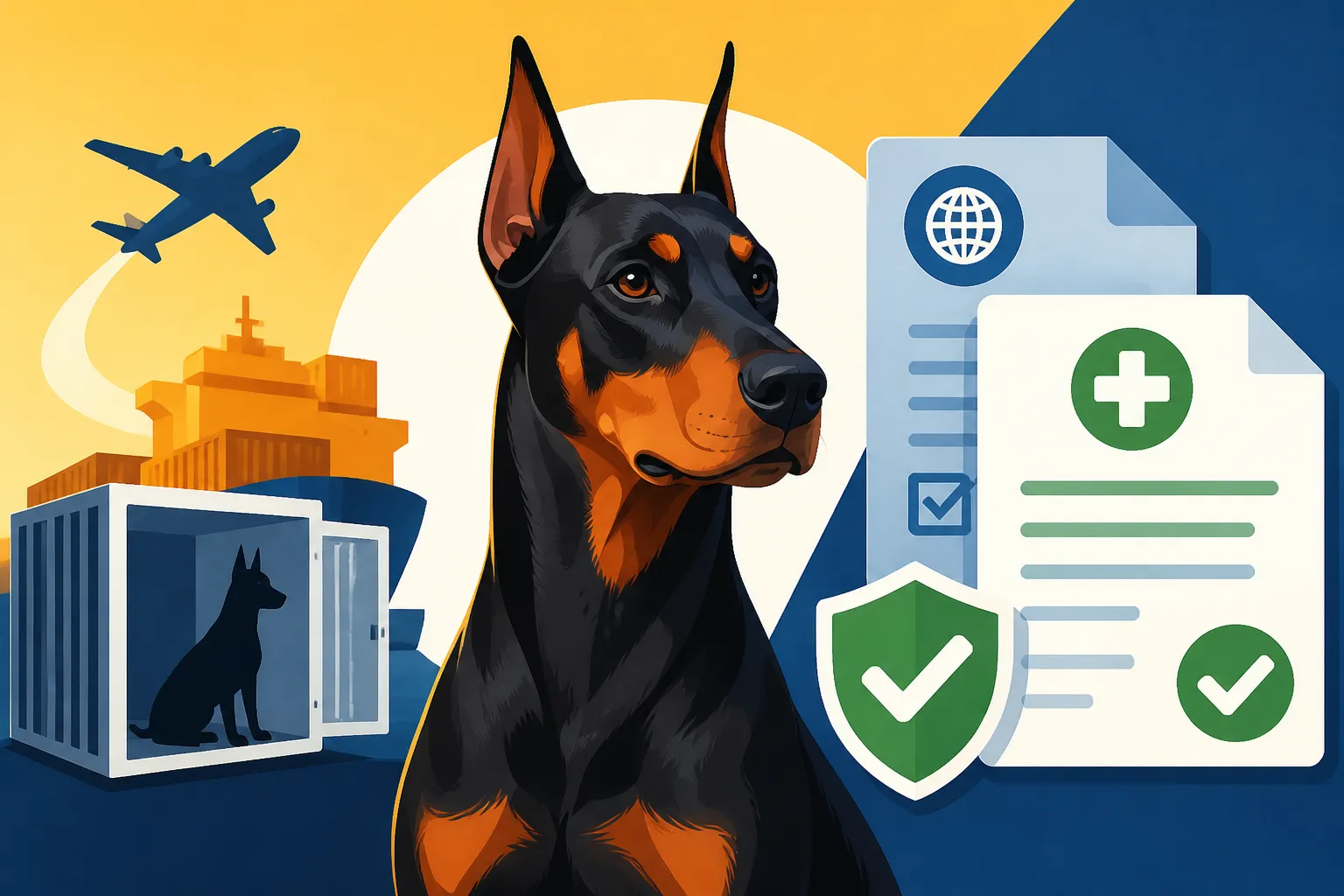
- International Health Certificate: This is one of the most critical documents. It's issued by a licensed veterinarian in the exporting country, certifying that your Doberman is healthy and free from contagious diseases, is fit to travel, and meets all U.S. import requirements. This certificate often needs to be issued within a specific timeframe (e.g., 10 days) of travel and may require endorsement by a government veterinarian in the exporting country.
Understanding USDA and CDC Requirements for Doberman Imports
Once you've navigated the export country's requirements, you'll turn your attention to the United States' regulations. The two main federal agencies involved are the U.S. Department of Agriculture (USDA) Animal and Plant Health Inspection Service (APHIS) and the Centers for Disease Control and Prevention (CDC). Their primary goal is to prevent the introduction of foreign animal diseases and public health threats. It's a complex system, and missing even one detail can lead to your Doberman being denied entry, quarantined, or sent back. Many people find the sheer volume of information daunting, but taking it piece by piece is key.
Health Certificates and Veterinary Endorsements
The international health certificate you received from the exporting country's vet isn't enough on its own. It needs to align with specific U.S. requirements. For dogs entering the U.S. from countries NOT considered high-risk for rabies, the process is generally smoother. The health certificate, often an APHIS Form 7001 or an equivalent international health certificate, must be completed and signed by a licensed veterinarian in the exporting country. Crucially, it must then be endorsed by the official government veterinarian of the exporting country (e.g., the Ministry of Agriculture). This endorsement verifies that the veterinarian who signed the certificate is indeed licensed and that the information is accurate and meets international standards. This step is often overlooked by first-time importers and can be a major hang-up.
This endorsed health certificate must:
- Identify the animal clearly (breed, age, sex, microchip number).
- State that the animal has been inspected and found free of any clinical signs of infectious or contagious diseases.
- Confirm the rabies vaccination status, including the date of vaccination, vaccine product name, and serial number.
- Be issued within 10 days of the animal's arrival in the United States.
It's paramount to ensure all dates are correct and legible. An expired health certificate or one with even a minor transcription error can lead to problems. Consider making multiple copies of everything and carrying them in a dedicated folder, perhaps even a sturdy one from Chewy, so you have backups.
Rabies Vaccination and Microchipping Mandates
The CDC has strict requirements for rabies vaccination and microchipping, which are critical for preventing the spread of rabies. These are not optional.
-
Rabies Vaccination: As mentioned, your Doberman must have been vaccinated against rabies.
- The vaccine must be administered by a licensed veterinarian.
- The dog must be at least 12 weeks old at the time of primary vaccination.
- For a first-time vaccination, it must be given at least 28 days before the dog's arrival in the U.S.
- If it's a booster, it must have been given before the previous vaccine expired.
- Documentation must include the date of vaccination, product name, serial number, and the administering veterinarian's information.
- For dogs coming from countries designated as high-risk for rabies by the CDC, the requirements are even more stringent, often including a rabies serologic titer test (RNATT) performed at an approved laboratory. Always check the latest CDC guidance, as the list of high-risk countries can change.
-
Microchipping: Your Doberman must be permanently identified with an ISO-compliant microchip. This microchip needs to be implanted before the rabies vaccine is administered for the vaccine to be considered valid for international travel. This sequential order is critical, as the microchip links the dog directly to its vaccination record.
- The microchip number must be correctly recorded on all health certificates and vaccination records.
- It's a good idea to have the breeder or vet check the microchip before travel to ensure it's readable.
If these mandates aren't met, your Doberman could face immediate refusal of entry, or in some cases, a costly quarantine period at your expense. Many a Doberman owner has faced significant stress due to incorrect rabies documentation or an improperly timed microchip.
Customs Clearance and Border Patrol for Your Doberman
The moment of truth arrives at the port of entry in the United States. This stage is where all your diligent preparation, or lack thereof, comes to light. Customs and Border Protection (CBP) officers and potentially USDA veterinarians will review all your documentation. It’s not just about having the papers; it’s about having them organized, correct, and readily available. The process can be stressful, both for you and for your Doberman, who will likely be tired and anxious after a long flight.
Preparing for Inspection at the Port of Entry
Before your flight even lands, ensure you have all your Doberman’s documents in a single, easily accessible folder. I always recommend a physical copy of everything, even if you have digital versions. You'll need:
- Original International Health Certificate: Endorsed by the exporting country’s government vet.
- Original Rabies Vaccination Certificate: Clearly stating the microchip number, vaccine details, and validity.
- Proof of Microchip: This is often included on the health certificate, but a separate document showing the microchip implantation date is helpful.
- Any other supporting documents: Pedigree, ownership papers, import permits if required for specific breeds or circumstances.
Upon arrival, you will typically clear customs first. Inform the CBP officer that you are traveling with a live animal. They will likely direct you to an area where your Doberman can be inspected. This inspection usually involves:
- Visual Check: The officer will observe your Doberman for signs of illness, distress, or unusual behavior. They'll confirm the breed and general appearance match the documentation.
- Microchip Scan: The officer will use a scanner to verify your Doberman's microchip number matches the paperwork. This is a crucial step to ensure the dog is indeed the one described in the documents.
- Document Review: Every piece of paper you have will be scrutinized for accuracy, correct dates, and proper endorsements.
Be prepared to answer questions about your Doberman’s origin, health, and travel history. Remain calm and polite, even if you’re exhausted. Your demeanor can often influence the smoothness of the process.
Potential Delays and Contingency Planning
Despite your best efforts, delays can happen. These might stem from:
- Paperwork Issues: A missing signature, an incorrect date, a document that's expired, or a microchip that can't be read. Even a minor discrepancy can hold things up. This is a common frustration for many, making it critical to double-check everything before travel, and even have your breeder triple-check.
- Customs Volume: High traffic at the airport can mean longer waiting times for inspection.
- Veterinary Availability: If a USDA vet needs to be involved for a more thorough inspection, their availability can cause delays, especially outside of regular business hours.
- Flight Delays/Cancellations: These can impact the validity window of your health certificate or lead to missed connections.
Having a contingency plan is wise.
- Emergency Contact Information: Keep contact numbers for your breeder, their vet, and any export agent readily available.
- Local Vet Contact: Have the number of a local, welcoming vet near your port of entry, just in case any immediate health concerns arise or an unexpected issue requires a local veterinary opinion.
- Pet-Friendly Accommodation: Research pet-friendly hotels near the airport in case an overnight stay becomes necessary.
- Financial Buffer: Unexpected costs, such as additional vet fees or rebooking flights, can add up quickly. Having funds set aside for these possibilities will reduce stress.
Remember, patience is key. The authorities are doing their job to protect animal and public health. Your cooperation will make the process as smooth as possible. For those thinking about Importing a European Doberman and What It Adds, being prepared for these eventualities is part of the package.
Post-Arrival Documentation and State-Specific Rules
Congratulations, you've made it through customs! Your Doberman is officially on U.S. soil. But the journey isn't quite over. There are still a few crucial steps to take to ensure your Doberman is properly settled and legally recognized in its new home. Many new owners breathe a sigh of relief after customs, only to forget that local regulations still apply.
Local Registration and Veterinary Follow-Ups
Once your Doberman is home, one of your first tasks should be to establish care with a local veterinarian. Even if your Doberman appears perfectly healthy, a post-travel check-up is always a good idea. The vet can address any travel stress, perform a general health check, and confirm all vaccinations are up to date for local requirements. This is also a good time to discuss an appropriate diet, perhaps considering options like Ollie, and ongoing care specific to Dobermans, such as heart screening, which is paramount given topics like The Heart Disease That Reaches Most Dobermans.
Your local vet will also be able to help you with:
- Local Licensing and Registration: Most cities and counties require dogs to be licensed, and often this requires proof of current rabies vaccination. Be sure to register your Doberman promptly to avoid fines.
- Microchip Registration: While your Doberman already has a microchip, it's vital to register it with an American microchip registry service and ensure your contact information is current. This is your best chance of being reunited if your Doberman ever gets lost.
- Ongoing Preventative Care: Discuss a schedule for parasite prevention (heartworm, fleas, ticks) and routine check-ups.
Long-Term Health Records Management
Dobermans, unfortunately, are predisposed to certain health conditions that require lifelong monitoring and detailed record-keeping. Diligent record management is not just for emergencies; it's a critical part of being a responsible Doberman owner. Consider a dedicated binder or a digital folder for all your Doberman’s health information, including:
- Import Documents: Keep all the customs and health papers from the import process. These prove legal entry and can be requested in various situations.
- Veterinary Records: All vet visits, vaccination certificates, lab results, and medication histories. This includes any breed-specific tests like those for The Two Doberman DCM Gene Tests or The Von Willebrand DNA Test for Dobermans.
- Breeder Health Clearances: Copies of the health clearances for your Doberman's parents, particularly for conditions prevalent in the breed.
- Insurance Information: If you've enrolled your Doberman in pet insurance, keep all policy details accessible. Companies like Healthy Paws can offer peace of mind, but understanding your policy and what it covers for a breed with specific health needs is crucial.
Here's a handy table summarizing key documents for Doberman import:
| Document Type | Issuing Authority/Purpose | When Needed | Key Details |
|---|---|---|---|
| Microchip Certificate | Licensed Veterinarian in Exporting Country | Before Rabies Vaccination | ISO-compliant, implant date, chip number |
| Rabies Vaccination Record | Licensed Veterinarian in Exporting Country | At least 28 days before entry (initial vaccine) | Date, vaccine name, serial number, vet signature, microchip number |
| International Health Cert. | Licensed Veterinarian in Exporting Country | Within 10 days of travel | Confirms health, fitness for travel, microchip, rabies info |
| Government Endorsement | Official Gov. Vet in Exporting Country (APHIS) | After vet signs health cert, before travel | Verifies vet licensure & document accuracy |
| Flight Manifest/Booking | Airline | Booking & Travel Day | Proof of travel arrangements, animal cargo details |
| Pedigree/Registration | Kennel Club in Exporting Country | Ownership transfer & post-arrival registration | Lineage, proof of breed, often needed for Registering an Imported Doberman in America |
| Import Permit (if applicable) | USDA/APHIS or specific state requirements | Prior to travel | Required for certain scenarios or breeds, always check specific state laws |
Establishing this system early will save you headaches down the line and ensure you always have a complete picture of your Doberman's health journey. This organized approach can be a lifesaver, especially if your Doberman develops an unforeseen issue, such as those discussed in Why a Doberman Heart Fails Before Anyone Notices. Your Doberman's long-term health and well-being largely depend on your vigilance and commitment to record-keeping.
Disclaimer
The information provided in this article is intended for general guidance only and does not constitute legal or veterinary advice. Import regulations for live animals are subject to change and can vary based on your specific country of export, U.S. port of entry, and individual state requirements. Always consult the official websites of the USDA (APHIS) and CDC, as well as a qualified international pet transport specialist or veterinarian, for the most current and accurate information pertaining to your specific situation.