Reading a Doberman’s Holter Result
Bringing home a Doberman is an incredible experience, but it also comes with a unique set of worries, especially when it comes to their heart health. If you've just put your Dobe through a 24-hour Holter monitor test, the results can feel like a confusing string of numbers and medical jargon, leaving you anxious about what it all means for your beloved companion. This guide is here to demystify those Holter results, helping you understand the crucial information they provide about your Doberman's cardiac well-being.
Understanding the Holter Monitor for Dobermans
For any Doberman owner, the phrase "heart health" carries a heavy weight. We all know the breed's unfortunate predisposition to Dilated Cardiomyopathy (DCM), a devastating disease where the heart becomes enlarged and weakened, unable to pump blood effectively. It’s a silent thief, often progressing without outward symptoms until it’s too late. This is exactly why the Holter monitor has become such a critical tool in our arsenal.
What is a Holter Monitor and Why It's Crucial?
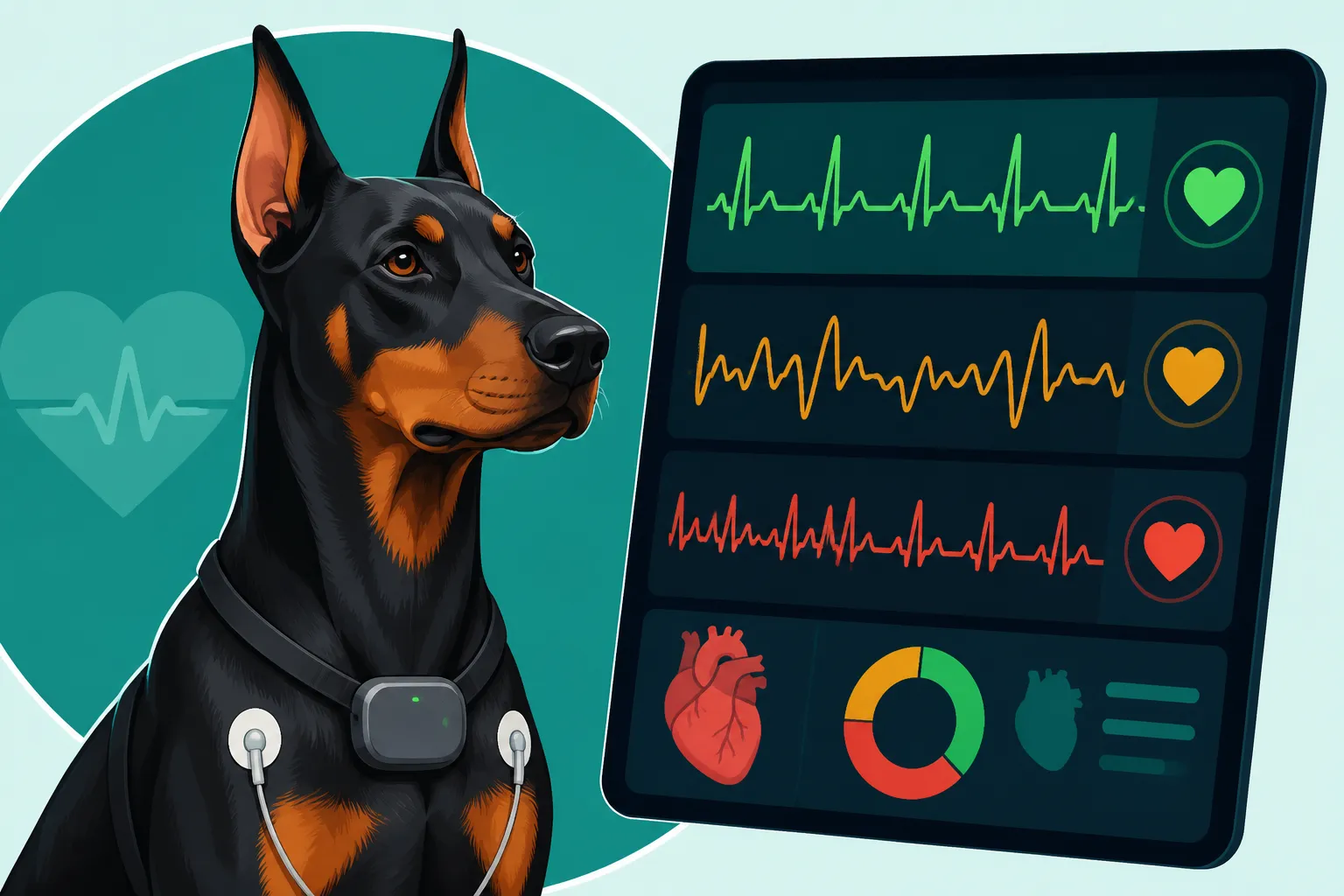
A Holter monitor isn't some fancy, invasive procedure; it's simply a portable electrocardiogram (ECG) device that continuously records your dog's heart activity for an extended period, usually 24 hours. Think of it as a tiny, wearable heart detective. Your Doberman wears a vest with electrodes attached to their chest, which connect to a small recording device. They go about their normal daily life – walking, eating, sleeping, playing – while the Holter quietly records every single heartbeat.
The frustration many of us feel is the sheer necessity of this test. Why can't a regular vet check-up or a simple stethoscope listen be enough? The truth is, DCM in its early, "occult" phase, doesn't always show up on a standard exam. The arrhythmias (irregular heartbeats) that often signal the onset of DCM are frequently intermittent. Your Doberman might have a perfectly normal ECG reading during a 10-minute vet visit, but those problematic beats could be occurring later that day, during a vigorous walk, or even while they're sleeping. This is why annual echo and Holter screening for a Doberman is so incredibly important; it captures the whole picture, not just a snapshot.
The Doberman's Unique Predisposition to DCM
It’s not paranoia that drives Doberman owners to such lengths for heart screening; it’s a grim reality. DCM is the heart disease that reaches most Dobermans, making them one of the most susceptible breeds. Current estimates suggest that up to 50% or more of Dobermans will develop DCM in their lifetime. This high prevalence is why comprehensive screening is so vital. We're not just looking for a slight abnormality; we're actively searching for signs of a pervasive breed-specific issue. Many dedicated Doberman breeders conduct extensive health testing to try and mitigate this risk, but even with the best genetics, vigilance is key.
The insidious nature of DCM means that it often progresses silently, with the heart gradually weakening without obvious clinical signs. This period is often referred to as the occult phase, which can last for several years. During this time, the only indication of the disease might be subtle electrical abnormalities in the heart, precisely what the Holter monitor is designed to detect. Understanding the silent years before a Doberman's heart shows symptoms is paramount for early intervention.
What Information the Holter Captures
The Holter monitor creates a detailed, minute-by-minute log of your Doberman's heart rhythm and rate. It's looking for any deviations from the normal electrical activity of the heart. Specifically, it focuses on:
- Heart Rate: How fast or slow the heart beats throughout the day and night, including during activity and rest.
- Heart Rhythm: Whether the beats are regular or irregular.
- Arrhythmias (Irregularities): The presence, type, frequency, and severity of any abnormal heartbeats.
- Conduction Abnormalities: Problems with the electrical pathways that tell the heart when to contract.
By gathering this extensive data, the Holter provides a roadmap of your Doberman's heart electrical activity. This allows the veterinary cardiologist to identify patterns that might indicate occult DCM or other cardiac issues long before a Doberman heart fails before anyone notices. It's truly a proactive diagnostic tool that gives us a fighting chance against this disease.
Decoding the Numbers: What Do the ARVs and VPCs Mean?
When your vet or cardiologist reviews the Holter data, they’ll be looking for specific types of abnormal beats. The most common and clinically significant for Dobermans are ventricular premature complexes (VPCs), also known as ventricular premature beats (VPBs). You might also hear about atrial premature complexes (APCs) or atrial premature beats (APBs). These are the numbers that often cause the most anxiety for Doberman owners.
Defining Atrial Premature Complexes (APCs) and Ventricular Premature Complexes (VPCs)
Let's break down these intimidating terms:
- Atrial Premature Complexes (APCs) / Atrial Premature Beats (APBs): These are extra heartbeats that originate in the atria, the upper chambers of the heart, before the next normal heartbeat is due. While they indicate some electrical instability, they are generally considered less serious in Dobermans than VPCs when it comes to DCM, especially if they are infrequent. However, a high number of APCs or complex atrial arrhythmias can still be a concern and warrant further investigation, sometimes indicating other underlying heart conditions or even an early sign that the heart is stressed.
- Ventricular Premature Complexes (VPCs) / Ventricular Premature Beats (VPBs): These are extra heartbeats that originate in the ventricles, the lower chambers of the heart, before the next normal heartbeat. For Dobermans, VPCs are the red flag. They are the most common arrhythmia associated with DCM, especially in the occult phase. These beats essentially disrupt the heart's normal rhythm and, if frequent or complex, can reduce the heart's efficiency. The presence and number of VPCs are often the primary metrics used to assess the likelihood of a Doberman developing clinical DCM.
When you receive your Doberman's Holter report, it will typically list the total number of APCs and VPCs detected over the 24-hour period. It might also specify whether these beats occurred individually or in "runs."
Normal vs. Abnormal Ranges for Dobermans
This is where things get really crucial, and often, the most confusing for owners. What constitutes a "normal" or "acceptable" number of VPCs? It's not a hard and fast rule, but there are generally accepted guidelines for Dobermans, informed by extensive research and the breed's specific risk profile.
Most veterinary cardiologists consider the following:
- < 50 VPCs in 24 hours: Generally considered normal or benign. While no Doberman with a healthy heart should have any VPCs, a very small number can sometimes be found in otherwise healthy, active dogs, perhaps due to stress or excitement during the monitoring period. If an echo is normal, this count is often monitored annually.
- 50-100 VPCs in 24 hours: This is often considered a "gray area." It might be a mild abnormality, especially if the echocardiogram (ultrasound of the heart) is still completely normal. Many cardiologists will recommend a repeat Holter in 6-12 months and continued annual screening. It’s a call to heightened vigilance.
- > 100 VPCs in 24 hours: This is typically considered abnormal and highly suggestive of occult DCM, even if the echocardiogram shows no structural changes yet. A count this high often prompts the cardiologist to recommend starting medication, such as Pimobendan before a Doberman shows signs, to help support heart function and potentially delay the progression to overt heart failure.
It’s important to remember that these are guidelines. A dog with 90 VPCs might still be concerning if other factors are present, while a dog with 110 VPCs might be less alarming if they are all single, isolated beats and the echo is pristine. This is why interpreting the results always requires a board-certified veterinary cardiologist, who can consider the full clinical picture. If you're wondering how many abnormal beats worry a Doberman cardiologist, a good rule of thumb is that over 100 is almost always a cause for concern, but even lower numbers warrant follow-up.
Here's a simplified table to help visualize these ranges for Dobermans:
| 24-Hour VPC Count | General Interpretation for Dobermans | Recommended Action (Consult Cardiologist) |
|---|---|---|
| < 50 | Typically Normal/Benign | Continue annual screening (Holter & Echo) |
| 50-100 | Gray Area / Mild Abnormality | Repeat Holter in 6-12 months, annual echo |
| > 100 | Highly Suggestive of Occult DCM | Consider medication (e.g., Pimobendan), close monitoring |
| Runs of VPCs | Always Concerning | Further investigation, likely medication |
How These Numbers Indicate Potential DCM
The presence of frequent or complex VPCs is a strong indicator of electrical instability in the heart muscle. In Dobermans, this instability is often an early manifestation of DCM. Even before the heart walls begin to thin or the chambers enlarge (changes seen on an echocardiogram), the electrical system can start to misfire, producing these premature beats.
Think of it like this: the heart muscle is gradually losing its integrity. As individual heart muscle cells (myocytes) become diseased and die, the remaining healthy cells become "irritable" or dysfunctional, leading to abnormal electrical impulses. These impulses create the VPCs. The more frequent these misfires, the more diseased the heart muscle is likely to be. Therefore, a rising trend in VPC counts over successive Holter tests, even if the echo remains normal, is a significant warning sign that the Doberman years when everything shows up might be approaching, and that the heart is indeed beginning its silent decline. This is why proactive monitoring and understanding what a Doberman echo actually measures are so crucial.
Beyond the Raw Count: Interpreting Complex Arrhythmias
While the total number of VPCs is a primary focus, a cardiologist doesn't stop there. The type and pattern of arrhythmias are just as, if not more, important. A few hundred isolated VPCs might be less concerning than a handful of "runs" of VPCs or other complex arrhythmias, which indicate a much higher degree of electrical instability.
Ventricular Tachycardia V-Tach and its Significance
Ventricular Tachycardia, often abbreviated as V-Tach, is a rapid heart rhythm that originates in the ventricles. It occurs when a series of three or more consecutive VPCs happen in a row. This isn't just a few extra beats; it's a sustained, abnormal rhythm that can be extremely dangerous.
- Significance: V-Tach is a major red flag. If your Doberman's Holter report shows episodes of V-Tach, it indicates a significantly advanced stage of electrical instability, even if the heart itself hasn't visibly enlarged on an echocardiogram yet. During V-Tach, the heart beats so quickly and inefficiently that it can't adequately fill with blood between beats, leading to a drop in blood pressure and reduced blood flow to vital organs. This can cause weakness, collapse, or even sudden death in a young Doberman. The presence of V-Tach almost always warrants immediate intervention with antiarrhythmic medication.
Runs of VPCs Couplets, Triplets, Salvos and R-on-T Phenomena
Beyond single VPCs, the way these abnormal beats group together provides critical information about the severity of the heart's electrical dysfunction.
- Couplets: Two VPCs occurring consecutively.
- Triplets: Three VPCs occurring consecutively (this is technically V-Tach, but sometimes singled out if short).
- Salvos (or non-sustained V-Tach): Four or more VPCs occurring consecutively, but stopping on their own within a few seconds.
The more VPCs that occur in a row, the more unstable the heart's electrical system is. These "runs" are far more concerning than an equal number of isolated VPCs because they show a tendency for the heart to enter a sustained abnormal rhythm. The longer the run, the higher the risk.
- R-on-T Phenomenon: This refers to a VPC that occurs very early, falling directly on or very near the T-wave of the preceding normal heartbeat. The T-wave represents the repolarization (recharging) phase of the heart's electrical cycle, a vulnerable period. If an abnormal electrical impulse hits during this time, it can trigger more dangerous arrhythmias, including potentially life-threatening ventricular fibrillation. While less common, detecting an R-on-T phenomenon on a Holter is a serious finding.
Any of these complex arrhythmias, even if the total VPC count isn't astronomically high, can indicate significant underlying DCM and necessitate immediate attention from your cardiologist. They are often a sign that the heart's electrical system is truly struggling.
Atrial Fibrillation AFib and Other Supraventricular Arrhythmias
While VPCs and V-Tach are most commonly associated with DCM in Dobermans, the Holter can also detect other types of arrhythmias originating from the upper chambers (atria) or the junction between the atria and ventricles.
- Atrial Fibrillation (AFib): This is a chaotic, rapid, and irregular electrical activity in the atria, causing them to quiver rather than contract effectively. It can lead to an irregularly irregular heartbeat and often results in a very fast heart rate. While AFib can occur on its own, it can also be a sign of advanced heart disease, including DCM, where the enlarged atria become prone to these electrical disturbances. In Dobermans, AFib can sometimes be the first overt clinical sign of a struggling heart.
- Other Supraventricular Arrhythmias: These include various other types of irregular beats originating above the ventricles, such as frequent APCs, supraventricular tachycardia, or junctional beats. Like AFib, they can indicate stress on the atria or other parts of the conduction system. While often less immediately life-threatening than V-Tach, frequent or sustained supraventricular arrhythmias still require evaluation as they can impact heart efficiency and may signify underlying issues.
Regardless of the specific type of arrhythmia, the Holter provides the cardiologist with the data needed to make informed decisions about your Doberman's care. It’s an invaluable tool for understanding the nuances of their heart health, allowing for targeted medication for a Doberman in the occult phase, or other crucial interventions.
The Importance of Context: What Else Affects the Results?
A Holter result isn't just a standalone report. Its interpretation is always done within the broader context of your Doberman's overall health, activity levels during the monitoring period, and other diagnostic findings. Understanding these factors is key to getting an accurate assessment.
Activity Levels During Monitoring
One of the beauties of the Holter monitor is that it captures heart activity during normal daily life. However, this also means that your Doberman's activity level during the 24 hours can influence the results.
- High Activity: If your Doberman had a particularly energetic day – chasing squirrels in the yard, playing fetch for hours, or having an exciting visit to the dog park – their heart rate would naturally be elevated, and they might show a slightly higher number of normal physiological beats. In some cases, stress or intense exercise can also trigger occasional VPCs in otherwise healthy dogs, or exacerbate existing mild arrhythmias.
- Low Activity: Conversely, a very sedentary day, perhaps due to bad weather or a quiet household, might yield lower heart rates and potentially fewer arrhythmias if they are mostly exercise-induced.
This is why your cardiologist will often ask you to keep a detailed log of your Doberman's activities during the Holter period. This log helps them correlate specific heart events with what your dog was doing at the time. For example, if a cluster of VPCs coincided with a strenuous run, it provides context. While a healthy Doberman's heart shouldn't produce large numbers of VPCs even under exertion, understanding the activity level helps interpret any marginal results.
Medication Influence
If your Doberman is already on any medication, especially those that affect heart rate or rhythm, this will significantly impact the Holter results.
- Heart Medications: If your Doberman has previously been diagnosed with some form of cardiac issue and is on drugs like beta-blockers, calcium channel blockers, or antiarrhythmics, these medications are designed to reduce arrhythmias or control heart rate. A Holter performed while on these drugs would show the effectiveness of the medication, rather than the true baseline severity of the arrhythmias.
- Other Medications: Even non-cardiac medications can sometimes have an effect on heart rhythm, though this is less common.
It's crucial to provide your veterinarian and cardiologist with a complete list of all medications, supplements, and even flea/tick preventatives your Doberman is taking. This allows them to properly interpret the results and determine if medication adjustments are needed or if the test needs to be repeated after a "wash-out" period for certain drugs.
Combining Holter Results with Echocardiogram Findings
The Holter monitor and an echocardiogram are like two sides of the same coin when it comes to Doberman heart health, especially with DCM. They provide complementary information that gives the most complete picture.
- Holter (Electrical): Primarily assesses the electrical activity of the heart, detecting arrhythmias.
- Echocardiogram (Structural/Functional): An ultrasound of the heart that assesses its physical structure, size of the chambers, thickness of the walls, and how well it's pumping. This is how a Doberman heart enlarges before symptoms are visible.
A comprehensive cardiac evaluation for a Doberman almost always involves both tests annually.
- Normal Echo, Abnormal Holter: This is a classic presentation of occult (hidden) DCM in Dobermans. The heart structure might still look normal, but the electrical instability (high VPCs) indicates the disease process has begun. This is often the stage where early intervention with medication like Vetmedin (Pimobendan) is recommended to delay progression.
- Abnormal Echo, Abnormal Holter: This indicates more advanced DCM, with both structural changes and electrical abnormalities present.
- Normal Echo, Normal Holter: This is the ideal scenario, indicating no current evidence of DCM. However, because DCM can develop rapidly, one clear echo is not enough for a Doberman, and annual screening is still recommended.
For an in-depth understanding of how these tests work together, you might want to read more about the two Doberman DCM gene tests and how they relate to screening, or learn about the overall Doberman lifespan and why it is short compared to many other breeds.
The Doberman's Age and Clinical Signs
Finally, your Doberman's age and any clinical signs they might be exhibiting are vital contextual factors.
- Age: DCM typically manifests in Dobermans between 4 and 8 years of age, though it can occur earlier or later. The age Doberman heart disease usually starts is an important consideration. A high VPC count in a 3-year-old Doberman might be more alarming than in an older dog if other conditions are ruled out, simply because it suggests an early onset. Similarly, screening an older Doberman more often is a prudent approach as they age.
- Clinical Signs: Has your Doberman been coughing and breathless in a Doberman? Have they been fainting on a walk, or perhaps just tiring faster than it used to? These symptoms, even subtle ones, dramatically change the interpretation of a Holter result. Even a moderate number of VPCs might be considered more serious if the dog is showing signs of heart failure (like fluid on a Doberman's lungs), whereas the same count in an asymptomatic dog might warrant a watchful waiting approach.
A good veterinary cardiologist will synthesize all this information – the Holter data, echo findings, clinical history, and age – to provide the most accurate diagnosis and treatment plan for your beloved Doberman. Insurance providers like Healthy Paws are increasingly understanding the importance of these routine screenings for breeds like Dobermans, often covering aspects of diagnostic tests when a veterinarian deems them medically necessary.
What Happens After the Result? Next Steps and Management
Receiving the Holter results can be a moment of profound relief or significant anxiety. Regardless of the outcome, understanding the next steps and long-term management is crucial for every Doberman owner. The journey doesn't end with the report; it's often just beginning.
When to Re-Holter
The frequency of repeat Holter monitoring depends largely on the initial results and your Doberman's overall health.
- Normal Results (Fewer than 50 VPCs): If your Doberman has a completely normal Holter and echocardiogram, annual screening is generally recommended. This proactive approach helps catch the disease early if it develops, as Dobermans can transition from normal to occult DCM surprisingly quickly.
- Gray Area Results (50-100 VPCs): For Dobermans in this "gray area" with no other clinical signs or echo abnormalities, your cardiologist might recommend a repeat Holter in 6-12 months. This helps establish a trend and determine if the VPC count is stable, decreasing, or increasing. An increase would indicate progression and likely prompt further action.
- Abnormal Results (More than 100 VPCs or complex arrhythmias): If your Doberman has significant arrhythmias, repeat Holter monitoring will be more frequent, often every 3-6 months. This allows the cardiologist to monitor the effectiveness of any medication prescribed and adjust dosages as needed. It also tracks disease progression, informing decisions on when to escalate treatment or simply monitor more closely.
It’s an ongoing commitment, but it’s a small price to pay for potentially extending the happy years with your Doberman. Pet insurance plans, such as those offered by Healthy Paws, can be invaluable for helping manage the recurring costs of these specialized cardiac tests and treatments over your Doberman's lifetime.
Treatment Options Based on Findings
Treatment for arrhythmias detected by a Holter monitor is highly individualized and depends entirely on the type, frequency, and severity of the abnormal beats, as well as the presence of any structural heart disease.
- No Treatment (Monitoring Only): For Dobermans with very low VPC counts (e.g., <50) and no other signs of heart disease, the recommendation might simply be continued annual monitoring.
- Pimobendan: This is a cornerstone medication for Dobermans with occult DCM. Studies have shown that starting Pimobendan before a Doberman shows signs can significantly delay the onset of overt heart failure and extend their lifespan. It works by improving the heart's pumping ability and dilating blood vessels. Your cardiologist will likely consider this medication if your Doberman has more than 100-200 VPCs, even without structural changes.
- Antiarrhythmic Drugs: If your Doberman is experiencing frequent or complex arrhythmias (like V-Tach), your cardiologist might prescribe antiarrhythmic medications to stabilize the heart's electrical rhythm. Common drugs include sotalol, mexiletine, or amiodarone. These medications aim to reduce the number of dangerous VPCs and prevent life-threatening events. Finding the right medication for a Doberman in the occult phase can take some trial and error, as dogs respond differently.
- Diuretics: If the heart disease has progressed to heart failure and there is fluid accumulation (e.g., fluid on a Doberman's lungs), diuretics are used to help remove excess fluid from the body, improving breathing and comfort.
- Other Adjunctive Therapies: Depending on the individual case, other medications like ACE inhibitors (e.g., enalapril, benazepril) may be added to help manage blood pressure and reduce the workload on the heart. Dietary modifications, such as low-sodium diets, might also be recommended. Some owners also explore supplements like Taurine and Carnitine for a Doberman heart, though their efficacy in all DCM cases is still debated and should always be discussed with your cardiologist.
Living With a Doberman Diagnosed With Arrhythmias or Occult DCM
A diagnosis of arrhythmias or occult DCM is undoubtedly heartbreaking, but it's not a death sentence. Many Dobermans can live fulfilling lives for years with proper management and dedicated care.
- Regular Veterinary and Cardiologist Visits: This becomes a lifelong commitment. Regular check-ups, often every 3-6 months, will be necessary to monitor your Doberman's condition, adjust medications, and perform repeat Holters and echocardiograms.
- Medication Adherence: It's vital to administer all prescribed medications exactly as directed, without skipping doses. These medications are crucial for managing the disease and maintaining your Doberman's quality of life.
- Monitoring at Home: You'll become your Doberman's most important observer. Pay close attention to their energy levels, breathing, appetite, and any signs of coughing or fainting. Keep a journal of their symptoms to share with your vet. Catching subtle changes early can make a big difference.
- Exercise Management: While exercise is generally good for dogs, Dobermans with heart disease may need modified activity levels. Your cardiologist will advise on appropriate exercise routines. Overexertion can sometimes trigger arrhythmias, so it's about finding a balance.
- Emotional Support: This journey can be emotionally taxing. Connect with other Doberman owners or support groups. Remember that you are doing everything you can for your dog, and focusing on their quality of life is paramount.
While the thought of "How long a Doberman lives after a DCM diagnosis" can be frightening, early detection and diligent management, often guided by Holter results, can significantly improve the prognosis and give you more precious time with your beloved companion. Many Dobermans continue to enjoy happy, active lives for years after an initial diagnosis.
Disclaimer
The information provided in this article is for educational purposes only and should not be considered a substitute for professional veterinary advice. Always consult with a qualified veterinarian or board-certified veterinary cardiologist regarding any health concerns or before making any decisions about your Doberman's medical care.