Nail Trims on a Doberman With All-Black Nails
As a Doberman owner, you've probably faced the unique challenge of those dark, strong nails. It's incredibly frustrating and even a little scary trying to trim them, constantly worrying if you're going to cut too far and hit the quick, causing pain and a bloody mess. This guide is here to walk you through everything you need to know to make nail trimming a less daunting, and hopefully, even a positive experience for both you and your Doberman.
Why Black Nails Are Such a Challenge on Dobermans
Let's be honest, those beautiful, sleek Doberman coats often come with equally sleek, but far less transparent, black nails. This isn't just an aesthetic preference; it's a real practical hurdle when it comes to routine grooming, causing anxiety for many dedicated Doberman parents. You're not alone in feeling this way; it's a very common frustration.
The Anatomy of a Doberman Nail and the Hidden Quick
Every dog nail, regardless of color, contains a "quick." This isn't just some random part of the nail; it's a delicate structure that houses blood vessels and nerves. When the quick is cut, it's painful for your dog and, yes, it bleeds—sometimes quite a bit. In dogs with clear or white nails, you can usually see this pink quick through the translucent nail, acting as a clear "stop sign" for your clippers. It makes the job so much easier, doesn't it?
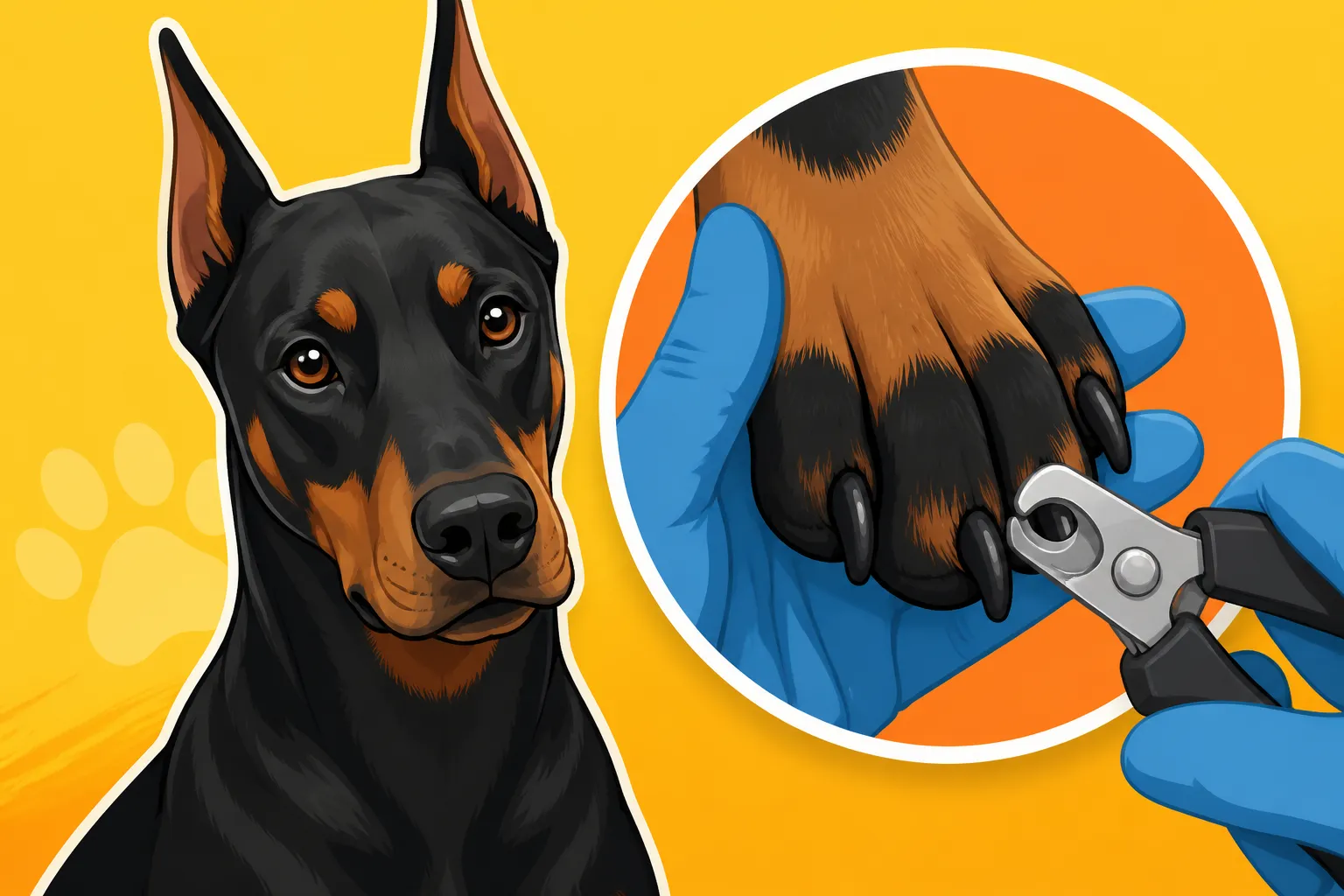
The problem with black nails, which are incredibly common in Dobermans, is that this quick is completely obscured. It's like trying to navigate a dark tunnel without a flashlight. You know the quick is there, extending a certain distance into the nail, but you can't visually pinpoint its exact location. Doberman nails are also often quite thick and dense, not thin and fragile, which means you need a good, sharp tool to cut through them cleanly, adding another layer to the challenge. The thickness can make it even harder to feel for the slight difference in texture that might hint at the quick's approach, a trick some experienced groomers use.
The Fear Factor: Why Owners Dread Trimming Black Nails
That fear of "quicking" your Doberman is very real, and it's a huge barrier for many owners. One accidental snip too close, one yelp, one gush of blood, and suddenly, a routine task becomes a dreaded ordeal. Your Doberman, being an intelligent and sensitive breed, will remember that discomfort. They might become resistant, pulling their paws away, struggling, or even vocalizing their displeasure the moment they see the clippers. This creates a negative association that can be incredibly hard to break, turning future nail trims into a wrestling match or a high-stakes guessing game.
It's completely understandable to feel anxious when you're trying to do something that could potentially hurt your beloved companion, especially when you can't even see the danger zone. This anxiety can lead to owners avoiding nail trims altogether, or only doing the bare minimum. While this seems like a temporary solution, it actually compounds the problem. When nails get too long, the quick itself grows longer, extending further down the nail. This makes it even more difficult to trim without hitting it, and if you manage to trim them short enough without quicking, you’re still not making enough progress to encourage the quick to recede. Long nails aren't just an aesthetic issue; they can impact your Doberman's gait, put strain on their joints, and even cause foot pain, which is something we definitely want to avoid for our athletic, powerful companions. It's a vicious cycle that starts with that initial fear.
Essential Tools and Setup for Stress-Free Doberman Nail Trims
Approaching nail trims with the right mindset and the proper equipment can make a world of difference. It’s not just about the act of cutting; it’s about the whole experience, from the moment you gather your supplies to the final treat. Think of it as preparing for a mini-surgery, where calm and precision are paramount, even if it's just trimming nails!
Choosing the Right Clippers or Grinder for Your Doberman
When it comes to Doberman nails, you have a couple of main choices: clippers or a grinder. Each has its pros and cons, and what works best for one Doberman might not work for another. It's often a matter of personal preference and what your dog tolerates.
Clippers: There are two main types: guillotine-style and scissor-style. Guillotine clippers are popular and work by placing the nail through a small hole and squeezing the handle to cut. Scissor-style clippers look more like a pair of pliers and are often favored for larger, thicker nails. For black nails, clippers require a very careful approach. You'll need to take off very small slivers at a time, looking at the cut surface for clues about the quick's location. A sharp, high-quality clipper is essential. Dull clippers can crush the nail, causing pain and splintering, which is the last thing you want when you’re already trying to avoid the quick. You can find excellent quality clippers from brands available on Chewy or Amazon that cater to large breeds.
Grinders: Many Doberman owners find a dremel-style nail grinder to be a game-changer, especially for black nails. Grinders use a rotating abrasive bit to file the nail down. The key advantage here is control. Instead of a single, decisive cut, you remove tiny amounts of nail material gradually. This allows you to stop the moment you see the first hint of the quick, which appears as a small, dark, often moist dot in the center of the nail, sometimes called the "powdered donut" effect. Grinders also smooth the nail edge, preventing sharp edges that can scratch floors or people. While the noise and vibration can be a concern for some dogs, many adapt well to the grinder, especially with proper desensitization. The more powerful grinders tend to work more efficiently, reducing the time you need to spend on each nail.
| Tool Type | Pros for Black Nails | Cons for Black Nails |
|---|---|---|
| Scissor Clippers | Precise, quick if done correctly, quiet | Hard to see quick, risk of crushing, requires confidence |
| Guillotine Clippers | Easy to use for quick trims, widely available | Can be difficult for thick nails, can crush if dull |
| Nail Grinder | Gradual removal, easy to see quick approaching, smooth finish | Noise/vibration can scare dogs, takes longer per nail, heat build-up |
Creating a Calm Environment and Gathering Your Supplies
Before you even think about touching your Doberman's paws, set the stage for success. A calm environment is crucial, especially if your dog already has reservations about nail trims. Choose a quiet time when there aren't many distractions, like other pets, noisy children, or the doorbell ringing. Make sure the area is well-lit so you can clearly see what you're doing, perhaps even with a headlamp for extra visibility if you're using clippers.
Gather all your supplies before you start. There's nothing worse than getting halfway through a trim and realizing you forgot the styptic powder or the treats. Here’s a checklist:
- Clippers or Grinder: Freshly sharpened or fully charged.
- Styptic Powder: This is absolutely non-negotiable. If you accidentally quick your Doberman, this powder will quickly stop the bleeding. Keep it within arm's reach.
- High-Value Treats: These are your secret weapon. Think chicken, cheese, or even something like Ollie dog food rolls cut into tiny pieces. Something your Doberman adores and rarely gets.
- Towel or Mat: Something for your Doberman to stand or lie on that provides good grip and comfort.
- Good Lighting: As mentioned, clear visibility is key.
- Patience and a Positive Attitude: This might be the most important "supply" of all. Your Doberman will pick up on your stress, so try to remain calm and reassuring.
Starting with a calm dog in a calm environment is half the battle won. If your Doberman is already agitated, it’s best to postpone the session and work on desensitization another time. Remember, the goal is not just trimmed nails, but a positive experience that builds trust and reduces fear for future sessions.
Step-by-Step Guide to Trimming Black Doberman Nails Safely
Now that you've got your tools and your Zen space, it's time to talk technique. The key with black nails is a slow, steady, and confidence-building approach. Rushing things will only lead to mistakes and further reinforce any anxieties your Doberman might have.
Gradual Desensitization and Positive Reinforcement
If your Doberman isn't keen on having their paws handled, or if they've had a bad experience, you need to start with desensitization. This is about slowly introducing them to the tools and the process in a positive way, often long before you even attempt a trim. This can be a multi-day or even multi-week process, so don't rush it.
Start by simply touching your Doberman's paws gently, rewarding them with treats and praise. Don't even bring out the clippers or grinder yet. Just make paw handling a pleasant thing. Once they're comfortable with that, introduce the tools. Let them see and sniff the clippers or grinder. Turn the grinder on briefly, far away from them, and immediately give a treat. Repeat this, gradually moving closer. The goal is to associate the sight and sound of the tools with something good.
Next, hold the clippers or grinder near a paw, but don't touch the nail. Treat. Touch a single nail briefly with the tool, then immediately treat and praise. Do this for a few seconds at a time, several times a day, always ending on a positive note. You might only work on one nail, or even just one paw, in an entire session. The progress might seem slow, but it's building a foundation of trust. For more general guidance on gentle handling and building positive associations, you might find tips in Doberman Puppy Biting and Adolescent Mouthing, as the principles of positive reinforcement and gradual exposure are very similar. Remember to use those high-value treats to make every step rewarding.
The "Dust, Dust, Stop" Method for Black Nails
This method is specifically designed for black nails and emphasizes taking off very small amounts at a time. It’s all about looking for subtle changes on the cut surface that indicate you’re nearing the quick.
- Positioning: Have your Doberman in a comfortable position, either standing, sitting, or lying down, whatever works best for both of you. You might hold them gently in your lap or have them lay on a rug. Some Dobermans do better standing, allowing you to lift each paw quickly.
- Angle: Doberman nails naturally grow forward and slightly downward. You want to trim at a 45-degree angle, following the natural curve of the nail.
- Small Increments: Whether you're using clippers or a grinder, take off only a tiny bit of the nail at a time. Seriously, think dust-like amounts if you're grinding, or thin slivers if you're clipping.
- Observe the Cross-Section: After each tiny cut or grind, look closely at the freshly exposed cross-section of the nail.
- Initially, you'll see a white or grayish outer ring with a solid black or gray center. This is the dead nail material. Keep going.
- As you get closer to the quick, the black center will start to change. It might become slightly more oval, and you'll often see a small, lighter gray or pinkish-gray dot appear in the very center, surrounded by the black. This is your "powdered donut" or "bullseye" sign.
- STOP IMMEDIATELY when you see this change. This indicates you are just at the quick, or a hair's breadth away. Going further will likely hit it.
If you accidentally nick the quick, don't panic. It happens to even the most experienced groomers. Immediately apply styptic powder with firm pressure for a few seconds. Stay calm and reassure your Doberman with a soothing voice. Don't make a big fuss, as that can heighten their anxiety. Give a treat and end the session on a positive note if possible, or move to a paw that doesn't need much trimming. Remember, even if you quick them, it’s not the end of the world. Just be prepared, and it will heal quickly.
Maintaining Healthy Doberman Nails Between Trims
Trimming nails isn't a one-and-done kind of job, especially with fast-growing Doberman nails. Consistent maintenance is key to not only keeping nails at a healthy length but also to ensuring the quick recedes over time, making future trims easier and less stressful for everyone involved.
The Importance of Frequency and Consistent Routine
One of the biggest mistakes owners make (and again, it's often born out of fear or a busy schedule) is letting nails get too long between trims. For Dobermans, who are active and have strong nails, waiting too long is counterproductive. When nails grow excessively long, the quick grows with them. This means that even when you finally get around to trimming, you can't take off as much as you'd like without hitting that elongated quick. This keeps the nails perpetually long, hindering your Doberman's natural gait and comfort.
The ideal scenario is frequent, small trims. For many Dobermans, this means a quick session every week or two. You don't need to do all four paws every time, especially if you're using a grinder. Just a few nails, taking off minimal amounts, can be enough to keep the quick from extending and slowly encourage it to recede. Imagine if you only trimmed a human's fingernails once a month; they'd get pretty long! The same applies here. A consistent routine makes the task less intimidating for your Doberman because it becomes a normal part of their week, not a traumatic, infrequent event. It also helps in preventing problems like Long Nails Alter How a Doberman Stands, which can cause long-term orthopedic issues. Short nails allow their toes to spread naturally, giving them better traction and reducing strain on their joints.
Alternative Methods and Professional Help When Needed
While regular trimming is paramount, there are other ways to help maintain nail length. Walking your Doberman regularly on abrasive surfaces like pavement or concrete can help naturally wear down their nails. However, be cautious not to overdo it, especially if your Doberman is young or has joint issues, as too much hard surface impact can be detrimental. Always make sure their paw pads are protected and check them after walks. This natural abrasion is a supplementary method, not a replacement for proper trimming, as it often doesn't adequately address the dewclaws or the inner nails as effectively.
Sometimes, despite your best efforts, you might feel completely overwhelmed, or your Doberman might simply be too fearful or resistant for you to manage alone. This is where professional help comes in, and there's absolutely no shame in seeking it. Veterinary technicians and professional groomers are skilled at handling difficult nail trims. They have specialized tools, techniques, and often, an extra pair of hands to safely and efficiently trim your Doberman's nails. Many vets even offer "nail trim clinics" or drop-in services specifically for this. If your Doberman is particularly anxious or aggressive about nail trims, your vet might even suggest light sedation to make the process stress-free for everyone involved. Don't hesitate to discuss this option with your vet, especially if you're concerned about your Doberman's reaction to sedation, as discussed in Whether Dobermans React Badly to Sedation. It's always better to ensure your Doberman's comfort and safety, even if it means delegating the task.
Common Problems and Troubleshooting Black Nail Trims
Even with the best intentions and tools, you might encounter bumps in the road. Dealing with a Doberman who is fearful or reactive, or noticing unusual nail conditions, requires a tailored approach and sometimes, professional advice.
Dealing with a Fearful or Reactive Doberman
A Doberman who is fearful or reactive to nail trims isn't just being stubborn; they've likely developed a strong negative association, perhaps from a past painful experience or insufficient desensitization. Trying to force a fearful Doberman will only escalate the situation, potentially leading to fear-based aggression or a complete breakdown of trust.
Here are some strategies:
- Go Back to Basics: If the fear is profound, stop trying to trim and go back to square one with desensitization, as described earlier. Focus purely on positive experiences with paw handling and tools, without any expectation of a trim. This could mean weeks of just touching paws, then touching tools to paws, rewarding generously, and gradually moving closer to the actual trimming action.
- High-Value Rewards: Use only your Doberman's absolute favorite treats. These should be so good they distract from the discomfort or fear. Think of it as counter-conditioning: replacing a negative feeling with a positive one. Some owners even use a lick mat smeared with peanut butter or yogurt to keep their Doberman distracted during the process.
- Short, Frequent Sessions: Keep sessions incredibly short – sometimes just 30 seconds to a minute. The goal is to end before your Doberman gets overly stressed or reactive. Always try to end on a positive note, even if it's just touching one paw with the clippers and then calling it a day with a big treat.
- Muzzle Training: For Dobermans who might nip or bite out of fear, muzzle training is a responsible and humane step. A basket muzzle allows your dog to pant and take treats, but prevents bites. Introduce the muzzle gradually and positively, never as punishment. Learning Muzzle Training a Doberman Before It Is Needed can be incredibly helpful for vet visits, grooming, or any situation where your Doberman might feel vulnerable.
- Professional Intervention: If you're truly struggling, a certified professional dog trainer or a veterinary behaviorist can provide tailored guidance and techniques to help your Doberman overcome their fear. They can assess the root cause of the reactivity and create a personalized desensitization and counter-conditioning plan.
Understanding Nail Structure Issues and When to Consult a Vet
While most black nail challenges revolve around visibility, sometimes the nails themselves present issues beyond just color. It's important to recognize when a problem might indicate an underlying health concern that warrants a trip to the veterinarian.
- Unusual Thickness or Brittleness: If your Doberman's nails suddenly become unusually thick, brittle, or start splitting easily, it could be a sign of a nutritional deficiency, a fungal infection, or a more serious condition like symmetrical lupoid onychodystrophy (SLO), an immune-mediated disease that affects the nails. These conditions require veterinary diagnosis and treatment.
- Deformed or Misshapen Nails: Nails that grow in odd directions, are excessively curved, or appear deformed might indicate trauma, an infection, or a congenital defect. Your vet can examine the nail bed and surrounding tissue to determine the cause.
- Redness, Swelling, or Discharge Around the Nail: These are classic signs of infection. If you notice any inflammation, pus, or a foul odor around the nail or nail bed, it's crucial to get veterinary attention. An infection can be very painful and, if left untreated, can spread or lead to more severe problems.
- Excessive Bleeding After Minor Trauma: While accidental quicking can cause bleeding, if your Doberman's nails bleed excessively or for an unusually long time after even minor trauma, it could be a sign of an underlying clotting disorder, such as Von Willebrand's Disease, which is seen in Dobermans. This would need specific testing and management, especially if your Doberman ever needs surgery.
- Pain or Lameness: If your Doberman is suddenly sensitive about their paws, limping, or showing signs of pain when walking, and you can't identify a clear injury, their nails should be checked. An ingrown nail, a deep infection, or even a tumor in the nail bed could be the culprit. These symptoms could also be related to broader orthopedic issues, which are often discussed when evaluating problems like Stiffness in a Doberman That Used to Sprint.
When in doubt, always err on the side of caution and consult your veterinarian. They can examine your Doberman's nails, perform any necessary tests, and provide appropriate treatment or recommendations. Your vet is your best partner in ensuring your Doberman's overall health, including their often-overlooked nail health.
Disclaimer
This article is for general informational purposes only and does not constitute professional advice. Laws, prices and regulations vary by location and change over time. Consult a qualified professional for guidance on your specific situation.