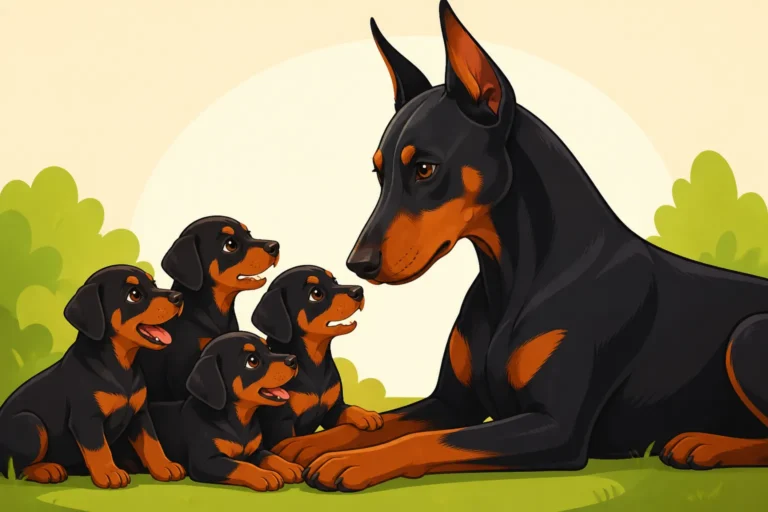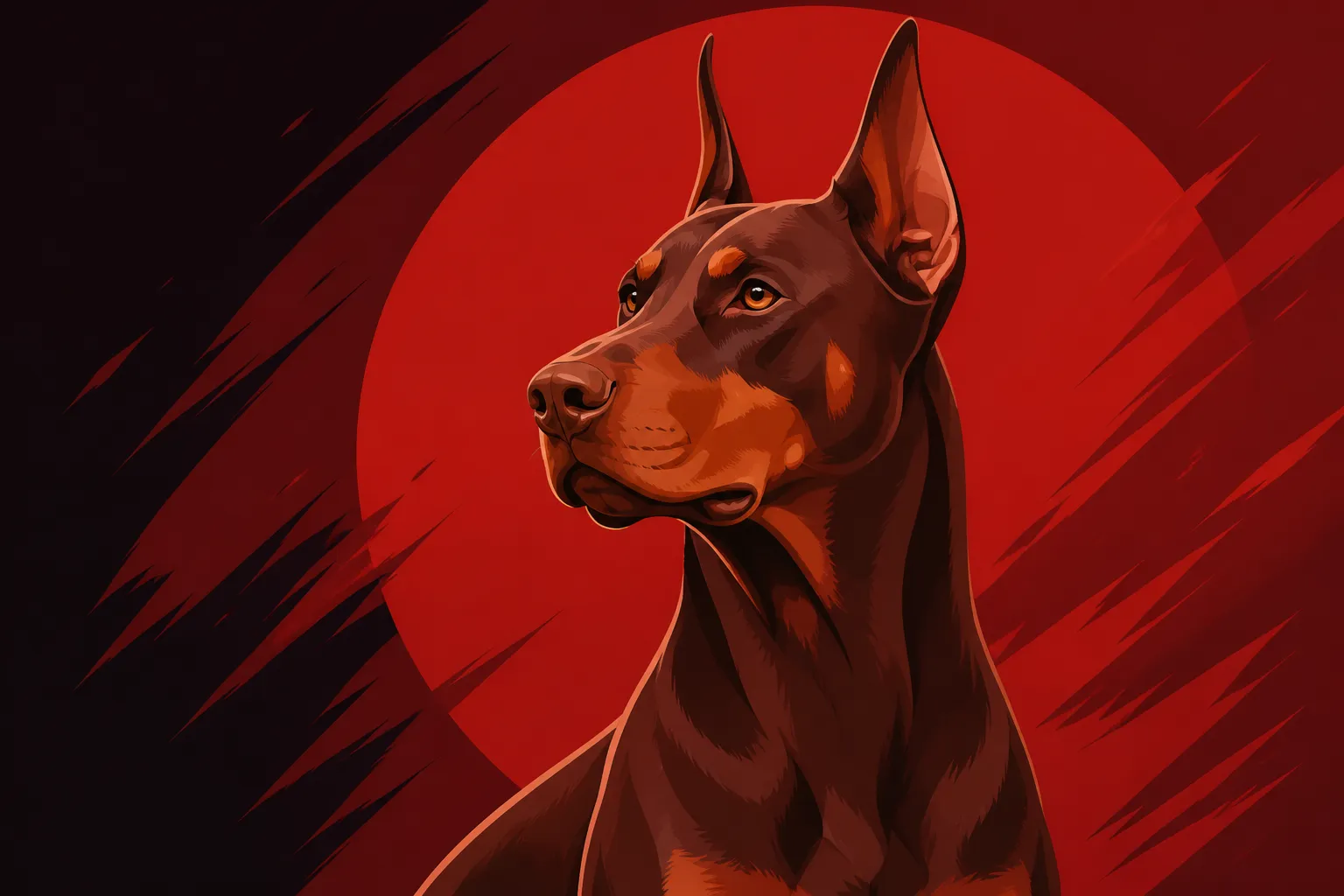
The Red Doberman
It's incredibly common for people to picture a Doberman and immediately think of that iconic sleek black coat with sharp rust markings. But for those of us who have spent time truly admiring this magnificent breed, we know there's a whole spectrum of beauty to behold. Sometimes, it's easy to overlook or misunderstand the other colors, and the red Doberman is a perfect example – a truly stunning variant that sometimes gets lumped in with less desirable coat colors or comes with unwarranted misconceptions. This guide aims to shed light on everything you need to know about the striking red Doberman, from the genetics that create its beautiful hue to what it's really like to live with one.
The Basics of Doberman Color Genetics
Doberman coat colors aren't just a random roll of the dice; they're governed by fascinating genetic rules that determine whether a puppy will be black, red, blue, or fawn. Understanding these basics can really demystify why certain colors appear in a litter and help you appreciate the science behind your Doberman's stunning appearance. It’s all about specific genes and how they interact, with some being dominant and others recessive.
Understanding the 'B' Locus
When we talk about Doberman colors, one of the most fundamental genetic locations, or 'loci', we consider is the 'B' locus. This locus is responsible for determining whether a Doberman's base pigment will be black or brown. The dominant gene, represented by 'B', results in black pigmentation. This means any Doberman with at least one 'B' gene (genotype BB or Bb) will express black as its primary coat color. It's the most common and often the most recognized color, thanks to its dominance in the genetic lottery.
However, there's also the recessive gene, 'b'. For a Doberman to display brown or red pigmentation, it must inherit two copies of this recessive gene (genotype bb). This means both parents must at least carry the 'b' gene to produce a red puppy. If a Doberman has the 'bb' genotype, its black pigment pathways are essentially "switched off," and what you see instead is that gorgeous rich brown, which we affectionally call "red" in Dobermans. It's a fundamental difference from the "black and rust" you might expect, all thanks to a tiny genetic instruction.
Beyond Black: The Doberman's Color Palette
While the 'B' locus explains the difference between black and red, it's important to remember that Dobermans have a broader color palette, involving other genetic factors as well. Beyond black and red, you'll also find blue and fawn Dobermans. These colors are not due to the 'B' locus but rather to a separate dilution gene, often referred to as the 'D' locus. This gene, when present in two copies (dd), dilutes either black pigment into blue or red pigment into fawn.
So, a black Doberman (BB or Bb) with the dilution gene (dd) becomes a blue Doberman. Similarly, a red Doberman (bb) with the dilution gene (dd) transforms into a fawn Doberman. It’s a completely different genetic mechanism than what creates a red Doberman, though sometimes people mistakenly group all non-black Dobermans into one category. Understanding that red is a distinct, non-diluted color helps clarify its genetic standing and why it doesn't typically carry the same specific color-related health concerns as blue or fawn Dobermans, which are unfortunately prone to conditions like Color Dilution Alopecia in Blue and Fawn Dobermans.
What Makes a Doberman Truly "Red"?
The term "red" when applied to a Doberman isn't just a casual description; it refers to a specific genetic expression that results in a beautiful, rich brown coat. It's distinct from other colors and holds a special appeal for many Doberman enthusiasts. It’s about more than just a shade of brown; it's about the complete pigment profile of the dog.
The Genetic Combination for Red
As we discussed, a Doberman is truly "red" because it has inherited two copies of the recessive 'b' gene – its genotype is 'bb'. This means that its body is genetically programmed to produce brown pigment instead of black. For this to happen, both parents of a red Doberman must contribute a 'b' gene. This can occur if both parents are black Dobermans who carry the recessive red gene (meaning their genotype is Bb), or if one parent is a carrier (Bb) and the other is already red (bb), or if both parents are red (bb).
This genetic reality is why you might see a mix of black and red puppies in the same litter. If two black Dobermans, both carrying the red gene (Bb x Bb), are bred, statistically, their litter could contain 25% black (BB), 50% black carriers (Bb), and 25% red (bb) puppies. It's a fascinating look into how inherited traits play out in real life, and it highlights why knowing a dog's pedigree and the genetic history of its parents is so important, especially when trying to predict litter outcomes or ensure genetic diversity. A reputable breeder will be transparent about these genetic possibilities and the health testing behind them.
Identifying a Red Doberman
Visually identifying a red Doberman involves more than just looking for a brown coat; it's about recognizing the characteristic shade and accompanying pigment. The red can range from a lighter, almost milk chocolate hue, to a deep, rich mahogany that almost shimmers with reddish undertones in the sunlight. These aren't just "brown" dogs; they possess a warmth and depth of color that truly stands out. The key is to see that the primary coat color is distinctly brown, rather than black.
The easiest way to confirm a red Doberman isn't just a very dark black Doberman in certain lighting is to look at the nose leather. A true red Doberman will always have a brown, or liver, colored nose. Its paw pads will also be brown, and its eye rims will be brown, not black. This complete lack of black pigmentation is the tell-tale sign that you're looking at a genuinely red Doberman. Sometimes, in pictures, black Dobermans can look reddish, but their black nose and dark brown eyes are the giveaways.
The Striking Appearance of the Red Doberman
The red Doberman is an undeniably striking dog, often turning heads with its unique and elegant appearance. While the general public might be more familiar with the black and rust variety, those in the know recognize the red Doberman for its deep, warm hues and distinctive features. There's a certain softness to their overall look that captivates many.
The Richness of the Red Coat
A true red Doberman’s coat is a spectacle. It possesses a depth and luster that can vary beautifully depending on the individual dog and the lighting. You might see reds that lean towards a lighter, almost chestnut brown, or those that boast a profound, dark mahogany, sometimes even appearing with a reddish-gold sheen in bright sunlight. This rich color is consistent throughout the main body of the dog, providing a cohesive and elegant backdrop for their contrasting markings. The short, sleek coat characteristic of the Doberman breed means that this color truly pops, highlighting their muscular build and graceful lines.
Unlike some other breeds where "red" can sometimes mean a faded or washed-out brown, the Doberman red is vibrant and full-bodied. It gives the dogs a distinct look that some people find less intimidating than the traditional black, fostering a sense of warmth and approachability. This aesthetic appeal is a significant reason why many Doberman lovers specifically seek out this color, appreciating its undeniable beauty and classic charm.
Rust Markings, Eye, and Nose Color
Just like their black counterparts, red Dobermans also display the characteristic "rust" markings, though these will naturally be a lighter, softer shade. Instead of the deep tan or mahogany rust seen on black Dobermans, a red Doberman’s markings will appear as a lighter tan, fawn, or even a creamy beige. These markings are found in the same places: above each eye, on the muzzle, throat, chest, on all four legs and feet, and beneath the tail. The contrast is still evident, but it’s a more subdued, harmonious blend of colors that complements the primary red coat beautifully.
A critical differentiator, as touched on earlier, is the pigmentation of the nose, eye rims, and paw pads. For a red Doberman, these will always be liver or brown, matching the red base coat, rather than black. Their eyes typically range from a medium brown to a lovely amber, often harmonizing with their coat color to give them a softer, more expressive gaze than the intense dark eyes of a black Doberman. This combination of lighter rust markings, a brown nose, and amber eyes truly defines the red Doberman's unique and striking appearance. This is a point to observe carefully when assessing a puppy's true color and not to confuse it with a black Doberman.
Physical Differences (or Lack Thereof)
Beyond their captivating coat color and the associated pigment differences, it is absolutely essential to understand that red Dobermans are physically identical to black Dobermans. There are no inherent differences in size, bone structure, muscle mass, or overall build that are tied to their red coloring. A red male Doberman should still fall within the breed standard for height and weight, just like a black one, with their powerful, athletic physique being a hallmark of the breed. Their ears, whether cropped or natural, will set and carry the same way, and their docked tails (where practiced) will be of the same length and appearance.
The perception that a red Doberman might be "softer" or "smaller" than a black one is purely anecdotal and completely unfounded in reality. The genes that dictate coat color are entirely separate from those that determine physical traits like stature, strength, or conformation. Therefore, when evaluating a Doberman, color should be considered a cosmetic trait, not an indicator of its underlying physical qualities or adherence to the breed standard. A well-bred red Doberman is every bit as robust and powerful as a well-bred black Doberman, exemplifying the breed's impressive presence.
Health and Temperament: Are Red Dobermans Different?
One of the biggest questions that often arises with Doberman colors is whether certain hues come with specific health issues or temperament quirks. It’s a valid concern, especially given the breed's known predispositions to certain conditions. For red Dobermans, the answer is generally reassuring, but it still requires a clear understanding of breed-wide challenges.
No Color-Specific Health Issues
This is a crucial point to emphasize: the red coat color itself, unlike the diluted blue or fawn varieties, is not associated with unique, color-specific health problems. Red Dobermans do not suffer from the same coat and skin issues that blue and fawn Dobermans can, such as Color Dilution Alopecia (CDA), a condition that causes progressive hair loss and recurrent skin infections. The gene responsible for red pigment (the 'b' gene) simply dictates the production of brown pigment instead of black; it doesn't interfere with follicle health or skin integrity.
This means that if you're drawn to the stunning appearance of a red Doberman, you don't need to add "red coat-specific diseases" to your list of health concerns. Their skin and coat care are the same as for a black Doberman – regular bathing with appropriate shampoos, brushing, and general cleanliness. This can be a huge relief for prospective owners who want a Doberman but are worried about the known issues with diluted colors. It allows owners to focus on general Doberman health, which is a significant topic in itself.
General Doberman Health Concerns Still Apply
While red Dobermans are free from color-specific ailments, they are still Dobermans, and that means they share the breed's common health challenges. The Doberman breed, regardless of coat color, is regrettably predisposed to a number of serious conditions. These include Dilated Cardiomyopathy (DCM), a heart disease that tragically affects a significant percentage of the breed and is often silent until advanced stages. Red Dobermans are just as susceptible to The Heart Disease That Reaches Most Dobermans as black ones, and screening for this condition through annual echocardiograms and Holter monitoring is paramount for all Doberman owners.
Other significant health concerns include Wobbler Syndrome (cervical vertebral instability), von Willebrand's Disease (a bleeding disorder), hypothyroidism, and various cancers. Therefore, choosing a responsible breeder who performs comprehensive health testing on their breeding stock – including OFA or PennHIP clearances for hips and elbows, thyroid panels, and DNA tests for vWD and the DCM genes – is absolutely critical, regardless of the puppy's color. The Health Testing a Doberman Breeder Must Show should be a non-negotiable expectation for any Doberman puppy. The color of the dog provides no shield against these breed-wide predispositions; proper care and proactive health management are vital for all Dobermans.
Temperament: Color Doesn't Dictate Character
Let's put this myth to bed right now: a Doberman's coat color has absolutely no bearing on its temperament, intelligence, or trainability. A red Doberman is, at its core, a Doberman. They possess the same intelligent, loyal, energetic, and protective nature that the breed is known for. Any perceived differences in temperament between different colored Dobermans are purely anecdotal, based on individual personalities, or, more likely, a result of breeding choices focusing on appearance over sound temperament.
A Doberman's character is shaped by a complex interplay of genetics (from carefully selected parents), early socialization, consistent training, and the environment in which it is raised. A well-bred red Doberman from health-tested parents with stable temperaments, raised in a stimulating and loving home, will exhibit the same confidence, courage, and devotion as a black Doberman from similar lineage and upbringing. Don't let myths about "softer" or "harder" temperaments based on coat color influence your decision; focus instead on a puppy's pedigree, the breeder's practices, and the individual puppy's personality and upbringing. The Doberman's intelligence and desire to please make them highly trainable, regardless of their hue, as covered in Doberman Temperament as the Standard Describes It.
Living with a Red Doberman: Care and Acceptance
Bringing any Doberman into your home is a significant commitment, and while the red variety offers a unique aesthetic, the day-to-day care and considerations are largely consistent across all colors. However, navigating public perception and finding the right resources can sometimes present minor nuances.
Standard Doberman Care
Caring for a red Doberman involves the same dedication and routines as caring for any other Doberman. They require a high-quality diet, appropriate for their age, size, and activity level, to fuel their lean, muscular bodies. Many owners find trusted brands or online retailers like Chewy to be invaluable resources for obtaining premium kibble or specialized diets, ensuring their Doberman gets the best nutrition possible. Due to their deep chest, it's often recommended to feed Dobermans multiple smaller meals a day rather than one large one to help mitigate the risk of bloat (gastric dilatation-volvulus). You can dive deeper into these requirements with Feeding an Eighty-Pound Doberman Well.
Exercise is non-negotiable for this energetic breed. Red Dobermans thrive on regular, vigorous activity, including daily walks, runs, playtime, and mental stimulation through training and puzzle toys. Their short, single coat means they don't have an undercoat for insulation, so they're susceptible to cold weather and will definitely appreciate a warm winter coat when temperatures drop. Grooming is relatively simple: weekly brushing with a soft brush or mitt helps remove loose hairs and keeps their stunning red coat shiny. Occasional baths are sufficient, using a mild shampoo to avoid stripping their natural oils.
Public Perception and Advocacy
It's an interesting phenomenon, but sometimes the public reacts differently to a red Doberman compared to a black one. Some people, perhaps associating the darker color with a more "intimidating" presence, might find red Dobermans to appear softer or less aggressive. While this can sometimes make interactions in public a little easier, it’s a double-edged sword. On one hand, it might reduce unwarranted fear, but on the other, it can diminish the breed’s powerful reputation if not managed.
As an owner of a red Doberman, you become an ambassador for the breed, regardless of its color. It's an opportunity to educate others about the Doberman's true nature – loyal, intelligent, and devoted family companions – rather than the exaggerated stereotypes seen in media. Responsible ownership, clear training, and proper socialization are key to presenting any Doberman in a positive light, proving that their true character shines far brighter than any preconceived notions based on color.
Finding a Responsible Breeder
When seeking a red Doberman, the absolute most critical step is finding a reputable breeder. Do not choose a breeder based solely on the desire for a specific color, especially if they are cutting corners on health testing or temperament evaluations. A responsible breeder will prioritize the health, longevity, and stable temperament of their dogs above all else, regardless of whether they produce black or red puppies. They will openly discuss their breeding dogs' health clearances, including heart screenings (Echo and Holter), hip and elbow evaluations, thyroid testing, and vWD status.
They will also be transparent about their puppies' parents' pedigrees, showing a history of sound health and good temperaments. Expect to be thoroughly vetted yourself, as a good breeder wants to ensure their puppies go to knowledgeable and loving homes. Visiting the breeder's facility, meeting the mother (and ideally the father), and seeing how the puppies are raised are crucial steps. A reputable breeder, whether they advertise on platforms like Chewy or have their own website, will be an invaluable resource and mentor throughout your Doberman's life, offering support and guidance long after you take your puppy home.
Red Dobermans in the Doberman World
The red Doberman isn't just a pretty face; it's a fully recognized and celebrated member of the Doberman breed. Their presence in the show ring, working competitions, and as cherished family members speaks volumes about their acceptance and capabilities within the Doberman community.
Acceptance in Breed Standards
For those concerned about official recognition, rest assured: red Dobermans are a fully accepted color in all major Doberman registries around the world, including the American Kennel Club (AKC) and the Fédération Cynologique Internationale (FCI). The breed standards explicitly list "black, red, blue, and fawn" as acceptable colors, always with rust markings. This means that a red Doberman is not considered a fault in conformation shows based on its color.
Judges evaluate red Dobermans on the same criteria as black Dobermans: structure, gait, temperament, and overall adherence to the breed standard, as outlined in The Doberman the AKC Standard Describes. Their beautiful red coat is simply another variation within the recognized spectrum of the breed. This widespread acceptance ensures that red Dobermans are judged on their merits as Dobermans, not disqualified for their hue. This is a stark contrast to colors like "white" (albino) Dobermans, which are not considered a standard color and come with significant health issues.
Show Ring and Working Dog Potential
The fact that red Dobermans are fully recognized means they have equal opportunities to excel in any dog sport or activity a Doberman can pursue. You'll find red Dobermans competing successfully in conformation events, earning championships just like their black counterparts. Beyond the show ring, they are formidable competitors in obedience, agility, tracking, and protection sports. Their intelligence, athleticism, and intense focus make them well-suited for these demanding disciplines, and their color is irrelevant to their performance.
Whether it's the precision of competitive obedience or the drive required for Schutzhund (now IGP), red Dobermans consistently prove their capabilities. Their strong work ethic and desire to please ensure that a well-bred and well-trained red Doberman can achieve anything a black Doberman can. This parity highlights that substance and character always come before coat color in the world of responsible Doberman breeding and ownership.
The Appeal of a Red Doberman
Beyond their official acceptance and working capabilities, the red Doberman holds a special place in the hearts of many enthusiasts for purely aesthetic reasons. There’s an undeniable appeal to their rich, warm tones that can stand out in a crowd. For some, the red coat offers a slightly softer visual impact compared to the stark contrast of black and rust, making them feel less intimidating to onlookers while still maintaining that powerful Doberman presence.
This unique beauty, combined with the breed's renowned loyalty and intelligence, makes the red Doberman a truly exceptional companion. Many owners appreciate the way their red Doberman’s coat catches the sunlight, highlighting the subtle variations in its rich brown hues. Ultimately, choosing a red Doberman, like any Doberman, comes down to finding a well-bred, healthy individual whose temperament aligns with your lifestyle, and simply enjoying the beauty of this magnificent breed in all its accepted colors.
| Characteristic | Black & Rust Doberman | Red & Rust Doberman | Blue & Rust Doberman | Fawn & Rust Doberman |
|---|---|---|---|---|
| Base Coat Color | Black | Reddish-brown | Grey-blue | Light tan/Isabella |
| Rust Markings Color | Rich Tan/Mahogany | Lighter Tan/Fawn | Lighter Tan/Grey-fawn | Light Cream/Pinkish-tan |
| Nose/Pad Pigmentation | Black | Liver/Brown | Grey-blue (slate) | Light Tan (pinkish) |
| Eye Color | Dark brown | Medium brown/Amber | Medium brown/Amber | Light brown/Amber |
| Color-Related Health Risks | None | None | Color Dilution Alopecia | Color Dilution Alopecia |
Disclaimer
This article is for general informational purposes only and does not constitute professional advice. Laws, prices and regulations vary by location and change over time. Consult a qualified professional for guidance on your specific situation.