Raising Children Alongside a Doberman
Many Doberman owners, or those considering bringing one into their family, wrestle with a significant concern: how will this powerful, protective breed interact with children? The media often paints a picture of fierce guard dogs, which can be incredibly unsettling. This guide aims to dismantle those fears and offer practical, empathetic advice on fostering a safe, loving, and harmonious environment where your Doberman and your children can thrive together.
Understanding the Doberman Temperament Around Children
The Doberman Pinscher is a breed renowned for its intelligence, loyalty, and protective instincts. These traits are often what draw people to them, yet they can also be the source of anxiety when children are in the mix. It's vital to understand the nuances of the Doberman temperament, moving beyond stereotypes to appreciate their true nature when it comes to the youngest members of the family.
The Doberman's Innate Protective Instincts
At their core, Dobermans are natural guardians. This instinct stems from their historical purpose – to protect their owner. With proper socialization and training, this protective drive typically translates into a deep loyalty and a watchful eye over their family, including children. They often see children as "their" vulnerable charges, deserving of their quiet, steadfast presence. It’s not uncommon for a well-socialized Doberman to position itself between a child and a stranger, or to gently nudge a child away from perceived danger, like the edge of a swimming pool. This protective nature is a double-edged sword: it provides security, but also requires careful management to ensure it doesn't manifest as over-guarding or suspicion towards harmless visitors. Understanding Doberman Temperament as the Standard Describes It is key to appreciating these inherent traits.
However, this protection is not a free pass for aggressive behavior. A properly raised Doberman should be confident, not fearful or reactive. Their instinct to protect should be guided by a calm demeanor and strong obedience training, allowing them to differentiate between a genuine threat and a playful visitor. The challenge lies in channeling this instinct so that the Doberman acts as a benevolent guardian rather than an overzealous enforcer. This often means consistently reinforcing polite greetings and ensuring your dog understands that you are in charge of assessing situations, not them.
Sensitivity and Emotional Intelligence
Despite their imposing appearance, Dobermans are surprisingly sensitive dogs with high emotional intelligence. They often pick up on the moods and emotional states of their human family members, including children. This sensitivity means they can form incredibly strong bonds, becoming deeply attuned to their children's needs and even their energy levels. You might notice your Doberman becoming extra gentle with a crying baby or offering a comforting nudge to a child who is upset. This empathetic nature is one of their most endearing qualities and makes them excellent companions.
This sensitivity also means they are profoundly affected by how they are treated. Harsh corrections or an inconsistent environment can lead to a Doberman becoming withdrawn, anxious, or even fearful. For children, this translates into the need for gentle, respectful interactions. A Doberman is unlikely to tolerate rough handling, ear pulling, or tail grabbing, not out of malice, but because such actions are uncomfortable or frightening to them. They thrive in an environment where they feel secure and understood, and where their personal space is respected, just like any other sensitive individual.
Common Misconceptions and Stereotypes
The Doberman breed has unfortunately suffered from a barrage of negative stereotypes, often portraying them as inherently aggressive, unpredictable, or even "man-eaters." These sensationalized portrayals are far from the truth for the vast majority of Dobermans, especially those bred by reputable breeders who prioritize stable temperaments. While a Doberman can be a formidable protector, this capacity is not synonymous with innate viciousness. Most Dobermans are loving, playful, and even goofy with their families.
The real danger often lies not in the breed itself, but in irresponsible ownership, poor breeding practices, or a lack of proper socialization and training. A Doberman without consistent guidance and early exposure to a variety of people, places, and experiences is more likely to develop fear-based reactivity or guarding issues, which can be dangerous, especially around unpredictable children. It’s important to remember that every dog is an individual, and while breed traits provide a baseline, an individual dog's behavior is overwhelmingly shaped by its environment and upbringing. This is why addressing the question of Whether a Doberman Is Safe Around Children ultimately depends on the efforts of the humans involved.
Preparing Your Doberman for a New Arrival (or Your Child for a Doberman)
Bringing a Doberman into a family with children, or introducing a new baby into a home with an existing Doberman, requires careful, proactive preparation. This isn't something to wing; a thoughtful approach can make all the difference in establishing a harmonious household where everyone feels safe and loved.
Socialization and Early Exposure for Puppies
If you're bringing a Doberman puppy into a home with children, socialization is your most powerful tool. From the moment your puppy arrives, it needs to experience a wide range of sights, sounds, smells, and interactions in a positive, controlled manner. This includes gentle interactions with children of all ages, supervised closely. Start with short, positive encounters where children are taught how to appropriately pet and interact with the puppy, and the puppy is rewarded for calm behavior. Think of it as Building a Doberman Puppy That Is Confident, Not Sharp.
Exposure shouldn't just be to your own children. Invite calm, dog-savvy children from outside your immediate family for controlled, supervised interactions. This helps your Doberman learn that children, in general, are a normal and pleasant part of life. Remember, the goal is not to overwhelm the puppy, but to create positive associations. Puppy classes are also invaluable, offering a safe environment for your Doberman to meet other dogs and people, and for you to learn how to manage their energy and instincts. For a successful outcome, the sixteen weeks that set a Doberman up are crucial.
Training and Boundaries for the Adult Doberman
For an adult Doberman, especially if a new baby is on the way, training and establishing clear boundaries become paramount. Your Doberman needs to understand basic obedience commands like "sit," "stay," "down," "leave it," and a reliable "go to your bed/place." These commands aren't just for show; they are critical safety tools that allow you to manage your dog's behavior effectively, especially when children are present. You might find that a smart breed like this can sometimes be challenging; indeed, Why a Clever Doberman Is Harder to Train is a common observation.
Practice these commands diligently, ensuring your Doberman responds reliably even with distractions. Consider a baby doll for practice: carry it around, make baby noises, and reward your Doberman for calm, non-reactive behavior. Create "child-free zones" with baby gates or crates where your Doberman can retreat and feel safe, away from the hustle and bustle of children. This teaches them that they don't have to be involved in every interaction and reduces the likelihood of them feeling overwhelmed or cornered. Tools like pet gates available from retailers like Chewy can be incredibly useful in setting up these zones.
Preparing the Home Environment
Beyond training, adjusting your physical home environment is essential for a smooth integration. This means setting up physical barriers like baby gates to control access to certain rooms or areas where children will be playing or where the Doberman needs a quiet retreat. Ensure all your Doberman's toys, food bowls, and bedding are in a designated "dog-only" area, far from where children typically play, to prevent any resource guarding issues.
If a new baby is expected, gradually introduce baby-related items and scents into the home before the baby arrives. Set up the nursery, turn on baby mobiles, play recordings of baby cries, and let your Doberman investigate these new sights and sounds. You can even bring home a blanket with the baby's scent from the hospital before the baby arrives, allowing your Doberman to become familiar with the smell in a calm setting. This gradual exposure helps your Doberman acclimate without being startled or overwhelmed by sudden changes.
Establishing Safe Interactions and Boundaries
Once your Doberman and children are sharing a space, the real work begins: actively managing their interactions. This means constant supervision, clear rules for both dog and child, and an unwavering commitment to respect for all parties involved.
Teaching Children How to Interact Respectfully
It’s not enough to train your Doberman; children also need to be educated on how to behave around dogs. This is a crucial, often overlooked, component of safety. Teach children the "petting rules": always approach a dog calmly, never rush or surprise them, and always ask an adult if it's okay to pet. Teach them to pet gently on the shoulders or chest, avoiding the top of the head or tail, and to stop if the dog moves away. Show them how to recognize a dog's body language that signals "I need space," such as turning their head away, licking their lips, or yawning.
Crucially, teach children never to disturb a sleeping or eating dog, never to take toys or food from a dog, and never to climb on, ride, or pull at a dog. Explain that dogs have feelings and need their own space. Consistency in these rules is paramount. What's allowed one day cannot be forbidden the next. This consistent guidance helps children develop empathy and understanding, fostering a relationship built on mutual respect rather than fear or dominance.
Supervising All Interactions Closely
I cannot stress this enough: all interactions between Dobermans and young children must be 100% supervised. This isn't just about preventing aggression; it's also about preventing accidental injuries. A playful Doberman, even one with the best intentions, can easily knock over a small child. Dobermans are powerful, muscular dogs, and their enthusiasm, especially during puppyhood or adolescence, can be overwhelming for a toddler. You need to be actively present, not just in the same room scrolling on your phone.
Active supervision means being close enough to physically intervene if necessary, reading both the dog's and the child's body language, and being prepared to redirect or separate them. If you cannot give your undivided attention, separate your Doberman and child using baby gates, crates, or different rooms. It's better to be overly cautious than to regret a moment of inattention. As your children grow older and more responsible, and your Doberman proves consistently reliable, supervision can become less hands-on, but it should never be completely absent.
Recognizing and Respecting Your Doberman's Signals
Your Doberman will communicate its comfort level through its body language long before it resorts to a growl or snap. Learning to "read" these subtle signals is vital for preventing problems. Look for signs of stress or discomfort: lip licking, yawning, turning away, sniffing the ground, freezing, stiff body posture, whale eye (where the whites of the eyes are visible), or a tucked tail. These are all indicators that your Doberman is feeling uneasy and needs space.
Respecting these signals means immediately intervening. Gently separate your child from the dog, or calmly lead your Doberman to its safe space. Never punish your Doberman for growling, as a growl is a warning. Punishing it teaches your dog to suppress the warning and potentially escalate to a bite without any prior communication. Instead, address the cause of the growl. Understanding What Cropped Ears Hide About a Doberman's Mood can be challenging, as the natural ear set often gives a clearer indication of a dog's emotional state, making keen observation of the rest of their body language even more important.
Common Challenges and How to Address Them
Even with the best preparation, living with Dobermans and children can present unique challenges. It’s important to anticipate these issues and have strategies in place to manage them effectively, maintaining a safe and calm home for everyone.
Resource Guarding and Jealousy
Resource guarding can occur when a Doberman feels protective over its food, toys, sleeping area, or even its owner. This behavior is instinctual in many dogs, but it needs to be carefully managed, especially around children who might unknowingly approach a dog's valued possessions. To mitigate this, ensure your Doberman always eats and enjoys special treats in a designated, child-free area, like its crate or a separate room. Do not allow children to approach the dog while it's eating or chewing a bone.
Jealousy, while not precisely the same as resource guarding, can arise when a Doberman feels it's losing attention to a new child. To combat this, make a conscious effort to include your Doberman in family activities, providing positive attention when children are present. Reward calm behavior when you're interacting with your child. For example, if you're rocking a baby, have your Doberman lie calmly on its bed nearby and reward it with praise or a quiet chew toy (perhaps from Chewy's extensive selection). This helps your Doberman associate the child's presence with positive experiences and continued affection from you.
Overexcitement and Accidental Nudges
Dobermans, especially young ones, can be incredibly exuberant. Their sheer size and strength mean that even playful overexcitement can lead to a child being accidentally knocked over or stepped on. A common scenario is A Doberman That Knocks a Toddler Over when greeting someone at the door or during an excited play session. This isn't malicious, but it can be dangerous. It's crucial to teach your Doberman appropriate greeting behaviors from a young age.
Train a solid "four on the floor" rule, meaning all four paws must remain on the ground during greetings. Practice this extensively with all family members and visitors. Use a leash during greetings if necessary to maintain control, rewarding your Doberman for calm, polite behavior. Management strategies, like crating your Doberman or putting it behind a baby gate when excited guests or children first arrive, can also prevent these accidental bumps. As they mature, Dobermans typically settle, but consistent training during their adolescent years is non-negotiable.
Managing the Doberman's High Energy Levels
Dobermans are athletic, intelligent dogs with significant energy needs. If these needs aren't met through appropriate exercise and mental stimulation, they can become restless, destructive, or prone to unwanted behaviors, which are amplified in a busy household with children. They need daily vigorous exercise, which could include long walks, runs, hikes, or structured playtime. Remember, a tired Doberman is a good Doberman! If you’re struggling with Leash Manners for an Eighty-Pound Doberman, investing in a comfortable harness and professional training can make walks much more enjoyable for both of you.
Beyond physical exercise, Dobermans thrive on mental stimulation. Puzzle toys, obedience training sessions, trick training, and even scent work (such as Putting a Doberman's Nose to Work) can help tire their minds and prevent boredom. Rotate their toys to keep things interesting. Consider enrolling in dog sports like agility, obedience, or tracking if you have the time and inclination, as these can provide an excellent outlet for their energy and intellect. A Doberman that is bored and under-exercised is more likely to develop nuisance behaviors that will inevitably impact a child's safety and your overall household harmony.
| Interaction Type | Safe Practices | Unsafe Practices | Risk Level |
|---|---|---|---|
| Petting | Gentle strokes on chest/shoulders, asking permission | Pulling ears/tail, climbing on dog, sudden approaches | High |
| Playtime | Supervised tug with appropriate toys, fetch in yard | Roughhousing, chasing dog, unsupervised wrestling | Moderate-High |
| Feeding | Dog eats in quiet, child-free zone | Children approaching dog's bowl, taking food from mouth | High |
| Rest/Sleep | Dog has a safe, undisturbed bed/crate | Children waking or startling a sleeping dog | High |
| Walking | Adult handles leash, child walks alongside calmly | Child holding leash of strong Doberman, running ahead | Moderate-High |
| Alone Time | Dog and child separated or supervised closely | Leaving dog and child unsupervised | Extreme |
Long-Term Harmony: Growing Up Together
The relationship between a Doberman and a child is a dynamic one that evolves over time. Cultivating a lasting bond built on trust and respect requires ongoing effort and commitment from the adults in the home.
Continued Training and Reinforcement
Even after a Doberman is past puppyhood, training is not a "one and done" affair. It's a lifelong process, especially in a family environment that is constantly changing. As children grow and their interactions with the Doberman change, you'll need to continually reinforce good manners and appropriate boundaries. Regular short training sessions keep your Doberman sharp and remind them of the rules. These don't have to be formal classes; a few minutes of practicing "sit," "stay," or "down" each day, perhaps before meals or walks, is enough.
Life changes, and so do the challenges. A confident, well-trained Doberman will navigate these changes much better than one whose training has lapsed. This consistent reinforcement not only maintains safety but also strengthens the bond between you and your Doberman, as they learn to understand and trust your guidance. Remember, The Owner a Doberman Actually Needs is someone who is consistent, patient, and committed to ongoing education.
Providing Safe Spaces for Both Dog and Child
Just as your Doberman needs a quiet retreat, children also need areas where they can play freely without constant dog interaction. Baby gates are fantastic for this, but also consider designating a "dog-free zone" in the house where children can have their toys spread out without worry. This allows both species to have their own territory and prevents either from feeling overwhelmed or constantly on guard.
Teach children that the Doberman's crate or bed is its private space – a sanctuary where they are never to be disturbed. This empowers your Doberman to retreat when they feel they need a break, knowing they will be safe and respected there. This mutual respect for personal space is critical for preventing stress and potential behavioral issues on both sides. Having comfortable bedding options, perhaps an orthopedic bed from Chewy, can make this safe space even more appealing to your Doberman.
The Benefits of a Doberman as a Family Protector
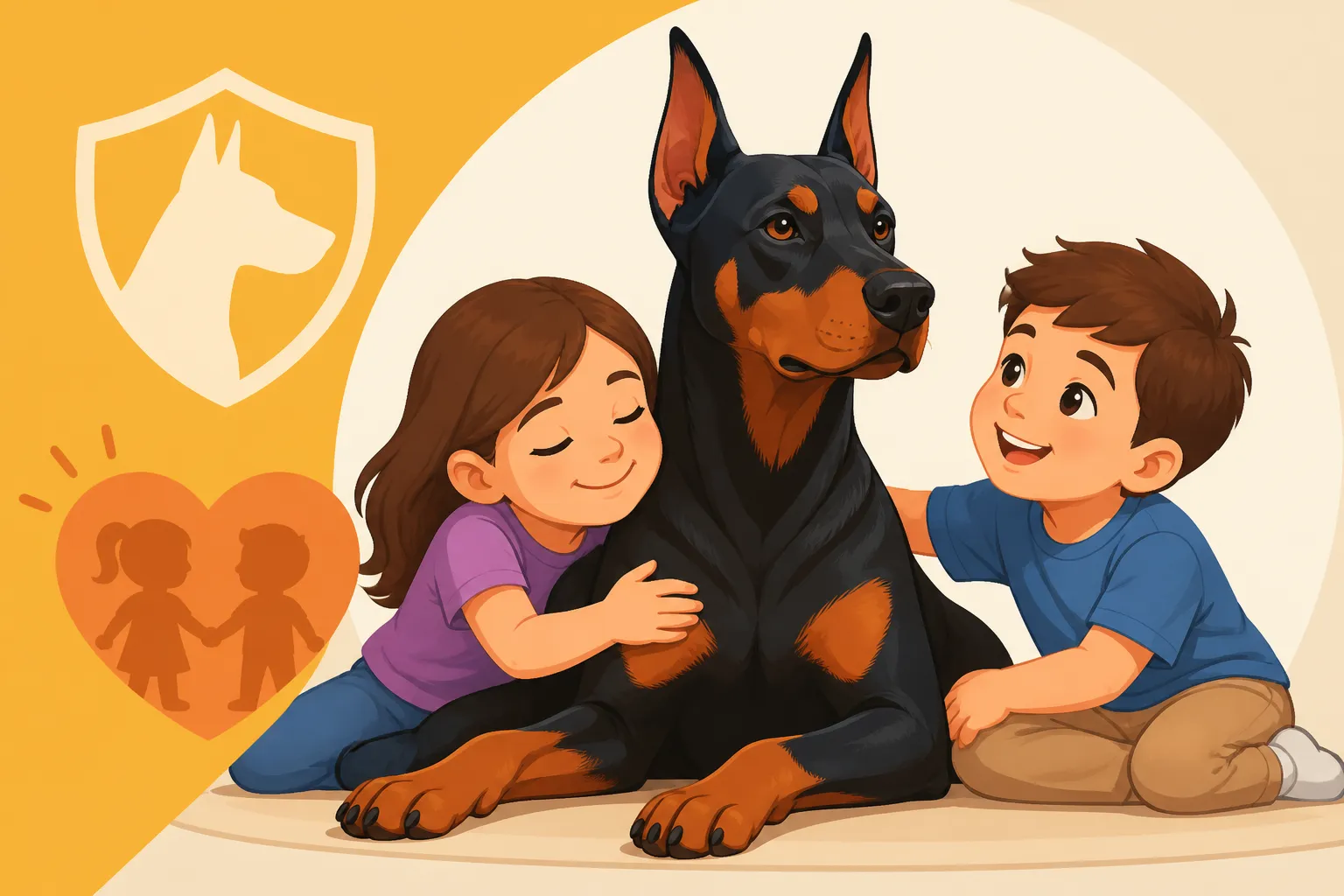
When raised correctly, the Doberman's protective instincts become an incredible asset to a family with children. They are loyal, vigilant, and naturally watchful. Many Doberman owners describe their dogs as gentle giants with their children, often showing immense patience and tolerance, even when toddlers are less than perfect in their interactions. This quiet, steadfast protection can bring a profound sense of security to a household.
Beyond protection, Dobermans offer companionship, love, and a unique bond. They are often incredibly affectionate, seeking out cuddles and leaning into their human family members. Children who grow up with a well-adjusted Doberman learn responsibility, empathy, and respect for animals. They gain a loyal best friend who will join them for adventures, offer comfort when they're sad, and simply be a constant, reassuring presence in their lives. The Doberman's intelligence and desire to be close to their family means they are often described as Where the Velcro Doberman Nickname Comes From, emphasizing their deep attachment to their people. With proper guidance, the Doberman-child relationship can be one of the most rewarding aspects of family life.
Disclaimer
This article is for general informational purposes only and does not constitute professional advice. Laws, prices and regulations vary by location and change over time. Consult a qualified professional for guidance on your specific situation.