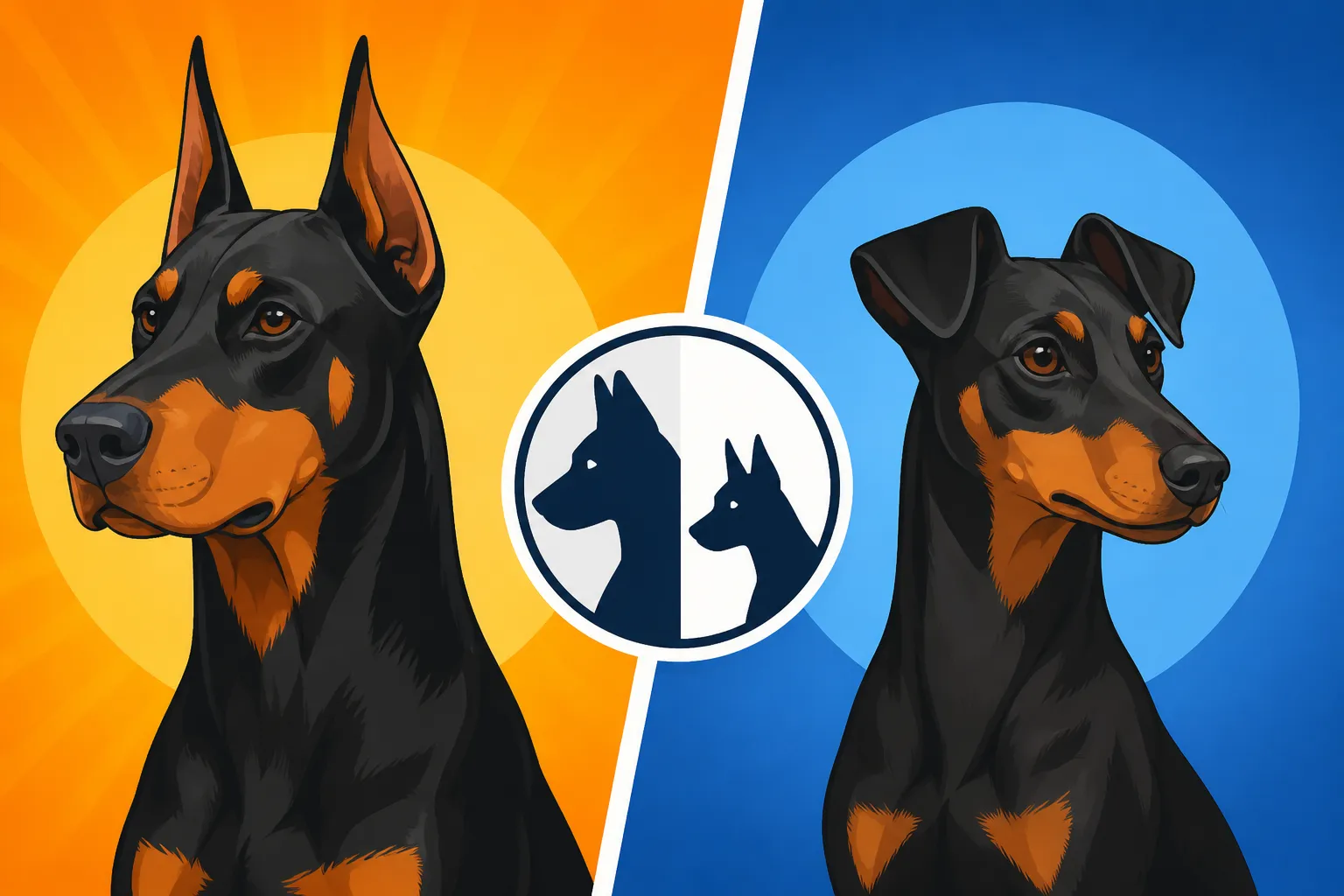
Telling a Doberman From a Manchester Terrier
It's quite common for people to mistake a Doberman for other sleek, black and tan breeds, especially the Manchester Terrier. While both breeds are incredibly handsome and share that striking color pattern, they are distinct dogs with different histories, temperaments, and, crucially, vastly different physical builds. This guide is here to help you clearly identify the unique characteristics that set the formidable Doberman apart from the spirited Manchester Terrier, dispelling any confusion along the way.
The Initial Visual Impression: Size and Presence
When you first encounter a dog, your eyes naturally register its overall size and how it carries itself. This initial impression is often the most telling clue when trying to differentiate a Doberman from a Manchester Terrier. Despite their similar coloring, these two breeds occupy very different spaces, physically and energetically.
Commanding Stature vs. Compact Agility
Imagine seeing two black and tan dogs walking down the street. One instantly commands attention with its regal, almost imposing presence, while the other is a picture of compact elegance and lively movement. This is often the first, most striking difference between a Doberman and a Manchester Terrier.
A Doberman Pinscher is a significantly larger dog, standing tall and proud. They have a truly commanding stature, often reaching 24 to 28 inches at the shoulder and weighing anywhere from 60 to 100 pounds. Their silhouette is one of power, athleticism, and undeniable grace. When a Doberman moves, it's with a long, ground-covering stride, purposeful and athletic. It’s hard to overlook a well-conditioned Doberman, as their presence fills a room or a park with a sense of alert nobility. They possess an inherent elegance that comes from their carefully refined breeding, making them stand out in any crowd. You can really get a sense of their intended purpose just by watching them move.
In contrast, the Manchester Terrier, even the Standard variety (there's also a Toy Manchester, which is even smaller), is a much more compact and agile dog. The Standard Manchester Terrier typically stands 15 to 16 inches tall and weighs between 12 and 22 pounds. They are built for speed and quick turns, reflecting their heritage as ratters. Their presence is one of lively curiosity and alert readiness, rather than the Doberman's more watchful, guardian-like demeanor. Picture a Manchester Terrier zipping around a yard; they're nimble, quick, and almost dart-like in their movements. They possess a certain terrier tenacity in their compact frame that is quite different from the Doberman's more measured power.
Bone Structure and Musculature
Beyond just height and weight, the underlying bone structure and musculature speak volumes about each breed's build and purpose. This is where a closer look truly reveals their distinct identities.
A Doberman boasts a powerful, muscular build that hints at their working dog heritage. They have a deep, broad chest that tapers to a tucked-up waist, giving them a sleek yet robust appearance. Their muscles are well-defined and evident under their short coat, particularly in their hindquarters, which provide the propulsion for their impressive gait. This solid, substantial bone structure is a hallmark of the breed, essential for their role as guardians and protectors. When you run your hand along a Doberman's back, you feel muscle and bone, not excess fat, even at a healthy weight. Their frame is built for endurance and strength, capable of powerful bursts of speed when needed. This deep chest is also an important factor in their health, making them prone to conditions like bloat, so understanding their build is key to their care. Why a Doberman's Narrow Deep Chest Twists
The Manchester Terrier, on the other hand, has a much finer bone structure. While they are certainly athletic and well-muscled for their size, their build is one of lean elegance rather than sheer power. Their chest is deep enough for efficient lung capacity, but it's not nearly as broad or profound as a Doberman's. Their muscles are taut and wiry, allowing for bursts of speed and incredible agility, but they don't have the bulky appearance of a Doberman. They are built to chase and dispatch small vermin, requiring a nimble, quick body, not a heavy, powerful one. Feeling a Manchester Terrier, you'll notice a sleek, firm body, but without the substantial feel of a Doberman. They're more like a finely tuned sprint athlete compared to the Doberman's robust, long-distance runner physique.
Distinguishing Features: Head, Ears, and Coat
While size is often the first indicator, a closer examination of the head, ears, and coat can further cement your identification. These are the details where the nuances of their breed standards truly shine through.
Head Shape and Expression
The head, often called the "expression" of a dog, can tell you a great deal. Both Dobermans and Manchester Terriers have intelligent, alert expressions, but the shape of their skulls and the set of their eyes contribute to a very different overall look.
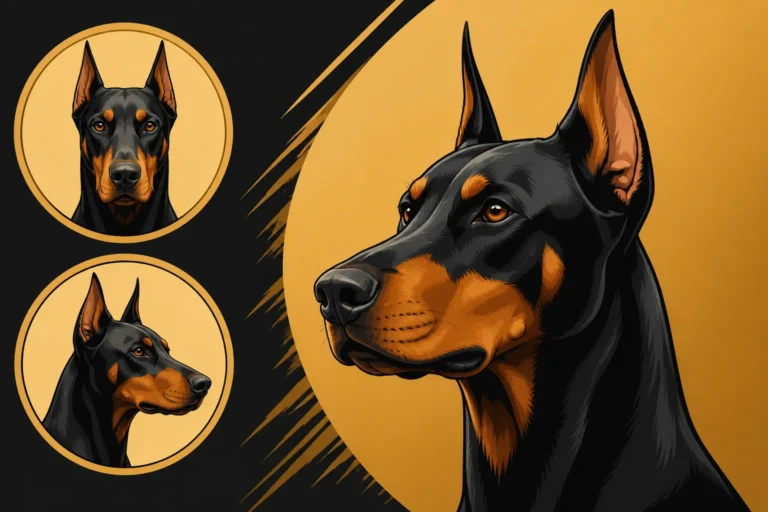
The Doberman is known for its long, elegant, and decidedly wedge-shaped head. When viewed from the top or side, the head tapers cleanly from the base of the ears to the tip of the nose, without any pronounced cheeks. Their eyes are almond-shaped, dark, and set moderately deep, conveying an intelligent, watchful, and sometimes intense gaze. This thoughtful, noble expression is a defining characteristic of the Doberman. Their stop (the indentation between the forehead and the muzzle) is slight but noticeable, contributing to the smooth wedge. It's a head designed for functionality and refinement, perfectly complementing their regal body. The Wedge Head a Doberman Is Meant to Have
The Manchester Terrier, while also having a refined head, presents a different profile. Their skull is typically longer and flatter, and they often possess a more pronounced "dish-faced" appearance, meaning a slight curve or hollowness below the eyes. Their eyes are small, dark, and almond-shaped, but they tend to be brighter and more button-like, reflecting their terrier quickness and mischief. The Manchester's stop is usually less defined than a Doberman's, creating a smoother line from the forehead to the muzzle. The overall impression is one of keen alertness and terrier grit, rather than the Doberman's more serious, watchful intensity. They have a certain sprightliness in their gaze that differs from the Doberman's deep gaze.
Ear and Tail Presentation
Historically, both Dobermans and Manchester Terriers have been breeds that frequently undergo ear cropping and tail docking, which can sometimes add to the confusion. However, there are subtle differences in their traditional presentation.
A Doberman's ears, when cropped, are typically cut long and stand erect, giving them a very alert, almost antenna-like quality. This contributes significantly to their iconic silhouette. The cropping process for a Doberman is quite involved, requiring consistent posting over many months to achieve the desired standing ear. If left natural, a Doberman's ears are medium-sized and typically hang close to the cheeks. Their tails are almost universally docked very short, leaving only a small nub. Doberman Ear Cropping From Surgery to Last Posting and Docked Tails and the Modern Doberman highlight the considerations for these practices. The combination of cropped ears and a docked tail enhances the Doberman's sharp, elegant, and formidable appearance, emphasizing their athletic lines.
Manchester Terriers also have their tails docked, usually to a length that leaves a small, whip-like appendage. However, their ear presentation can be more varied than Dobermans. While some Manchester Terriers have their ears cropped to stand erect (though usually shorter than a Doberman's crop), it's also very common to see them with natural ears. Their natural ears can be "button" ears (small, V-shaped ears that fold just above the skull, falling forward), or "erect" ears (naturally standing, sometimes called "prick" ears). This variety in ear set in Manchester Terriers means that if you see a black and tan dog with natural, button ears, it's highly unlikely to be a Doberman. The blend of a docked tail with natural ears is a common and perfectly acceptable look for a Manchester Terrier.
Coat Color and Texture
Both breeds are famous for their stunning black and tan coats, but even here, there are subtle differences in the richness of the markings and the texture of the coat itself.
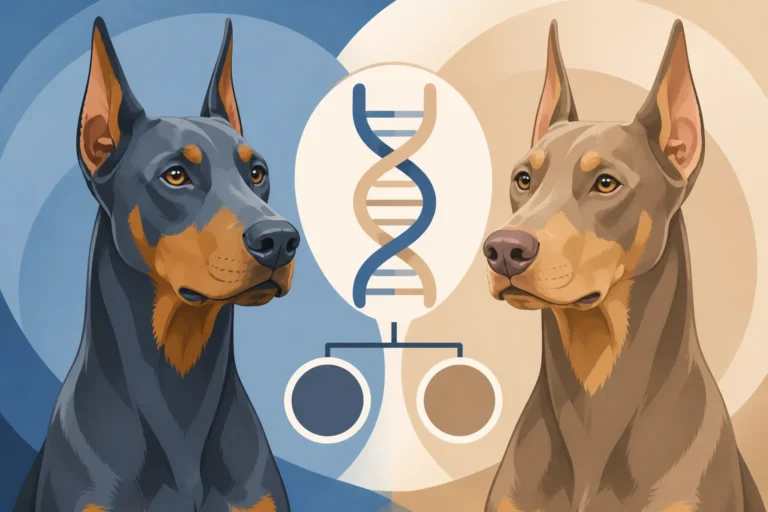
The Doberman Pinscher's coat is short, hard, and smooth, lying close to the body. It should have a distinct, glossy sheen. The primary color is most commonly black, but can also be red, blue, or fawn, always with sharply defined rust (tan) markings. These rust markings are found above each eye, on the muzzle, throat, chest, on all four legs and feet, and below the tail. The rust is typically a rich, deep hue. The contrast between the main body color and the rust markings is sharp and clear, adding to the Doberman's striking appearance. The Black and Rust Doberman explains this classic coloring. When you pet a Doberman, you feel a dense, almost stiff short fur, quite different from some other short-coated breeds.
The Manchester Terrier also sports a short, dense, glossy, and smooth coat. The key difference in color description is that the main body color is always jet black, with rich mahogany tan markings. These tan markings are similar in placement to the Doberman's: above the eyes, on the muzzle, on the cheeks, inside the ears, on the chest (two clear tan spots are desirable), on the lower portions of the legs, and under the tail. The quality of the black is often described as deep and inky, with the tan markings being rich and warm. While both breeds are black and tan, the Manchester's tan is sometimes described as a slightly different shade, often leaning more towards a rich mahogany or chestnut. The texture is usually slightly softer than a Doberman's, though still very sleek and close-lying.
Temperament and Purpose: Beyond Appearance
While physical traits are helpful for identification, understanding the underlying temperament and historical purpose of each breed solidifies the distinction. These innate qualities shape how each dog interacts with the world and their families.
The Doberman's Guardian Instinct
The Doberman Pinscher was intentionally bred in the late 19th century by Karl Friedrich Louis Dobermann, a tax collector in Germany, to be a protector and companion. He needed a dog that was intelligent, fearless, and a loyal guardian. This history means the Doberman carries a strong innate guarding instinct. They are intensely loyal and devoted to their families, often earning the nickname "Velcro dogs" because they want to be by their owner's side constantly. Living With a Doberman That Follows You Everywhere perfectly describes this characteristic.
Dobermans are highly intelligent and require consistent training and mental stimulation to thrive. They are quick learners but can also be strong-willed, making them best suited for experienced dog owners who can provide firm, fair, and consistent leadership. With strangers, a Doberman typically exhibits a reserved and watchful demeanor. They are not usually outwardly aggressive, but they are discerning and will assess newcomers before offering acceptance. This innate suspicion means they aren't generally "meet and greet" dogs with everyone they encounter. Their temperament is described in Doberman Temperament as the Standard Describes It as bold and watchful, but never shy or vicious. A well-socialized Doberman is a confident and reliable companion, fiercely protective of its loved ones, but always under control. They demand a great deal of time and commitment from their owners, thriving on close interaction and having a job to do, whether it's protection work, obedience, or simply being an active family member.
Manchester Terrier's Spirited Terrier Nature
In stark contrast, the Manchester Terrier originated in 19th-century England, primarily as a ratting dog. They were bred for their speed, agility, and keen hunting instincts to control vermin. This heritage instilled in them a spirited, tenacious, and often independent personality, typical of the terrier group.
Manchester Terriers are lively, intelligent, and confident dogs. They possess a keen sense of humor and can be quite mischievous, always ready for a game or an adventure. While devoted to their families, they tend to be a bit more independent than the constantly shadowed Doberman. They are alert and make excellent watchdogs, barking to announce visitors, but their primary instinct isn't guarding people in the same way a Doberman's is. They are often more outgoing with strangers once they've had a proper introduction, though they retain a healthy terrier skepticism.
Training a Manchester Terrier requires consistency and creativity, as their intelligence is often paired with a stubborn streak inherent to terriers. They excel in dog sports like agility and earthdog trials, where their natural athleticism and problem-solving skills can shine. Keeping a Doberman Mentally Tired is relevant here too, as Manchsters also need mental stimulation, just perhaps in different forms. They are generally robust and resilient, less prone to the same health issues that plague some larger breeds. While they are energetic and require regular exercise, their needs can often be met with vigorous playtime and walks, rather than the extensive working demands of a Doberman. They are truly big dogs in a small package, full of personality and terrier charm.
Practical Identification Tips and Common Misconceptions
Knowing the subtle differences is one thing, but how do you quickly apply this knowledge in the real world? Here are some practical tips and common myths to help you tell these two distinct breeds apart.
Key Measurement Differences
When in doubt, the most straightforward way to differentiate a Doberman from a Manchester Terrier is simply by their size. The difference is significant enough that it's often visible at a glance, even if you don't have a tape measure handy!
Here's a quick comparison of their typical adult measurements:
| Feature | Doberman Pinscher | Manchester Terrier (Standard) |
|---|---|---|
| Height | Males: 26-28 inches, Females: 24-26 inches (at shoulder) | 15-16 inches (at shoulder) |
| Weight | Males: 75-100 lbs, Females: 60-90 lbs | 12-22 lbs |
| Build | Powerful, muscular, deep chest, lean | Compact, agile, sleek, finely boned |
| Head Shape | Long, wedge-shaped, moderate stop | Longer, flatter skull, less defined stop |
| Coat Type | Short, hard, smooth, glossy | Short, dense, glossy, very smooth |
As you can see, the Doberman is clearly in the large breed category, while the Manchester Terrier is a medium-to-small breed. If you're looking at a dog that stands taller than your knee, it's almost certainly not a Manchester Terrier. Conversely, if it's small enough to easily scoop up and carry, it's definitely not a Doberman.
When In Doubt: Observing Movement and Gait
Beyond static measurements, observing how a dog moves can offer critical clues. Each breed's gait is a reflection of its structure and purpose.
The Doberman Pinscher has a characteristic gait that is powerful, balanced, and effortless. They move with a long, reaching stride that covers a lot of ground efficiently. Their trot is often described as fluid and elegant, with a sense of underlying power. When a Doberman is moving at speed, they appear to glide, maintaining a level topline. This kind of powerful, yet graceful, movement is a direct result of their athletic build and deep chest. It's a hallmark of The Doberman the AKC Standard Describes, emphasizing their role as a working dog that needs endurance.
The Manchester Terrier, true to its terrier roots, exhibits a very different kind of movement. Their gait is quick, agile, and often described as "terrier-like" – a brisk, almost springy trot. They are light-footed and can change direction with incredible speed and precision. While not lacking in grace, their movement emphasizes their quickness and ability to dart and chase, rather than the Doberman's powerful, ground-covering stride. They carry themselves with an alert, lively posture that reflects their spirited nature. Observing the general "feel" of their movement – is it powerful and flowing, or quick and darting? – can really help you make the distinction.
Addressing the "Mini Doberman" Myth
One of the most persistent misconceptions is that the Manchester Terrier is simply a "miniature Doberman." This couldn't be further from the truth! While they share a similar color pattern, they are entirely separate breeds with distinct histories and ancestral lines.
The Doberman was developed in Germany with breeds like the Rottweiler, German Pinscher, and possibly the Great Dane contributing to its lineage, creating a formidable guardian. What Went Into the First Dobermans details their fascinating origins. The Manchester Terrier, on the other hand, was developed in England from the Black and Tan Terrier (an extinct breed) and Whippets, bred for speed and ratting prowess. The similar black and tan coloration is a case of convergent evolution in canine aesthetics, not direct lineage or intentional miniaturization.
Thinking of a Manchester Terrier as a "mini Doberman" does a disservice to both breeds. It implies a genetic relationship that doesn't exist and can lead to misunderstandings about their temperament and needs. A Manchester Terrier is not a Doberman in miniature; it is a Manchester Terrier, with all the unique terrier traits that come with it. They both make wonderful companions for the right families, but their needs and personalities are quite different. When purchasing supplies for your pup, whether it's for a Doberman's large appetite or a Manchester's agility training, remember that Chewy offers a range of products tailored to various breed sizes and needs. Similarly, for those looking into getting a Doberman puppy, it's vital to research reputable breeders who understand the breed's needs and health testing requirements, as What Breeders Ask for a Doberman Puppy explains, focusing on the breed's specific characteristics rather than superficial similarities.
The next time you see a sleek black and tan dog, take a moment to look beyond the color. Consider its size, its head shape, its ears, and how it moves. You'll likely find that with a little observation, you can confidently tell a Doberman from a Manchester Terrier, appreciating each for their unique and wonderful qualities.
Disclaimer
This article is for general informational purposes only and does not constitute professional advice. Laws, prices and regulations vary by location and change over time. Consult a qualified professional for guidance on your specific situation.