The Wedge Head a Doberman Is Meant to Have
When you first fall in love with a Doberman, you might be captivated by their sleek, powerful physique and intelligent eyes. But for those who delve deeper into the breed standard, there's a specific feature that truly defines their elegance and working heritage: the head. Many new owners or admirers might not grasp the nuances of what makes a Doberman's head truly "correct" according to the breed standard, leading to confusion or an incomplete appreciation of this magnificent dog. This guide will walk you through the distinctive "wedge head" of the Doberman, explaining what it means, why it matters, and how it contributes to the breed's iconic look and function.
Understanding the Doberman's Head: More Than Just a Pretty Face
The Doberman's head is often described as its crowning glory, a testament to the breed's aristocratic and alert nature. It's not just about aesthetics; every aspect of the head contributes to the dog's overall functionality and expression, reflecting its history as a capable working animal. Without understanding the intricacies, it's easy to miss the subtle points that make a Doberman's head truly exemplary.
The "Wedge" Defined: What Does it Actually Mean?
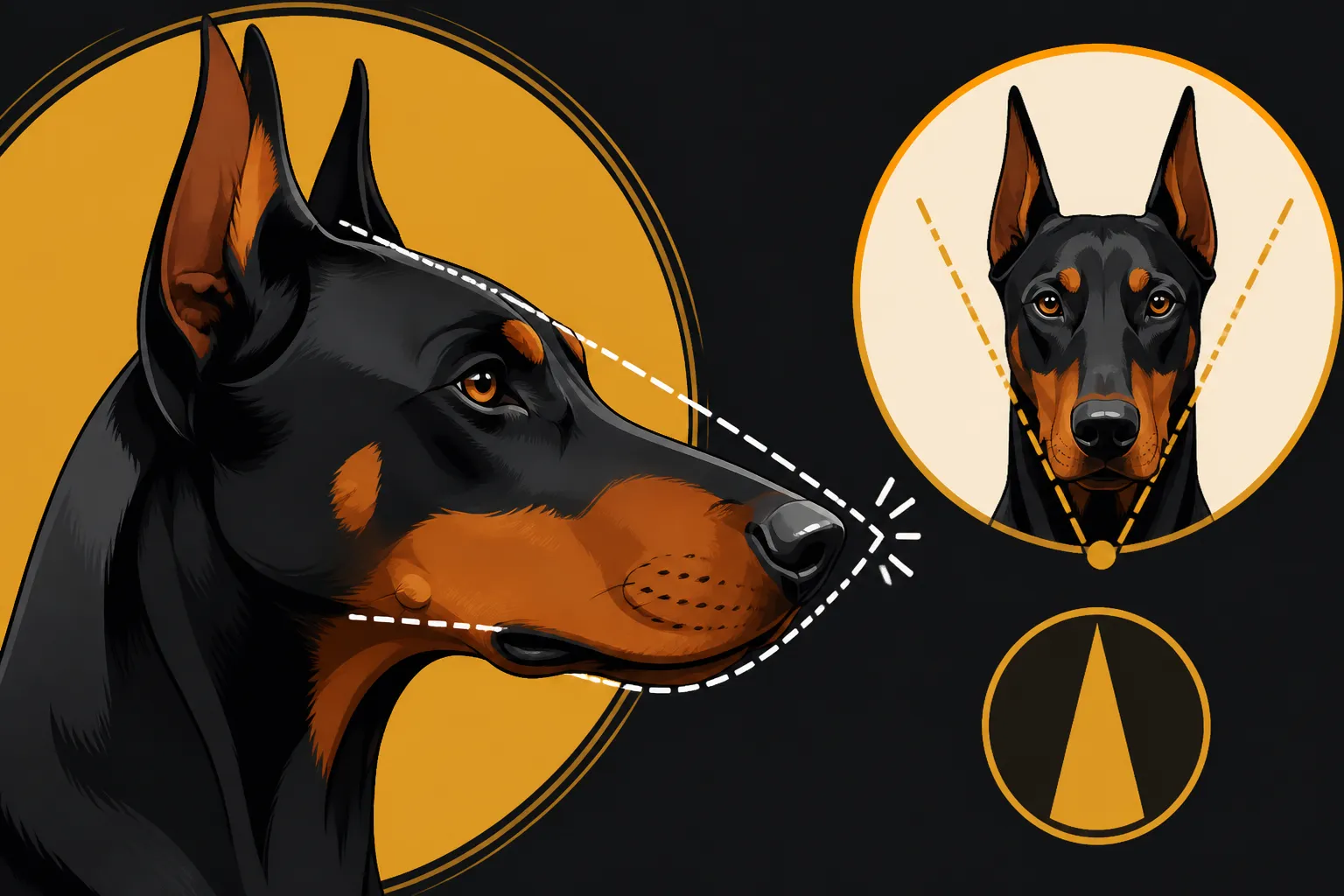
When the breed standard talks about a "wedge-shaped" head, it's not a vague poetic description; it’s a precise anatomical ideal. Imagine looking down at your Doberman's head from above: it should taper smoothly and cleanly from the widest point at the ears towards the nose, forming a blunt wedge. The same applies when viewing the head in profile. The top of the skull and the bridge of the muzzle should appear as nearly parallel planes, converging slightly towards the nose. This gives the Doberman a distinctive, clean-cut, and powerful silhouette that’s instantly recognizable.
Unlike breeds with broad, blocky heads like a Rottweiler, or those with highly domed skulls and short muzzles, the Doberman's wedge head is about refinement and functional strength. It’s a shape that conveys alertness and intelligence without appearing cumbersome or fragile. It's a hallmark that ties directly back to The Tax Collector Who Invented the Doberman and his vision for a capable, imposing protector. Any deviation, such as a round "apple head" or a too-narrow skull, disrupts this balance and moves away from the desired type.
Forehead to Muzzle: The Crucial Lines and Planes
Achieving that perfect wedge involves several key anatomical points working in harmony. Let’s break it down:
Firstly, the skull itself should be flat on top, between the ears. It shouldn't be rounded or domed. From this flat plane, the forehead transitions to the muzzle with a slight, well-defined "stop." This isn't an abrupt, deep stop like you'd see in a Bulldog, nor is it so shallow that it appears as one continuous line from skull to nose. It's just enough to indicate the separate planes.
Secondly, and critically, the top line of the muzzle should be straight and parallel to the top line of the skull. This is what creates that striking, clean profile. When you consider The Doberman the AKC Standard Describes, these parallel planes are a non-negotiable feature. If the muzzle dips down from the stop (a "dish face") or the skull is convex (rounded), that parallel relationship is lost, and the head loses its quintessential Doberman character. Conversely, a "down face" where the muzzle slopes continuously from the skull without a distinct stop is also incorrect. This precision in lines and planes is what truly defines the Doberman's elegant yet formidable presence.
Features That Complete the Doberman's Distinctive Head
While the overall wedge shape is paramount, it's the interplay of other features – the jaw, cheeks, eyes, and ears – that truly bring the Doberman's head to life, embodying its intelligence and alertness. These elements are not isolated; they contribute to and enhance the overall impression of the head.
The Importance of the Jaw and Cheek Muscles
Beneath that sleek skin, the Doberman's jaws are built for purpose. They should be strong and full, with well-developed teeth that meet in a powerful scissor bite. This jaw structure contributes to the blunt end of the wedge, providing a sense of strength without making the muzzle appear coarse or heavy. A "snipey" or weak muzzle, where it becomes too narrow and pointed, detracts significantly from the Doberman's powerful appearance and its historical role as a guardian. This isn't just about looks; a strong jaw is essential for a working dog, for holding and gripping.
The cheek muscles, while well-developed, should not bulge or appear coarse. They should contribute to the smooth planes of the head, blending seamlessly into the overall wedge. You shouldn't see pronounced, bulging cheeks that make the head appear round or heavy. The skin over the cheeks should be taut and smooth, without wrinkles, further emphasizing the clean lines. This delicate balance of strength and refinement in the jaw and cheek structure is key to the Doberman's unique head. It's why finding quality food that supports bone and muscle development, often available on platforms like Chewy, is so important from puppyhood.
Eyes, Ears, and Expression: Bringing the Head to Life
The Doberman's eyes are often described as its windows to the soul, and they play a critical role in the overall head picture. The standard calls for almond-shaped eyes, moderately deep-set, with a keen, intelligent, and alert expression. They should be as dark as possible, matching the color of the coat (though slight variations are allowed in red, blue, and fawn dogs). Light eyes or round eyes can give a Doberman a soft, vacant, or even harsh expression that is contrary to the breed's dignified demeanor. The placement of the eyes, looking straight forward, adds to the focused intensity that is so characteristic of the breed. For a deeper dive, check out Doberman Head, Eye and Expression in the Standard.
The ears, whether naturally carried or cropped, should complement the head's proportions. Historically, Dobermans were almost universally cropped, and the standard still describes a high-set, erect ear that enhances the alert expression and the elegant line of the head. A correctly cropped ear should be of a length proportionate to the head, contributing to the overall impression of balance. Even if your Doberman has natural ears, they should be well-set and not too heavy, maintaining the overall alert profile. The combined effect of these features is an intelligent, watchful, and fearless expression, embodying Doberman Temperament as the Standard Describes It.
Why the Head Matters: Beyond Aesthetics
While many aspects of a breed standard might seem purely aesthetic, for the Doberman, almost every point is rooted in functionality and the breed's original purpose. The head is no exception; its specific conformation is not arbitrary but integral to what makes a Doberman a Doberman.
Functionality and the Breed's Working Heritage
The Doberman was originally bred by Karl Friedrich Louis Dobermann to be a formidable personal protector, a loyal companion, and a keen working dog. Every physical trait, including the head, was selected to enhance these capabilities. The strong, wedge-shaped head with its powerful jaws and defined muzzle is not just for show; it's designed for effective gripping and holding. Imagine a Doberman in its historical role, whether guarding its owner or assisting law enforcement; that head structure provides the necessary tools for decisive action.
The keen, intelligent expression fostered by the eye shape and placement signals a dog that is constantly aware, perceptive, and ready to act. This alertness is crucial for a dog whose job was to detect threats and react appropriately. Even for modern pet Dobermans, this functional aspect translates into their innate vigilance and protective instincts. The head truly reflects the breed's heritage, a living connection to What Went Into the First Dobermans and their initial purpose.
Recognizing Deviations and Their Implications
When breeders evaluate Dobermans, either for show or breeding purposes, the head is one of the first things they assess. Deviations from the standard are considered faults, as they can impact both appearance and, in some cases, function.
Here’s a quick overview of some common deviations and why they’re considered faults:
| Feature | Ideal Doberman Head Characteristics | Common Deviations (Faults) | Implications |
|---|---|---|---|
| Overall Shape | Distinct blunt wedge, tapering from ears to nose. | Round or apple-shaped skull, too broad or too narrow throughout. | Loses elegance and distinctiveness; can suggest structural weakness. |
| Skull | Flat on top between the ears. | Domed or rounded skull. | Alters parallel planes; less refined appearance. |
| Stop | Slight but definite. | Too abrupt/deep, or too shallow (appearing as one continuous line). | Disrupts flow and balance of head; can affect expression. |
| Muzzle | Strong, deep, broad, with parallel top line to skull. | Snipey (too narrow), dish-faced (dips), down-faced (slopes from skull). | Reduces jaw strength; detracts from powerful, elegant look. |
| Jaws | Powerful, full, well-developed. | Weak, undeveloped, or undershot/overshot bite. | Impairs functional grip; indicates poor breeding for working traits. |
| Cheeks | Flat, well-muscled, not bulging. | Bulging or coarse. | Makes head appear heavy or round; detracts from sleek lines. |
| Eyes | Almond-shaped, moderately deep-set, dark, intelligent expression. | Round, light-colored, bulging, or sunken. | Gives soft, vacant, or harsh expression; less alert appearance. |
These faults, as outlined in guides like The Doberman Faults a Judge Cannot Overlook, are not just arbitrary rules for the show ring. A significantly weak muzzle, for instance, might genuinely reduce the dog's ability to hold or grip effectively. An overly domed skull could indicate other structural issues. While minor deviations in a pet Doberman might not impact its quality of life, understanding them helps us appreciate the careful thought that went into crafting The 1900 German Doberman Standard and how breeders today strive to maintain that ideal.
Preserving the Breed Standard in Modern Dobermans
The commitment to the Doberman breed standard, particularly regarding the head, is what ensures the continued integrity and recognition of this magnificent dog. It’s a collective effort, from dedicated breeders to informed owners.
The Breeder's Role in Upholding Type
Responsible Doberman breeders dedicate years, often decades, to understanding genetics, pedigrees, and the breed standard. Their goal isn't just to produce puppies but to produce Dobermans that embody the ideal traits of the breed, including that distinctive wedge head. They carefully select breeding pairs, looking at the head structure of both parents and their ancestors. They consider how different lines might contribute to specific head traits, aiming for consistency and improvement.
This commitment goes beyond superficial looks. It's about preserving the functional attributes that the head represents. Breeders who prioritize health and temperament alongside conformity to the standard, as detailed in articles like What Separates a Doberman Breeder Who Tests Hearts, are the backbone of the breed. They understand that a truly correct Doberman head is a reflection of overall sound structure and good genetics. They might even refer to differences, such as Why European Dobermans Have Heavier Heads or Whether a European Doberman Is Bigger, noting how these might subtly influence the wedge appearance, but the core principles remain.
Appreciating Your Doberman's Unique Head
As Doberman owners, we might not all be aiming for the show ring, but understanding the breed standard helps us appreciate our dogs on a deeper level. Looking at your Doberman's head, you can see the history, the purpose, and the careful breeding that shaped them. You might notice the strong jaw when they happily chew on a durable toy you picked up from Chewy, or the intelligent gaze when they fix their eyes on you, awaiting their next command.
Every Doberman is an individual, and even those not destined for champion titles are magnificent companions. While your Doberman’s head might not be "show perfect," understanding the ideal helps you recognize and admire the beautiful features they do possess. It fosters a greater appreciation for the breed's distinctiveness and the careful stewardship required to maintain it. Ultimately, the Doberman's wedge head is more than just a physical trait; it's a symbol of its intelligence, nobility, and unwavering loyalty, reminding us of the incredible journey this breed has undertaken.
Disclaimer
This article is for general informational purposes only and does not constitute professional advice. Laws, prices and regulations vary by location and change over time. Consult a qualified professional for guidance on your specific situation.