Docked Tails and the Modern Doberman
For many folks dreaming of bringing a Doberman into their lives, the image that immediately springs to mind is often that iconic, sleek silhouette with alert, cropped ears and a short, docked tail. But that traditional look often obscures a much larger conversation about the health, welfare, and natural form of these incredible dogs. This guide is here to shed light on the history, practice, and modern controversies surrounding docked Doberman tails, helping you understand this important aspect of the breed.
The Historical Rationale Behind Tail Docking
When you look at a Doberman today, especially one bred to the traditional American standard, it's almost a given that you'll see a dog with a short tail. But why did this practice become so intertwined with the breed's identity in the first place? It wasn't just for aesthetics; there were very real, albeit historically rooted, reasons for it.
Early Working Dog Needs
Let's go back to the very beginning, to Karl Dobermann in Apolda, Germany, who set out to create a fearless protector. The Tax Collector Who Invented the Doberman needed a dog that could accompany him on his rounds, a formidable deterrent against potential threats. In that environment, a long, flowing tail could actually be a liability. Imagine a Doberman engaged in protection work, navigating tight spaces, or even just chasing down a varmint in the fields. A long tail is vulnerable – it can get stepped on, caught, or even severely injured in a scuffle.
The thinking was that a docked tail reduced the risk of injury for a dog actively working in demanding, sometimes dangerous, situations. If a dog's tail was frequently getting cut, bruised, or broken, it would lead to pain, infection, and time off work. For a dog whose primary purpose was protection and guardianship, minimizing such risks was a practical consideration, not just a cosmetic choice. The focus was on creating a highly functional animal, and every aspect, including tail length, was considered through that lens.
A Legacy of Tradition and Breed Identity
Over time, as the Doberman breed developed and standards were formalized, the docked tail became an intrinsic part of its recognized appearance. The short tail contributed to the lean, powerful, almost chiseled look that became synonymous with the Doberman. It was believed to enhance the dog's elegant lines and create a perception of strength and refinement. When The 1900 German Doberman Standard was written, these physical traits, including the docked tail, were solidified as ideals for the breed.
This tradition meant that many generations of Doberman fanciers, breeders, and owners simply grew up seeing Dobermans with docked tails. It became the 'normal' and 'correct' look. For many, it's still difficult to imagine a Doberman without that characteristic short tail, as it's so deeply ingrained in the breed's visual identity worldwide. The silhouette of a docked Doberman is instantly recognizable, often portrayed in media and art, further cementing this image in the public consciousness. It's a powerful example of how tradition, once established for practical reasons, can persist and shape perceptions for decades, even centuries, becoming a symbol in its own right.
The Procedure of Doberman Tail Docking
Understanding the 'why' behind tail docking is one thing, but it's equally important to know the 'how.' The procedure itself is quite specific, typically performed very early in a Doberman puppy's life, and involves certain considerations for both the veterinary professional and the owner.
Timing and Technique
Doberman tail docking, when performed, is usually done when puppies are just a few days old, typically between 3 and 5 days. At this tender age, their nervous systems are still developing, and it's generally believed they experience less pain than older puppies or adult dogs, though this is a point of considerable ethical debate. The procedure is quick, involving the surgical removal of a portion of the tail. Sometimes, it's done by applying a tight rubber band to the tail, which cuts off blood supply, causing the tail portion to wither and fall off – a method less common now and often discouraged due to potential complications.
A reputable breeder will always ensure that any docking is performed by a licensed veterinarian. This isn't a DIY job; it requires sterile conditions, proper technique, and ideally, local anesthetic, even in very young puppies, to minimize discomfort and risk of infection. The goal is a clean, swift procedure that heals quickly. After the tail is docked, the remaining stump is typically sutured or left to heal naturally, depending on the vet's preferred method and the age of the puppy. Owners need to understand that even if done early, it's still a surgical procedure, and proper care is crucial.
Pain Management and Aftercare
The question of pain in neonatal puppies undergoing docking is a complex one. While some argue that puppies at such a young age don't fully register pain in the same way an older dog would, many veterinary professionals now advocate for local anesthetics to be used, even for these tiny pups, acknowledging that some level of discomfort is unavoidable. Pain relief, whether through a local nerve block or systemic analgesics, is a critical component of responsible practice, aimed at making the experience as humane as possible.
Post-procedure, the primary concern for owners and breeders is ensuring the tail stump heals without complications. This involves keeping the area clean and dry, monitoring for any signs of swelling, redness, discharge, or excessive licking/chewing from the puppy, which could indicate infection. Sometimes, an Elizabethan collar might be needed for a short period to prevent the mother dog or other littermates from interfering with the healing site, though this is less common with very young puppies. The small wound typically scabs over and heals quite quickly, often within a week or two. If you're considering a Doberman puppy with a docked tail, always ask the breeder about who performed the procedure, what pain management was used, and what aftercare was provided. You can also explore options for supplies and medications to support healing, often found conveniently at retailers like Chewy.
The Shifting Landscape: Opposition and Regulation
While tail docking has been a long-standing tradition for Dobermans, the tides of opinion and regulation are turning. What was once common practice is now facing increasing scrutiny from animal welfare advocates, veterinary bodies, and governments around the world.
Ethical Concerns and Animal Welfare
The core of the opposition to tail docking revolves around ethical concerns and animal welfare. Critics argue that it is a purely cosmetic procedure, not medically necessary, and therefore inflicts unnecessary pain and suffering on an animal. They point out that a dog's tail is a vital tool for communication, balance, and expression, and removing it significantly impacts their ability to interact with the world and other dogs. Imagine trying to understand another dog's mood without seeing its tail wagging happily, tucked in fear, or held high in curiosity.
Major veterinary associations, such as the American Veterinary Medical Association (AVMA) and the Canadian Veterinary Medical Association (CVMA), officially oppose cosmetic tail docking. They view it as an unnecessary mutilation and encourage breeders and owners to choose dogs with natural tails. This stance is echoed by animal welfare organizations globally, who highlight the potential for acute pain during the procedure, chronic pain later in life, and the removal of an essential body part without genuine medical justification. The debate is often fierce, pitting historical traditions against modern understandings of animal sentience and ethical treatment.
Legal Restrictions and Breed Standards
These ethical concerns have translated into widespread legal restrictions on tail docking across many parts of the world. It is now illegal in the vast majority of European countries, including the United Kingdom, Germany, Australia, and many others. In these regions, Dobermans must retain their natural tails, and exhibiting a docked dog in shows can result in disqualification or penalties. This means that if you import a Doberman from a European country where docking is banned, it will almost certainly have its natural tail.
In contrast, countries like the United States and parts of Canada still permit the practice, and the American Kennel Club (AKC) breed standard for the Doberman Pinscher still describes a docked tail as part of the ideal appearance. This creates a fascinating dichotomy and often means breeders in different parts of the world are working with very different standards regarding this physical trait. For those interested in showing their Dobermans, this can be a significant factor. It’s also important to remember that laws can change, so staying informed about local regulations is always a good idea. Even though Doberman Ear Cropping in the Standard and tail docking are often discussed together, the regulations and public opinion on each can vary slightly.
Living with an Undocked Doberman
With growing opposition to tail docking, more and more Dobermans are sporting their natural tails. If you're considering an undocked Doberman, or if you already have one, there are some wonderful aspects and a few practical considerations to be aware of.
The Natural Doberman Tail
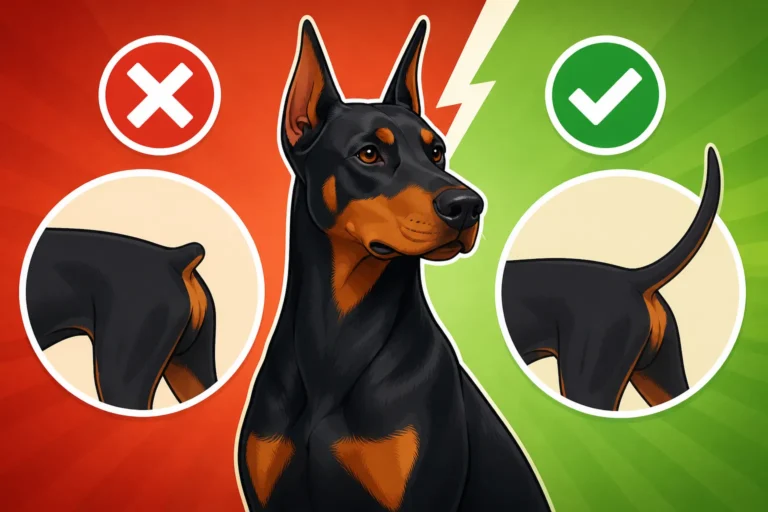
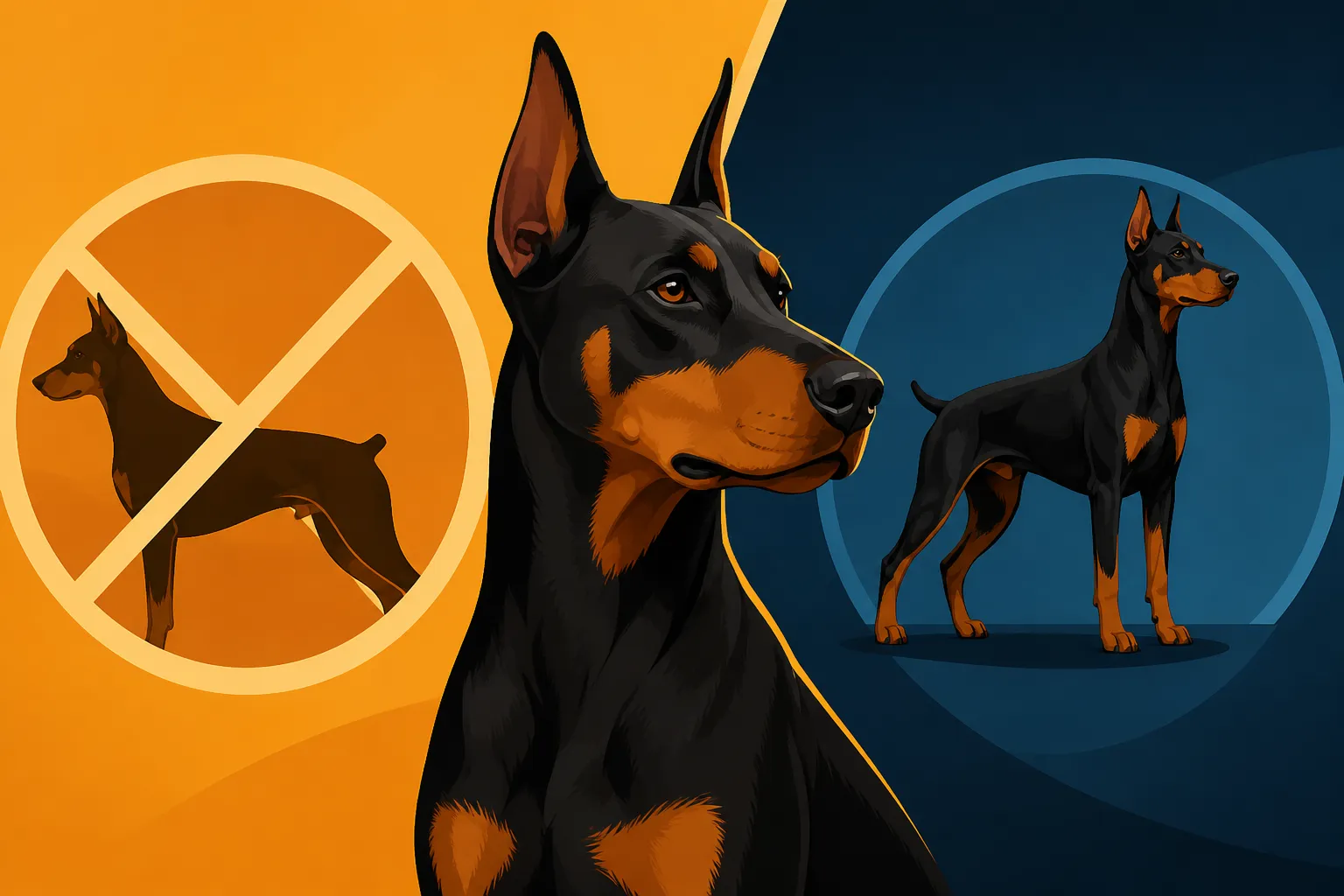
Picture this: instead of the short, upright stub, an undocked Doberman has a long, elegant tail that tapers to a fine point. It's often carried with a graceful curve, sometimes reaching down to the hocks, or even lower, depending on the dog's structure and mood. When relaxed, it might hang low; when excited, it will sweep back and forth with enthusiastic vigor. This natural tail is surprisingly beautiful and adds a different kind of grace to the Doberman's already striking physique.
Many owners who have welcomed an undocked Doberman into their home find that this natural look completely changes their perception of the breed. It allows for a fuller expression of the dog's body language and can highlight a different aspect of their athleticism and elegance. What a Full Doberman Tail Looks Like is truly a sight to behold, showcasing the breed as nature intended, rather than how human preference has traditionally shaped it. The tail isn't just an appendage; it's a dynamic part of their movement and poise.
Communication and Balance
One of the most profound differences you'll observe in an undocked Doberman is its enhanced ability to communicate. A dog's tail is a complex instrument of non-verbal communication. It signals joy, fear, anxiety, curiosity, and aggression. A docked Doberman, while still expressive through its ears, eyes, and body posture, simply loses a significant part of its vocabulary. With a full tail, you'll see every nuance: the gentle sweep of a happy greeting, the nervous tuck between the legs, the low, slow wag of caution, or the high, fast blur of pure excitement. This makes it easier for you and other dogs to understand your Doberman's mood, potentially preventing misunderstandings in social interactions.
Beyond communication, the tail also plays a crucial role in a dog's balance and agility. Think of it like a counterbalance, especially when a Doberman is running, turning sharply, or navigating uneven terrain. This is particularly noticeable in active Dobermans involved in sports like agility or even just those who love to zoom around the yard. Their tails help them stabilize and maneuver with precision. While a docked Doberman certainly isn't unbalanced, the natural tail provides an extra dimension to their athletic capabilities, allowing for subtle adjustments in their center of gravity.
Practical Considerations for Owners
Living with an undocked Doberman does come with a few minor practical considerations, though they are generally easily managed. The most commonly discussed issue is "happy tail" syndrome. This occurs when an enthusiastically wagging long tail repeatedly strikes hard surfaces (walls, furniture, crate bars), leading to abrasions, cuts, or even severe lacerations. These injuries can be painful and messy, sometimes requiring veterinary intervention to heal. It's not a reason to dock, but it's something to be mindful of in your home environment. Using soft bedding in crates, or ensuring adequate space, can help mitigate this. You might even find protective wraps or sleeves at pet supply stores like Chewy to guard against re-injury during healing.
Another minor point might be keeping the tail clean. While Dobermans have short coats, some owners find the longer tail can pick up more debris, especially if it brushes against dirty ground or wet grass. A quick wipe down after outdoor adventures usually suffices. Lastly, you might find some people comment on your Doberman's tail, either expressing surprise at its length or even admiration for its natural beauty. It's an opportunity to educate others about the shift in breed standards and the benefits of an undocked tail. When purchasing items like Harnesses and Leads for a Strong Doberman or even Car Restraints for an Eighty-Pound Doberman, you generally won't find the tail length to be an issue, but larger crates might be needed to allow full tail wagging comfortably.
Navigating the Choice: Breeder, Rescue, and Personal Preference
When bringing a Doberman into your life, the question of a docked versus natural tail is often one you'll encounter. It's a personal decision, but it's important to understand the landscape, whether you're working with a breeder or considering a rescue.
Finding a Breeder Who Aligns with Your Views
If you're looking for a Doberman puppy, you'll quickly discover that breeders often have strong opinions and practices regarding tail docking. In regions where it's legal, many reputable breeders will still dock tails in the first few days of a puppy's life, adhering to the traditional breed standard. However, you will also find ethical breeders who choose to leave tails natural, especially if they are influenced by European lines where docking is banned, or if they simply prioritize the natural form and function of the tail. When interviewing potential breeders, it's perfectly acceptable to ask about their practices and why they choose one over the other. Choosing a Doberman Breeder or a Rescue is a critical step, and a good breeder will be transparent about this and all other health and welfare practices.
It's crucial to have open communication from the start. If you have a strong preference for a natural tail, communicate this early in your search, as breeders often have waiting lists and may need to make arrangements if they are one of the few who offer undocked puppies in areas where it's still widely practiced. Conversely, if you want a docked tail, ensure the breeder works with a reputable veterinarian for the procedure. Remember, the most important thing is a healthy, well-tempered puppy from parents with The Health Testing a Doberman Breeder Must Show, regardless of tail length.
Rescue Dobermans and Their Tails
The world of Doberman rescue offers a diverse array of dogs, and you'll often find a higher percentage of Dobermans with natural tails in rescue organizations. This can be for several reasons: perhaps they were imported from countries where docking is illegal, or they come from accidental litters where docking wasn't a priority, or even from owners who simply preferred the natural look. If you're open to an adult Doberman, a rescue can be a fantastic option to find a dog with a natural tail. What Doberman Rescue Charges for an Adult typically covers their vetting and care, and you’ll get a dog whose personality is already known.
Embracing a rescue Doberman with a natural tail can be a rewarding experience. These dogs are no less Doberman than their docked counterparts, and their full tails often add to their unique charm. Rescue organizations like Doberman Pinscher Rescue America or local Doberman-specific rescues are excellent resources. They'll be able to tell you about the dog's background, temperament, and whether they might have come from a region where docking is not practiced. This route often presents a wonderful opportunity to welcome a Doberman into your home while also embracing the natural look of the breed.
Public Perception and Your Doberman
Having an undocked Doberman often means you'll encounter varied public reactions. In areas where docking is still the norm, people might stare, ask questions, or even mistakenly believe your dog is a mixed breed. Some might express surprise, never having seen a Doberman with a long tail before. However, in more progressive areas, or among those educated about animal welfare, you'll likely receive compliments on your dog's natural beauty. It's an interesting social dynamic that comes with owning a Doberman that doesn't fit the traditional mold.
Ultimately, your Doberman's tail length doesn't define its personality, loyalty, or capabilities. What truly matters is their temperament, training, and the bond you share. If you have an undocked Doberman, be prepared to be an ambassador for the natural look. You might find yourself gently educating curious strangers about why your Doberman's tail looks different, or sharing insights into canine body language. The focus should always be on raising a confident, well-socialized Doberman, regardless of whether their tail is docked or natural. Handling a Doberman in Public Without Alarming People is far more about your dog’s behavior and your control than it is about their physical appearance.
Here's a quick comparison of some aspects of docked versus natural Doberman tails:
| Feature | Docked Tail | Natural Tail |
|---|---|---|
| Appearance | Short, upright stub, traditional 'classic' Doberman look | Long, tapering, often curved, natural elegant look |
| Communication | Limited visual cues from tail | Full range of expression, vital for canine communication |
| Balance/Agility | Good, but lacks the extra counterbalance | Aids in balance and swift maneuvers, especially at speed |
| Historical Rationale | Reduced risk of injury in working dogs, aesthetic preference | None, as it is the original, unaltered state |
| Modern View (Ethical) | Often viewed as cosmetic mutilation, unnecessary pain | Seen as preserving natural form, promoting welfare |
| Legal Status | Banned in many countries, legal in others | Accepted everywhere, mandatory in some regions |
| Injury Risk | Low risk of "happy tail" injury | Higher risk of "happy tail" injury against hard surfaces |
| Grooming | Minimal grooming required | May require occasional wiping if dirty (very minimal for Dobermans) |
Disclaimer
This article is for general informational purposes only and does not constitute professional advice. Laws, prices and regulations vary by location and change over time. Consult a qualified professional for guidance on your specific situation.