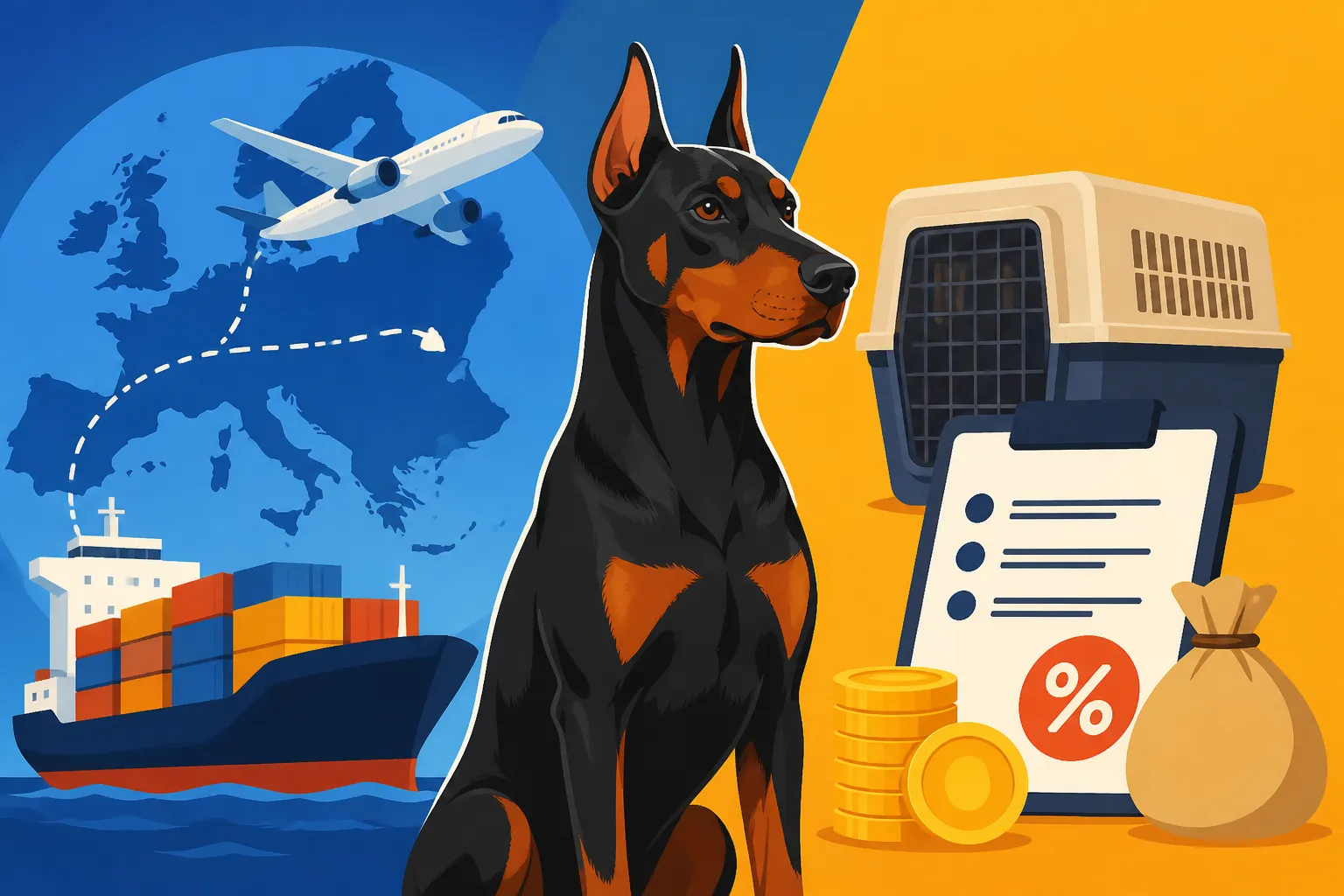
Shipping and Import Fees on a European Doberman
Dreaming of bringing home a magnificent European Doberman is a common aspiration for many enthusiasts, but the journey across continents involves far more than just picking out a puppy. Many prospective owners are understandably focused on the initial purchase price, only to be hit with a wave of unexpected expenses related to shipping and import. This guide aims to demystify these significant costs, helping you understand and budget for every step of bringing your new Doberman home from Europe.
Understanding the Allure of European Dobermans
There's a distinct draw to European Doberman lines that captures the hearts of many seeking a specific type of companion. It’s not just about a geographical distinction; it’s about a lineage, a certain look, and often, a reputation for robust health and temperament that appeals to those looking for a working-line or even just a more substantial pet.
Why Owners Seek European Lines
Many owners are specifically looking for a Doberman with a more powerful, traditional build – often described as heavier-boned and more substantial than some of their American counterparts. This isn't just aesthetic; it often aligns with a desire for a Doberman bred primarily for working aptitude, embodying strong protective instincts and a fearless, yet stable, character. These dogs are frequently seen in Schutzhund, IPO, or other protection sports, and their breeding priorities often reflect these demanding roles. Owners may feel that European lines retain more of the breed's original drive and resilience.
Beyond the physical appearance and working drive, there's also a perception of differing health standards and breeding practices. While Dobermans globally face challenges like The Heart Disease That Reaches Most Dobermans, some believe European breeders are ahead in certain health testing protocols or maintain more diverse gene pools, leading to a reduced incidence of particular ailments. For many, the commitment to rigorous health testing, often documented through extensive pedigrees and certifications like ZTP (Zuchttauglichkeitsprüfung) in Germany, is a huge draw. This perceived emphasis on soundness in both mind and body contributes significantly to their appeal.
Initial Costs Beyond the Purchase Price
When you decide to purchase a European Doberman, the price quoted for the puppy is just the tip of the iceberg. You’ll quickly find that a significant portion of your budget will be absorbed before your puppy even leaves its home country. Firstly, non-refundable deposits are standard practice, often ranging from several hundred to over a thousand dollars, simply to secure your spot on a waiting list or a specific puppy. These deposits cover the breeder's time, initial vetting, and commitment to you.
Furthermore, you need to account for the actual currency exchange rate at the time of purchase. What might seem like a straightforward €3000 can quickly become more or less in US dollars depending on market fluctuations. International bank transfers often come with their own set of fees, imposed by both the sending and receiving banks, which can add another $30-$70 per transaction. Beyond that, a reputable European breeder will likely have already initiated some health checks and vaccinations before the puppy is ready for travel. While some of these might be included in the puppy's price, others, such as specific blood tests or early health certifications, might be itemized separately. It's crucial to get a detailed breakdown from your breeder of what's included and what additional costs to expect before the puppy is even ready to travel, echoing the considerations discussed in Reading a Doberman Puppy's Test Certificates.
Navigating International Shipping Logistics
Once you've secured your puppy, the next major hurdle is figuring out how to get them from Europe to your home. This process is complex, governed by strict regulations, and can be a source of considerable stress and expense. Understanding your options is key to a smooth journey for your new family member.
Air Cargo vs. In-Cabin Transport
The primary method for transporting a Doberman, especially a puppy that will quickly grow beyond carry-on size, is via air cargo. This means your Doberman will travel in a climate-controlled, pressurized compartment beneath the passenger cabin. Air cargo is a highly regulated and safe method, but it comes with specific requirements. Airlines have strict rules regarding crate size, materials, ventilation, and labeling, all designed to ensure the animal's comfort and safety. For a Doberman, this usually means a large, IATA-compliant crate, significantly adding to the overall volumetric weight cost. Moreover, many airlines have breed restrictions or temperature embargoes, especially for brachycephalic (short-nosed) breeds, but also sometimes for larger breeds during extreme weather. You need to verify these policies with your chosen airline well in advance.
In-cabin transport, where the pet travels with you in the cabin, is generally reserved for very small dogs that can fit comfortably under the seat in a carrier. Given a Doberman's size, even a young puppy often exceeds these limits. While it might be possible for a tiny Doberman puppy to fly in-cabin for the initial leg of its journey with a human escort, it's rarely a viable option for the entire international flight, or once the puppy reaches even a few months of age. For those considering the in-cabin route, it almost always requires finding a dedicated pet courier or a flight nanny who will travel with your Doberman, booking an extra seat if necessary, which incurs substantial costs on top of the actual airfare. This option offers more direct supervision and comfort for the puppy but is significantly more expensive and logistically challenging for a Doberman.
Pet Relocation Services and Their Value
For many, the sheer complexity of international pet travel makes hiring a professional pet relocation service an invaluable investment. These services specialize in navigating the intricate web of international regulations, airline policies, and customs procedures. They act as a single point of contact, handling everything from booking flights and arranging ground transport to ensuring all paperwork is correctly filled out and endorsed. This can be particularly beneficial for Doberman owners who are less familiar with international shipping protocols, or those with demanding schedules who simply don't have the time to coordinate every detail.
A reputable pet relocation service will advise you on the best travel crates, verify health certificate requirements, arrange for USDA endorsement (if applicable for your destination country), and often have established relationships with airlines and customs officials, which can smooth the process considerably. While the cost of these services can range from $1,500 to $5,000 or more, depending on the complexity of the journey and the level of service, many owners find it a worthwhile expense to reduce stress and ensure their Doberman's safe and compliant arrival. Attempting to DIY international shipping, while potentially saving money, carries a significant risk of costly delays, denied entry, or unexpected complications if even a single document is incorrect or a regulation overlooked. This is a critical area where seeking expert help can prevent nightmares and ensure a smoother experience, as discussed in Flying a Doberman Puppy in From Europe.
Deconstructing the Shipping Fee Structure
The actual cost of flying your Doberman will depend on a multitude of factors, but it's generally one of the most substantial expenses in the entire import process. Understanding how these fees are calculated can help you anticipate the total.
Core Freight Charges and Weight Calculations
Airline freight charges for live animals are typically based on a combination of the animal's weight, the weight of its travel crate, and the volumetric weight of the crate itself. Volumetric weight takes into account the dimensions of the crate, often meaning that a large, lightweight crate can still incur higher charges than a small, heavy one. For a Doberman puppy, which can quickly grow, this means selecting a crate large enough for them to stand, turn around, and lie down comfortably, which in turn increases the volumetric weight. An average Doberman puppy traveling from Europe to the US might incur freight charges anywhere from $800 to $2,500, or even more for larger or older puppies, or depending on the route and airline.
These core charges are often supplemented by various surcharges. You'll likely encounter fuel surcharges, which fluctuate with oil prices, and specific handling fees for live animal shipments. These fees cover the specialized care, climate-controlled holding areas, and priority loading that live animals require. Some airlines also add a "terminal fee" or "document processing fee." It's not uncommon for these additional charges to add several hundred dollars to the base freight cost. Always ask for an itemized quote from the shipping company or airline to avoid surprises.
Crate Requirements and Acquisition Costs
The travel crate is more than just a box; it's your Doberman's safe haven during transit, and it must comply with International Air Transport Association (IATA) regulations for live animal transport. These regulations dictate specific dimensions, construction materials, ventilation, water and food dish accessibility, and labeling. For a Doberman, this usually means a sturdy, hard-sided plastic or wooden crate that is large enough for the dog to stand erect without its head touching the top, turn around easily, and lie down in a natural position.
The cost of such an IATA-compliant crate for a Doberman can range from $150 to $500, depending on its size, material, and where you purchase it. Brands like Petmate's Sky Kennel or Vari Kennel are popular choices. You'll also need absorbent bedding, "LIVE ANIMAL" stickers, and "THIS SIDE UP" arrows, all of which are usually inexpensive but vital for compliance. Beyond simply acquiring the crate, it's absolutely crucial to start crate training your Doberman puppy well in advance of travel. A dog that is comfortable and calm in its crate will have a much less stressful journey. This means making the crate a positive, familiar space, rather than a scary, unknown box, long before it becomes their temporary home for a trans-Atlantic flight.
Unpacking Import Regulations and Associated Fees
Once your Doberman's flight is booked and the crate is ready, the next layer of complexity lies in the import regulations of the destination country. The United States, for instance, has specific requirements to prevent the introduction of diseases, and adhering to these is non-negotiable.
Health Certificates and Veterinary Endorsements
Before your Doberman can enter the U.S., it must have a valid international health certificate issued by a licensed veterinarian in the country of origin. This certificate attests to the dog's health, vaccination status, and freedom from communicable diseases. For dogs traveling from the European Union, this typically means a standardized EU Health Certificate for non-commercial movement of pets. Key components usually include proof of rabies vaccination (administered at least 21 days prior to travel and still current), microchip identification (which must be implanted before the rabies vaccination), and often treatments for internal and external parasites.
The health certificate must then be endorsed by the official veterinary authority in the exporting country, such as the equivalent of the USDA. This endorsement verifies that the issuing veterinarian is accredited and that all requirements have been met. The cost for these veterinary checks, vaccinations, and the official endorsement can range from $100 to $500, depending on the vet's fees and the official endorsement charges. It’s absolutely vital that all dates and information on these documents are precise and correct, as any error can lead to significant delays or even refusal of entry at the port of arrival, a scenario you definitely want to avoid as detailed in Customs and Health Papers for an Imported Doberman.
Customs Duties, Taxes, and Brokerage Fees
Here’s a piece of good news: generally, live animals imported into the United States for personal companionship are not subject to customs duties or import taxes. The U.S. Customs and Border Protection (CBP) considers pets as personal effects rather than commercial goods. However, you must still declare the value of your Doberman on the import paperwork, even if no duty is assessed. Some states or specific ports of entry might have minor processing fees, but these are usually minimal.
Where costs can arise is if you choose to use a customs broker. While not always mandatory for pet imports, a customs broker can expedite the clearance process, particularly if there are any unusual circumstances or if the paperwork is complex. They specialize in navigating CBP procedures and can help ensure a smooth, swift entry for your Doberman. Their fees can range from $100 to $500 or more, and while they are an optional expense for most personal pet imports, they can be a worthwhile consideration for peace of mind, especially if you're not physically present at the port of entry to handle the clearance yourself. It's always best to research specific state and port requirements, as regulations can sometimes vary.
Quarantine and Inspection Upon Arrival
For Dobermans arriving in the U.S. from most European countries, especially EU member states, a lengthy quarantine period is typically not required, provided all health and vaccination requirements are met. This is a huge relief for owners, as quarantine facilities can be very expensive and stressful for the animal. However, your Doberman will still undergo an inspection upon arrival by customs and potentially by a veterinarian from the Centers for Disease Control and Prevention (CDC) or the U.S. Department of Agriculture (USDA) at the port of entry.
This inspection is to verify the microchip, review the health certificate and vaccination records, and conduct a visual health check to ensure the dog appears healthy and free of obvious signs of disease. While there isn't usually a separate "inspection fee" charged directly to the owner at this stage, any issues discovered during this process could lead to additional costs. This might include further veterinary examinations, retesting, or, in the worst-case scenario, temporary quarantine at the owner's expense until compliance is achieved. Therefore, ensuring all paperwork is perfect and your Doberman is in good health before departure is the best way to avoid these potential financial and emotional burdens.
Additional Hidden Costs and Considerations
Beyond the direct shipping and import fees, there are several other expenses and factors you absolutely need to consider to ensure a smooth transition for your European Doberman. These costs often go overlooked in the initial budgeting phase but can quickly add up.
Travel Insurance for Your Doberman
Just like human travel, international pet travel carries inherent risks. Flights can be delayed or rerouted, crates can be damaged, or, tragically, a pet could become ill or injured during transit. This is why securing dedicated travel insurance for your Doberman for its journey is a wise, albeit often overlooked, investment. Such policies typically cover veterinary care for injuries or illnesses sustained during travel, costs associated with flight delays (like extended boarding at a layover kennel), or in extreme cases, compensation for loss.
While this travel-specific insurance is different from a general pet health insurance policy, it's a good time to think about ongoing coverage. Once your Doberman arrives and settles in, you'll want to protect your investment in their long-term health. Providers like Healthy Paws offer comprehensive pet insurance plans that can help manage the often-high veterinary costs associated with Doberman health concerns throughout their life. Many Dobermans face genetic predispositions, so having a robust insurance plan in place before any issues arise can be a financial lifeline. This foresight can be crucial, as unexpected vet bills can quickly spiral into thousands, a stark reality for many Doberman owners.
Post-Arrival Vet Checks and Acclimation
The journey across continents is incredibly stressful for any animal, regardless of how well it's managed. Once your Doberman arrives, a post-arrival veterinary check-up is not just recommended but essential. This initial vet visit allows for a thorough examination to catch any stress-related illnesses, parasites picked up during transit, or issues exacerbated by the journey. Your vet may recommend additional deworming, a booster vaccination, or simply a general health assessment to establish a baseline in their new environment. The cost for this visit and any immediate treatments could range from $100-$300.
Beyond medical care, helping your Doberman acclimate to its new home environment is paramount. This includes providing a quiet, safe space, establishing a consistent routine, and offering a high-quality, easily digestible diet. You might consider using reputable online retailers like Chewy to stock up on premium kibble or explore fresh food delivery services like Ollie for specialized nutritional needs. Sudden changes in diet can cause gastrointestinal upset, so having a supply of the food your Doberman was eating in Europe, or a suitable alternative, is important. Any behavioral issues stemming from travel stress, such as anxiety or house-training regressions, might also require professional guidance or additional supplies, adding to the initial post-arrival expenses.
Budgeting for the Long-Term Investment
Bringing a European Doberman home is undoubtedly a significant financial undertaking, but it’s crucial to understand that the initial import costs are truly just the beginning of a long-term financial commitment. Thinking holistically about the cost of ownership will help you prepare for the wonderful, but sometimes challenging, journey ahead.
The True Cost Beyond the Initial Import
While the shipping and import fees might seem steep, they pale in comparison to the total lifetime cost of owning a Doberman. European Dobermans, with their strong working drives, often require consistent, professional training, which can include group classes, private lessons, or even protection sport training. These activities are vital for their mental and physical well-being and can easily cost hundreds to thousands of dollars annually. Beyond training, their dietary needs are substantial, especially for a large, active breed. High-quality kibble, or specialized diets, can be a significant monthly expense.
Then there’s the ongoing veterinary care, which for a Doberman, includes not just routine check-ups and vaccinations, but also regular health screenings for breed-specific ailments. For instance, Annual Echo and Holter Screening for a Doberman is strongly recommended annually to monitor for dilated cardiomyopathy (DCM), a prevalent heart condition. These specialized screenings, along with potential medication, can quickly become a significant yearly expense. Don’t forget the everyday costs: leashes, collars, beds, toys (especially durable ones for a powerful chewer), grooming supplies, and potential emergency vet visits. These cumulative costs mean that the upfront investment for your imported Doberman is just a down payment on their lifelong care.
Making an Informed Decision
Bringing a European Doberman into your life is a deeply rewarding experience, but it’s one that requires careful planning and a realistic understanding of the financial commitment. The key to success lies in doing your homework, choosing a reputable breeder who prioritizes health and temperament, and meticulously budgeting for all expenses – from the initial puppy price to the complex shipping logistics and ongoing care. Don't let the allure of a specific lineage blind you to the practical realities of importing an animal.
Engage openly with your chosen breeder about all costs, not just the puppy's price. Research specific airline regulations, solicit quotes from multiple pet relocation services, and factor in contingency funds for unforeseen circumstances. Consider Whether an Imported Doberman Is Worth the Premium for your specific circumstances and goals. Remember, the goal is not just to get your Doberman home, but to provide them with a healthy, happy, and fulfilling life once they arrive. By understanding and preparing for every financial aspect, you set both yourself and your magnificent Doberman up for success.
| Cost Category | Estimated Range (USD) | Notes |
|---|---|---|
| Doberman Puppy Price | $2,500 – $5,000+ | Varies significantly based on pedigree, breeder reputation, titles, and lineage. See Why European Doberman Puppies Are Priced Higher for more context. |
| Deposit (non-refundable) | $500 – $1,500 | Typically applied towards the full purchase price. |
| International Bank Transfer Fees | $30 – $70 (per transaction) | Costs from both sending and receiving banks. |
| IATA-Compliant Travel Crate | $150 – $500 | Must meet strict airline dimensions and construction requirements. |
| Health Certificate & Vet Endorsement | $100 – $500 | Includes required vaccinations (e.g., rabies), parasite treatments, vet exam, and official government endorsement. Critical for entry. |
| Air Freight Charges | $800 – $2,500+ | Based on volumetric weight, actual weight, route, airline, and fuel surcharges. Can be higher for older/larger puppies. |
| Pet Relocation Service | $1,500 – $5,000+ (Optional) | Covers coordination, paperwork, bookings, and ground transport. Highly recommended for first-time importers to avoid errors. |
| Customs Broker Fees | $100 – $500 (Optional) | For expedited customs clearance, though not always necessary for personal pet imports. |
| Travel Insurance | $50 – $200 (for the journey) | Covers contingencies during transit like delays, medical emergencies, or loss. Distinct from long-term pet health insurance. |
| Post-Arrival Vet Check | $100 – $300 | Essential initial check-up, any follow-up vaccinations or deworming. |
| Ground Transport (Airport to Home) | $50 – $300 (or your own vehicle) | Cost depends on distance and whether you hire a professional pet taxi. |
| TOTAL ESTIMATED MINIMUM | $4,000 – $10,000+ | This excludes ongoing costs like food, training, toys, and long-term vet care. This also doesn't include the value of your Doberman puppy itself. Remember that A Doberman's Whole-Life Total will be significantly higher over the years. |
Disclaimer
The information provided in this guide is for general informational purposes only and does not constitute professional veterinary, legal, or financial advice. Shipping regulations and costs can change rapidly and vary by country, airline, and specific circumstances. Always consult with a licensed veterinarian, a reputable pet relocation specialist, and the relevant government authorities (e.g., USDA, CDC, CBP) for the most accurate and up-to-date information regarding importing a Doberman. Costs are estimates and can vary significantly.