Whether a Doberman Should Eat Legume-Heavy Food
It can feel overwhelming, can't it? You love your Doberman more than anything, and you just want to feed them the best food possible, only to be met with conflicting information, scare stories, and a minefield of dietary advice, especially when it comes to ingredients like legumes. The concern is real, particularly for Doberman owners, given our breed's heartbreaking predisposition to certain health conditions. This guide will help you understand the debate around legume-heavy dog foods, what it means for your beloved Doberman, and how to make informed decisions for their diet.
The DCM Connection: Unpacking the Dietary Concerns for Dobermans
For Doberman owners, the words "Dilated Cardiomyopathy" (DCM) carry a heavy weight. It's a devastating heart condition that affects our breed disproportionately, often striking silently until it's too late. So, when the FDA started investigating a potential link between certain "grain-free" or "boutique, exotic, or grain-free" (BEG) diets and DCM in dogs, a collective shiver went through the Doberman community. We're already on high alert for anything that might impact our dogs' hearts, and this added a whole new layer of anxiety.
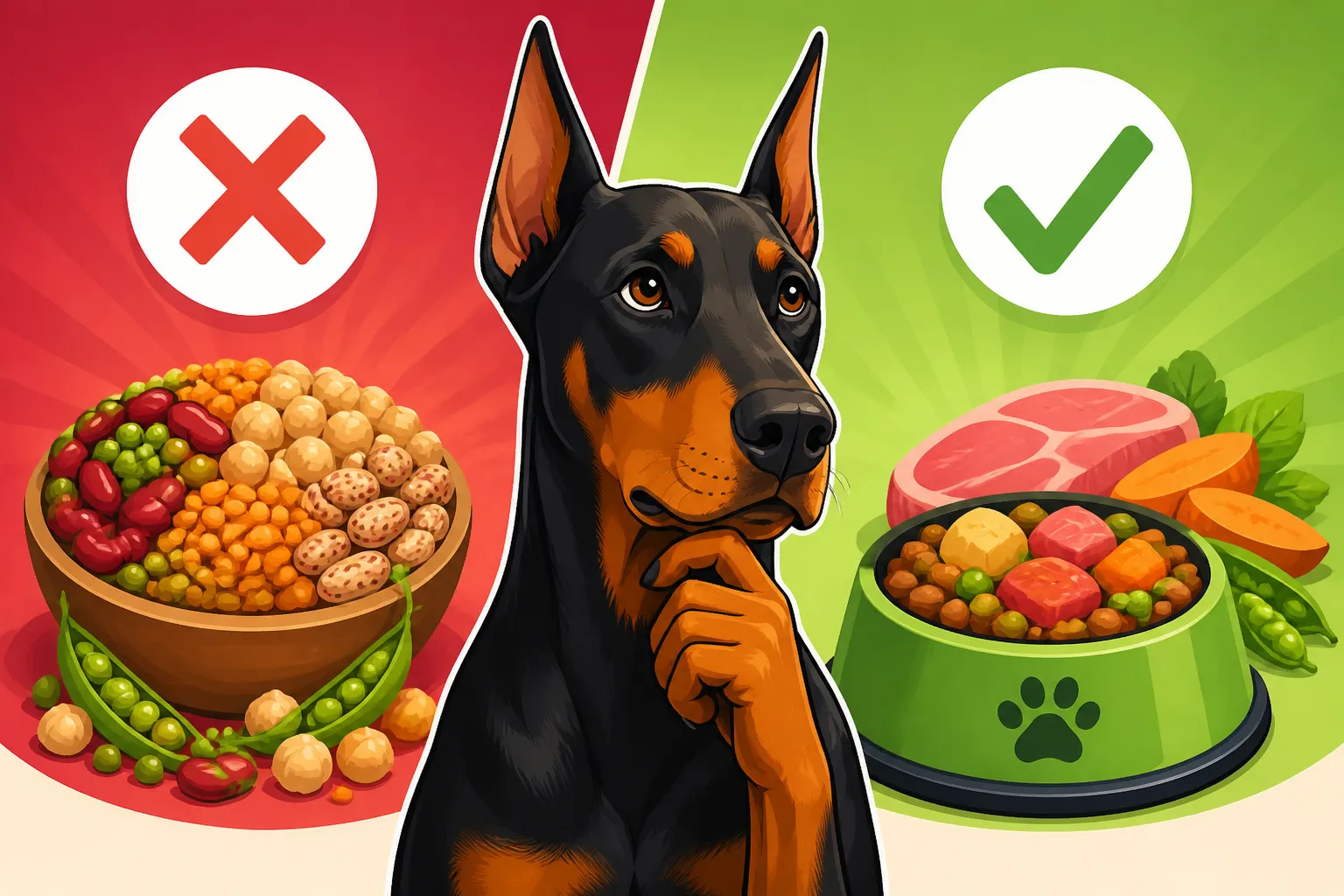
The core of the concern revolves around these diets often containing high levels of legumes like peas, lentils, chickpeas, and potatoes as primary ingredients, replacing traditional grains like rice or corn. While grains have been demonized in some circles, they actually provide important nutrients and don't necessarily cause issues for most dogs. The FDA's investigation, which is still ongoing and has not concluded a definitive causal link, observed an increase in atypical DCM cases in breeds not traditionally prone to the disease, or in breeds like Dobermans presenting at younger ages. It was hypothesized that certain components or nutrient imbalances in these legume-heavy diets might be interfering with taurine metabolism, a vital amino acid for heart function.
It's crucial to understand that this isn't about all grain-free diets, nor is it definitively proven that legumes cause DCM. Instead, it's about a correlation observed in certain types of diets and an alarming rise in DCM cases that didn't fit the usual patterns. For a Doberman owner, who is already grappling with the very real threat of genetic DCM, this added dietary layer can feel incredibly unfair. You're trying your best, often opting for what you think is a healthier, more "natural" food, only to find it might be contributing to the very disease you fear most. This is why staying informed, rather than reacting to headlines, is so important. You’re already dealing with the prospect of The Heart Disease That Reaches Most Dobermans, so sorting through dietary advice becomes another critical aspect of responsible ownership.
Understanding Taurine and Carnitine in Doberman Diets
When we talk about legumes and heart health in Dobermans, the conversation almost immediately turns to taurine and carnitine. These aren't just obscure nutrients; they are absolute superstars for cardiac function. Taurine is an amino acid that plays a critical role in heart muscle contraction, and a deficiency can lead to DCM. Carnitine, another amino acid, is essential for energy production within the heart cells. Many Dobermans, even those on what seem to be perfectly balanced diets, can have lower-than-optimal levels of these crucial compounds, making them potentially more susceptible to dietary-induced issues.
The theory behind the legume-DCM link often suggests that high levels of certain ingredients, including peas and lentils, might either directly interfere with taurine synthesis in the dog's body, or they might bind to taurine, making it less available for absorption. Some evidence also points to the potential for these ingredients to alter the gut microbiome in a way that affects taurine levels. This is why some veterinary cardiologists started recommending taurine and carnitine supplementation for Dobermans, particularly those on diets containing high amounts of these ingredients, or those with early signs of cardiac changes. It's an attempt to mitigate a potential risk, even if the exact mechanism isn't fully understood.
For Dobermans, specifically, this is especially pertinent because our breed is known to be more prone to both genetic and potentially dietary-influenced taurine deficiencies. It's a double-whammy that makes us more vigilant. If your Doberman is already on a medication for its heart, or if you're discussing Medication for a Doberman in the Occult Phase, then diet becomes an even more critical component of their overall health plan. Discussing Supplements a Doberman Cardiologist Actually Recommends should definitely be on your agenda with your vet.
What Exactly Are "Legume-Heavy" Dog Foods?
The term "legume-heavy" isn't a scientific classification, which can make it confusing for pet owners. Essentially, it refers to dog foods where legumes—like peas, lentils, chickpeas, and various beans—or potatoes (which are starchy vegetables, not true legumes, but often appear in similar diets) are listed as one of the first few ingredients on the label. This typically means they make up a significant portion of the food's composition, often replacing grains.
Many commercially available "grain-free" foods utilize these ingredients to provide carbohydrates, fiber, and protein. They became popular partly due to marketing trends suggesting grains were fillers or allergens, even though true grain allergies in dogs are relatively uncommon. What often happened is that manufacturers replaced grains with other carbohydrate sources, and legumes became a popular, cost-effective choice. So, while the front of the bag might proudly proclaim "grain-free," the back often reveals a long list of pea protein, lentil flour, or whole chickpeas. This is a crucial distinction to make: "grain-free" does not automatically mean "legume-free," and often, it means the opposite.
Recognizing these ingredients on a label is the first step. Look for "peas," "lentils," "chickpeas," "fava beans," "navy beans," "pinto beans," or any form of "pea protein," "lentil flour," etc., high up in the ingredient list. Sometimes, potato or sweet potato also appears prominently. It’s not that these ingredients are inherently bad – they offer protein and fiber – but their concentration and replacement of other well-established ingredients are what raised flags. Many reputable brands found on retailers like Chewy or Amazon will clearly list their ingredients, making it easier for you to scrutinize.
Common Legume Ingredients and Their Role
Let's break down some of the most common legume and related ingredients you'll find in dog food and why they might be there. It's not about villainizing these ingredients entirely, but understanding their prevalence and potential impact.
| Ingredient Type | Common Examples | Typical Role in Dog Food | Doberman Consideration (Current Understanding) |
|---|---|---|---|
| Peas | Green peas, yellow peas, pea protein, pea flour | Carbohydrate, fiber, plant-based protein | Frequently high in BEG diets; may impact taurine levels. |
| Lentils | Red lentils, green lentils, lentil flour | Carbohydrate, fiber, plant-based protein | Similar concerns to peas when present in high amounts. |
| Chickpeas | Garbanzo beans | Carbohydrate, fiber, plant-based protein | Often used in "grain-free" recipes; potential taurine link. |
| Potatoes | White potato, sweet potato | Carbohydrate, fiber | Often replace grains; while not a legume, part of BEG diets. |
| Beans | Fava beans, navy beans, pinto beans | Carbohydrate, fiber, plant-based protein | Less common as primary ingredients, but still legumes. |
This table highlights that while these ingredients offer nutritional value, their quantity in relation to other components is the critical factor. When they dominate the ingredient list, especially in the top five, it flags a food as potentially "legume-heavy."
Navigating Diet Choices for Your Doberman
Choosing the right food for your Doberman can feel like a high-stakes game, especially with the DCM shadow looming. My best advice, and something I tell every Doberman owner, is to consult with experts and prioritize proven formulations over trendy diets. The goal is to provide a balanced, nutritionally complete diet that supports their overall health, including their heart, without introducing unnecessary risks.
If your Doberman is currently on a grain-free or legume-heavy diet, don't panic. The most important first step is to talk to your veterinarian. They can assess your dog's individual needs, discuss the risks, and help you determine if a diet change is warranted. They might recommend screening for DCM, such as an annual echo or Holter, and potentially running blood tests to check taurine levels. If you are concerned about The Age Doberman Heart Disease Usually Starts, these screenings become even more critical.
Many vets now recommend sticking to diets formulated by companies that employ board-certified veterinary nutritionists and conduct rigorous feeding trials. These companies often produce traditional grain-inclusive diets, which have a long history of safety and efficacy. Brands like Purina, Hill's Science Diet, Royal Canin, and Eukanuba are frequently cited as examples of such companies. While you might be drawn to the idea of a "boutique" or "ancestral" diet, sometimes the tried and true options are the safest bet, especially for a breed like the Doberman. Switching diets, if needed, should be done gradually over 7-10 days to avoid upsetting your Doberman's stomach. You can find many of these recommended foods readily available through online retailers like Chewy, which makes comparing ingredients and pricing straightforward.
When to Consider a Diet Change for Your Doberman
Deciding to change your Doberman's diet isn't a decision to take lightly, and it should always be done in consultation with your veterinarian. However, there are some scenarios where a closer look at your dog's food, particularly if it's legume-heavy, becomes paramount.
Firstly, if your Doberman has been diagnosed with DCM, or if a cardiac screening shows any early signs of heart changes, a dietary adjustment is almost always part of the treatment plan. Your cardiologist or vet will guide you on the best course of action, which may include specific prescription diets or supplements like taurine and carnitine. This is where Taurine and Carnitine for a Doberman Heart becomes a direct consideration. Even if your Doberman hasn't shown symptoms, if you've done health testing and found genetic markers for DCM, discussing diet with your vet is a proactive measure.
Secondly, if your Doberman is on a diet that is heavily reliant on legumes (peas, lentils, chickpeas, etc.) as main ingredients, and particularly if it's one of the brands that have been frequently cited in the FDA's reports, it's prudent to discuss this with your vet. They can help you evaluate the risk versus benefit for your individual dog. Remember, many Dobermans thrive on well-balanced, high-quality grain-inclusive diets. There's no shame in moving away from a trendy diet if it means potentially safeguarding your Doberman's heart. Retailers like Amazon offer a vast selection, so you can easily research alternative options, but always bring your findings back to your vet. Don't be afraid to ask about Switching a Doberman Off a Boutique Diet and how to do it safely.
Working With Your Vet on Nutritional Decisions
It's tempting to try and become a canine nutrition expert overnight, but the truth is, the world of pet food is incredibly complex. For Doberman owners, trying to decipher ingredient lists, understand nutrient profiles, and weigh potential risks can lead to serious anxiety. This is precisely why your veterinarian should be your primary partner in all dietary decisions. They have the medical knowledge, access to current research, and understanding of your individual Doberman's health history.
When you bring up dietary concerns, your vet can help you sift through the noise. They can explain the current understanding of the FDA's investigation, recommend specific brands or types of food, and advise on whether blood tests for taurine or cardiac screenings are appropriate for your Doberman. Sometimes, they might even recommend consulting with a board-certified veterinary nutritionist, especially if your Doberman has complex health needs or unusual dietary sensitivities. These specialists have advanced training in animal nutrition and can formulate highly specific diets if needed.
Remember, veterinarians are continually learning and staying updated on the latest research. They are your best resource for making evidence-based decisions for your Doberman's health. Don't rely solely on online forums, breeder recommendations, or marketing claims. Your Doberman's unique health profile, age, activity level, and any pre-existing conditions (like their predisposition to The Heart Disease That Reaches Most Dobermans or Doberman Lifespan and Why It Is Short) all play a role in determining the best diet. A holistic approach, combining expert veterinary advice with careful consideration of food ingredients, is the most responsible way to nourish your cherished Doberman.
Reading Ingredient Labels and Making Informed Choices
Learning to read dog food ingredient labels effectively is a superpower for any Doberman owner. It empowers you to make informed decisions rather than just relying on marketing jargon. Here's a simple guide to what to look for:
- First Five Ingredients: These typically make up the bulk of the food. Look for named meat proteins (e.g., "chicken meal," "lamb," "beef") as the first one or two ingredients. If you see multiple legume ingredients (peas, lentils, chickpeas) within the first five, or even in the first ten in varying forms (e.g., "peas," "pea protein"), that food might be considered "legume-heavy."
- Named Ingredients vs. Generic: Always prefer specific, named ingredients. "Chicken meal" is better than "poultry meal." "Peas" is clearer than "vegetable protein."
- Nutritional Adequacy Statement: Look for an AAFCO (Association of American Feed Control Officials) statement. It should say something like "formulated to meet the nutritional levels established by the AAFCO Dog Food Nutrient Profiles for [life stage, e.g., 'all life stages' or 'adult maintenance']" or "animal feeding tests using AAFCO procedures substantiate that [brand name] provides complete and balanced nutrition for [life stage]." This confirms the food is nutritionally complete.
- Manufacturer's Reputation: Research the company. Do they employ veterinary nutritionists? Do they conduct feeding trials? How are their quality control measures? These factors often speak volumes about the quality and safety of their products.
- Calories and Macronutrients: While not directly related to legumes, understanding your Doberman's caloric needs (Daily Calories for an Adult Doberman) and the food's protein and fat content can help ensure they maintain a healthy weight and energy level.
Don't hesitate to take a picture of the ingredient list and guaranteed analysis from a bag of food you're considering and show it to your vet. It's much better to have an informed conversation before you commit to a new food. While you might feel compelled to try every new food that promises to be the "best," consistency with a vet-approved, nutritionally sound diet is usually the safest and most effective path for our Dobermans.
Disclaimer
This article is for general informational purposes only and does not constitute professional advice. Laws, prices and regulations vary by location and change over time. Consult a qualified professional for guidance on your specific situation.