Whether a Doberman Needs Boots in Snow
The winter months can be truly challenging for Doberman owners, especially when you step outside and see snow covering everything. Many of us grapple with the genuine concern for our Doberman's well-being in the cold, particularly their paws, which seem so vulnerable against the harsh elements. This guide will walk you through the specifics of Doberman paw care in snowy conditions, helping you decide if boots are the right choice for your beloved companion and how to keep their feet healthy all winter long.
Understanding Your Doberman's Cold Sensitivity and Paw Protection Needs
It’s no secret that Dobermans aren't exactly built for arctic expeditions. Their sleek, athletic build and short coats, while beautiful, don't offer the same insulation as, say, a Siberian Husky. This inherent sensitivity extends to their paws, making cold weather a real consideration for their comfort and health.
Why Dobermans Feel the Cold More Than Other Breeds
When you look at a Doberman, you see muscle and elegance, not layers of fluff designed to trap warmth. They possess a single, short coat with virtually no insulating undercoat. This means there's very little between their skin and the biting cold. Compare this to a breed like a Bernese Mountain Dog or a Newfoundland, who have thick, dense double coats that act like natural down parkas. Your Doberman, on the other hand, is wearing a light jacket on a freezing day.
Beyond their coat, Dobermans also tend to have a leaner body mass with less subcutaneous fat compared to many other breeds. Fat acts as an insulator, and without much of it, their core body temperature can drop more quickly. While their entire body is susceptible to the cold, their extremities—ears, tail, and especially their paws—are often the first to show signs of discomfort or potential harm. It's a valid concern we all share for our Dobermans, wondering just what exactly The Temperature a Doberman Needs a Coat to stay comfortable. They're not just being dramatic; they genuinely feel it more acutely than many other dogs.
The Dangers Snow and Ice Pose to Doberman Paws
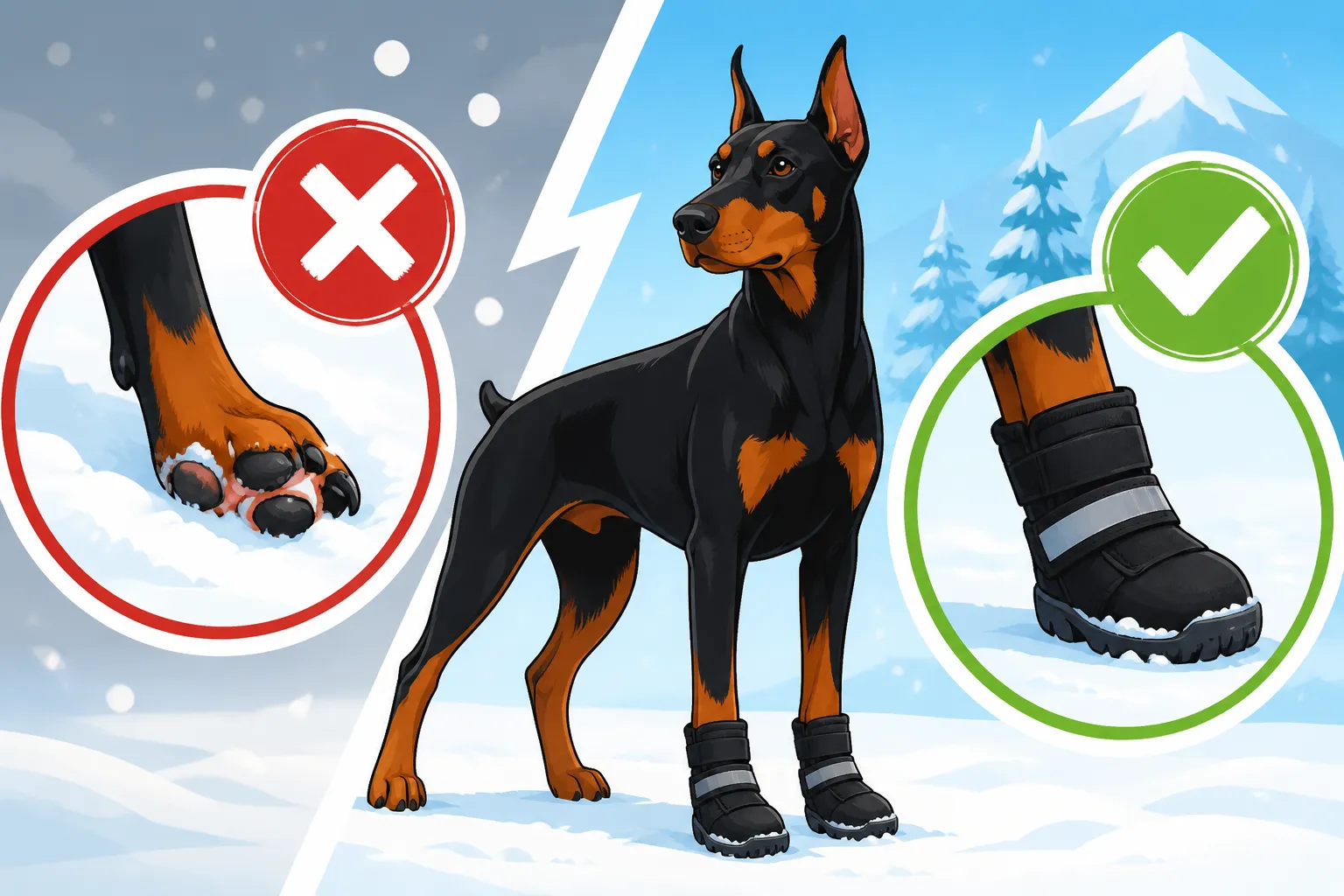
Even though Doberman paw pads are naturally tough, they aren't impervious to the relentless assault of winter. Snow and ice present a multitude of risks that can range from minor discomfort to serious injury. One common issue is the formation of ice balls between their paw pads and toes. As they walk, snow melts slightly from their body heat, then refreezes into hard, painful clumps that tug at the fur and can cause chafing, irritation, and even open sores. Imagine walking with tiny, sharp ice cubes jammed between your toes – that's what your Doberman might be experiencing.
Beyond the mechanical irritation, there's the danger of cuts and abrasions. Frozen ground can be sharp, and hidden shards of ice, gravel, or other debris can easily slice through tender paw pads. These small wounds can be incredibly painful and are prone to infection, especially if dirt and grime get trapped inside. And then there are the chemical hazards. De-icing salts and other snow-melting chemicals, commonly used on sidewalks and roads, are incredibly irritating and corrosive to paw pads. They can cause chemical burns, dryness, cracking, and severe discomfort. Even if your Doberman avoids immediate injury, these chemicals are toxic if ingested, which often happens when dogs lick their paws after a walk.
When Doberman Boots Become a Necessity (or a Good Idea!)
Deciding if your Doberman needs boots isn't always a straightforward "yes" or "no." It often depends on a careful assessment of the specific winter conditions you're facing and, importantly, how your individual Doberman reacts to them. Every Doberman is a unique individual, and while the breed as a whole feels the cold, some are more tolerant than others.
Assessing the Conditions: More Than Just Snowfall
It's tempting to think that "snow means boots," but it's a bit more nuanced than that. The actual temperature is a huge factor – a dusting of snow when it's just below freezing is different from a blizzard at -10°F. Wind chill also plays a significant role, making already cold temperatures feel even more brutal on exposed skin, including paw pads. The type of snow matters too: fluffy, freshly fallen snow is generally less abrasive than crusty, icy snow that can easily cut paw pads. Think about how you feel walking through soft powder versus crunching over frozen, broken ice.
Perhaps the biggest factor, especially in urban or suburban environments, is the presence of de-icing chemicals. Rock salt, calcium chloride, and other snowmelt products are truly nasty for dog paws. They can cause painful burns and dryness, and if your Doberman licks their paws, these chemicals can lead to gastrointestinal upset. If you know your walking routes involve treated surfaces, paw protection becomes much more critical. Even if it's not bitterly cold, the chemical burn risk alone warrants a barrier. This is where the concern over Salt Burns on a Doberman's Bare Pads really comes into play, making protection essential.
Recognizing Signs Your Doberman Needs Paw Protection
Your Doberman can't tell you in words that their paws are cold or hurting, but they'll certainly communicate it through their behavior. It's up to us, as their loving caregivers, to pay close attention to these signals. One of the most common signs is lifting their paws frequently, perhaps holding one paw up for a few seconds before switching to another. This is a clear indication that the ground is uncomfortable, either too cold or irritating. They might also start limping or walking gingerly, trying to minimize contact with the ground.
Excessive shivering, not just from their body but specifically as they stand on their paws, can also point to extreme cold affecting their extremities. If your Doberman becomes reluctant to walk, slowing down or trying to turn back home much sooner than usual during what should be an enjoyable Winter Walks With a Thin-Coated Doberman, their paws might be the culprit. After a walk, watch for incessant paw licking, chewing, or gnawing. This could be a sign of irritation from salt, chemicals, or small cuts that they're trying to soothe. If you observe any of these behaviors, it's a strong hint that it's time to invest in some paw protection, whether it's boots or a good balm.
Choosing and Introducing Doberman Boots
Once you've determined that boots are a good idea for your Doberman, the next step is finding the right pair and, arguably, the bigger challenge: getting your Doberman to accept wearing them. It’s a process that requires patience and positive reinforcement, but the payoff in comfort and protection is well worth it.
What to Look for in Quality Doberman Paw Boots
Not all dog boots are created equal, especially when it comes to the unique needs of a Doberman. You want boots that offer genuine protection and durability. Look for materials that are truly waterproof and ideally insulated. This isn't just about keeping moisture out; it's about keeping their paws warm and shielded from the extreme cold. The soles are crucial: they should be durable, offer good traction (think non-slip grip on ice and snow), and be thick enough to provide a barrier against sharp objects and cold surfaces.
Fit is paramount. Boots that are too loose will twist, rub, and fall off, becoming more of a nuisance than a help. Too tight, and they can cut off circulation or cause painful chafing. Look for boots with adjustable straps or closures that allow for a snug, secure fit around their ankles without being constricting. Some boots also have a higher shaft, which helps prevent snow from getting inside and offers a bit more leg protection. Brands readily available on large retailers like Chewy or Amazon often carry a range of styles and sizes, from simple rubber balloon-like coverings to more structured fabric boots with robust soles. It's a good idea to measure your Doberman's paws carefully and check sizing guides provided by the manufacturers to ensure the best fit. Sometimes, you might even find boots that coordinate with stylish Winter Coats Sized for a Doberman for a truly prepared winter ensemble!
Tips for Getting Your Doberman Comfortable with Boots
For many dogs, particularly Dobermans who are very tactile and sensitive, the sensation of wearing boots can be utterly baffling at first. They might walk like they're drunk, high-step, or even freeze in place. The key here is positive reinforcement and a gradual introduction. Start by simply showing them the boots and letting them sniff them, offering praise and treats. Don't even try to put them on yet.
Next, try putting just one boot on for a few seconds. Immediately praise and give a high-value treat. Take it off. Repeat this a few times over several sessions, slowly increasing the duration. Once they tolerate one, try two, then three, and finally all four. Keep these initial sessions very short and always end on a positive note. Distraction is your friend! Once they have all four boots on, try to engage them in a favorite game or offer a stuffed Kong to redirect their attention from the "funny feet." Only after they seem relatively comfortable indoors should you attempt a very short walk outside in the snow. Remember, patience is crucial. Some Dobermans pick it up quickly, while others may take days or even weeks to fully adjust. Don't force it, and celebrate every small step of progress.
Alternatives and Complementary Paw Care
While boots offer the most comprehensive protection in harsh winter conditions, they aren't the only tool in your winter paw care arsenal. For milder conditions, or as a crucial complement to boots, other methods can significantly contribute to your Doberman's paw health and comfort.
Paw Balms and Waxes: A First Line of Defense
For those days when the snow isn't too deep, the temperatures aren't extreme, or you're just stepping out for a quick potty break, paw balms and waxes can be incredibly effective. Think of them as a protective barrier cream for your Doberman's paws. These products, often made with natural ingredients like beeswax, shea butter, and various oils, create a thin, breathable layer over the paw pads. This layer helps to moisturize the pads, preventing dryness and cracking which can be exacerbated by cold, dry air and exposure to snow.
More importantly, this protective barrier acts as a shield against irritants like de-icing salts and chemicals. It prevents these harsh substances from directly contacting the skin, reducing the risk of chemical burns and irritation. A good wax can also help prevent ice balls from forming between the paw pads by creating a smoother surface where snow is less likely to cling. While they don't offer the same insulation or puncture protection as a quality boot, they are a fantastic first line of defense for light snow, short walks, or as an added layer of protection underneath boots. Many Doberman owners swear by paw balms available from companies you'd find on Chewy or Amazon, or even specialty brands like Musher's Secret, which has been a staple for working dogs for years. They are easy to apply and can make a noticeable difference in your Doberman's comfort.
Post-Walk Paw Cleaning and Inspection
Regardless of whether your Doberman wears boots or just has balm on their paws, a diligent post-walk routine is absolutely non-negotiable in winter. This step is crucial for preventing a host of problems. The first thing to do is thoroughly clean their paws. Even with boots, some snow or chemicals can sometimes get in, and if they were bare-pawed or just had balm, they've almost certainly picked up salt, chemicals, dirt, and ice. Use warm water and a soft towel to gently wash off their paws. Pay close attention to the areas between their toes and pads, where irritants love to hide. This ensures all corrosive salts and potentially toxic chemicals are removed before your Doberman has a chance to lick them off.
After washing, it’s vital to dry their paws completely. Moisture left between the pads can lead to skin irritation, fungal infections, or simply make them colder. While drying, take the opportunity to perform a quick inspection. Look for any signs of redness, cracking, cuts, punctures, or swelling. Check for any embedded ice, small pieces of glass, or other foreign objects. If you notice any issues, address them promptly. A small cut today could become a painful infection tomorrow. This thorough post-walk care is just as important as the protection itself, ensuring your Doberman's paws stay healthy and happy all winter long. It's similar to how we would diligently perform Cleaning a Doberman's Feet After Muddy Walks in other seasons, just with different elements.
Here's a quick comparison of paw protection options:
| Feature | Paw Boots | Paw Balms/Waxes |
|---|---|---|
| Primary Protection | Physical barrier against extreme cold, ice, sharp objects, chemicals | Barrier against moisture, chemicals, mild cold, prevents ice ball formation |
| Insulation | High (especially insulated boots) | Low to moderate |
| Durability | High (depends on material) | Moderate (needs reapplication) |
| Against Sharp Objects | Excellent | Poor |
| Against Chemicals | Excellent | Good |
| Ease of Application | Can be challenging for some dogs, takes practice | Very easy, quick |
| Visibility of Paws | No | Yes |
| Cost | Higher initial investment | Lower initial investment, recurring purchase |
| Best For | Extreme cold, long walks, icy conditions, chemical-treated surfaces | Mild cold, short walks, general paw conditioning, complement to boots |
Ultimately, whether your Doberman needs boots in the snow depends on a blend of factors: the severity of the weather, the terrain you'll be covering, and your individual dog's tolerance. It's not just about warmth; it's about safeguarding their paws from a multitude of winter hazards. Observing your Doberman's comfort level and being proactive with protection, whether it's quality boots or a reliable balm, will ensure your walks remain enjoyable and safe for your cherished companion. Don't forget that their overall comfort is important too, so make sure they're also outfitted with Coats That Actually Fit a Doberman's Chest to combat the cold. Our Dobermans rely on us to look out for their well-being, especially when Why a Doberman Feels the Cold Before Other Dogs means they're more susceptible to winter's bite.
Disclaimer
This article is for general informational purposes only and does not constitute professional advice. Laws, prices and regulations vary by location and change over time. Consult a qualified professional for guidance on your specific situation.