Water Trapped in a Doberman’s Ear After Swimming
There's nothing quite like watching your Doberman bound into the water, a picture of pure joy as they splash and swim. But that carefree moment can quickly turn into a frustrating cycle of head shaking, pawing at ears, and eventually, the tell-tale signs of an uncomfortable ear infection. It's a common dilemma for us Doberman owners: our dogs love water, but their ears often pay the price. This guide is here to walk you through exactly why water gets trapped in your Doberman's ears, how to prevent it, and what to do if an infection unfortunately takes hold. We'll explore practical steps and long-term strategies to keep those magnificent ears healthy and happy, even for the most enthusiastic swimmers.
Why Doberman Ears Are Prone to Trapping Water
It might seem unfair that a dog so athletic and keen on swimming can suffer so easily from ear issues, but the truth lies in the unique structure of their ears. Unlike some breeds with naturally open or short ear canals, Dobermans, even with cropped ears, have a certain anatomy that makes them a perfect little incubator for moisture-related problems.
The Anatomy of a Doberman's Ear
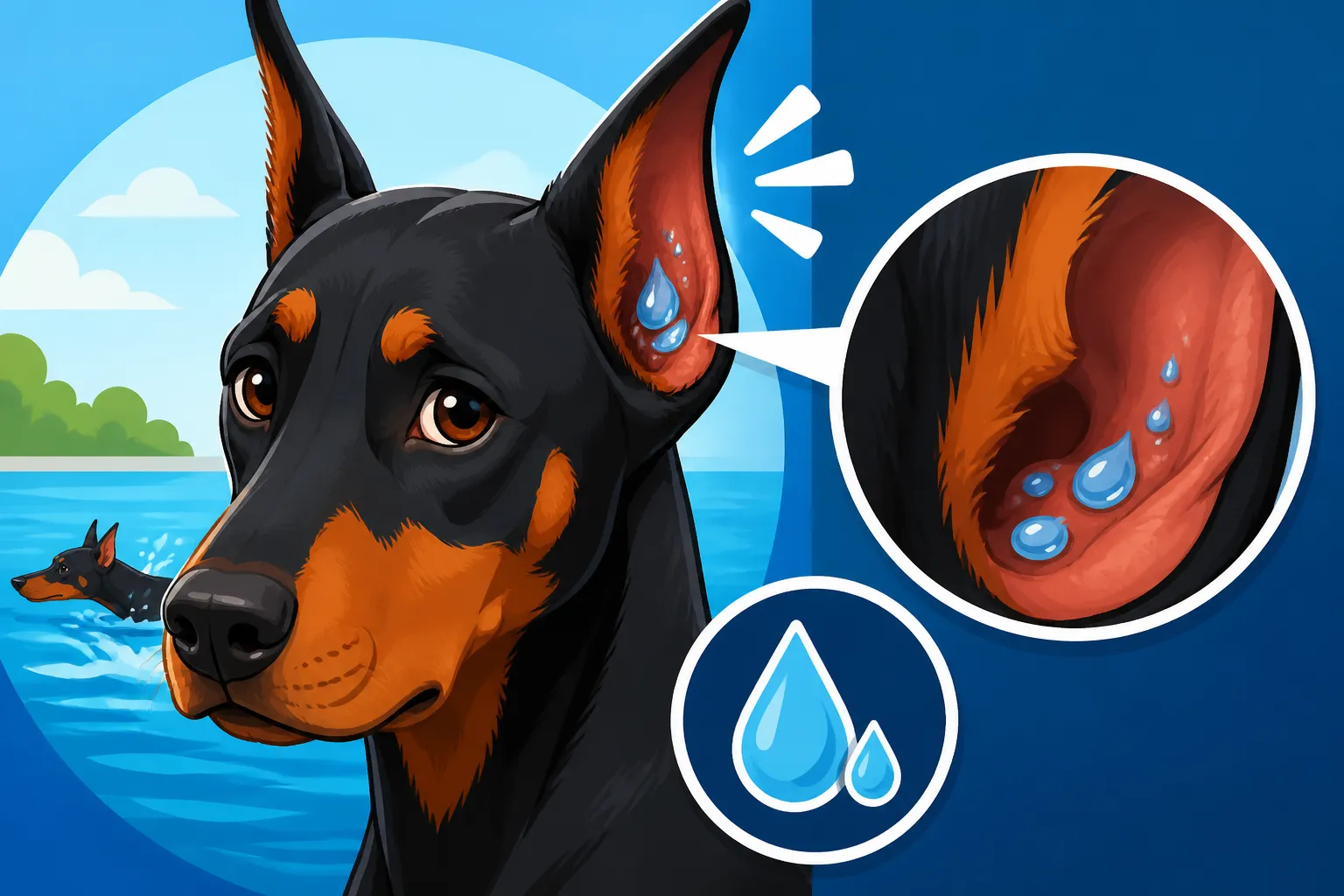
Let's talk about what's going on inside. A Doberman's ear canal isn't a straight shot from the outside world to the eardrum. Instead, it takes a distinct "L" shape. Imagine a long, vertical tube that then makes a sharp right-angle turn to become a horizontal tube, leading to the eardrum. This deep, winding structure is brilliant for protecting the delicate inner ear from external debris in dry conditions, but it's a nightmare for drainage. When water gets in, it tends to pool at that bend, and gravity isn't much help in getting it back out.
Beyond the shape, some Dobermans might have a fair amount of hair growing inside their ear canals. This hair, while seemingly innocuous, acts like a tiny sponge, holding onto moisture even more effectively. If your Doberman has natural, uncropped ears, the floppy ear leather itself can cover the opening, further reducing air circulation and creating a humid microclimate. Even with the upright, cropped ears many Doberman owners prefer, the internal canal structure remains the same, still posing a challenge when water decides to move in. Owners sometimes mistakenly believe cropped ears are impervious to water issues, but sadly, that's not the case at all. The outer shape changes, but the inner workings, the parts that cause the real trouble, stay exactly as they are.
The Problem with Moisture and Heat
Once water is trapped in that warm, dark, L-shaped canal, you've essentially created a five-star resort for unwelcome guests: bacteria and yeast. These microorganisms are naturally present in small numbers on your dog's skin and in their ears, but they thrive in moist, warm environments. When the natural balance is disrupted by excessive humidity, they proliferate rapidly, leading to an infection. It’s like leaving a damp towel in a warm bathroom – it’s only a matter of time before things start to get funky.
Swimming, while fantastic exercise and enrichment, introduces both the water itself and often, whatever contaminants are in that water. Pond water can carry all sorts of microscopic life, and even chlorinated pool water, while clean, can irritate sensitive ear skin and alter its natural protective barrier. The moment your Doberman emerges from the lake, that water inside their ear canal warms up to body temperature, creating the ideal conditions for an infection to brew. The frustration is real: you want your Doberman to enjoy life, but you dread the head shaking that starts a day later, the scratching, and that unmistakable, pungent smell that tells you an ear infection is probably setting in. It’s a battle between canine joy and owner vigilance.
Immediate Steps After a Swim to Prevent Issues
The good news is that many ear issues after swimming are preventable with a little proactive effort. It's all about diligent, consistent care right after your Doberman takes a dip. Don't wait for symptoms to appear; get to work drying those ears right away.
Gentle Drying Techniques
As soon as your Doberman finishes their aquatic adventures, the first order of business is to get those ears as dry as possible. Start with the outer ear and the visible part of the canal. Take a soft, clean cloth or a cotton ball and gently wipe away any visible moisture from the ear flap and the entrance to the ear canal. Think of it like blotting, not scrubbing. You're trying to absorb the water, not push it deeper.
It's tempting to grab a cotton swab (you know, those Q-tips we use for ourselves), but please resist the urge to insert it into your Doberman's ear canal. The L-shape of their ear means you're far more likely to push wax, dirt, or even water further down the canal, potentially compacting it against the eardrum or causing irritation. This can make matters worse or even puncture the eardrum if you go too deep. Stick to cleaning only the parts of the ear you can clearly see. Patting around the base of the ear where water might collect is also a good idea. For a particularly wet dog, you might even consider gently dabbing the inside of the ear flap with a corner of a towel, ensuring no excess moisture remains. Remember, the goal is to remove water, not to introduce more foreign objects or irritation. This gentle approach is key to preventing irritation that could also invite infection.
Using Ear Cleaners and Drying Solutions
After you've done the initial physical drying, an ear cleaning solution designed for post-swim use can be a lifesaver. These aren't just any old cleaners; many are specifically formulated to help dry out the ear canal and restore its natural pH balance, making it less hospitable for bacteria and yeast. Look for solutions that contain drying agents like boric acid or witch hazel, and ideally, those that are alcohol-free or contain very little alcohol to avoid irritation, especially if your Doberman has sensitive skin. Many reputable brands found on Chewy or Amazon offer excellent options.
To use them effectively, follow these steps:
- Warm the Bottle (Optional but Recommended): A cold solution can be startling for your Doberman. Holding the bottle in your hand for a few minutes or running it under warm water can make it more comfortable.
- Apply Generously: Hold your Doberman's ear flap up and squirt the recommended amount of solution directly into the ear canal. You want to fill the visible part of the canal, don't be shy!
- Massage the Base: Gently massage the base of the ear for 20-30 seconds. You should hear a squishing sound, which means the solution is breaking up debris and getting to work.
- Let Them Shake: Stand back and let your Doberman shake their head. This helps to dislodge the solution and any loosened debris. Be prepared for a spray of liquid!
- Wipe Clean: Finally, use a fresh cotton ball or soft cloth to wipe away any excess solution, wax, or debris that has worked its way out of the ear canal. Again, avoid sticking anything deep into the ear.
Don't overdo it. While essential after swimming, using these solutions too frequently (e.g., daily without swimming) can sometimes lead to irritation. A good rule of thumb is to use a drying solution immediately after swimming or heavy water exposure, and perhaps a general Ear Hygiene Once a Doberman's Crop Has Healed cleanser weekly as part of regular maintenance, or as advised by your vet.
The Importance of Regular Ear Checks
Prevention isn't just about what you do right after a swim; it's also about ongoing vigilance. Make it a habit to routinely check your Doberman's ears, even when they haven't been swimming. This helps you establish a baseline for what a healthy ear looks and smells like, so you can spot problems early. A healthy Doberman ear should be a pale, uniform pink color, with no strong odor, and only a minimal amount of light-colored wax. The skin should look calm and smooth, not red, swollen, or greasy.
When you perform your regular checks, gently lift the ear flap (or look into the upright ear) and take a good sniff. Seriously, sniff those ears! An impending infection often announces itself with a yeasty, sweet, or frankly foul odor long before other visual signs become obvious. Look for any redness, swelling, excessive dark or yellowish discharge, or any signs of discomfort like head tilting or scratching. Catching an issue early, before it escalates, can save your Doberman a lot of pain and you a hefty vet bill. Integrating this into your regular grooming routine, perhaps after a Washing a Doberman Without Stripping Its Skin, can make it a natural part of their care. Remember, healthy ears are a reflection of consistent, mindful care.
Recognizing and Treating an Ear Infection
Despite our best efforts, sometimes an ear infection still manages to take hold. It's frustrating, especially when you've been so careful, but it happens. Knowing the signs and when to seek professional help is crucial to getting your Doberman relief quickly.
Signs Your Doberman Has an Ear Infection
Your Doberman can't tell you in words that their ear hurts, but they'll certainly show you through their behavior. One of the most common and undeniable signs is excessive head shaking. It might start subtly, then become more frequent and vigorous, often accompanied by a distinct flapping sound. They might also relentlessly scratch or paw at their ear with their back leg, sometimes to the point of causing skin irritation or even open sores around the ear flap and neck.
Other tell-tale signs include:
- Discharge: Look for anything other than a very light, natural wax. This could be waxy, dark brown, yellowish, green, or even bloody. The consistency might range from sticky to watery.
- Odor: As mentioned, a strong, unpleasant smell emanating from the ear is a major red flag. It can be yeasty, sweet, or downright putrid.
- Redness and Swelling: Gently examine the inside of the ear flap and the visible ear canal. Is it redder than usual? Does it look puffy or swollen?
- Pain or Sensitivity: Your Doberman might flinch, yelp, or pull away when you try to touch their ear. They might hold their head tilted to one side, favoring the painful ear.
- Changes in Behavior: Some dogs become more lethargic, irritable, or even lose their appetite when experiencing discomfort from an ear infection.
These symptoms often appear a day or two after water exposure, as the microorganisms have had time to multiply. You know your Doberman best, and if something seems "off" with their ears, trust your gut. Many Doberman owners feel a pang of guilt when they realize an infection has taken hold, especially after a fun day at the beach or lake. It’s important to remember that these things happen, and the most important step is addressing it promptly.
When to See the Vet
If you notice any of the signs of an ear infection, it's time to call your veterinarian. While it's tempting to try over-the-counter remedies, self-treating an ear infection is generally not recommended. Here's why:
- Incorrect Diagnosis: Ear infections can be caused by bacteria, yeast, ear mites, foreign bodies (like grass awns), or even allergies. Each cause requires a different treatment approach. What works for yeast won't work for bacteria, and using the wrong medication can make the problem worse, create resistance, or delay proper healing.
- Underlying Issues: Sometimes, an ear infection is a symptom of a larger problem, such as allergies, thyroid issues, or even an autoimmune disease. A vet can rule out or identify these underlying conditions.
- Eardrum Damage: If the eardrum is ruptured (which can happen with severe infections), certain ear cleaning solutions or medications can be toxic to the inner ear, leading to hearing loss or balance problems. A vet will always check the eardrum before prescribing treatment.
During your visit, the vet will likely examine the ear with an otoscope, looking deep into the canal and checking the eardrum. They might take a swab of any discharge for a cytology, which involves looking at the sample under a microscope to identify yeast, bacteria, or mites. Based on these findings, they'll prescribe appropriate medication, which could be ear drops (antibiotic, antifungal, or anti-inflammatory), oral medications, or a combination. For persistent or recurrent infections, your vet might recommend further diagnostics, such as a bacterial culture and sensitivity test or even imaging. This is crucial for conditions like Ear Infections in an Uncropped Doberman, where the cause might be complex, and the solutions are not one-size-fits-all.
Home Care During Treatment
Once your vet has diagnosed the infection and prescribed treatment, your role at home is critical for successful recovery. Administering the medication exactly as directed is paramount. This usually involves cleaning the ear with a prescribed solution, waiting a few minutes, and then applying medicated drops or ointment. Be consistent with the frequency and duration of the treatment, even if the ear seems to be improving. Stopping too early can lead to a relapse.
During the treatment period, it's best to keep your Doberman's ears as dry as possible. This means avoiding swimming altogether until the infection has cleared up and your vet gives the all-clear. If your Doberman needs a bath for other reasons, be extra careful to protect their ears. You can place large cotton balls just inside the ear opening (not deep into the canal) to act as a barrier, removing them immediately after the bath. Some owners even use a dog-specific snood or ear cover during baths or short, light rain showers, though these aren't always foolproof. While your Doberman might not be thrilled about having their ears cleaned and medicated, making it a calm, positive experience with praise and treats can go a long way. This makes future ear care much easier.
Long-Term Strategies for Water-Loving Dobermans
For Doberman owners whose dogs are truly water enthusiasts, managing ear health becomes an ongoing commitment. It's not just about treating infections but building sustainable habits that protect their sensitive ears in the long run.
Managing Water Exposure
While we never want to completely deny our Dobermans the joy of a good swim, there are ways to manage water exposure to minimize ear problems. If your Doberman loves to dive and submerge their head repeatedly, try to encourage games that involve shallower water or retrieving toys from the surface, limiting deep submersion. This isn't always easy, especially with a Doberman's inherent drive and zest for life, but even small changes can help.
For Dobermans who swim very frequently – say, daily in the summer – you might consider specialized ear protection. There are dog snoods made of water-resistant material, or even dog-specific swimming caps designed to cover the ears. While these can be tricky to keep on a determined Doberman, some owners find them helpful as an added layer of defense. The key is to find something comfortable enough that your Doberman will tolerate it, otherwise, it's more of a struggle than a solution. Ultimately, being mindful of the type of water (clean lake vs. muddy pond) and the duration of the swim can also play a role in reducing risk.
Building a Routine
The most effective long-term strategy is to make post-swim ear care a non-negotiable part of your Doberman's routine. Think of it like drying yourself off after a shower – it's just what you do. This consistency is far more powerful than sporadic, reactive interventions. Every single time your Doberman gets wet, whether from a swim, a bath, or even a prolonged romp in heavy rain, those ears need attention.
Establish a clear, calm routine. Bring out your ear cleaner and cotton balls as soon as they're done with their water activity. If your Doberman is initially resistant, start with very short sessions, lots of praise, and high-value treats. Make it a positive association. Over time, they'll learn to tolerate and even expect the routine, understanding that it's just part of the post-swim cool-down. This consistent approach not only prevents infections but also allows you to perform regular Cleaning Wax From a Cropped Doberman Ear checks, spotting any early signs of trouble before they escalate. It's about proactive maintenance, rather than always playing catch-up.
Choosing the Right Ear Cleaner
With so many ear cleaners on the market, it can feel overwhelming to choose the right one. They generally fall into categories: drying, antiseptic, or wax-dissolving (ceruminolytic). For Dobermans who frequently swim, a drying solution is paramount. These solutions are designed to quickly evaporate moisture and create an acidic environment that bacteria and yeast dislike. Look for ingredients like boric acid or salicylic acid, but ideally, avoid high concentrations of alcohol if your dog's ears are sensitive or prone to irritation. Many good options are readily available online from retailers like Chewy and Amazon.
If your Doberman tends to produce a lot of wax, you might occasionally use a ceruminolytic cleaner before a drying solution, but always consult your vet for guidance. For Dobermans with a history of recurrent infections, your vet might recommend a specific antiseptic cleaner (containing ingredients like chlorhexidine) for maintenance, or even a prescription-strength solution. It’s not a one-size-fits-all product; what works for one Doberman might not be ideal for another. When in doubt, always ask your veterinarian for their recommendation, especially if you're dealing with sensitive ears or a history of problems. They know your Doberman’s specific needs best and can guide you toward the safest and most effective choice.
Here's a quick overview of common ear cleaner ingredients and their functions:
| Ingredient Type | Primary Purpose | Example Ingredients | When to Consider Using |
|---|---|---|---|
| Drying Agents | Evaporate moisture, reduce humidity, discourage growth | Boric Acid, Isopropyl Alcohol (low % only), Witch Hazel | Immediately after swimming or bathing; high humidity |
| Acidifiers | Restore natural pH balance, inhibit bacterial/yeast growth | Acetic Acid (vinegar), Salicylic Acid, Lactic Acid | Regular maintenance; post-swim; mild irritation |
| Antiseptics | Kill bacteria and yeast | Chlorhexidine, Povidone-iodine, Gentian Violet | For active infections (vet-prescribed); preventative in high-risk cases |
| Ceruminolytics | Break down and dissolve excessive ear wax | Docusate Sodium, Dioctyl Sulfosuccinate, Propylene Glycol | For very waxy ears; before other cleaners to improve penetration |
| Soothing/Anti-Inflammatory | Reduce irritation and discomfort | Aloe Vera, Chamomile, Hydrocortisone (mild) | For sensitive ears; to reduce redness and itchiness |
Remember, your Doberman’s ear health is an investment in their overall comfort and happiness. By understanding their unique anatomy, being proactive with post-swim care, and knowing when to seek professional help, you can ensure their love for water doesn't come at the cost of painful ear infections. Keep those Doberman ears clean, dry, and healthy so they can continue to live their best, splash-filled lives!
Disclaimer
This article is for general informational purposes only and does not constitute professional advice. Laws, prices and regulations vary by location and change over time. Consult a qualified professional for guidance on your specific situation.