Whether a Carrier Doberman Should Be Bred
It can feel incredibly daunting, not to mention confusing, when you're navigating the world of Doberman breeding and suddenly encounter the term "carrier" in relation to a genetic condition. Many aspiring breeders or those looking to expand their lines often wonder: if a Doberman carries a gene for a disease but isn't actually affected, is it still okay to breed them? This guide is here to untangle that complex question, exploring the ethical considerations, scientific realities, and responsible practices surrounding breeding Dobermans identified as carriers.
Understanding What "Carrier" Truly Means in Dobermans
When we talk about a Doberman being a "carrier," we're diving deep into the fascinating, sometimes frustrating, world of genetics. It's a term that often sparks concern, but understanding it precisely is key to making informed decisions for the health of the breed.
The Basics of Recessive Inheritance
At its core, "carrier" status typically refers to a dog that carries one copy of a recessive gene for a particular disease. Think back to your high school biology class and Punnett squares. Most genetic diseases in Dobermans that lead to a carrier status are inherited in a recessive pattern. This means that a dog needs two copies of the faulty gene (one from each parent) to actually develop the disease itself. If they only have one copy, inherited from just one parent, they won't show any symptoms because the "good" gene copy they received from the other parent is dominant and does its job, masking the faulty one. They are perfectly healthy, living normal lives, often completely unaware they hold this hidden genetic information.
For Dobermans, some of these conditions can be quite serious. For instance, Von Willebrand Disease (vWD), a common bleeding disorder, is a prime example of a condition where carriers are clinically normal but can pass the gene on. You might not see any signs in your carrier Doberman, but the potential is there to create affected puppies if bred without careful planning. The crucial part here is recognizing that while your dog is healthy, they are a vital link in the chain of genetic inheritance.
Common Doberman Genetic Conditions with Carrier Status
The Doberman breed, unfortunately, is predisposed to several genetic conditions, and understanding carrier status often begins with these specific health challenges. One of the most widely recognized and tested conditions where "carrier" status is clear-cut is Von Willebrand Disease (vWD). This is a blood clotting disorder, and dogs can be "clear" (no copies of the gene), "carrier" (one copy, no symptoms), or "affected" (two copies, displaying bleeding issues). A carrier Doberman for vWD will not suffer from excessive bleeding themselves, but they are a silent transmitter of the gene. You can learn more about this common issue in our detailed guide, The Bleeding Disorder Almost Every Doberman Line Carries.
Then we have Dilated Cardiomyopathy (DCM), which is a much more complex beast. While there are gene tests available, such as for the DCM1 and DCM2 variants, the term "carrier" here isn't as straightforward as with vWD. DCM is a polygenic disease, meaning multiple genes, as well as environmental factors, play a role. A Doberman might test positive for one or both of the known DCM gene markers (like the DCM1 deletion or the DCM2 titin variant), which technically means they carry these genetic predispositions. However, unlike a simple recessive trait, carrying one or even both known DCM genes doesn't guarantee they will develop DCM, nor does being clear of them guarantee they won't. It significantly increases their risk, but it's not a direct carrier-affected relationship in the same way. This distinction is vital when considering breeding, as the decision becomes even more nuanced. For a deeper dive, check out articles like The DCM1 Gene Test Explained for Doberman Owners and The Two Doberman DCM Gene Tests.
The Difference Between Carrier, Clear, and Affected
To truly grasp the implications for breeding, it's essential to clearly differentiate between these three genetic statuses. It's not just semantics; it defines the genetic makeup and potential impact on offspring.
- Clear (or Normal): This Doberman has two copies of the "normal" gene and no copies of the disease-causing gene. They will not develop the genetic disease (for purely recessive conditions) and cannot pass the disease gene to their offspring. They are genetically "clean" for that specific trait.
- Carrier (or Heterozygous): This Doberman has one copy of the normal gene and one copy of the disease-causing gene. They do not typically show symptoms of the disease themselves because the normal gene is dominant. However, they can pass the disease-causing gene to approximately 50% of their offspring. This is the category we are focusing on and the one that presents ethical breeding dilemmas.
- Affected (or Homozygous Affected): This Doberman has two copies of the disease-causing gene (one from each parent). For recessive conditions, they will develop the disease and will pass one copy of the disease gene to 100% of their offspring.
Understanding these distinctions is paramount for any responsible Doberman owner or breeder. It allows for predictive analysis in breeding and helps manage expectations regarding puppy health.
Here's a quick reference table to help visualize these states for a simple recessive disease:
| Status | Genetic Makeup | Clinical Signs (Recessive) | Can Pass Gene? |
|---|---|---|---|
| Clear | Two normal genes | No | No |
| Carrier | One normal, one faulty | No | Yes (50%) |
| Affected | Two faulty genes | Yes | Yes (100%) |
The Ethical Dilemma of Breeding a Carrier Doberman
Deciding whether to breed a Doberman who is a carrier for a genetic condition is one of the most challenging ethical questions a breeder faces. It’s rarely a black-and-white choice, and there are strong arguments on both sides.
The Breeder's Responsibility to the Breed Standard and Health
Every Doberman breeder holds a significant responsibility to the health and integrity of the breed. The overarching goal should always be to improve the breed, and this inherently includes striving to reduce the prevalence of debilitating genetic diseases. For many, this means eliminating known carriers from the breeding pool entirely. They believe that even if a carrier dog doesn't show symptoms, breeding them is akin to playing Russian roulette with the health of future generations. It’s about more than just producing healthy puppies in one litter; it’s about the long-term health trajectory of the Doberman as a whole.
However, the reality is rarely that simple. Sometimes, a Doberman might be an exceptional example of the breed in terms of temperament, conformation, working drive, or longevity in their own lines. If such a dog is also a carrier for a recessive gene, the decision to remove them from the gene pool entirely can be a tough pill to swallow, especially if their positive traits are rare or highly sought after. This is where the ethical tightrope walk begins, balancing individual dog merit with collective breed health.
Balancing Genetics with Other Desirable Traits
The ideal Doberman isn't just a collection of "clear" genetic test results. They are a complex blend of temperament, structural soundness, intelligence, drive, and health. Finding a Doberman that excels in all these areas while also being completely clear of every known genetic marker can be incredibly challenging, if not impossible. Many top show dogs or working champions, dogs that embody the breed standard in every other way, might carry a single recessive gene. To simply dismiss these dogs from breeding might mean losing invaluable traits that are crucial for the breed's overall robustness and future success.
Imagine a Doberman that has an unparalleled working temperament, bulletproof nerves, and exceptional conformation—traits that took generations to develop. If this dog is a carrier for vWD, for example, is it always responsible to remove them from breeding, potentially losing those other incredible qualities from the gene pool? This is a question breeders grapple with constantly. The decision often boils down to careful risk assessment and prioritizing which traits are most vital to preserve, always with a clear plan for mitigating genetic risks. It's a testament to the dedication of Doberman breeders that they consider these factors so deeply.
The Impact on Future Generations and Puppy Buyers
The most direct and immediate impact of breeding a carrier Doberman, particularly without proper genetic planning, is on the puppies produced and, by extension, the families who welcome them into their homes. If a carrier Doberman is bred to another carrier for the same recessive gene, there's a 25% chance that each puppy in the litter will be "affected" by the disease, meaning they will develop symptoms. This can lead to heartbreaking situations for new owners who suddenly face significant veterinary bills and the emotional toll of caring for a sick dog.
Responsible breeders understand that transparency is non-negotiable. If a carrier Doberman is bred responsibly (e.g., to a clear mate, as discussed below), puppy buyers must be informed of the carrier status of their puppy and the implications for their future breeding decisions, should they choose to breed. They need to understand that their puppy might also be a carrier, and why genetic testing would be important if they ever consider breeding themselves. This level of honesty builds trust and ensures that the cycle of responsible breeding continues. A good breeder will provide all relevant health certifications, which you can learn more about in our guide on Reading a Doberman Puppy's Test Certificates, ensuring you're fully informed.
Responsible Breeding Practices for Carrier Dobermans
Navigating the complexities of breeding a carrier Doberman requires a strategic, informed, and deeply responsible approach. It's not about ignoring genetic faults but about managing them intelligently to preserve the breed's strengths.
Strategic Mating: "Clear to Carrier" Only
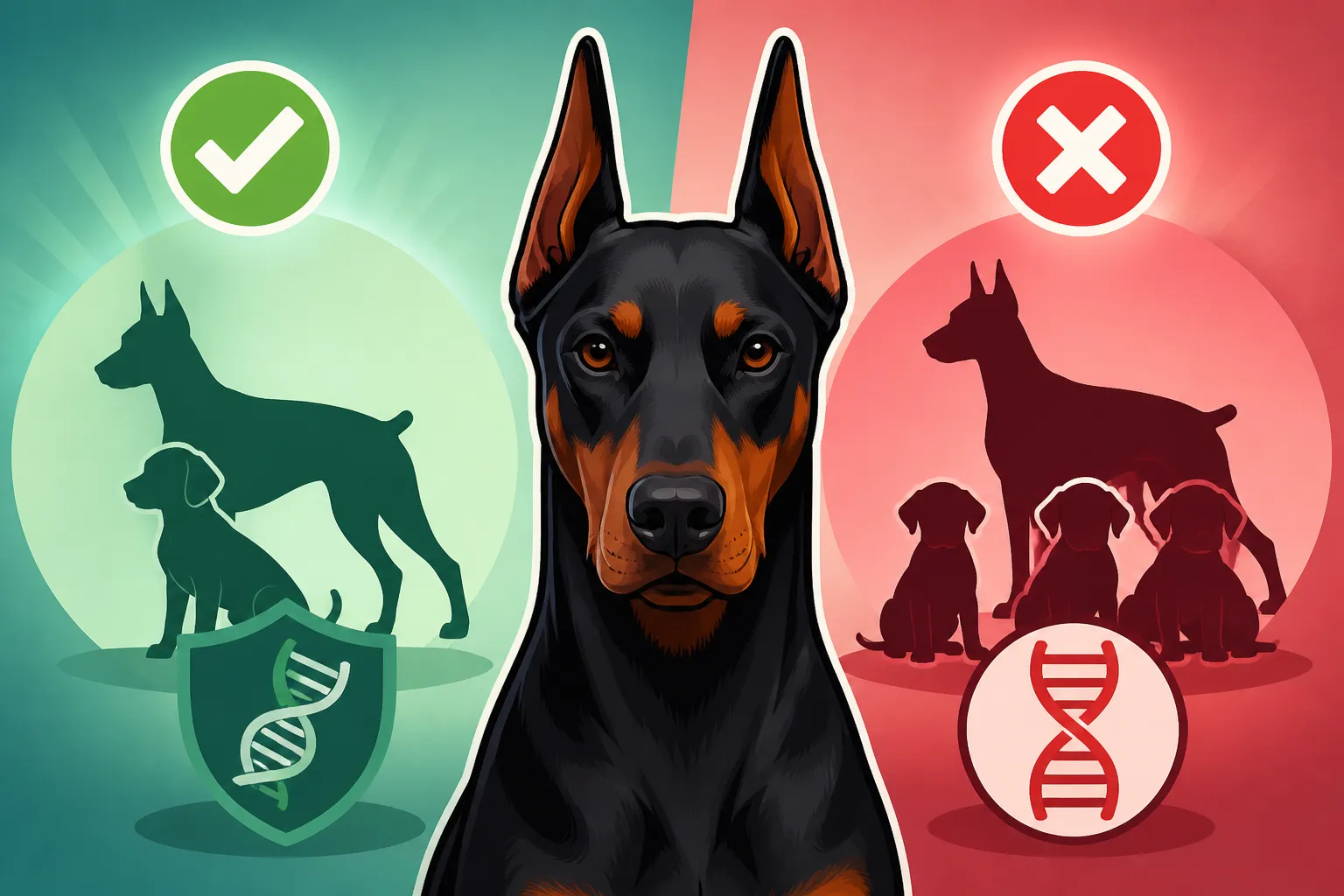
The cardinal rule, the absolute non-negotiable foundation for responsibly breeding a carrier Doberman for a simple recessive trait like vWD, is to only breed them to a Doberman that is "clear" of that specific genetic condition. This mating strategy ensures that no affected puppies are produced. While some puppies in the litter will undoubtedly inherit the carrier status (statistically, 50% will be carriers and 50% will be clear), none will receive two copies of the faulty gene and therefore none will suffer from the disease.
This approach requires thorough pre-breeding genetic testing for both prospective parents. Relying on ancestral lineage alone is not enough; definitive DNA testing provides certainty. For conditions like Von Willebrand Disease, a simple DNA test can confirm the status of both parents. This meticulous planning is the cornerstone of preventing suffering. If you're contemplating breeding or acquiring a Doberman, understanding The Von Willebrand DNA Test for Dobermans is crucial. For the more complex DCM, even though the carrier status is different, breeders still use gene tests like DCM1 and DCM2 to make informed pairing decisions, aiming to reduce the overall genetic risk in the offspring.
Utilizing Genetic Testing and Health Registries
Modern science has gifted Doberman breeders with incredible tools to make informed decisions. Genetic testing laboratories like Embark Veterinary, Optimal Selection by Wisdom Panel, and other specialized labs offer comprehensive panels that can screen for dozens of genetic conditions, including those common in Dobermans. These tests are vital for identifying carrier status in potential breeding animals before any mating takes place. This isn't just about identifying problems; it's about making proactive choices.
Beyond individual tests, reputable breeders often register their health test results with organizations like the Orthopedic Foundation for Animals (OFA) and its Canine Health Information Center (CHIC) program. A CHIC number indicates that a dog has had all the recommended health screenings for their breed, making it easier for prospective puppy buyers to verify health clearances. Always consult with a veterinarian, especially a genetics expert or experienced Doberman breeder, to interpret complex test results. It's also worth noting that while DNA panels are incredibly helpful, they don't replace all forms of health screening. Our guide, Whether a Doberman DNA Panel Replaces Screening, delves into this further.
The Role of Breed Clubs and Mentors
In the Doberman community, established breed clubs play an invaluable role in promoting responsible breeding practices. Organizations like the Doberman Pinscher Club of America (DPCA) provide guidelines, educational resources, and sometimes even recommended health testing protocols for breeders. They understand the breed's unique challenges and work to support health initiatives. These clubs often maintain public registries or databases where breeders can list their health-tested dogs, fostering transparency and accountability.
For new or aspiring Doberman breeders, finding a mentor from within these circles is gold. An experienced breeder who has navigated the complexities of Doberman genetics, health, and temperament for decades can offer practical advice and insights that no textbook ever could. They can help you understand the nuances of a specific Doberman line, interpret health certificates, and guide you through the ethical considerations of breeding a carrier. The collective wisdom of the Doberman community is a powerful tool in ensuring the breed's future health. It’s imperative to investigate The Health Testing a Doberman Breeder Must Show before considering any breeding pair.
Long-Term Strategies for Doberman Breed Health
Breeding isn't just about the next litter; it's a commitment to the enduring health and vitality of the entire Doberman breed. Addressing carrier status is part of a much larger, long-term strategy.
Gradually Reducing Carrier Frequency
The goal with genetic diseases, especially those with carrier status, isn't always to eradicate the gene entirely in one fell swoop. Doing so could severely limit the gene pool, potentially leading to other unforeseen genetic problems due to inbreeding or the loss of desirable traits. Instead, a more sustainable and strategic approach is to gradually reduce the frequency of the disease-causing allele within the population over several generations. This means carefully selecting breeding pairs so that carrier dogs are consistently bred to clear mates, slowly increasing the proportion of clear individuals in each subsequent generation.
This method allows breeders to retain valuable characteristics from carrier lines while steadily moving towards a healthier overall genetic profile for the breed. It's a delicate balance of maintaining genetic diversity while actively working to minimize the incidence of inherited diseases. This long-term view requires patience, consistent health testing, and a commitment from the entire Doberman breeding community. The hope is to reduce the overall risk of conditions like DCM, which can be devastating, even if predicting the disease in individual dogs remains challenging. Our article on How Many Dobermans Develop DCM highlights the scale of this challenge.
The Future of Genetic Testing and Research
The field of canine genetics is constantly evolving, and what we know about Doberman health today is far more comprehensive than even a decade ago. Continued research is vital to identify new genetic markers for complex diseases like DCM, which, as discussed, isn't fully explained by the current DCM1 and DCM2 tests. Researchers are actively working to uncover more genes involved in this devastating heart condition, and the more we understand, the more effectively breeders can make informed decisions. The silent progression of DCM, often for The Silent Years Before a Doberman's Heart Shows symptoms, underscores the urgency of this research.
Doberman owners and breeders have a significant role to play in supporting this ongoing research. Participating in studies, contributing DNA samples, and staying informed about scientific advancements can directly impact the future health of the breed. This collaborative effort, combining the dedication of breeders with the expertise of geneticists, is the best path forward to tackling the genetic challenges Dobermans face. Consistent annual screenings like Annual Echo and Holter Screening for a Doberman also contribute valuable data to researchers.
Supporting Responsible Doberman Ownership
Ultimately, the responsibility for breed health extends beyond just the breeders to every Doberman owner. When seeking a Doberman puppy, it is paramount to choose a breeder who is transparent about their health testing protocols, including genetic screening for carrier status. They should be willing to show you results for both parents and explain what those results mean for your potential puppy. Don't be afraid to ask tough questions about genetic conditions and how they manage carriers in their lines. Learning to confidently interpret Reading a Doberman Breeder's Heart Paperwork is a skill every prospective owner should develop.
Even with the most responsible breeding, unforeseen health issues can arise. This is where comprehensive pet insurance can be a lifesaver. Providers like Healthy Paws offer coverage that can help mitigate the financial burden of unexpected veterinary care, ensuring your Doberman receives the best possible treatment throughout their life, regardless of genetic predispositions. While responsible breeding aims to minimize risks, having a safety net like Healthy Paws provides peace of mind, allowing you to focus on loving and caring for your cherished Doberman.
Disclaimer
This guide provides general information about Doberman health and breeding practices. It is not a substitute for professional veterinary advice, diagnosis, or treatment. Always consult with a qualified veterinarian or veterinary geneticist for specific advice regarding your Doberman's health or any breeding decisions.