Skin Lumps Worth Aspirating on a Doberman
Finding an unexpected lump or bump on your Doberman's sleek, short coat can trigger instant worry for any dedicated owner. It's perfectly natural to leap to the most frightening conclusions, envisioning the worst-case scenario. However, the truth is that not every mysterious growth is cause for panic, though none should ever be ignored. This guide is designed to help you navigate the often confusing world of Doberman skin lumps, understand which ones warrant immediate veterinary attention, and demystify the crucial diagnostic tool known as a fine needle aspiration (FNA).
Decoding Your Doberman's Skin Lumps: The Usual Suspects
Dobermans, with their close-lying coats and lean physiques, often make lumps and bumps more noticeable than in breeds with thicker fur. It’s almost a guarantee that if you spend enough time petting your Doberman, you’ll eventually discover something you hadn't felt before. The immediate reaction is usually a wave of fear, but it's important to remember that many skin growths in dogs are benign, meaning they are not cancerous.
One of the most common types of benign lumps you might encounter is a lipoma. These are essentially fatty tumors, soft to the touch, and often feel like they can move freely under the skin. They are typically painless and don't bother the dog at all. Lipomas tend to develop in older Dobermans and can appear almost anywhere on the body, though they're frequently found on the chest, abdomen, or legs. While generally harmless, they can sometimes grow quite large, potentially interfering with movement if located near a joint, or simply becoming a nuisance for your Doberman. It’s not uncommon to hear an owner describe finding a new, squishy lump on their older Doberman and immediately thinking the worst, only for the vet to confirm it's a simple lipoma.
Then there are sebaceous cysts, which are essentially blocked oil glands. These can feel firm and well-defined, sometimes resembling a small, hard pea under the skin. They often present as a raised bump with a small pore in the center, from which a thick, cheesy, or pasty substance might emerge if it ruptures. When a sebaceous cyst breaks open, it can become inflamed or infected, leading to redness, swelling, and discomfort for your Doberman. Imagine a particularly stubborn zit, but on your dog's skin. They're usually benign but can be annoying and might need draining or removal if they frequently become infected.
Another common, albeit less frequent, benign growth is a histiocytoma. These usually appear on younger dogs, often under two years old, and are characterized by rapid growth. They often look like a small, red, hairless, dome-shaped lump. The good news is that these "button tumors" often resolve on their own within a few months, shrinking and disappearing without intervention. However, because of their rapid growth, they can be quite alarming to discover. A vet can often identify them visually, but an aspiration confirms the diagnosis, bringing immense relief to a worried owner.
Less common, but still possible, are skin tags or small warts. Skin tags are typically benign, small, fleshy growths that hang off the skin, usually on older dogs. Warts (papillomas) are caused by viruses and are more common in young dogs, often appearing around the mouth or eyes, though they can crop up elsewhere. They usually have a cauliflower-like appearance. While these are usually easy to identify, sometimes a vet will recommend checking them out just to be sure. It’s always best to be proactive about your Doberman's health, particularly as they enter The Doberman Years When Everything Shows Up.
When a Doberman's Lump Demands Immediate Attention
While many lumps are benign, it's absolutely critical to understand that you, as an owner, cannot diagnose a lump simply by touch or appearance. Any new lump or bump you find on your Doberman should be evaluated by a veterinarian. This isn't about being overly cautious; it's about responsible pet ownership and potentially catching something serious early. The peace of mind alone is worth the trip to the clinic.
There are, however, certain characteristics that should heighten your concern and prompt an immediate vet visit. If you notice a lump that is:
- Growing rapidly: A lump that seems to double in size within a few days or weeks is a major red flag. Aggressive tumors often grow quickly.
- Changing in appearance: Any alteration in color, shape, or texture of an existing lump should be noted. For example, if a previously smooth lump becomes irregular, or a non-pigmented lump darkens.
- Firm or fixed: Benign fatty tumors (lipomas) are typically soft and movable. If a lump feels hard, unyielding, and fixed to underlying tissue, it could indicate a more serious type of tumor.
- Causing pain or discomfort: If your Doberman flinches, licks, chews, or guards the lump, it's a sign that it's bothering them. This could be due to inflammation, infection, or an invasive tumor.
- Ulcerated or bleeding: A lump that has broken open, is oozing, or bleeding is a clear indication that it needs professional attention. Open sores are prone to infection and can be painful.
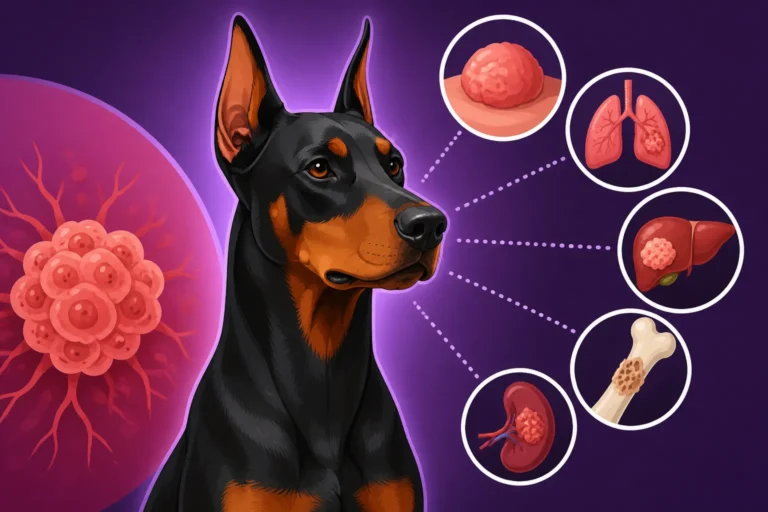
- Associated with other symptoms: If your Doberman is also showing signs of illness, such as lethargy, loss of appetite, weight loss, or changes in behavior, in conjunction with a new lump, get them to the vet without delay. These systemic signs can point to a more widespread disease like Cancer Types That Reach Dobermans.
It's a good habit to perform regular "lump checks" on your Doberman, especially as they get older. Gently run your hands over their entire body, paying close attention to areas like the armpits, groin, neck, and behind the ears. If you do find a lump, take a photo, measure it if possible, and make a note of its location and when you first noticed it. This information will be incredibly helpful for your vet. Many Doberman owners tell me how quickly they can go from enjoying a nice cuddle to extreme anxiety once they feel an unfamiliar spot. Don't let that anxiety fester; make that appointment. Remember, early detection is often key to successful treatment, especially with certain types of Swollen Nodes That Turn Out to Be Doberman Lymphoma.
The Fine Needle Aspiration (FNA) Explained for Doberman Owners
Once you've identified a lump and brought your Doberman to the vet, the first diagnostic step your veterinarian will likely recommend is a fine needle aspiration (FNA). This procedure is a cornerstone of veterinary oncology and is often the quickest, least invasive, and most cost-effective way to get an initial look at what’s growing under your Doberman's skin. It can offer immediate insight and help guide further diagnostic or treatment plans.
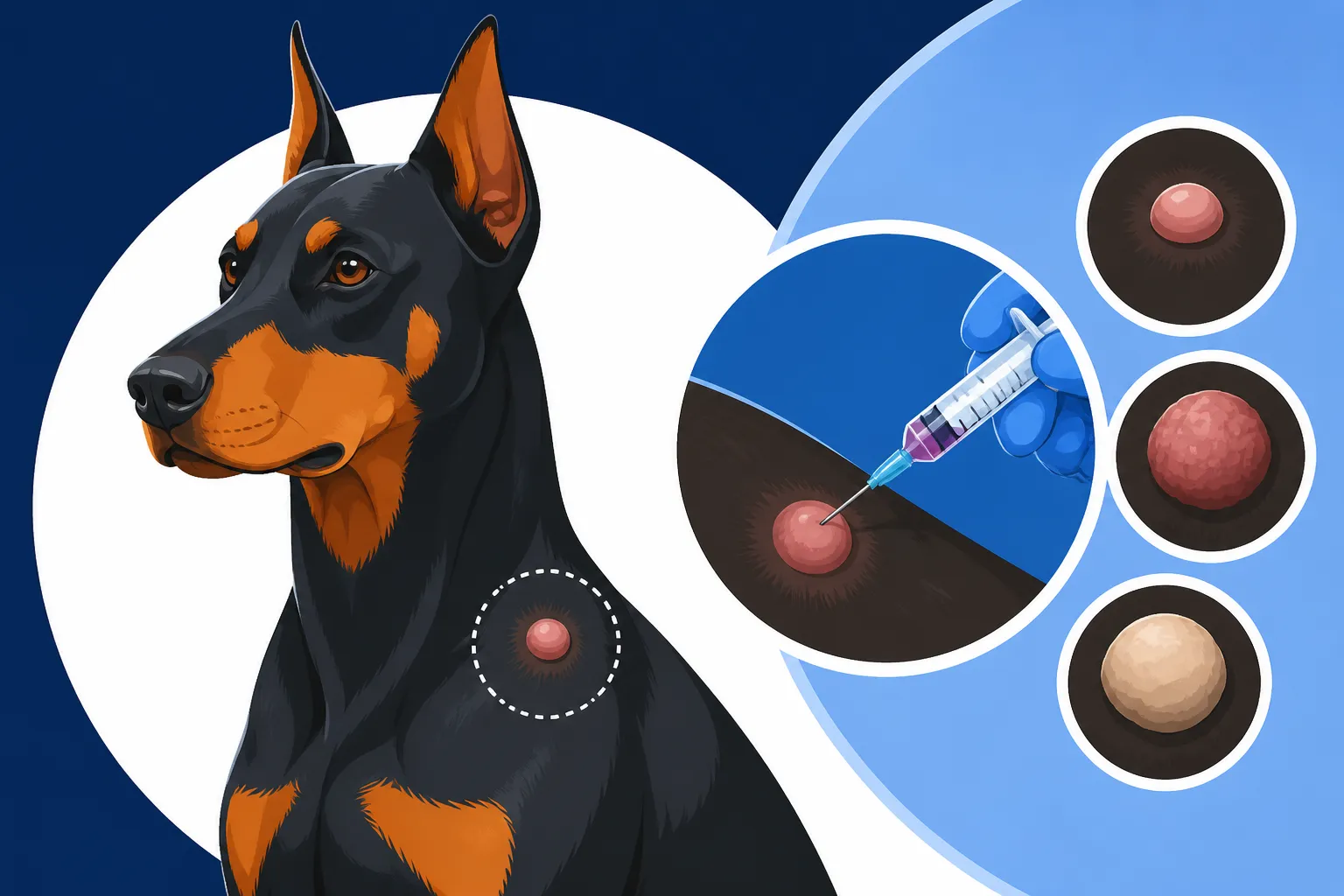
So, what exactly does a fine needle aspiration involve? It's surprisingly simple. Your vet will take a very thin needle, similar to those used for vaccinations, and insert it directly into the lump. While the needle is in the lump, they might apply a small amount of suction with an attached syringe, or simply move the needle back and forth rapidly within the lump to dislodge cells. The goal is to collect a small sample of cells from the mass. This process is usually very quick, often taking less than a minute. Most Dobermans tolerate it incredibly well, often only reacting with a slight flinch, much like receiving a quick shot. Anesthesia or sedation is rarely needed unless the lump is in a particularly sensitive area or the dog is unusually anxious.
Once the cells are collected, they are gently expelled onto a microscope slide, stained with special dyes, and then examined under a microscope. Sometimes, your vet will have the expertise to interpret the sample right there in the clinic. Other times, especially if the cells are complex or unclear, the slides will be sent to a veterinary pathologist for a more detailed analysis. A pathologist is a specialist who spends their days studying cells and tissues to identify diseases.
What kind of information can an FNA reveal?
- Cell Type Identification: The pathologist can often identify the specific type of cells present. Are they fat cells (indicating a lipoma)? Inflammatory cells (suggesting an infection or cyst)? Or are they abnormal, rapidly dividing cells characteristic of a tumor, such as mast cells or cancerous epithelial cells?
- Benign vs. Malignant Indication: While not always definitive, FNA can often provide a strong indication of whether a mass is benign or malignant. For instance, finding uniform fat cells points to a lipoma, while finding highly atypical cells with multiple nuclei and abnormal structures would strongly suggest malignancy.
- Guidance for Further Steps: If the FNA is diagnostic, it helps the vet decide the next course of action. For a benign lipoma, monitoring might be sufficient. For a suspected mast cell tumor, a more invasive biopsy and surgical removal would likely be recommended.
It's important to understand the limitations, though. Occasionally, an FNA might come back as "non-diagnostic," meaning not enough cells were collected, or the sample was too dilute to provide a clear answer. This is not uncommon, especially with very firm tumors or cysts. In such cases, your vet might recommend a repeat FNA, or suggest a more invasive biopsy, where a small piece of tissue is surgically removed and sent for histopathology. While an FNA is a fantastic screening tool, a full surgical biopsy is often required for a definitive diagnosis and proper grading of malignant tumors. The cost of diagnostic procedures can add up, and many Doberman owners find peace of mind with pet insurance providers like Healthy Paws, which can help cover diagnostic procedures like FNA and subsequent treatments if needed. It's an investment in your Doberman's future, allowing you to make medical decisions based on need, not just budget.
Common Diagnoses: What Your Doberman's Lump Might Be
After an FNA, the results will help your veterinarian narrow down what kind of lump you're dealing with. It’s the closest thing to peeking inside without a full surgery. Here's a deeper dive into some of the more common diagnoses and what they mean for your Doberman.
Lipomas: As mentioned, these are benign fatty tumors. On FNA, the sample will primarily consist of mature fat cells. They are typically soft, movable, and don't cause pain. While generally harmless, if a lipoma grows very large or is in an awkward spot, it can sometimes be surgically removed. Many Dobermans live long, healthy lives with multiple lipomas, which are simply monitored for changes in size.
Sebaceous Cysts and Adenomas: These arise from the skin's oil glands. A sebaceous cyst is a blocked gland, and the FNA might reveal keratin (skin cells) and oily debris. They often rupture and can become infected, requiring cleaning and possibly antibiotics. A sebaceous adenoma is a benign tumor of the sebaceous gland, appearing as a small, firm, often wart-like growth. FNA can differentiate these from more serious tumors by showing a proliferation of benign sebaceous cells.
Histiocytomas: These benign immune cell tumors are often diagnosed through FNA, which will show characteristic histiocytic cells. These tumors are most common in young Dobermans and typically regress spontaneously within a few months, so often no treatment beyond monitoring is needed. It’s a wonderful relief when a rapidly growing lump turns out to be "just" a histiocytoma.
Mast Cell Tumors: These are notoriously tricky and one of the most common skin cancers in dogs. They can appear in almost any form – a small bump, a large mass, or even look like a benign fatty lump. On FNA, mast cells, which are distinctive granular cells, are usually easily identified. The granules often stain purple, making them stand out. A positive FNA for mast cell tumors is a serious diagnosis because these tumors can be very aggressive and can spread rapidly. This diagnosis usually leads to recommendations for wider surgical removal and potentially further diagnostics like lymph node aspirations or staging to check for metastasis. For unexpected diagnoses like a mast cell tumor, having a robust pet insurance plan like those offered by Healthy Paws can truly alleviate the financial burden of extensive treatment, ensuring your Doberman receives the best possible care.
Basal Cell Tumors: These are generally benign tumors originating from the basal cells of the epidermis. They are more common in older Dobermans and often appear as firm, well-defined, sometimes pigmented masses. FNA can confirm a basal cell tumor, and while usually benign, surgical removal is often recommended, especially if they are growing or bothering your Doberman.
Melanomas: While often associated with dark pigmentation, melanomas can also be non-pigmented. They can be benign or malignant. Benign melanomas are common in Dobermans and usually appear as small, dark, raised lesions, often on the head or digits. Malignant melanomas are aggressive and often found in the mouth, nail beds, or mucocutaneous junctions. FNA will show cells with melanin pigment, and a pathologist can often determine if the cells show malignant characteristics, guiding the need for aggressive treatment.
Table: Common Doberman Skin Lumps and What FNA Might Show
| Lump Type | Appearance/Feel | Common Age | General Prognosis | Typical FNA Finding |
|---|---|---|---|---|
| Lipoma | Soft, movable, non-painful | Older dogs | Benign | Mature fat cells |
| Sebaceous Cyst | Firm, well-defined, can rupture, sometimes painful | Any age | Benign, can get infected | Keratin, oily debris, inflammatory cells |
| Histiocytoma | Red, hairless, dome-shaped, rapid growth | Young dogs | Benign, often self-resolving | Histiocytic cells |
| Mast Cell Tumor | Highly variable (firm, soft, red, normal skin) | Any age | Malignant, can be aggressive | Mast cells with distinct granules |
| Basal Cell Tumor | Firm, well-defined, sometimes pigmented | Older dogs | Usually benign | Basaloid cells |
| Melanoma | Small, dark, raised (benign); aggressive in some sites (malignant) | Any age | Variable (benign or malignant) | Cells with melanin pigment, can show malignancy criteria |
Remember, this isn't an exhaustive list, and only a veterinarian can provide an accurate diagnosis. The key takeaway here is that prompt action and a simple FNA can provide invaluable information, reducing your anxiety and setting your Doberman on the correct path to care, whether it’s just monitoring or more involved treatment. Staying vigilant about your Doberman's health, including regular checks, can make all the difference, especially as they age and may require Screening an Older Doberman More Often. It’s all part of ensuring your beloved companion lives the fullest life possible.
Disclaimer
The information provided in this article is for educational and informational purposes only and does not constitute veterinary advice. Always consult with a qualified veterinarian for any health concerns or before making any decisions about your Doberman's health and treatment plan.