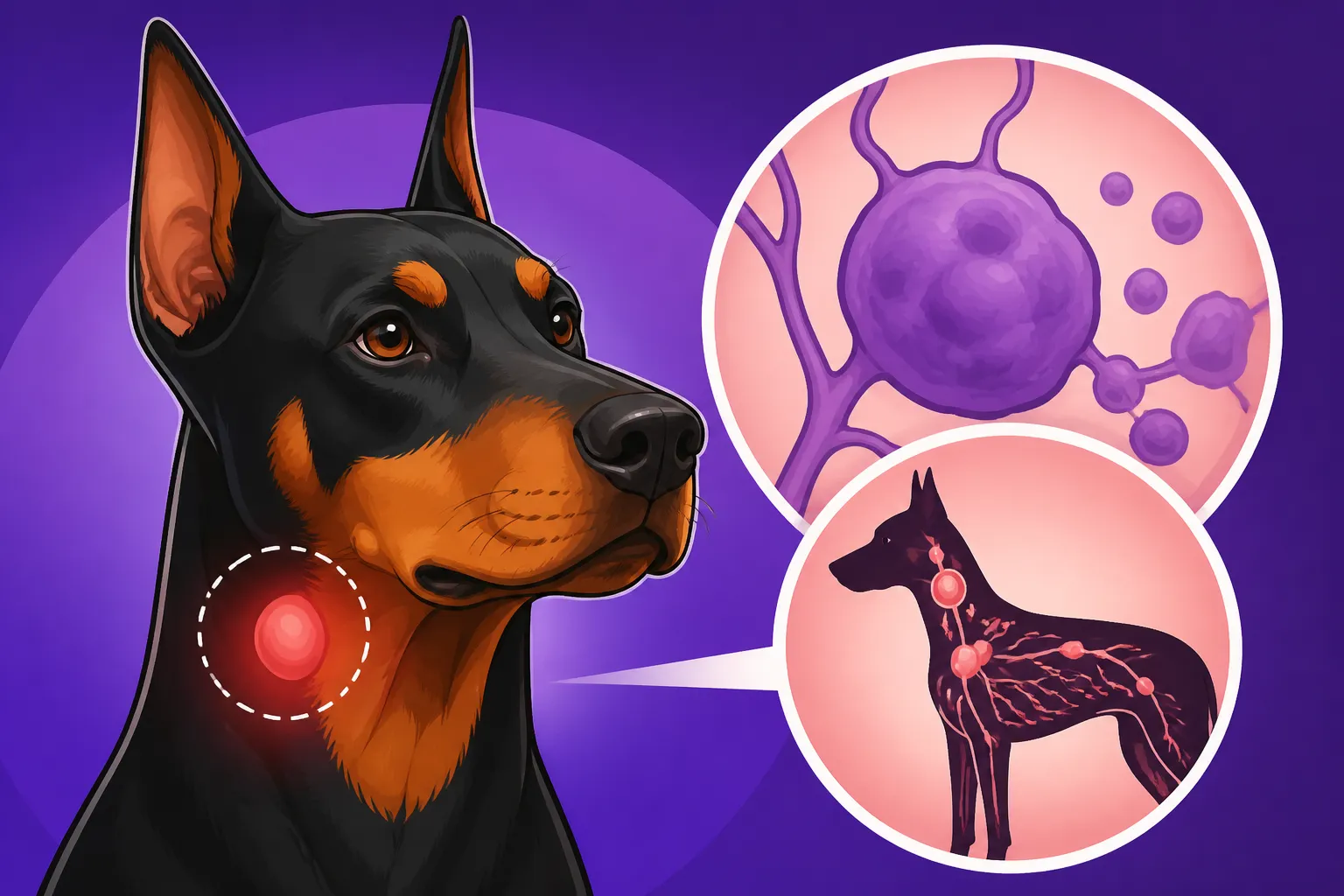
Swollen Nodes That Turn Out to Be Doberman Lymphoma
Discovering a lump or swelling on your beloved Doberman can send a shiver down any owner's spine. The immediate worry often jumps to the most serious possibilities, and unfortunately, for Doberman owners, swollen lymph nodes can indeed be a grim indicator of canine lymphoma. This guide aims to walk you through understanding lymphoma in Dobermans, how to identify those worrying signs, the diagnostic journey, and the available treatment options to help you navigate this challenging diagnosis.
Understanding Lymphoma in Dobermans: A Frightening Reality
Finding an unexpected lump on your Doberman is one of those moments every pet parent dreads, and when it turns out to be a swollen lymph node, the fear of cancer, specifically lymphoma, becomes very real. It's a diagnosis that can feel overwhelming, but understanding what it means is the first step in facing it head-on.
What is Lymphoma and Why Dobermans Are Susceptible
At its core, lymphoma is a cancer of the lymphocytes, a type of white blood cell that forms a critical part of the immune system. These cells are found throughout the body, including in the lymph nodes, spleen, bone marrow, and other organs. When these lymphocytes become cancerous, they can multiply uncontrollably, leading to the swelling we often associate with the disease.
Dobermans, like several other breeds such as Golden Retrievers, Boxers, and Rottweilers, appear to have a higher incidence of certain cancers, including lymphoma. While the exact genetic predispositions are still being researched, it's believed that a combination of genetic factors and environmental influences plays a role. It’s not just one type either; lymphoma can manifest in different forms:
- Multicentric Lymphoma: This is the most common form in dogs, affecting the peripheral lymph nodes. This is the type most owners first notice as palpable lumps.
- Gastrointestinal Lymphoma: This type affects the digestive tract, leading to symptoms like vomiting, diarrhea, and weight loss.
- Mediastinal Lymphoma: This form involves lymph nodes in the chest (mediastinum) and can cause breathing difficulties.
- Cutaneous Lymphoma: This rarer type affects the skin, presenting as skin lesions or plaques.
Knowing that Dobermans are unfortunately among the breeds statistically more prone to developing certain cancers is important for proactive health management. You can learn more about general tendencies in the article on various Cancer Types That Reach Dobermans.
The Silent Threat: Recognizing Early Signs Beyond Swollen Nodes
The presence of visibly or palpably swollen lymph nodes is often the first alarm bell for owners, but lymphoma can be a silent infiltrator, showing subtle signs long before any obvious lumps appear. This is why vigilance and knowing your Doberman's normal behavior are so crucial.
Many owners recall their Doberman just "not being themselves" in the weeks or months leading up to a diagnosis. These subtle, non-specific symptoms can include:
- Lethargy or Decreased Energy: Your Doberman might seem less enthusiastic about walks, playing, or their usual activities. This isn't just "getting older"; it's a persistent, unexplained dip in their usual energy levels. You might notice they are A Doberman That Tires Faster Than It Used To.
- Weight Loss: Despite eating normally, or sometimes even with a slightly decreased appetite, your Doberman might start to lose weight. This can be masked by their already lean physique, so regular weigh-ins at home can be beneficial.
- Decreased Appetite: While some Dobermans with lymphoma maintain their appetite, others may show a general disinterest in food or pickiness. If you notice A Doberman That Suddenly Stops Eating, especially coupled with other changes, it warrants attention.
- Fever: Persistent, unexplained fever can be a sign of lymphoma, as the body tries to fight the proliferating cancer cells.
- Other Vague Symptoms: Less common but still possible are increased thirst, increased urination, or even coughing if the disease affects intrathoracic lymph nodes.
It's truly a heartbreaking reality that Why a Doberman Can Look Fine and Be Ill until the disease has progressed. Catching these subtle changes and bringing them to your vet's attention promptly can make a significant difference in early detection and potential treatment outcomes. Don't dismiss lingering lethargy or changes in eating habits as just quirks of aging.
The Worrying Signs: Identifying Swollen Lymph Nodes
For many Doberman owners, the moment they feel an unexpected lump is terrifying. These lumps are often swollen lymph nodes, a primary indicator of multicentric lymphoma. Knowing where to look and what to feel for can empower you to perform regular checks, which are vital for early detection.
Where to Feel for Lymph Nodes on Your Doberman
Regularly checking your Doberman's lymph nodes should become part of your routine grooming or cuddle time, especially as they enter the years when The Doberman Years When Everything Shows Up more frequently. You'll be looking for enlarged, firm, non-painful (usually) lumps in specific areas. Here’s a guide on where to feel:
- Submandibular Lymph Nodes: These are located under your Doberman's jaw, on either side of the windpipe. They're usually pea-sized and somewhat elongated. To check, gently cup your Doberman's jaw in your hands, running your fingers along the underside of the jawbone towards the neck.
- Prescapular Lymph Nodes: Found just in front of your Doberman's shoulders, on either side of the chest, where the neck meets the shoulder blade. They are normally quite small, like a bean. Gently feel the area with your fingertips.
- Axillary Lymph Nodes: These are in your Doberman's "armpits." They are rarely palpable unless significantly enlarged. Gently lift your Doberman's front leg and feel deep into the armpit area.
- Inguinal Lymph Nodes: Located in the groin area, where the hind leg meets the body. These are also generally not palpable unless swollen. Gently feel the soft tissue in this region.
- Popliteal Lymph Nodes: Situated on the back of your Doberman's hind legs, just above the knee joint. You'll feel them on the caudal (back) aspect of the stifle. They're typically bean-sized.
A normal lymph node should feel like a small, soft, movable bean under the skin, barely noticeable. A swollen lymph node, however, will feel much larger – like a grape, a marble, or even a golf ball, depending on the severity. It will often be firm and non-painful to the touch. If you feel anything significantly larger than a normal lymph node, or if multiple nodes feel enlarged, it's time for an immediate veterinary visit.
When a Swollen Node Isn't Lymphoma: Other Causes for Concern
While discovering a swollen lymph node immediately makes us think of the worst, it's important to remember that not every enlarged node points to lymphoma. Lymph nodes are crucial parts of the immune system and will swell in response to various issues, often infections or inflammation.
Common reasons for reactive lymph nodes, besides cancer, include:
- Infections: Bacterial, viral, or fungal infections anywhere in the body can cause regional lymph nodes to swell as they work to fight off the invaders. For instance, a dental infection might cause submandibular nodes to enlarge. Skin infections or even severe allergic reactions could cause more generalized swelling.
- Inflammatory Conditions: Autoimmune diseases or other inflammatory processes can also lead to lymph node enlargement.
- Vaccine Reactions: Sometimes, a localized reaction to a recent vaccination can cause temporary swelling in nearby lymph nodes.
The key difference often lies in other accompanying symptoms and the duration of the swelling. An infection might come with fever, pain at the site of swelling, or other signs of illness. Lymphoma, on the other hand, often presents with firm, non-painful swelling that persists and often enlarges over time, often without other acute signs of infection. However, differentiating these conditions solely by touch is impossible. This is why a prompt veterinary examination is critical. Your vet will perform tests to determine the underlying cause, whether it's a simple infection or something more serious.
Getting a Diagnosis: The Path to Clarity
Once you’ve noticed swollen lymph nodes, the next crucial step is getting a definitive diagnosis. This can be an anxious period, but understanding the process can help you feel more prepared.
Initial Vet Visit and Diagnostic Steps
When you bring your Doberman to the vet with concerns about swollen nodes, the veterinarian will first perform a thorough physical examination, assessing all accessible lymph nodes, checking for other signs of illness, and reviewing your Doberman's overall health history.
The most common initial diagnostic step is a fine needle aspiration (FNA). This is a relatively non-invasive procedure where your vet inserts a very thin needle into the enlarged lymph node and collects a small sample of cells. This sample is then spread onto a slide and examined under a microscope (cytology) by either your vet or a veterinary pathologist.
- Pros of FNA: It's quick, usually well-tolerated by Dobermans (often without sedation), and can often provide an immediate preliminary diagnosis.
- Cons of FNA: Sometimes, the sample collected isn't sufficient or representative enough to give a definitive diagnosis, leading to inconclusive results. In such cases, further testing is needed.
If the FNA is inconclusive or if lymphoma is strongly suspected, a surgical biopsy may be recommended. This involves surgically removing a small piece or even an entire lymph node. The tissue is then sent to a specialized lab for histopathology, which is a more thorough examination of the tissue architecture. While more invasive, a biopsy typically provides a definitive diagnosis, including the specific type and grade of lymphoma, which is vital for guiding treatment.
These initial steps are crucial. While the waiting can be agonizing, getting an accurate diagnosis is the cornerstone of effective treatment.
Staging Lymphoma and Understanding Prognosis
Once lymphoma is definitively diagnosed, the next critical phase is staging. Staging involves determining the extent to which the cancer has spread throughout your Doberman's body. This process is essential because it influences the prognosis and dictates the most appropriate treatment protocol.
Common tests performed for lymphoma staging include:
- Bloodwork (Complete Blood Count and Chemistry Panel): To assess overall health, organ function, and identify any abnormalities in blood cell counts that might indicate bone marrow involvement.
- Urinalysis: To check kidney function and rule out urinary tract infections.
- Chest X-rays: To look for enlarged lymph nodes within the chest (mediastinal lymphoma) or spread to the lungs.
- Abdominal Ultrasound: To examine internal organs like the spleen, liver, and abdominal lymph nodes for signs of disease spread.
- Bone Marrow Aspiration: In some cases, a sample of bone marrow may be collected to determine if the cancer has spread to the bone marrow.
Based on these results, the lymphoma will be assigned a stage (I to V), indicating how widespread it is. Generally, lower stages (e.g., only one lymph node affected) tend to have a better prognosis than higher stages (e.g., multiple lymph nodes and internal organs affected). The specific type of lymphoma (e.g., T-cell vs. B-cell lymphoma) also plays a significant role in prognosis and response to treatment. Your veterinary oncologist will discuss these findings with you in detail, helping you understand what to expect and what treatment paths are most viable.
Treatment Options and Managing Life with Lymphoma
A diagnosis of lymphoma in your Doberman can feel like a punch to the gut, but it's important to remember that treatment options exist, and many Dobermans can achieve remission and maintain a good quality of life with proper care.
Chemotherapy and Palliative Care
For most forms of canine lymphoma, chemotherapy is the primary treatment. The goal of chemotherapy is not usually a "cure" in the human sense, but rather to achieve remission, which means reducing or eliminating the cancer cells to the point where the dog feels well and lives comfortably for an extended period.
The most common and effective chemotherapy protocol for multicentric lymphoma is the CHOP protocol, which involves a combination of different chemotherapy drugs administered over several weeks or months. This protocol has a high success rate in inducing remission, with many Dobermans experiencing significant improvement.
- Success Rates: With protocols like CHOP, approximately 80-90% of Dobermans with multicentric lymphoma will achieve remission. The duration of remission varies, but many dogs can have a good quality of life for 6-12 months, with some living even longer.
- Side Effects: While cancer treatment sounds daunting, dogs generally tolerate chemotherapy much better than humans do. Side effects are usually mild and temporary, such as a transient decrease in appetite, mild nausea, or some lethargy. More severe side effects are less common but can include bone marrow suppression or gastrointestinal upset. Your veterinary oncologist will carefully monitor your Doberman and manage any side effects.
Alongside, or in cases where aggressive treatment isn't feasible or desired, palliative care plays a crucial role. Palliative care focuses on improving your Doberman's comfort and quality of life by managing symptoms. This might include pain medication, anti-nausea drugs, appetite stimulants, or corticosteroids to reduce inflammation and temporarily shrink tumors. The goal is to make every day as comfortable and enjoyable as possible, regardless of the disease progression.
Supporting Your Doberman Through Treatment
Navigating lymphoma treatment is a journey, and your role in supporting your Doberman is paramount. It involves more than just administering medication; it's about providing holistic care that nurtures their physical and emotional well-being.
- Nutrition: Maintaining good nutrition is vital. Some Dobermans may need special diets to support their immune system or manage treatment side effects. Your vet or oncologist can provide guidance on appropriate food choices.
- Comfort: Ensure your Doberman has a comfortable, quiet place to rest. Dobermans, with their lean build, appreciate soft bedding that cushions their joints.
- Emotional Support: Dobermans are highly sensitive dogs and will pick up on your emotions. Try to maintain a positive and calm demeanor. Spend quality time with them, even if it's just gentle petting or quiet companionship.
- Regular Vet Check-ups: Adhering strictly to your appointment schedule for chemotherapy treatments and follow-up examinations is critical. This allows the veterinary team to monitor your Doberman's response to treatment, adjust dosages if necessary, and address any side effects promptly.
- Open Communication: Don't hesitate to ask your veterinary oncologist any questions you have. They are your best resource for understanding your Doberman's specific condition and treatment plan.
The financial burden of cancer treatment can be substantial. Comprehensive diagnostic tests, chemotherapy sessions, and supportive medications add up. This is where pet insurance can be a lifesaver. Companies like Healthy Paws often cover a significant portion of these costs, provided the policy was in place before the diagnosis. It’s always a good idea to consider pet insurance early, especially for breeds prone to health issues. Discussing options like Enrolling a Doberman Before Its First Echo or understanding Whether Any Doberman Owner Should Skip Insurance are important conversations for long-term ownership. Knowing What a Doberman Costs Month to Month helps budget for potential health challenges, and having a plan for unexpected The Vet Bills a Doberman Runs Up Outside Screening can alleviate stress during a difficult time.
Remember, you are not alone in this. Your veterinary team is there to support both you and your Doberman through every step of the journey.
Comparison of Lymph Node Conditions
| Feature | Normal Lymph Node | Reactive (Infected/Inflamed) Lymph Node | Lymphoma-Affected Lymph Node |
|---|---|---|---|
| Size | Small (pea-sized to small bean) | Enlarged (grape-sized, marble-sized) | Markedly enlarged (golf ball-sized or larger) |
| Consistency | Soft, pliable | Firm, rubbery | Firm, hard, rubbery |
| Pain on Touch | None | Often painful, especially if acutely infected | Usually non-painful (unless very large or rapidly growing) |
| Mobility | Freely movable under the skin | Movable, sometimes slightly adhered | Can be movable, but may become fixed if very large |
| Duration | Consistent | Develops with illness, resolves with treatment of infection | Persists, often grows, does not resolve with antibiotics |
| Accompanying Symptoms | None | Fever, lethargy, localized infection, pain | Lethargy, weight loss, decreased appetite, fever (non-specific) |
| Cause | Healthy immune system | Infection (bacterial, viral), inflammation, allergies | Uncontrolled proliferation of cancerous lymphocytes |
| Action | Monitor during routine checks | Vet visit for diagnosis and treatment of underlying cause | Urgent vet visit for diagnosis and cancer staging |
Disclaimer
The information provided in this guide is intended for educational purposes only and should not be considered a substitute for professional veterinary advice. Always consult with a qualified veterinarian for any health concerns or before making any decisions about your Doberman's medical care.