Whether One Clear Echo Is Enough for a Doberman
It's a heartbreaking truth for Doberman owners: the shadow of heart disease looms large over our beloved companions. You bring home this vibrant, intelligent puppy, full of life and boundless energy, and you're told about Dilated Cardiomyopathy (DCM). Naturally, you want to do everything right, so you get their heart checked. You breathe a sigh of relief when the vet says, "All clear!" But then the nagging question starts: is one clear echocardiogram really enough to put your mind at ease for the lifetime of your Doberman? This guide delves into why a single clear test isn't the finish line and what truly constitutes a comprehensive heart health plan for your Doberman.
The Reality of Doberman Heart Disease
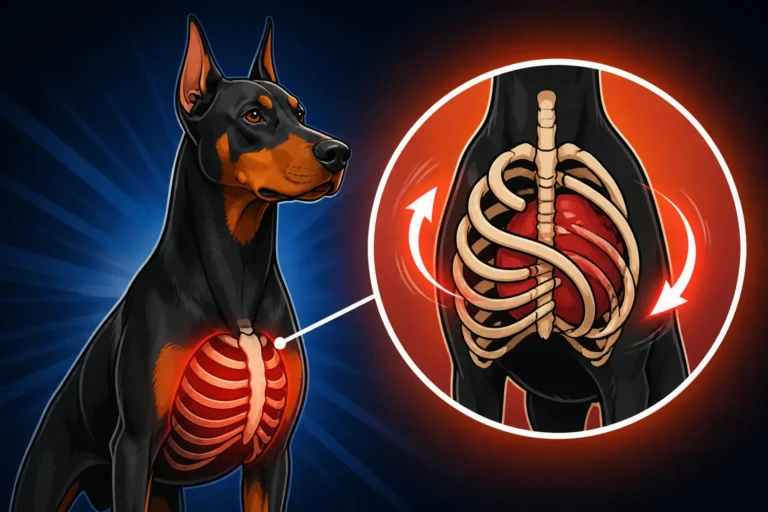
Dobermans are, sadly, predisposed to a silent killer: Dilated Cardiomyopathy (DCM). It’s a genetic condition where the heart muscle thins and weakens, leading to an enlarged heart that struggles to pump blood effectively. The devastating part is that it often progresses unseen for years, leaving owners blindsided when symptoms finally appear.
Understanding Dilated Cardiomyopathy (DCM) in Dobermans
Dilated Cardiomyopathy isn't just a generic heart issue; it's a specific, progressive disease that affects the Doberman breed disproportionately. Imagine your Doberman's heart like a powerful engine. With DCM, over time, the walls of the engine's chambers start to become thinner and flimsier, and the chambers themselves stretch out. This makes it incredibly difficult for the heart to effectively push blood throughout the body. The pump just isn't working as efficiently as it should, and eventually, it starts to fail.
The insidious nature of DCM lies in its "occult" or "preclinical" phase, which can last for years. During this time, your Doberman appears perfectly healthy, bouncing around, playing fetch, and demanding cuddles as usual. There are no outward signs – no coughing, no lethargy, no fainting spells – that something is gravely wrong with their most vital organ. This is why it's such a silent threat and why so many owners are caught off guard when the disease finally manifests. It’s during these silent years before a Doberman's heart shows that the damage is slowly accumulating, often unnoticed by even the most vigilant owner.
Why a Single Clear Echo Can Be Misleading
A single clear echocardiogram, especially on a young Doberman, is certainly good news in that moment. It tells you that at the time of the scan, there were no obvious structural changes indicative of DCM. However, DCM is a progressive disease, and it can develop at any stage of a Doberman's life, though it commonly manifests later. Think of it like a photograph: a clear echo is a snapshot, telling you what the heart looked like on that specific day. It doesn't predict the future.
Many Dobermans will test clear for DCM in their younger years, say at two or three years old, only to develop the disease as they mature. The age Doberman heart disease usually starts can vary, but it's most frequently seen between four and eight years of age, though some Dobermans can be affected younger or older. A Doberman puppy's first heart check might be clear, but that doesn't guarantee they'll remain clear. The disease might not have progressed enough for any measurable changes to be visible on the echo yet. Relying on one clear echo would be like saying you're safe from future cavities because your teeth were fine at your last dental check-up two years ago – it simply doesn't account for ongoing changes.
The Limitations of Diagnostic Tests
While an echocardiogram is an invaluable tool, it's not the only piece of the puzzle. Understanding what each diagnostic test can and cannot reveal is crucial for a comprehensive approach to Doberman heart health.
What an Echocardiogram Actually Measures
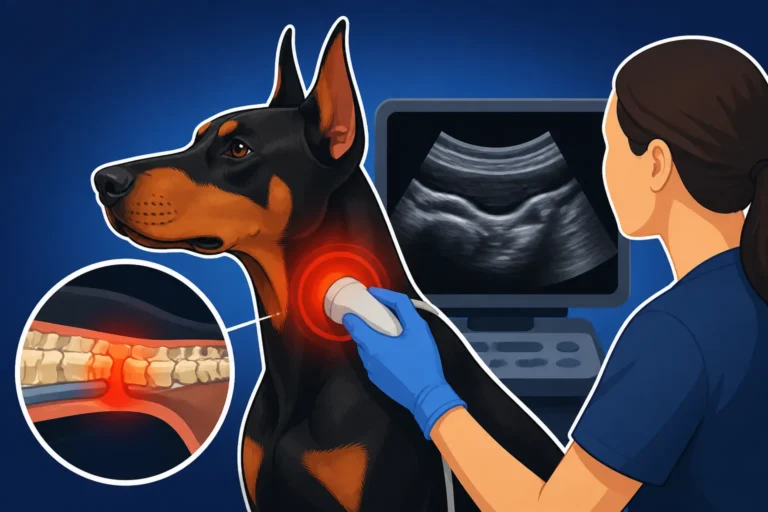
An echocardiogram, often referred to as an "echo," is a sophisticated ultrasound of the heart. When your Doberman undergoes an echo, a board-certified veterinary cardiologist uses sound waves to create real-time images of the heart's structure and function. It’s incredible technology that allows them to visualize the heart's chambers, valves, and major blood vessels.
Specifically, what a Doberman echo actually measures includes:
- Chamber size: Are the left ventricle and atria enlarged? This is a key indicator of DCM.
- Wall thickness: Are the heart muscle walls thinning?
- Pumping function (ejection fraction and fractional shortening): How efficiently is the heart contracting and pushing blood out? Weakened contractions are a hallmark of DCM.
- Valve function: Are the valves opening and closing properly, or is there any leakage (regurgitation)?
- Blood flow: Doppler ultrasound can assess blood flow patterns, detecting abnormalities.
While an echo is excellent for detecting structural changes, it's still just a snapshot. It can confirm the presence of DCM once structural changes have occurred, but it might not catch the very earliest stages where functional changes (like arrhythmias) are present before physical enlargement. This is why it's not enough on its own, especially for a breed prone to such a progressive disease.
The Role of the Holter Monitor
This is where the Holter monitor comes into play, providing a critical complementary view of your Doberman's heart health. A Holter monitor is a portable, battery-operated electrocardiogram (ECG) device that continuously records your Doberman's heart rhythm for a full 24 hours. The process, typically called twenty-four hours of Holter on a Doberman, involves attaching electrodes to your dog's skin, usually over a shaved patch, and then the small device is worn in a vest or harness.
The Holter monitor isn't looking at the heart's structure; it's listening to its electrical activity. It's designed to detect arrhythmias (irregular heartbeats) that might occur sporadically and would likely be missed during a brief in-clinic ECG. In Dobermans with DCM, ventricular premature contractions (VPCs) are a common early sign, often appearing long before any structural changes are visible on an echo.
By compiling a full day's worth of data, the cardiologist can analyze the frequency and severity of these arrhythmias. When reading a Doberman's Holter result, they're looking for an increase in the number of VPCs, which can be an early warning signal of DCM. Knowing how many abnormal beats worry a Doberman cardiologist can provide crucial insight into the stage of the disease, even if the heart still looks structurally normal on an echo. This combination of structural and electrical assessment offers a far more complete picture of your Doberman's heart health.
Establishing a Comprehensive Screening Protocol
Given the progressive and often silent nature of Doberman DCM, a one-and-done approach to heart screening just doesn't cut it. A robust, ongoing screening protocol is the only way to stay ahead of this challenging disease.
Annual Echo and Holter Screening: The Gold Standard
For Doberman owners, the gold standard for managing DCM risk is a program of regular, annual screening that combines both an echocardiogram and a 24-hour Holter monitor. This isn't just a suggestion; it's a critical component of responsible Doberman ownership. The age to start screening a Doberman's heart is typically around two years old, sometimes even earlier if there's a strong family history of early-onset DCM. From that point forward, these screenings should become an annual routine for your Doberman's life, especially as they enter the Doberman years when everything shows up.
Why is this consistent, annual check so vital? Because DCM can develop and progress at different rates. One year, your Doberman might have a perfectly clear echo and Holter. The next year, a few VPCs might show up on the Holter, or a subtle increase in heart chamber size might be detectable on the echo. This early detection is everything. It allows your veterinarian and a cardiologist to begin treatment, like medication such as pimobendan, before your dog becomes symptomatic. Early intervention can significantly extend the quality and length of your Doberman's life. The comprehensive approach of annual echo and Holter screening for a Doberman truly maximizes your chances of catching this disease in its most manageable stage.
Integrating Genetic Testing
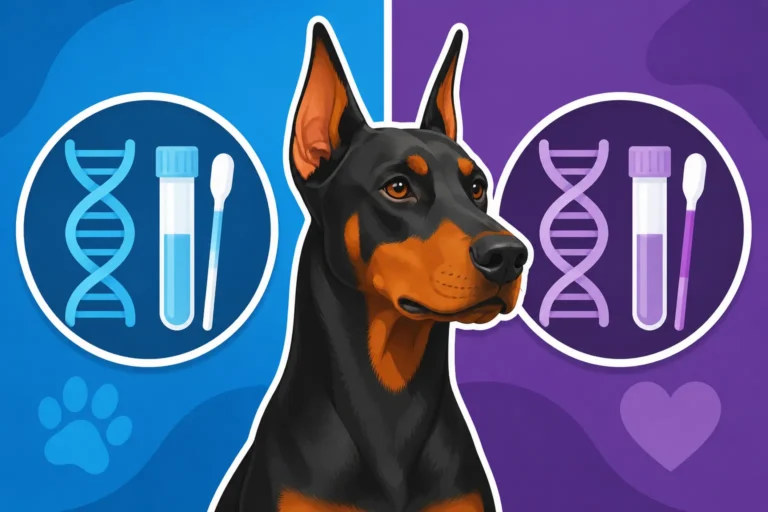
Beyond the physical screenings, genetic testing has emerged as another valuable tool in understanding your Doberman's predisposition to DCM. Currently, two main genetic mutations, known as DCM1 and DCM2, have been identified in Dobermans that are associated with an increased risk of developing the disease. Labs like the one at Washington State University (WSU) offer panels to test for these markers.
You can learn more about The DCM1 Gene Test Explained for Doberman Owners and The DCM2 Titin Variant in Dobermans. It's important to understand what these tests tell you: they identify risk factors. A Doberman testing positive for one or both of these genetic variants has a higher likelihood of developing DCM, but it's not a guarantee. Conversely, a Doberman testing clear for both known genetic markers can still develop DCM, as there are other genetic factors and environmental influences we don't fully understand yet.
Therefore, genetic testing serves as a piece of the puzzle, informing your overall risk assessment. If your Doberman tests positive for a variant, it makes the commitment to annual physical screenings even more critical. Genetic tests don't replace the need for regular echos and Holters; rather, they complement them by giving you an earlier heads-up about potential susceptibility. Think of it as knowing you have a family history of a certain disease – it prompts you to be extra diligent with your own preventative care and screenings.
Financial Considerations and Proactive Planning
Let’s be honest, ongoing specialized veterinary care for a Doberman, especially when it involves cardiac health, comes with a significant price tag. It’s a reality that can cause a lot of stress, but with proactive planning, it can be manageable.
The Costs of Ongoing Doberman Heart Care
The commitment to annual cardiac screening for your Doberman is truly an investment in their health and your peace of mind. However, these specialized tests are not cheap. You're looking at recurring expenses that can really add up over the years. An echocardiogram performed by a board-certified veterinary cardiologist can range from $400 to $800, depending on your location and the specific clinic. A 24-hour Holter monitor rental and interpretation typically runs another $150 to $300. So, the yearly heart bill for a Doberman just for screening can easily be $600 to $1,000, and that's before any medication or emergency treatments are needed.
If your Doberman is diagnosed with DCM, the costs escalate dramatically. Medications like Pimobendan, Furosemide, and Enalapril are often prescribed for life, and these can run hundreds of dollars per month, depending on the dosage and your dog's weight. Emergency visits for acute heart failure, fluid on the lungs, or sudden collapse can easily cost thousands of dollars for diagnostics, overnight care, and stabilization. It's a heavy financial burden that many Doberman owners unfortunately face.
The Value of Pet Insurance
This is precisely where pet insurance becomes not just a good idea, but an absolute lifesaver for Doberman owners. Imagine facing a $5,000 emergency bill because your Doberman suddenly collapsed due to an arrhythmia. Without insurance, that’s a direct hit to your savings. With a good policy from a reputable provider, like Healthy Paws, you could be reimbursed for a significant portion of that expense, allowing you to focus on your Doberman’s care rather than the crushing financial stress.
The key to maximizing the benefit of pet insurance is to enroll your Doberman before any signs of heart disease emerge. Most pet insurance policies consider pre-existing conditions as non-covered events. If your Doberman has a clear echo and Holter at two years old and you enroll them then, any DCM diagnosis later in life would likely be covered. However, if you wait until they've already had an abnormal result, it could be deemed pre-existing, and you'd be footing those substantial bills entirely on your own. Many policies, including those from providers like Healthy Paws, also offer different deductible and reimbursement percentage options, allowing you to tailor coverage to your budget and needs. As your Doberman ages and approaches the "DCM years," the importance of renewing a Doberman policy in the DCM years becomes paramount, ensuring continuous coverage for ongoing treatments and screenings. Don't wait until it's too late; a proactive approach to insurance is just as vital as proactive screening.
Doberman Heart Health Screening at a Glance
To summarize the recommended screening strategy for Doberman heart health, here's a quick comparison of the common methods and their roles.
| Test Type | Purpose | Frequency (Recommended) | What it Reveals | Limitations |
|---|---|---|---|---|
| Echocardiogram | Assesses heart structure and pumping function | Annually (starting 2-3 years old) | Heart enlargement, chamber thinning, reduced pumping efficiency, valve issues | Only shows structural changes once present; a "snapshot in time" |
| Holter Monitor | Detects electrical abnormalities and arrhythmias over 24 hours | Annually (starting 2-3 years old) | Ventricular premature contractions (VPCs), other irregular heartbeats | Does not assess heart structure; requires dog to wear a vest for 24h |
| Genetic Testing | Identifies known genetic mutations (DCM1, DCM2) associated with increased risk | Once (any age) | Predisposition to DCM | Indicates risk, not certainty; clear test doesn't guarantee freedom from DCM |
| NT-proBNP Blood Test | Measures a hormone released by stretched heart muscle | Can be part of routine check-up, or if echo/Holter is not feasible (less precise) | Can indicate cardiac stress or disease presence | Not specific to DCM; requires further diagnostics for confirmation |
As you can see, a combination of these tests, especially the annual echo and Holter monitoring, provides the most comprehensive picture of your Doberman's heart health, allowing for early detection and intervention should DCM begin to develop.
Disclaimer
The information provided in this article is for educational purposes only and is not a substitute for professional veterinary advice. Always consult with a qualified veterinarian or a board-certified veterinary cardiologist regarding your Doberman's specific health needs and treatment options.