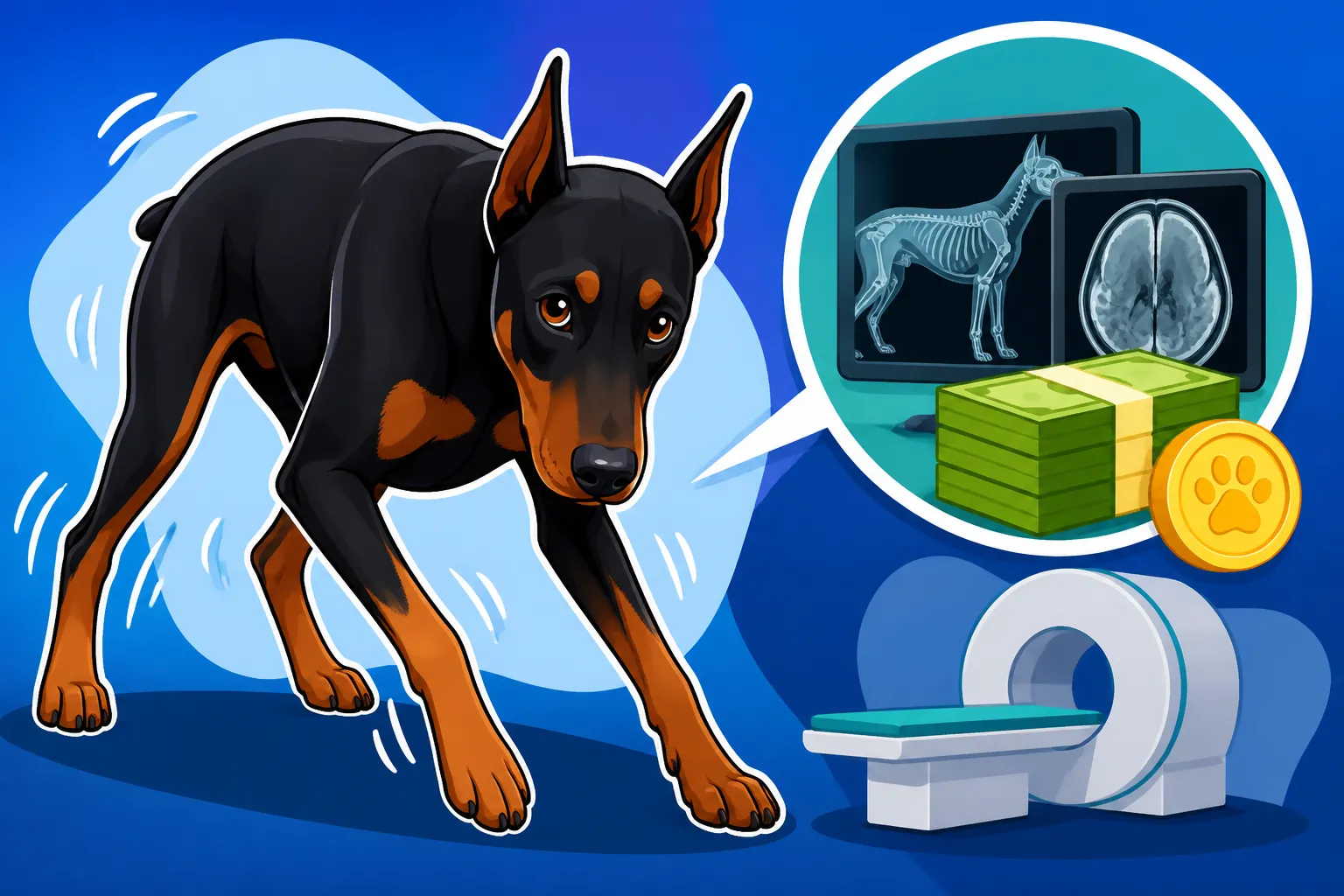
Imaging Bills When a Doberman Starts Wobbling
It’s a heart-stopping moment when you first notice your beloved Doberman isn’t walking quite right. Maybe it’s a subtle stumble, a slight drag of a paw, or an uncharacteristic wobble in their gait. The immediate worry for their well-being is quickly compounded by the creeping anxiety about what might be wrong and, let's be honest, the potential financial burden of getting answers. This guide aims to walk you through the diagnostic process for conditions like Wobbler Syndrome, specifically focusing on the imaging bills you might face to understand your Doberman's discomfort.
Understanding Doberman Wobbler Syndrome
Seeing your Doberman, a breed known for its grace and athleticism, suddenly exhibit an unsteady gait or a strange lack of coordination is incredibly alarming. It’s not just a clumsy moment; it can be a sign of something much more serious brewing beneath the surface, often pointing towards a condition commonly known as Wobbler Syndrome.
What is Wobbler Syndrome?
Wobbler Syndrome, medically referred to as cervical spondylomyelopathy (CSM), isn't just one disease but a general term describing a compression of the spinal cord and/or nerve roots in the neck (cervical spine) region. This compression leads to those characteristic wobbling signs. In Dobermans, who are particularly predisposed to this condition, it typically manifests as a disc-associated Wobbler, where a disc protrudes or degenerates, or as a bony malformation that narrows the spinal canal. The nerve damage caused by this compression disrupts the normal communication between the brain and the limbs, leading to the uncoordinated movements you observe. It's a progressive condition, meaning it often gets worse over time without intervention.
The sheer frustration of watching your usually energetic Doberman struggle with basic movements is immense. You want answers, and you want them fast, but the path to diagnosis can feel like a labyrinth, starting with identifying exactly what is causing that pressure on their delicate spinal cord. This specific type of nerve compression is what makes Dobermans so prone to the condition, often affecting the lower cervical vertebrae.
Recognizing the Signs of a Doberman Wobbling
The signs of Wobbler Syndrome can be incredibly varied, from subtle to stark, and often develop gradually, making them easy to dismiss initially. Owners frequently report their Doberman exhibiting an uncoordinated gait, often described as a "wobble," particularly in the hind limbs. They might look like they're walking on a boat or drunk. Another common tell-tale sign is a tendency for their hind paws to scuff along the ground, leading to worn-down nails on the top surface. You might also notice a reluctance to go up or down stairs, difficulty standing up after lying down, or an overall stiffness in their neck and shoulders.
Sometimes, the initial signs can be subtle, like a slightly shorter stride in one leg or a momentary stumble during a run. As the condition progresses, you might observe more pronounced ataxia (lack of voluntary coordination of muscle movements), weakness, and even paralysis in severe cases. Some Dobermans may also show signs of neck pain, holding their head low or crying out when touched in the neck area. It's truly heartbreaking to see a strong dog like a Doberman suffer from such a debilitating condition, and the urgency to find out what's happening becomes paramount. Many owners report seeing signs start to appear around middle age, but it can affect younger dogs too. To learn more about when these signs typically begin, you might want to read our article on The Age Doberman Wobbler Signs Appear. If your Doberman is struggling with their back legs, a deeper dive into A Doberman That Wobbles on Its Back Legs could also be helpful.
The First Steps: Initial Vet Visit and Basic Diagnostics
Once you notice your Doberman’s gait isn’t quite right, the first and most crucial step is a visit to your regular veterinarian. They will be your initial guide through this unsettling journey, performing a thorough physical and neurological examination to pinpoint the general area of concern and rule out other potential issues.
Your Vet's Initial Assessment
When you bring your Doberman in, your vet will perform a comprehensive physical exam, feeling along their spine and limbs, checking for any obvious pain responses or muscle atrophy. The neurological exam is where they’ll truly shine a light on the problem. This involves a series of tests to evaluate your Doberman's reflexes, proprioception (their awareness of where their limbs are in space), and overall coordination. They'll look for signs like a delayed proprioceptive response, where your dog struggles to right their paw when it's placed in an abnormal position, or an exaggerated reflex, indicating nerve compression.
Your vet will also observe your Doberman walking, trotting, and turning, carefully noting the characteristics of their gait abnormality. They’re trying to distinguish between lameness originating from a joint issue, for example, and the more generalized incoordination typical of spinal problems. This initial assessment helps them narrow down the possibilities and decide if further, more specialized diagnostics are warranted. It's a critical first filter that prevents unnecessary advanced testing if the issue can be resolved with simpler means, though often with Dobermans and wobblers, the path does lead to more advanced steps.
X-rays: A Starting Point, But Often Not Enough
After the initial exam, your vet will likely recommend X-rays of your Doberman's neck. These images are often the next logical step and can provide some valuable information. X-rays can help rule out other bone-related issues, such as fractures, severe arthritis, or obvious tumors that might be causing similar symptoms. They can also reveal significant bony abnormalities or severe disc space narrowing that strongly suggest Wobbler Syndrome.
However, here’s where the frustration can really set in: while X-rays are helpful for an initial screening, they often don’t provide the definitive answer needed for Wobbler Syndrome. The spinal cord itself, being soft tissue, does not show up on standard X-rays. This means X-rays can't directly visualize the compression on the spinal cord or the exact nature of the disc protrusion. They might show suggestive changes, but they typically can't confirm the diagnosis or pinpoint the precise location and severity of the compression with the detail required for treatment planning, especially if surgery is a consideration. It's a necessary step to get a lay of the land, but rarely the final word. For a more detailed understanding of what imaging involves, our article Scanning a Doberman for a Compressed Neck goes into further depth.
Delving Deeper: Advanced Imaging for a Wobbler Doberman
When X-rays aren't conclusive, or the vet strongly suspects Wobbler Syndrome, it's time to consider advanced imaging. This usually means a Magnetic Resonance Imaging (MRI) scan or a Computed Tomography (CT) scan. These aren't minor procedures, and they come with a significant price tag, but they are often the only way to get a definitive diagnosis and plan effective treatment.
Why an MRI or CT Scan is Crucial
An MRI or CT scan goes far beyond what a standard X-ray can offer. These sophisticated imaging techniques create detailed cross-sectional images of the cervical spine, allowing veterinarians to see the soft tissues, including the spinal cord, discs, and nerves, with incredible clarity. This level of detail is absolutely critical for diagnosing Wobbler Syndrome. Without it, you’re often left with educated guesses rather than concrete answers.
For a Doberman suspected of having Wobbler Syndrome, an MRI is often the preferred choice. It excels at visualizing soft tissue structures, meaning it can clearly show a bulging disc, a thickened ligament, or any other soft tissue lesion that is compressing the spinal cord. It can pinpoint the exact location, number, and severity of compressions, which is essential for determining the best course of action, whether that's surgical intervention or medical management. A CT scan, while also advanced, is generally better for bone structures, though it can also show soft tissue changes. Being able to see these details precisely avoids exploratory surgery and allows for targeted, effective treatment, saving your Doberman from unnecessary procedures and giving them the best chance at relief. Understanding What a Doberman MRI Shows for Wobblers can help you appreciate its value.
The Process: Anesthesia, Referrals, and Specialized Equipment
Undergoing an MRI or CT scan for your Doberman isn't like a quick human outpatient procedure. Because dogs cannot hold still for the extended periods required to capture these detailed images, general anesthesia is mandatory. This adds another layer of complexity and cost to the process, as your Doberman will need pre-anesthetic bloodwork to ensure they are healthy enough for sedation, and they will be carefully monitored throughout the procedure by veterinary staff.
Most general veterinary clinics don't have MRI or CT machines on site. This means your Doberman will likely be referred to a specialized veterinary neurology center or a large veterinary teaching hospital. These facilities are equipped with the expensive, state-of-the-art imaging technology and have board-certified veterinary neurologists or radiologists who are experts in interpreting these complex scans. The referral process itself can add a bit of time to the diagnostic journey, and traveling to these specialized centers, which might be hours away, is another logistical consideration for owners already under immense stress. It’s a necessary step, but it certainly adds to the emotional and practical load.
Comparing MRI and CT Scans
While both MRI and CT scans are invaluable for diagnosing Wobbler Syndrome, they offer slightly different strengths, and your veterinary neurologist will recommend the most appropriate option based on your Doberman's specific symptoms and what they suspect.
| Feature | MRI (Magnetic Resonance Imaging) | CT Scan (Computed Tomography) |
|---|---|---|
| Primary Strength | Excellent for soft tissues (spinal cord, discs, ligaments, nerves) | Excellent for bone structures (vertebrae, bony compressions) |
| What it Shows | Disc herniations, spinal cord swelling, tumors, fluid, inflammation | Bony malformations, facet joint abnormalities, disc calcification |
| Radiation | No ionizing radiation | Uses ionizing radiation (X-rays) |
| Scan Time | Longer (30-90 minutes typically) | Shorter (5-15 minutes typically) |
| Cost | Generally higher | Generally lower than MRI, but still significant |
| Anesthesia | Required | Required |
| Best For | Identifying soft tissue compression (common in Dobermans) | Identifying bony compression or when MRI is unavailable |
For Dobermans, due to the prevalence of disc-associated Wobbler Syndrome, MRI is often the gold standard because it provides superior soft tissue contrast, allowing for the best visualization of disc protrusions or spinal cord lesions. However, a CT scan might be recommended if there's a strong suspicion of bony abnormalities or if an MRI machine isn't readily available. Sometimes, a combination of both might even be used to get the most comprehensive picture. It's a decision made by specialists, weighing the diagnostic value against the cost and logistics for you and your beloved Doberman.
Navigating the Cost of Doberman Wobbler Diagnostics
The emotional toll of watching your Doberman struggle is heavy enough, but the financial aspect of advanced diagnostics for Wobbler Syndrome can be truly overwhelming. These aren't cheap procedures, and understanding the breakdown of costs, as well as how to manage them, is a vital part of the ownership journey for Doberman families.
The Price Tag: Breaking Down MRI and CT Costs
Let’s talk numbers, because that’s often the immediate source of anxiety for Doberman owners. An MRI or CT scan for a Doberman's cervical spine typically ranges from $2,500 to $5,000, and sometimes even higher depending on the region, the specific veterinary specialty clinic, and any additional services required. This isn't just for the scan itself; this comprehensive fee usually includes the specialist consultation, the pre-anesthetic bloodwork, the anesthesia administration and monitoring, the imaging procedure, and the interpretation of the images by a board-certified radiologist or neurologist.
Factors that influence the cost include your geographic location (major metropolitan areas tend to be more expensive), whether the procedure is performed at a private specialty clinic or a university veterinary hospital, and if contrast dye is needed to enhance certain structures in the images. For example, a facility in New York or California might be at the higher end of that range, while a smaller city in the Midwest might be closer to the lower end. It's a significant investment, but one that is often necessary to get a clear diagnosis and guide subsequent treatment decisions. To get a better handle on these specific costs, you may find our guide on What a Doberman Neck MRI Costs particularly useful.
Insurance and Financial Planning
This is where pet insurance can truly be a lifesaver, though timing is everything. If you enrolled your Doberman in a policy like those offered by Healthy Paws early in their life, before any symptoms of Wobbler Syndrome appeared, your insurance could cover a significant portion of these diagnostic bills. Many policies cover 80-90% of eligible veterinary costs after your deductible is met, which can turn a $4,000 bill into a much more manageable $400-$800 out-of-pocket expense (plus your deductible).
However, if your Doberman is showing signs of wobbling before you get insurance, Wobbler Syndrome will almost certainly be considered a pre-existing condition, and it won't be covered. This is why many experienced Doberman owners advocate for enrolling in pet insurance when their puppies are young, ideally before their first vet check-up, to ensure coverage for potential breed-specific conditions that often emerge later in life. If you haven’t yet secured insurance, it's wise to start setting aside a dedicated emergency fund for your Doberman’s health needs. Even with insurance, knowing Picking a Deductible When Doberman Claims Repeat can significantly impact your annual out-of-pocket expenses. It’s a good idea to consider Insuring a Doberman Before the Heart Turns to cover a wider range of potential health issues.
Hidden Costs and Follow-Up Diagnostics
Beyond the hefty price tag of the MRI or CT scan itself, there are often other "hidden" costs that can accumulate during the diagnostic process. This includes initial consultation fees with the neurologist, which can range from $150-$400, especially if it's a specialist referral. There might be additional blood tests, urinalysis, or other diagnostic checks performed before the anesthesia is administered to ensure your Doberman is a good candidate for the procedure.
Post-imaging care might involve pain medications or anti-inflammatories to manage discomfort while waiting for treatment decisions. Furthermore, depending on the findings of the scan, there might be recommendations for follow-up diagnostics down the line, or perhaps a second opinion consultation. It’s not a one-and-done expense; it's a cascade of costs that necessitate careful financial planning and a robust emergency fund. Being prepared for these incremental expenses helps alleviate some of the stress when you're already worried sick about your Doberman.
Beyond the Scan: What Comes After a Wobbler Diagnosis
Receiving a definitive diagnosis of Wobbler Syndrome, while stressful, is also a crucial step forward. It allows you and your veterinary team to formulate a clear treatment plan, which can vary significantly depending on the severity of the compression and your Doberman's individual condition. This next phase also brings its own set of potential costs and considerations.
Treatment Options: Surgery vs. Medical Management
Once the advanced imaging has confirmed Wobbler Syndrome and pinpointed the exact location and nature of the compression, you'll be faced with decisions regarding treatment. The two primary approaches are surgical intervention and medical management. Surgery aims to decompress the spinal cord by either removing the offending disc material, fusing vertebrae, or stabilizing the spine. Surgical options can offer the best chance for significant improvement or even a cure, but they are expensive, complex, and carry risks. To delve deeper into the pros and cons, our article Surgery Against Management for Doberman Wobblers provides a comprehensive overview. The surgical bills alone, including post-operative care and rehabilitation, can easily range from $5,000 to $10,000 or more. If you're considering surgery, understanding Wobbler Surgery Prices for a Doberman will be crucial for your budgeting.
Medical management, on the other hand, focuses on alleviating symptoms and slowing progression without surgery. This typically involves anti-inflammatory medications (steroids or NSAIDs), pain relievers, and strict rest. While less invasive and initially less costly than surgery, medical management often requires long-term medication, regular vet check-ups, and careful monitoring, which adds up over time. The choice between these paths is highly individual, based on your Doberman's specific case, your financial capabilities, and your goals for their quality of life.
Long-Term Care and Quality of Life
Regardless of whether you choose surgery or medical management, a Doberman diagnosed with Wobbler Syndrome will likely require ongoing, long-term care to maintain their quality of life. This can include physical rehabilitation therapy, which helps improve muscle strength, coordination, and proprioception. These sessions, often involving hydrotherapy, therapeutic exercises, and massage, can cost anywhere from $50-$150 per session, and multiple sessions per week may be recommended initially. Products from Chewy, like specialized harnesses, orthopedic beds, or ramps, can make a huge difference in managing mobility challenges at home.
Many Dobermans will remain on various medications for pain management or nerve support for the rest of their lives. These ongoing prescription costs need to be factored into your budget. Dietary considerations might also become important, with some vets recommending specific diets to support overall health and reduce inflammation. Services like Ollie, which provide fresh, custom-portioned meals, could be an option for optimal nutrition, though they come at a premium. Regular follow-up appointments with your neurologist are essential to monitor their progress and adjust treatment as needed, adding to the recurring vet bills. For an insightful look into how this condition impacts daily life, consider reading Living With a Doberman That Cannot Walk Straight. Remember, even a healthy Doberman needs The Yearly Checkup a Doberman Still Needs, and those with Wobblers will need more frequent, specialized attention.
Disclaimer
The information provided in this article is for general informational purposes only and does not constitute veterinary advice. Always consult with a qualified and licensed veterinarian for any medical concerns or before making any decisions about your Doberman's health or treatment plan. Individual costs and outcomes can vary significantly.