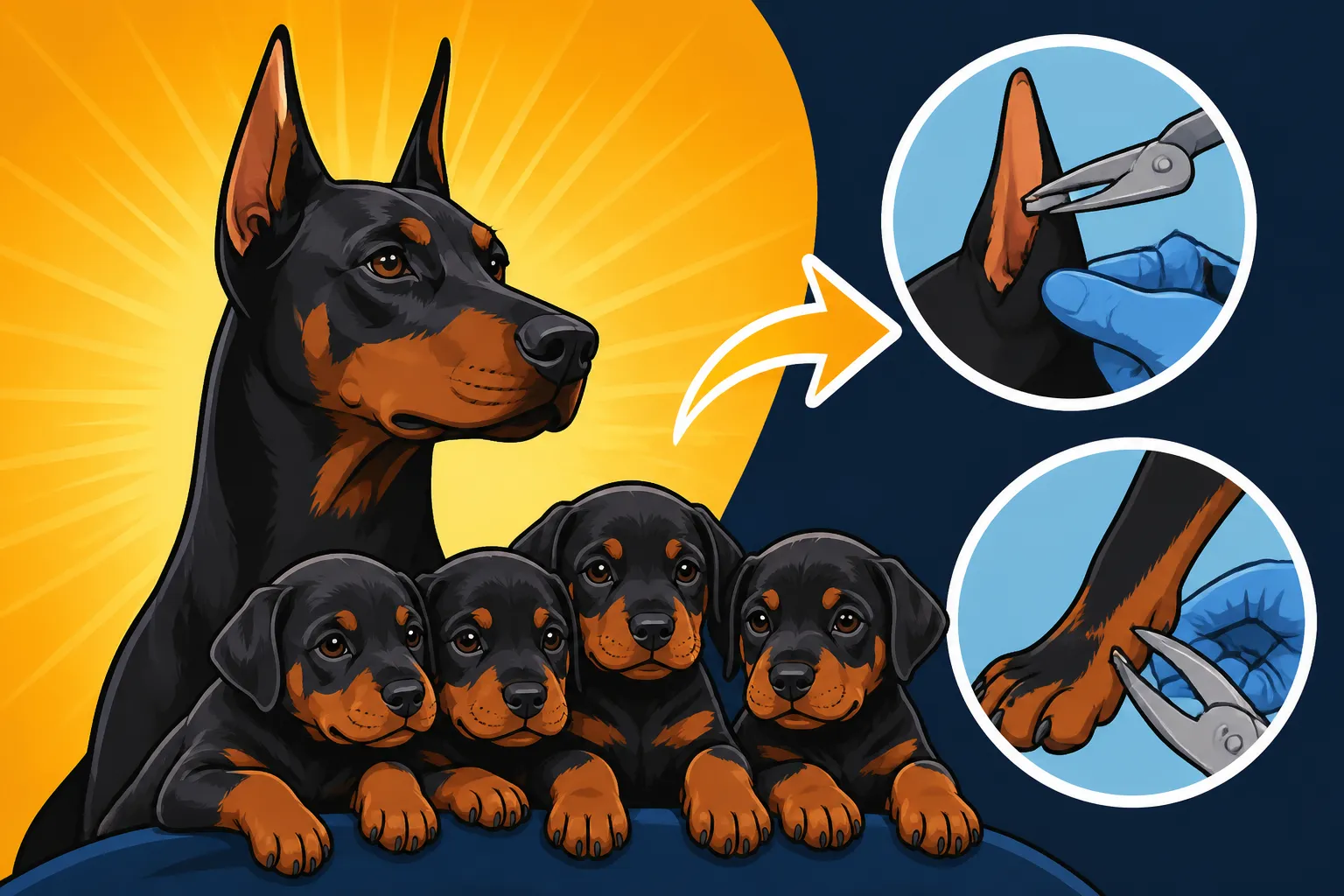
Docking and Dewclaws Billed on a Doberman Litter
Bringing home a Doberman puppy is an incredibly exciting time, but it often comes with a whirlwind of new information, including terms like "docking" and "dewclaws" that might show up on breeder paperwork or be part of the conversations you have. Many prospective owners are understandably confused about what these procedures entail, when they happen, and, crucially, who shoulders the cost. This guide aims to demystify these early procedures for Doberman litters, helping you understand the financial and practical aspects so you can make informed decisions.
Understanding the Procedures and Their Place in Doberman History
When you first start looking into Dobermans, you’ll quickly notice a uniformity in their appearance: short tails and often no dewclaws on their hind legs. These aren't natural traits but rather the result of procedures performed very early in a puppy's life. It’s important to understand the tradition behind these practices, even as societal views evolve.
The Doberman Tail Docking Tradition
The Doberman Pinscher, as a breed, was developed in the late 19th century in Germany by Karl Friedrich Louis Dobermann. His goal was to create a fierce protector and companion. Historically, tail docking was performed on many working breeds with a view to preventing injury during tasks such as guarding, hunting, or herding. The thinking was that a long, whip-like tail could be easily damaged in a scuffle, get caught in brush, or be stepped on, leading to painful injuries.
For Dobermans specifically, a docked tail has also become a long-standing part of the breed standard recognized by many kennel clubs, including the American Kennel Club. This standard describes the ideal Doberman appearance, and a short, stout tail contributes to the breed's distinctive silhouette. The procedure itself is performed when puppies are very young, typically between 2 to 5 days old, often at the same time as dewclaw removal. At this tender age, the puppies' nervous systems are not fully developed, and the procedure is usually quick, performed without general anesthesia by an experienced veterinarian. The breeder usually arranges for this before the puppies even go to their new homes. If you're looking at a breeder, they should be transparent about their practices and able to explain the reasons behind their choices, often referencing breed preservation and tradition. It’s a good sign when they are willing to discuss these things openly.
Dewclaw Removal: Function and Timing
Dewclaws are essentially a vestigial digit, akin to a thumb, located on the inside of a dog's leg. While all dogs have dewclaws on their front legs, not all breeds or individual dogs have them on their hind legs. Dobermans are one of those breeds where hind dewclaws are not universally present, but if they are, breeders often choose to remove them.
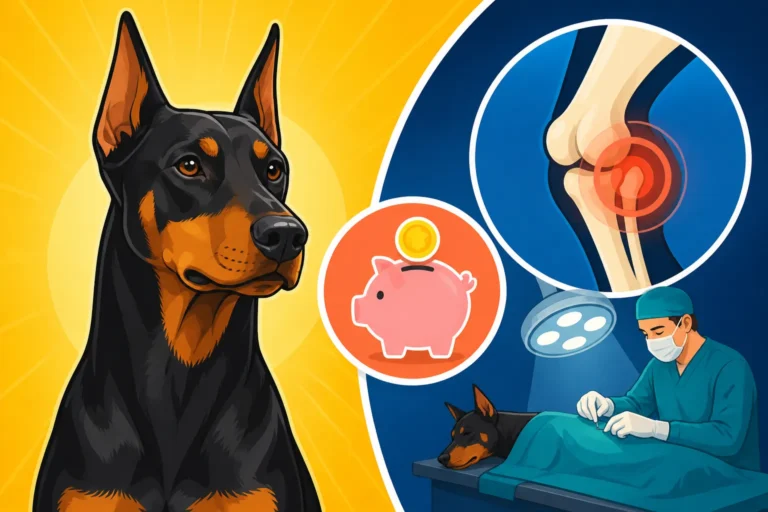
The primary reason for removing dewclaws, especially on the hind legs, is to prevent future injuries. Dewclaws, particularly those that are loosely attached (not bone-supported) or on the hind legs, can easily snag on carpets, furniture, or during rigorous activity. A torn dewclaw can be incredibly painful, bleed profusely, and often requires a costly veterinary visit, stitches, or even a full surgical removal under anesthesia later in life. For a powerful, athletic dog like a Doberman, the risk of such an injury might be higher. Front dewclaws are sometimes removed too, though they are usually more firmly attached and can be functional for gripping objects or climbing, so their removal is less common and often a matter of breeder preference or specific breed standard. Like tail docking, dewclaw removal on puppies is typically performed by a veterinarian during the same brief window of 2 to 5 days old, with the same minimal intervention. This early timing aims to minimize discomfort and ensure rapid healing for the tiny pups. Again, this is a procedure that falls under the breeder's purview, completed long before you meet your puppy. Understanding these early life interventions helps new owners appreciate the journey a Doberman puppy takes before it even gets to them.
The Financial Side: What to Expect for a Doberman Litter
When you're bringing a Doberman puppy into your home, it's easy to get caught up in the excitement. But it's also crucial to understand the financial commitments involved, even for procedures that happen before you even meet your pup. Docking and dewclaw removal are almost always part of the upfront cost of a well-bred Doberman puppy.
Typical Costs for Docking and Dewclaw Removal
For the average puppy buyer, the cost of tail docking and dewclaw removal is typically not an itemized bill you'll receive separately. Instead, these procedures are considered standard practice by many Doberman breeders and are included in the overall purchase price of the puppy. A reputable breeder will have factored these veterinary expenses into their pricing, alongside other crucial costs like health testing for the parents, quality nutrition for the dam and pups, and initial vaccinations.
If, by some unusual circumstance, you were to obtain an undocked Doberman puppy and decide to have the tail docked or dewclaws removed after the initial 2-5 day window, the costs would be significantly higher and the procedures much more invasive. After this very early period, the bones and nerves are more developed, requiring general anesthesia and a full surgical procedure performed by a licensed veterinarian. This would entail pre-surgical blood work, the anesthesia itself, the surgery, pain medication, and post-operative care, easily running into hundreds or even over a thousand dollars, depending on your location and the vet clinic. This is precisely why breeders perform these procedures so early, to minimize trauma and cost. Therefore, when comparing Doberman puppy prices, remember that the cost of a puppy from a breeder who adheres to these traditions will usually implicitly include these initial vet fees. Don't be shy about asking your breeder what's included in their puppy price and to show you any vet records related to these procedures. Transparency is key.
Who Pays and When
As mentioned, for Doberman litters, the breeder almost universally takes on the financial responsibility and logistical arrangements for tail docking and dewclaw removal. These procedures are performed on the entire litter at once, usually by the breeder's trusted veterinarian, when the puppies are just a few days old. At this age, the puppies are still with their mother, entirely dependent on the breeder for their care.
This means that by the time you select your puppy and bring them home, these procedures have already been completed, and the cost has been absorbed into the overall price of the puppy. You wouldn't typically receive a separate bill for docking and dewclaws. This is a significant point for new owners to grasp: if you're buying a Doberman from a reputable breeder who follows breed standards, your puppy will almost certainly come with a docked tail and removed dewclaws (if present). It’s part of the package, ensuring the uniformity and traditional appearance of the breed.
Here's a simplified look at the cost distribution for these early procedures:
| Item | Timing of Procedure | Who Pays (Typically) | Estimated Cost Impact (to Buyer) | Notes |
|---|---|---|---|---|
| Tail Docking | 2-5 days old | Breeder | Included in puppy purchase price | Minimal trauma, no general anesthesia needed at this age. |
| Dewclaw Removal (rear) | 2-5 days old (often with docking) | Breeder | Included in puppy purchase price | Prevents snagging/injury later. |
| Dewclaw Removal (front) | Less common, 2-5 days old | Breeder (if chosen) | Included in puppy purchase price | Often functional, so sometimes left intact. |
| Post-Op Complications | Rare, but can happen | Breeder initially, then Buyer | Varies, potentially significant | Infection, improper healing. May require further vet visits. |
| Late-Stage Procedure | Not recommended after 5 days old | Buyer (if requested) | Very High (e.g., hundreds+) | Requires full anesthesia, surgical suite, and recovery care. |
While the initial costs are absorbed by the breeder, it's always wise for new Doberman owners to budget for potential future veterinary care, whether it's routine check-ups or unexpected issues. Services like Healthy Paws pet insurance can be a smart investment for mitigating the financial impact of unforeseen health problems throughout your Doberman's life. Think about how you’ll manage your Doberman's diet too; quality food, whether traditional kibble from a place like Chewy or fresh options from Ollie, is an ongoing cost.
Potential Additional Costs and Complications
While tail docking and dewclaw removal performed on very young puppies are generally considered safe and straightforward procedures, no veterinary intervention is entirely without risk. It’s rare, but complications can arise, and it’s important for prospective Doberman owners to be aware of them, as they could lead to additional, unexpected costs.
For instance, although puppies heal quickly at such a young age, there's always a slight risk of infection at the site of the dock or dewclaw removal. A reputable breeder will meticulously monitor the puppies during their critical first weeks, ensuring the sites heal cleanly. However, if a puppy were to develop an infection, it would require veterinary attention, which could involve antibiotics or further cleaning. Similarly, in very rare cases, the docking might not heal perfectly, or a small neuroma (a bundle of nerve cells) could form at the tip of the docked tail, causing chronic irritation for the dog. While a good vet performing the procedure minimizes these risks, they aren't impossible.
If you bring home a puppy and notice any redness, swelling, discharge, or signs of discomfort around where the tail was docked or dewclaws were removed, it's crucial to contact your veterinarian immediately. These follow-up visits and any necessary treatments would then fall under your responsibility as the new owner. It underscores the importance of a comprehensive approach to your Doberman's health, from the first few days of life through their entire lifespan. Even with a well-handled initial procedure, future health concerns can always arise, which is why budgeting for The Vet Bills a Doberman Runs Up Outside Screening and considering pet insurance is so essential.
Ethical Considerations and Changing Norms
The discussions around tail docking and dewclaw removal for Dobermans, and indeed many other breeds, have grown increasingly vocal over the years. What was once considered routine practice by many is now viewed through a different lens by a growing number of people, including veterinarians and animal welfare advocates.
The Evolving Debate on Cosmetic Procedures
The debate centers on whether these procedures, often referred to as "cosmetic surgeries," are medically necessary or simply uphold traditional breed aesthetics. Many countries in Europe, for example, have banned or severely restricted tail docking and ear cropping (another common Doberman procedure) for non-medical reasons, citing animal welfare concerns. In North America, while still permitted in most areas, there's a definite shift in public perception, with many people now preferring natural ears and tails.
Opponents argue that these procedures inflict unnecessary pain on puppies and remove a vital form of communication (the tail) or protective structures (dewclaws). Proponents, often breeders who adhere to the historical breed standard, argue that the procedures prevent future injury, maintain breed type, and are performed so early that discomfort is minimal. For Dobermans, the docked tail and cropped ears have been integral to their iconic look for over a century. However, as more people prioritize natural appearance and animal welfare, breeders face the challenge of balancing tradition with evolving ethical viewpoints. As a prospective owner, it's worth exploring the breed's history, but also considering your own comfort level with these practices. You might find some breeders offering natural-tailed Dobermans, though they may be less common depending on your region and the specific lines being bred. Learning about Doberman Ear Cropping From Surgery to Last Posting can offer further insights into similar debates.
Finding a Breeder with Integrity
When navigating the world of Doberman ownership, especially concerning topics like docking and dewclaws, finding a breeder with integrity is paramount. A truly responsible breeder will prioritize the health and temperament of their dogs above all else, and they will be completely transparent about their breeding practices, including whether they dock tails and remove dewclaws.
They should be able to articulate why they choose to perform these procedures (e.g., adherence to breed standard, injury prevention) and provide details about the veterinarian who performs them. They should also be ready to discuss alternative approaches if you're interested in a Doberman with a natural tail, though this might mean looking for different lines or breeders.
Beyond these early procedures, a good breeder will also provide evidence of extensive health testing on the parent dogs, especially for prevalent Doberman health issues like Dilated Cardiomyopathy (DCM) and Von Willebrand Disease. Don't be afraid to ask to see records for The Health Testing a Doberman Breeder Must Show and ask questions about the parents' temperaments. A breeder focused on integrity will see your questions as a sign of a responsible future owner, not an imposition. They understand that bringing a Doberman into your life is a significant commitment, both emotionally and financially, and they want to ensure their puppies go to homes that are prepared for A Doberman's Whole-Life Total. Ultimately, a transparent and ethical breeder will ensure that the initial care, including decisions about docking and dewclaws, is handled professionally, giving your Doberman puppy the best start possible, and ensuring you feel confident in your choice.
Disclaimer
This article is for general informational purposes only and does not constitute professional advice. Laws, prices and regulations vary by location and change over time. Consult a qualified professional for guidance on your specific situation.