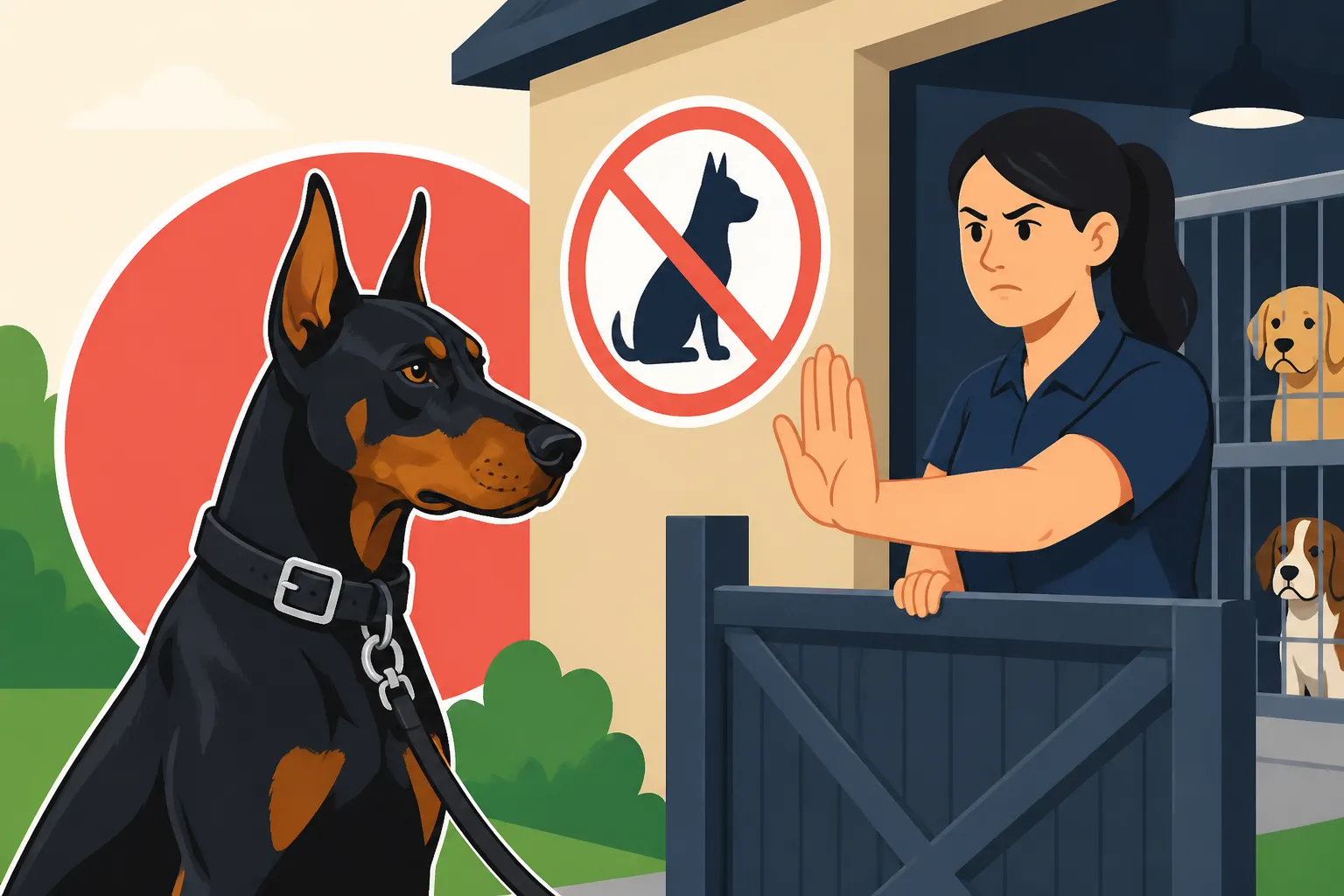
Boarding Kennels That Turn a Doberman Away
It's incredibly frustrating when you're trying to plan a trip, handle an emergency, or simply get away for a few days, only to hit a brick wall when trying to find a safe, welcoming place for your beloved Doberman. Many Doberman owners have faced the disheartening experience of being turned away by boarding kennels simply because of their dog's breed. This guide will delve into why this happens, how to proactively find suitable care for your Doberman, and explore some excellent alternatives to traditional boarding.
The Unfortunate Reality of Breed Restrictions in Boarding
The Doberman is a magnificent, intelligent, and fiercely loyal companion, but unfortunately, they often carry a heavy burden of public misconception. This can make finding a suitable place for them to stay when you're away an unexpected challenge. It's not about your individual Doberman, who might be the sweetest, most well-behaved dog on the planet, but about a breed-specific stigma that's hard to shake.
Why Dobermans Face Stigma
Let's be real: Dobermans have a formidable presence. Their sleek, muscular build, intelligent gaze, and often cropped and docked appearance (though not universally) project an image of a powerful guardian. While this makes them excellent protectors of our homes and families, it also contributes to a public perception that can be, frankly, unfair and frustrating for responsible owners. Media portrayals, often showcasing Dobermans in aggressive roles, have cemented a stereotype that persists despite countless examples of well-adjusted, loving family Dobermans. This fear can lead to blanket policies where kennels, often driven by a need to appease all clients or simplify operations, decide to exclude certain breeds. It's a tough pill to swallow when your gentle giant is judged before anyone even meets them.
Insurance concerns also play a massive role here. Many commercial insurance policies for businesses, including boarding kennels, have breed-specific clauses or outright exclusions. If a kennel wants to maintain its insurance coverage, it might be forced to deny services to breeds deemed "high risk" by their insurer, regardless of the individual dog's temperament or training. This isn't usually a personal slight; it's a business decision rooted in liability protection, which leaves Doberman owners scrambling.
Kennel Policies and Liability Concerns
Beyond external insurance pressures, kennels also establish their own internal policies. These can stem from a variety of factors: staff comfort levels with large, strong breeds; past negative experiences (even if isolated); or a desire to avoid potential conflicts between boarding dogs. Imagine a kennel where a Doberman might accidentally intimidate a smaller, shyer dog simply by being its boisterous self, leading to complaints from other owners. To avoid these headaches, some facilities opt for a simplified approach: no Dobermans, no problem.
It's not just about aggression, either. The Doberman's immense strength and intelligence, which we adore, can also present operational challenges for a kennel. A determined Doberman might be more adept at figuring out latch systems, or their sheer power could be a concern for staff handling them, especially if the staff aren't experienced with the breed. Kennels are busy places, and while it's unfair, some simply aren't equipped or willing to provide the specific attention and handling that a large, strong, and highly intelligent dog like a Doberman might require. For a Doberman, who thrives on routine and close companionship—often called "Velcro dogs" for a reason—the stress of an unfamiliar environment and less personalized attention can also manifest in ways that a kennel might deem too challenging.
Strategies for Finding a Welcoming Doberman-Friendly Kennel
Finding the right place for your Doberman when you need to travel requires more than just a quick online search. It involves proactive research, transparent communication, and sometimes, a little bit of advocacy on behalf of your wonderful dog. The goal is to find a facility that understands and appreciates the Doberman breed, rather than fearing it.
Starting Your Search Early and Being Transparent
My first piece of advice is always to start your search months in advance, especially if you have travel plans. Good kennels, particularly those with a reputation for handling all breeds well, book up quickly. When you first contact a potential kennel, be completely upfront about owning a Doberman. Don't wait for them to ask. Say something like, "Hi, I'm calling to inquire about boarding for my Doberman Pinscher for these dates." This direct approach immediately addresses any potential breed restrictions. If they have a blanket ban, you'll know right away and can move on without wasting your time or theirs.
If they say they do accept Dobermans, great! Follow up by asking specific questions: "What is your policy regarding Doberman Pinschers?" "Do your staff have experience handling Dobermans or other large, strong breeds?" "What kind of supervision do the dogs receive?" These questions help you gauge their comfort level and actual experience, not just a policy written on paper. A truly Doberman-friendly kennel will be happy to discuss their protocols and demonstrate their understanding of the breed's needs.
Showcasing Your Doberman's Temperament
Once you've found a kennel that seems promising, it's time to let your Doberman shine! Offer to bring them in for a "meet and greet" or even a trial day of daycare, or a single overnight stay, well before your actual travel dates. This gives the kennel staff a chance to observe your dog's true personality – the calm, confident, and affectionate dog you know, not just the "intimidating" label. Bring references from your veterinarian, your professional dog trainer (especially if you've done obedience or sport training like The Working Sports a Doberman Was Built For), or even friends who have boarded your Doberman before.
Highlighting your Doberman's training and socialization is key. Can they reliably respond to commands like "sit," "stay," and "come"? Are they accustomed to new environments and meeting new people? A well-socialized Doberman who has had positive experiences meeting strangers will make a much better impression. You can explain how you’ve actively worked on their confidence and manners since puppyhood, perhaps by exposing them early on to various people, places, and situations, as discussed in The Sixteen Weeks That Set a Doberman Up. Showing proof of training, like a Canine Good Citizen certificate, can also go a long way in demonstrating your Doberman’s excellent manners and your commitment as an owner.
What to Look For in a Kennel
When you visit a potential kennel, observe everything. Do the staff seem knowledgeable and comfortable around all the dogs, not just the smaller, fluffier ones? Are the facilities clean, secure, and appropriate for a large, energetic dog? Look for ample exercise space and secure enclosures that a clever Doberman won't easily compromise. Ask about their daily routine: how often are the dogs let out, what kind of activities do they engage in, and how are dogs supervised during playtime?
It’s also crucial to understand their emergency protocols. What happens if a dog becomes ill or injured during its stay? Do they have a relationship with a local veterinary clinic, or is there a vet on call? This is especially important for Dobermans, who, like many breeds, can be prone to certain health issues that might emerge unexpectedly, such as Recognizing a Doberman Stomach Twist in Time. Knowing these details upfront can give you immense peace of mind. A good kennel will be transparent about their medical protocols and demonstrate a clear plan for any unforeseen circumstances.
| Feature | Traditional Kennel | In-Home Pet Sitter | Veterinary Clinic Boarding |
|---|---|---|---|
| Environment | Dedicated facility, many dogs, structured routine | Your dog's familiar home, one-on-one attention | Vet clinic setting, often quieter, medical staff |
| Cost Tendency | Mid-range, varies by amenities | Often higher, personalized service | Varies, sometimes higher for medical supervision |
| Breed Restriction Risk | High for Dobermans, variable by facility | Low, personal choice of sitter | Low, focus on health, less breed-discriminatory |
| Medical Care | Basic first aid, vet referral, staff limited | Sitter follows instructions, emergency vet contact | Immediate access to vet care, medical staff |
| Socialization | Group play (if allowed), kennel staff interaction | Limited unless sitter arranges outings | Minimal, usually individual housing |
| Comfort Level | Can be stressful for some dogs | High, familiar surroundings, less anxiety likely | Variable, depends on dog's vet comfort |
Exploring Doberman-Friendly Alternatives to Traditional Boarding
Sometimes, even with the best efforts, a traditional kennel just isn't the right fit, or you simply can't find one that meets your Doberman's needs. Thankfully, there are several excellent alternatives that can provide your Doberman with a safe, comfortable, and stress-free experience while you're away. These options often cater to the specific demands of a Doberman's personality, offering more personalized care.
In-Home Pet Sitters and Dog Walkers
For many Doberman owners, an in-home pet sitter is the ideal solution. Your Doberman gets to stay in their own familiar environment, maintaining their routine, scents, and comfort zone. This significantly reduces stress and anxiety, which can be a huge benefit for a breed known for its strong bond with its family and sometimes exhibiting behaviors like A Doberman That Cannot Cope When You Go Out or A Doberman That Follows You Everywhere. A professional pet sitter comes to your home, often staying overnight, and provides one-on-one care tailored precisely to your dog's needs.
When choosing an in-home sitter, prioritize experience with large, strong, and intelligent breeds like Dobermans. Ask for references, proof of insurance (which can be a lifeline if anything unexpected happens, perhaps covered through a provider like Healthy Paws), and inquire about their emergency protocols. A good sitter will want to meet you and your Doberman beforehand to ensure it's a good fit. They should also be comfortable with any specific instructions, such as administering medication or following a specialized diet. Make sure they understand that a Doberman needs mental stimulation as much as physical exercise; they're smart dogs who thrive on puzzle toys, training sessions, and engaging walks.
Trusted Friends, Family, or Doberman Community Members
Leveraging your personal network is often the most comfortable and cost-effective solution. If you have friends or family members who understand and love Dobermans, asking them to care for your dog can be a fantastic option. Your Doberman already knows and trusts these people, which means less anxiety for everyone involved. They'll also be familiar with your dog's quirks, routines, and specific needs, whether it's their preferred sleeping spot or their meal schedule (e.g., Low-Copper Feeding for a Doberman if your Doberman has dietary restrictions).
If friends and family aren't an option, consider reaching out to your local Doberman community or breed club. Often, other Doberman owners are more than willing to help out, either through reciprocal arrangements or for a reasonable fee. These individuals truly understand the breed's temperament, exercise requirements, and potential health considerations, making them exceptionally qualified caregivers. They'll also be less likely to harbor any preconceived notions or stigmas about the breed, focusing instead on the individual dog they're caring for.
Veterinary Clinics with Boarding Facilities
Some veterinary clinics offer boarding services, and this can be an excellent alternative, especially if your Doberman has ongoing medical conditions or requires specialized care. Vet clinics are generally less likely to have breed restrictions, as their focus is on health and well-being, and their staff are already accustomed to handling dogs of all sizes and temperaments. If your Doberman is prone to anxiety or has specific health needs, having veterinary professionals on-site provides an unparalleled level of peace of mind.
While a vet clinic environment might not offer the same "fun" activities as a dedicated dog resort, the security and medical supervision can be invaluable. This option is particularly strong if your Doberman needs daily medication, careful monitoring, or if you anticipate any health concerns during your absence. Discuss their specific boarding setup, exercise routines, and how they manage dogs that might be stressed in a clinic environment. You can often arrange for your dog's regular food to be brought in, or discuss specialized diets with them. Companies like Chewy can deliver specific foods directly if needed, or if your Doberman is on a fresh food diet like Ollie, you can coordinate delivery or preparation.
Preparing Your Doberman for Any Stay Away From Home
Regardless of whether you choose a traditional kennel, an in-home sitter, or vet boarding, proper preparation is crucial for ensuring your Doberman has a positive and stress-free experience. A Doberman thrives on routine and clear expectations, so a little groundwork before you leave can make a world of difference for both you and your dog.
Gradual Acclimation and Practice Runs
Never just drop your Doberman off somewhere new without any prior introduction. This is especially true for an intelligent and sensitive breed like the Doberman. If you're using a kennel, start with short daycare visits, gradually increasing the duration to an overnight stay, then a weekend. This helps your Doberman build positive associations with the location and the people there. They'll learn that you always come back, reinforcing trust and reducing separation anxiety. A Doberman That Cannot Cope When You Go Out highlights the importance of gradual acclimatization for Dobermans who might struggle with being alone.
For in-home sitters, arrange a few visits before you leave. Let your Doberman meet the sitter, go for a walk together, and even have the sitter feed them. This helps your Doberman get comfortable with the person who will be caring for them in your absence. The more familiar and routine you can make the experience, the smoother the transition will be when you actually leave. Dobermans learn quickly, sometimes in as little as Why a Doberman Learns a Cue in Three Repetitions, so these short, positive exposures will sink in.
Packing Essentials and Comfort Items
When it's time for your Doberman to go, pack a "go bag" with everything they'll need, clearly labeled for the caregivers. This includes:
- Food: Stick to their regular diet to avoid stomach upset. Measure out each meal into separate baggies. If your Doberman is on a specific diet like Ollie, ensure there's enough and clear instructions are provided.
- Treats: Their favorite high-value treats can be a great comfort and a good tool for positive reinforcement.
- Medications: All medications, clearly labeled with dosage and frequency, along with detailed instructions.
- Comfort Items: A favorite blanket, a bed they know (like one of the Beds That Cushion a Bony Doberman), or a familiar toy can provide immense comfort and help them feel more at home in a new environment. The scent of home can be very reassuring.
- Collar/Harness and Leash: Their usual walking gear.
- Emergency Contact Info: A laminated card with your vet's number, your contact details, and an emergency contact person who can make decisions if you're unreachable.
Providing detailed written instructions for feeding, exercise, medication, and even quirks (like "she loves a belly rub after every potty break!") will ensure your Doberman receives consistent care.
Ensuring Their Health and Safety
Before any stay away from home, ensure your Doberman is up-to-date on all vaccinations, including kennel cough. Most reputable facilities will require proof of this. It's also a good idea to confirm that their flea, tick, and heartworm preventatives are current.
Finally, consider pet insurance if you don't already have it. Unexpected vet bills can arise anywhere, anytime, and having a plan in place from providers like Healthy Paws can alleviate financial stress if your Doberman experiences a medical issue while you're away. It's wise to get your Doberman covered before any potential health issues develop, as Insuring a Doberman Before the Heart Turns is a critical step for this breed. Discuss with your chosen caregiver their emergency vet protocols and ensure they have your permission to seek veterinary care if needed. By taking these proactive steps, you can help ensure your Doberman's time away from you is as safe, comfortable, and positive as possible.
Disclaimer
This article is for general informational purposes only and does not constitute professional advice. Laws, prices and regulations vary by location and change over time. Consult a qualified professional for guidance on your specific situation.