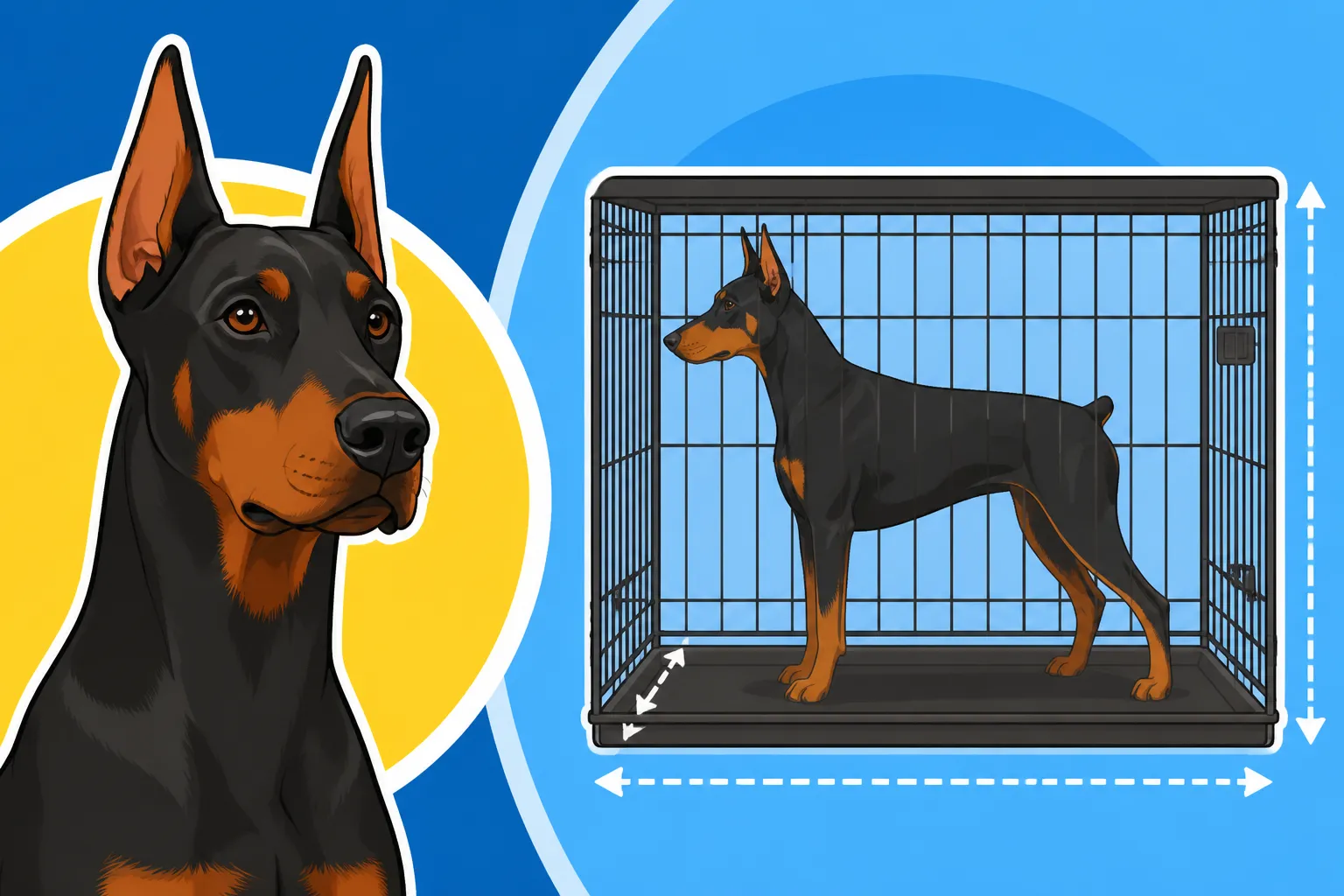
Crate Sizing for a Doberman at Full Height
Trying to figure out the perfect crate size for your Doberman can feel like a guessing game, especially when they're growing so fast and you want to make sure they're comfortable and safe. It's a common struggle—you don't want a crate that's too small and cramped, but one that's too big defeats the purpose of effective house training and creating a den-like space. This guide will walk you through exactly how to measure your Doberman at their full adult height and length, ensuring you pick a crate that's just right for their powerful, lean build, providing them with the secure and spacious retreat they deserve.
Understanding Doberman Growth and Full Height
Dobermans are undeniably impressive dogs, known for their elegant yet muscular physique. But getting to that adult stage involves a period of rapid growth that can make predicting their final size, especially for something as critical as a crate, quite challenging. It’s not just about their weight, which can fluctuate, but their bone structure, height, and length that truly dictate the crate dimensions you’ll need.
The Doberman's Rapid Growth Spurt
From a tiny, gangly puppy, your Doberman will transform into a powerful adolescent at an astonishing rate. Most Dobermans reach their full height and often their lean adult length between 12 to 18 months of age. It's truly a blink-and-you'll-miss-it kind of growth. During this time, they shoot up like weeds, and you might find yourself buying bigger collars and harnesses every few months. While they might hit their maximum height relatively early, they often continue to fill out and gain muscle mass until they are about two to three years old. This means that even after they stop getting taller, their overall body mass and presence will continue to mature.
Imagine your Doberman puppy at six months old, all legs and ears, seemingly swimming in a crate that looked perfect just a few weeks prior. Then, suddenly, they're bumping their head when they stand. This quick growth spurt is why many owners struggle with "interim" crate sizes, trying to keep up without constantly buying new equipment. The goal is to anticipate that final adult size and invest wisely. You'll want to review resources like Kitting Out for a Doberman Puppy That Will Hit Eighty to ensure you're prepared for all the gear changes, not just the crate.
What "Full Height" Actually Means for Crating
When we talk about "full height" for crate sizing, we're not just looking at their standing height at the shoulder. For a Doberman, it's about their entire vertical dimension when they're standing naturally inside the crate without having to hunch or duck their head. This includes the top of their head, and often, the tips of their ears if they are uncropped or just finishing the posting process after a crop. You want them to be able to stand up, turn around easily, and lie down stretched out in any comfortable position without touching the sides or top of the crate.
A Doberman male, for example, can stand anywhere from 26 to 28 inches tall at the shoulder, with some large European lines sometimes exceeding this. Females are typically a little smaller, ranging from 24 to 26 inches. This "at the shoulder" measurement doesn't account for their head and neck, which adds several more inches when they're standing upright. So, a crate that's 28 inches tall might seem sufficient for a 28-inch Doberman, but it will likely be too short in reality. Always consider their head height, whether they have a natural ear or a cropped and standing ear. You can learn more about official size standards by reading The Twenty-Eight Inch Ceiling on a Doberman Male and Whether a Big European Doberman Is Over Standard.
Why Crate Size Matters So Much for a Doberman
Choosing the right crate size for your Doberman isn't just about comfort; it's fundamental to their well-being, training, and safety. A poorly sized crate can lead to both physical and psychological issues, which no devoted Doberman owner wants to see.
Comfort and Safety: Too Small Can Cause Injury
Imagine trying to sleep in a bed that's too short for you, where your feet hang off the end, or you can't stretch out properly. Now imagine that being your only safe space. A crate that is too small for a Doberman can cause serious discomfort and even physical problems over time. If they can't stand up, turn around, or lie down comfortably, they'll be perpetually cramped. This can lead to muscle stiffness, joint pain, and pressure sores, especially for a lean breed like the Doberman with less natural padding.
More critically, a crate that's too small poses a safety risk. A Doberman might try to force themselves into uncomfortable positions, potentially scraping against wire bars, or twisting awkwardly, which could lead to minor injuries. If they panic or try to escape, a confined space can exacerbate the situation. A Doberman who feels trapped might exert force against the crate, potentially hurting their nose, teeth, or paws. You want their crate to be a sanctuary, not a cage that evokes fear or pain. It’s also crucial to remember that their bone structure, especially in their long back, needs adequate support, and being perpetually curled up in a tiny space isn't ideal for their skeletal health.
Behavioral Implications: Potty Training and Anxiety
The primary function of a crate, beyond providing a safe den, is often to aid in potty training. Dogs are naturally clean animals and generally won't soil their sleeping area. However, this only works if the crate is appropriately sized. If a crate is too large, your Doberman might designate one end as a sleeping area and the other as a "bathroom," completely undermining your house-training efforts. This is a common mistake new owners make, thinking a bigger crate is always better.
On the flip side, a crate that's too small can lead to extreme anxiety and resistance. If your Doberman feels uncomfortably confined, they might develop a negative association with the crate, making future training much harder. This could manifest as excessive barking, whining, destructive chewing, or even attempting to break out, which can result in injuries or damage to the crate itself. A Doberman needs to view their crate as a safe, comfortable den, a place where they can relax and feel secure. If it's a source of stress, it can hinder their ability to settle and cope with being alone. For dogs with separation anxiety, or just those learning to be home alone, the crate needs to be a positive space. Articles like Training a Doberman That Cannot Cope When You Go Out offer deeper insights into managing alone time.
Measuring Your Doberman for the Perfect Crate Fit
Getting accurate measurements is paramount to choosing the right crate. It's not a task to eyeball; a few inches can make a significant difference in your Doberman's comfort. Take your time, use a soft measuring tape, and make sure your Doberman is relaxed and standing naturally.
Getting Accurate Measurements
To measure your Doberman correctly, you'll need two key figures: their length and their height.
- Length Measurement: Have your Doberman stand squarely, not stretched out or hunched. Measure from the tip of their nose all the way to the base of their tail. Do not include the tail itself in this measurement. This gives you their primary body length.
- Height Measurement: Again, have your Doberman stand squarely. Measure from the top of their head (or the tips of their ears if they are standing erect after cropping, as this is the highest point) down to the ground. You want to ensure they can stand without hitting their head.
Let's say, for example, your adult male Doberman measures 36 inches from nose to tail base and 29 inches from the top of his head to the floor. These are your baseline numbers for calculating crate dimensions.
The "Rule of Thumb" for Doberman Crate Dimensions
Once you have your Doberman's precise measurements, you can apply the general "rule of thumb" used by most crate manufacturers and dog trainers. This rule ensures enough room for comfort and proper movement without being excessive.
- For Length: Add 4 to 6 inches to your Doberman's nose-to-tail-base measurement. This extra space allows them to stretch out fully when lying down and provides a bit of room to maneuver. So, if your Doberman is 36 inches long, you'd be looking for a crate that is approximately 40-42 inches in length.
- For Height: Add 2 to 4 inches to your Doberman's standing head-to-floor height. This ensures they can stand up comfortably without bumping their head. For our example Doberman who is 29 inches tall, you'd aim for a crate that is roughly 31-33 inches high.
It's important to remember that these are minimum recommendations. Some Dobermans might prefer a touch more space, or if they are particularly energetic, a slightly larger footprint might be beneficial. However, avoid going significantly larger, especially if you're still working on house training, as it could invite accidents inside the crate.
Recommended Crate Sizes and Types for Adult Dobermans
Now that you know how to measure your Doberman, let's look at the typical crate sizes that will fit an adult Doberman and explore the different types of crates available, each with its own benefits and drawbacks.
Standard Sizes for Doberman Males and Females
Given their lean build and active nature, Dobermans typically require a larger crate than their weight alone might suggest. They need room to stretch out those long legs and stand tall. Here’s a general guideline for adult Doberman crate sizes, keeping in mind individual variations:
| Doberman Sex | Average Length (Nose to Tail Base) | Average Height (Head to Floor) | Recommended Crate Length | Recommended Crate Height |
|---|---|---|---|---|
| Male | 34-38 inches | 28-31 inches | 40-44 inches | 31-35 inches |
| Female | 32-36 inches | 26-29 inches | 38-42 inches | 29-33 inches |
Most commonly, you'll find that a 42-inch or 48-inch crate is the go-to size for an adult Doberman. A 42-inch crate usually offers dimensions around 42"L x 28"W x 30"H (Length x Width x Height), which works well for many female Dobermans and some smaller males. For larger males, especially those from European lines that tend to be more substantial, a 48-inch crate (typically 48"L x 30"W x 33"H) is often a better fit. Always check the specific dimensions of the crate you're considering, as sizes can vary slightly between manufacturers. Reputable retailers like Chewy often provide detailed dimensions for all their crates.
Material and Design Considerations
Beyond size, the material and design of the crate are crucial for a Doberman. They are strong, intelligent dogs, and not all crates are created equal in terms of durability and functionality.
- Wire Crates: These are the most common and often the most affordable. They offer good ventilation and visibility, and many come with dividers, which are handy for adjusting the space for a growing puppy before they reach full size. However, for a powerful Doberman, you need to ensure the wire gauge is thick and sturdy. Flimsy wire crates can bend or break, especially if you have a Doberman who isn't entirely settled in their crate. Some Dobermans might even try to bend bars if they're stressed or bored. This can lead to injuries and costly crate replacements, so consider reading A Doberman That Bends Crate Bars Trying to Get Out. Look for heavy-duty wire crates designed for larger breeds.
- Plastic Crates (Vari-Kennel Style): These offer more of a den-like feel, as they are enclosed. They are generally secure and can be good for Dobermans who prefer a darker, cozier space. They also tend to be better for travel, especially air travel, as they are IATA-compliant. However, ventilation can be less than wire crates, so ensure it's adequate, especially in warmer climates. They are usually a bit lighter than heavy-duty wire crates but bulkier in shape.
- Furniture-Style Crates: These are designed to blend into your home decor and can be quite appealing. They often come in wood or attractive metal designs. While aesthetically pleasing, it's vital to ensure their structural integrity is robust enough for a Doberman. Some might look nice but aren't built to withstand the power of a large, determined dog.
- Soft-Sided Crates: These are generally not recommended for unsupervised Dobermans, especially in the early stages of crating or if your Doberman is prone to chewing. While lightweight and portable, a Doberman can easily chew through the fabric or zippers, rendering them useless and potentially ingesting harmful materials. These are best reserved for supervised short-term use, like at dog shows, once your Doberman is fully crate trained and completely reliable.
When choosing a crate, also think about features like single versus double doors, which can make placing the crate in different rooms or cleaning it much easier. Also, consider investing in comfortable bedding. Dobermans have very little body fat, so a plush, supportive bed or mat is essential for their comfort inside the crate. Brands like Healthy Paws, while known for insurance, advocate for preventive care and comfort, which includes proper bedding to avoid pressure sores or joint issues on hard surfaces. For advice on keeping your Doberman cozy, check out Bedding a Doberman With No Body Fat.
Adjusting for Individual Doberman Variations
While the guidelines above are a great starting point, remember that every Doberman is an individual. You might have a Doberman male who is on the smaller end of the spectrum, or a female who is exceptionally tall and long. Always prioritize your dog's specific measurements and comfort over generic recommendations.
If your Doberman puppy is still growing, you have a couple of options. You can buy the full-sized adult crate and use a divider to adjust the internal space. This prevents them from using one end as a bathroom while still getting used to the crate. As they grow, you can move the divider back until it's removed entirely when they reach their adult size. Alternatively, some owners opt for a slightly smaller "intermediate" crate that bridges the gap between puppyhood and full adulthood, then upgrade to the final large crate. This might be a more expensive route but can offer a more precise fit at different stages.
Ultimately, the goal is to provide a safe, secure, and comfortable space that your Doberman will willingly use as their den. It’s their personal room, a place for rest, relaxation, and sometimes, a little quiet time with a favorite chew toy sourced from a pet supply store like Chewy, or a long-lasting treat from Ollie. Taking the time to get the crate size right is an investment in their comfort and your peace of mind.
Disclaimer
This article is for general informational purposes only and does not constitute professional advice. Laws, prices and regulations vary by location and change over time. Consult a qualified professional for guidance on your specific situation.