The Twenty-Eight Inch Ceiling on a Doberman Male
It’s easy to feel a bit lost in the sea of opinions and images when you’re trying to figure out what a Doberman is supposed to look like, especially when it comes to their size. Many aspiring and current Doberman owners wonder about the ideal height for these magnificent dogs, and often encounter dogs that seem to stretch beyond what they expected. This guide is here to cut through the confusion and clarify the official height expectations for male Dobermans according to breed standards.
Understanding the Doberman Breed Standard for Height
When we talk about a "breed standard," we're not just discussing an arbitrary set of rules. We're looking at a carefully crafted description that guides breeders in producing dogs that are fit for their original purpose and maintain the breed's unique characteristics, temperament, and health. For the Doberman, these standards are particularly important because they speak to the dog's athleticism, strength, and overall balance.
Why the Twenty-Eight Inch Ceiling Matters
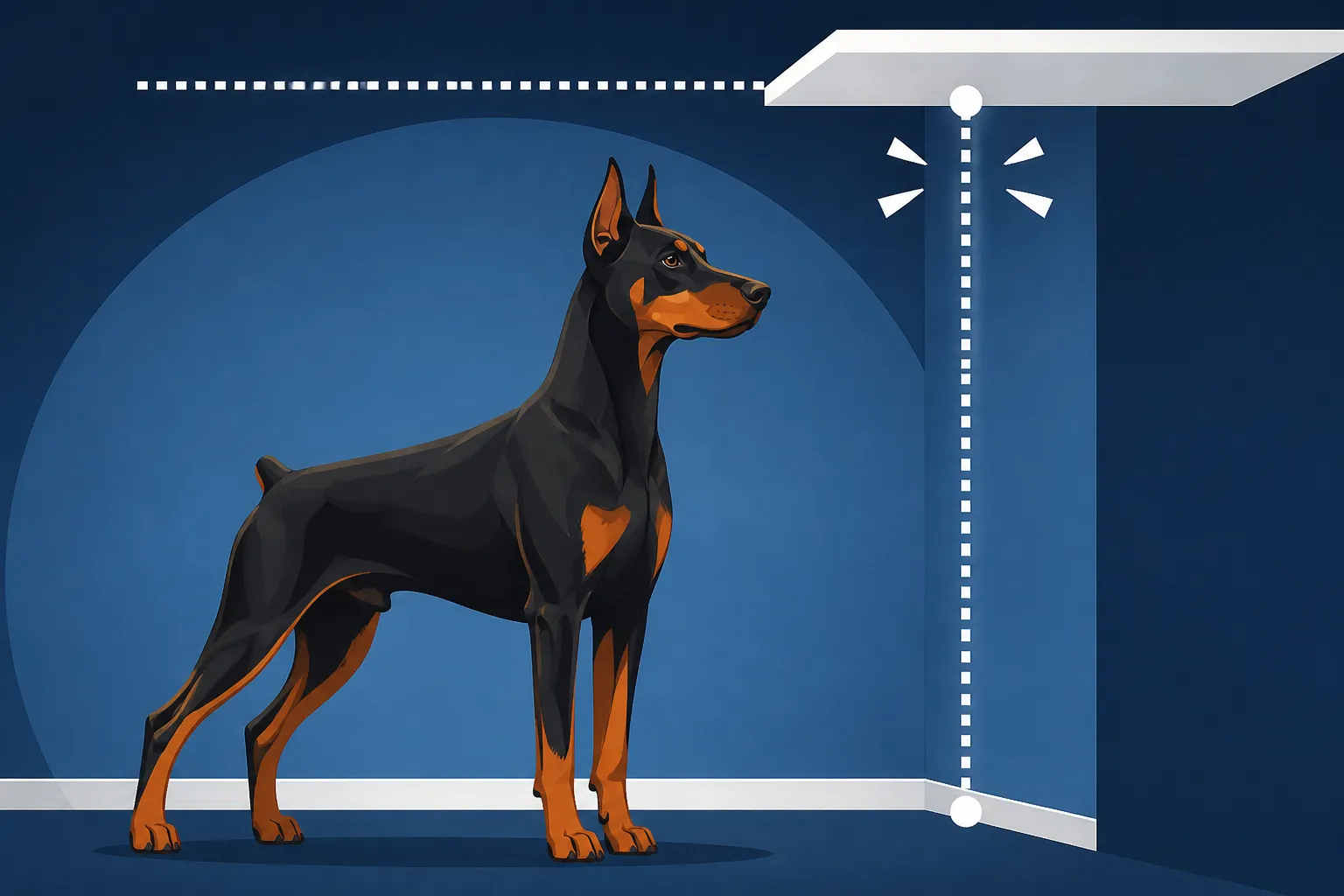
The twenty-eight-inch ceiling for a male Doberman isn't just a number; it represents the upper limit of what is considered ideal for the breed's structure and function. A Doberman is meant to be elegant, powerful, and agile, capable of quick bursts of speed and sustained work. When a dog significantly exceeds this height, it can begin to compromise these traits. Imagine a basketball player who is too tall – while height is an advantage, excessive height can lead to awkwardness and strain on joints. The same principle applies here. This standard aims to prevent the breed from becoming overly leggy or losing its characteristic muscular, compact, yet graceful build. It’s about maintaining the athleticism that Dobermans are renowned for, ensuring they remain capable of the tasks they were historically bred for, whether it was guarding or working alongside people.
The Role of the AKC Standard
In the United States, the American Kennel Club (AKC) sets the standard for the Doberman Pinscher. For male Dobermans, the AKC standard specifies a height range of 26 to 28 inches at the withers. The "withers" is the highest point of the shoulder blade, where the neck meets the back. This specific measurement is crucial for judges in the conformation ring, but it's equally important for breeders striving to produce healthy, well-balanced dogs. Falling outside this range, particularly being significantly over 28 inches, can lead to disqualification in the show ring. More importantly, consistent deviations from the standard can indicate a departure from the breed's intended form and function, potentially impacting long-term health and soundness. The standard is a blueprint, and while no dog is perfect, reputable breeders use it as their guiding star. The Doberman the AKC Standard Describes offers a deeper dive into all aspects of this important document.
Measuring Your Doberman Properly
Getting an accurate measurement of your Doberman's height is simpler than you might think, but it does require a bit of patience and the right tools. You'll need a measuring stick or a ruler, ideally one that can stand upright, and your Doberman should be standing squarely on a flat, level surface. The key is to measure from the ground up to the highest point of his shoulder blade (the withers), not the top of his head.
Here’s how to do it:
- Get Level: Have your Doberman stand naturally, not slouching or stretching, with all four paws directly under him. It helps to have someone hold him gently.
- Locate the Withers: Feel for the bony prominence between his shoulder blades. This is the spot.
- Use Your Tool: Place your measuring stick or ruler against his side, extending straight up from the ground. Then, use a small, flat object (like a book or another ruler) to create a level line from the top of his withers across to the measuring stick.
- Read the Measurement: Read the number where the flat object meets the stick.
It might take a few tries, especially if your Doberman is wiggly, but consistent measurements will give you a good idea of where he stands in relation to the 28-inch ceiling. Don't be surprised if he's a little taller or shorter than you guessed, as visual estimation can be tricky!
What "Over Standard" Really Means for a Male Doberman
When a male Doberman exceeds the 28-inch AKC standard, it’s not necessarily a disaster, but it does bring certain considerations to the forefront. It’s more than just an aesthetic detail; it can genuinely affect a dog's health and daily life.
Health Implications of Excessive Size
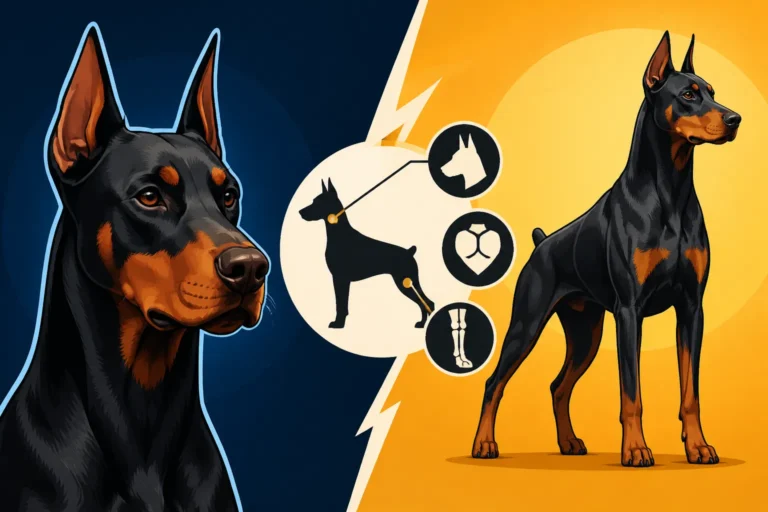
Larger dogs, in general, tend to mature slower and can be more prone to certain orthopedic issues. For a Doberman who grows significantly beyond the standard, this means a higher risk of conditions like hip and elbow dysplasia, even if their breed isn't typically associated with them as much as, say, a German Shepherd. The extra height often means longer bones, which can put increased stress on joints, especially during their crucial growth phases. Rapid growth in a very tall Doberman puppy can exacerbate these risks. Owners need to be extra vigilant with diet, ensuring it supports Protecting a Growing Doberman's Joints and avoids excessive calories that promote too-fast growth. Furthermore, a larger frame might mean a greater demand on the cardiovascular system, though the Doberman's primary heart concern, DCM, is more genetically linked than purely size-related. The Heart Disease That Reaches Most Dobermans is a good read on this.
Impact on Movement and Function
The Doberman standard emphasizes a smooth, free, and balanced gait. A dog that is too tall might lose this elegant, ground-covering movement. They can become more gangly, less agile, and may struggle with quick turns or intricate movements required in dog sports like agility or protection work. Their center of gravity might shift, making them less balanced. While a pet Doberman might not be judged in a ring, these functional aspects still impact their quality of life. An overly tall dog might be more prone to clumsy moments, slips, or even injuries if their skeletal structure isn't proportional to their height. Imagine a dog that struggles to fit under standard obstacles or find comfortable footing due to disproportionately long legs—it's not just a minor inconvenience; it impacts their confidence and natural abilities.
Show Ring Disqualification and Breeding Considerations
For those involved in conformation showing, a male Doberman exceeding 28 inches at the withers is a disqualifying fault under the AKC standard. This means he cannot be awarded points or titles in the conformation ring. This isn't just a formality; it reinforces the importance of the standard in maintaining the breed's characteristics. For breeders, breeding dogs significantly over standard height can be problematic. It can lead to the propagation of oversized traits, potentially introducing or worsening health and structural issues in future generations. Responsible breeders prioritize breeding dogs that conform to the standard, not just for the show ring, but for overall health, temperament, and longevity. They carefully select breeding pairs to avoid extremes and produce healthy, typey Dobermans within the accepted height and weight ranges. Understanding The Health Testing a Doberman Breeder Must Show goes hand-in-hand with understanding breed standards.
The Difference Between American and European Doberman Size
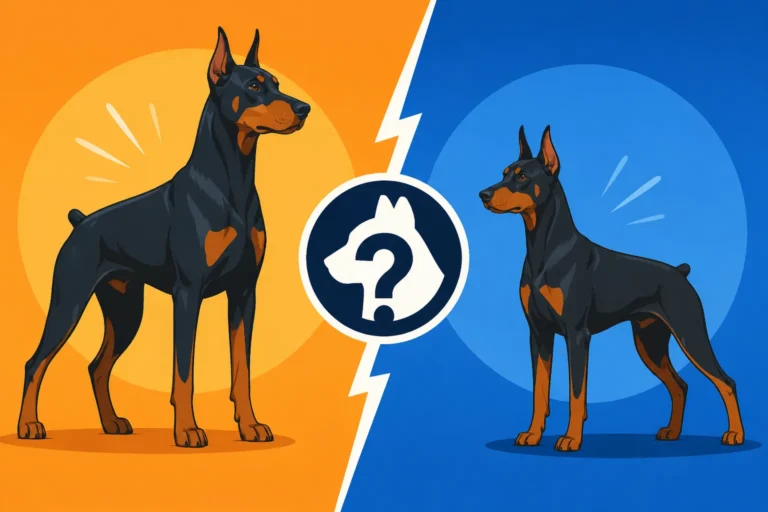
There's a persistent rumor that European Dobermans are universally massive compared to their American counterparts. While there are some differences, the reality is more nuanced than simple blanket statements.
General Perceptions of European Dobermans
Many people seek out European Dobermans specifically because they perceive them to be larger, more robust, and more substantial. It's true that, on average, Dobermans bred in Europe (under the FCI standard) may appear heavier-boned and have a broader build, which can give the impression of greater overall size. They often have deeper chests and a more powerful, blockier head. This "heavier" look is appealing to many who appreciate a more substantial dog. However, this doesn't automatically mean they are always significantly taller than the AKC maximum of 28 inches. It's more about overall body composition and weight distribution. For a deeper understanding, you might want to read How a European Doberman Is Built Differently.
Nuances in Breed Standards
The Fédération Cynologique Internationale (FCI) standard, which is used by most European countries, also has a height range for male Dobermans. It generally specifies 68-72 cm, which translates to approximately 26.77 to 28.35 inches. As you can see, the upper limit is only slightly higher than the AKC's 28 inches. So, while European Dobermans can be on the taller side of this range, it's not a radical departure from the American standard. The primary difference often lies in the emphasis on substance and bone. European lines often focus on maintaining the working dog's robust build, which might translate to dogs that feel bigger even if their height at the withers falls within a similar range. Why European and American Doberman Rates Differ delves into these distinctions.
The Importance of Breeder Selection
Regardless of whether you're looking at American or European lines, selecting a responsible breeder is paramount. A good breeder, whether adhering to AKC or FCI standards, will be breeding dogs that fall within the accepted height ranges. They aren't trying to produce oversized dogs just to satisfy a market trend. Instead, they focus on health, temperament, and conformity to the breed standard as a whole. If you encounter a breeder boasting about "giant" or "oversized" Dobermans, it should raise a red flag. These breeders are often prioritizing extreme size over sound structure and health, which can lead to problems down the line. A reputable breeder will be transparent about their dogs' sizes and how they align with the standard. You should expect to see Reading a Doberman Breeder's Heart Paperwork and other health certificates.
Living With a Doberman Outside the Standard Height
So, what if your beloved Doberman male happens to be a little over that 28-inch ceiling? For most pet owners, it's not a reason for alarm, but it does come with practical considerations.
Everyday Realities for a Larger Doberman
Living with a Doberman who's a bit of a gentle giant can be wonderful, but it does have its quirks. Finding appropriately sized gear can sometimes be a puzzle. A standard-sized crate might be too cramped, requiring you to invest in an extra-large one. Crate Sizing for a Doberman at Full Height is a common consideration. Harnesses and coats, like those you might find on Chewy, might need careful selection to ensure a comfortable fit for their broader chest and longer body. You might also notice that people react to them differently. A large Doberman, even a sweet one, can sometimes intimidate strangers, so consistent training in public manners is even more important to help Handling a Doberman in Public Without Alarming People. Their sheer size means they need more space to move around comfortably in your home and car, and they might accidentally knock things over with that wagging tail!
Managing Growth in a Large Doberman Puppy
If you have a Doberman puppy that's showing signs of becoming quite large, managing their growth is incredibly important to mitigate potential health issues. Rapid growth spurts can put undue stress on developing joints. This means being mindful of their diet – not overfeeding to encourage faster growth, but rather providing a balanced, high-quality diet appropriate for large breeds. You might want to explore foods that support Protecting a Growing Doberman's Joints. Avoid excessive high-impact exercise during their puppy and adolescent phases. Long runs on hard pavement, jumping off high surfaces, or prolonged vigorous activity should be limited until their growth plates have closed, usually around 12-18 months of age. Instead, focus on controlled walks, soft-surface play, and mental enrichment activities. Regular check-ups with your vet can help monitor their development.
Embracing Your Unique Doberman
Ultimately, while breed standards are valuable guides, your Doberman's individual health and temperament are what truly matter. A Doberman male who stands at 29 or even 30 inches at the withers can still be an incredible, loving companion. Many beloved pets fall outside the strict parameters of the breed standard. As long as they are healthy, happy, and well-adjusted, their exact height becomes a minor detail. Focus on providing them with excellent nutrition, proper exercise, consistent training, and lots of love. Celebrate their unique personality and charm. Whether they're perfectly standard or a little bit extra, a Doberman's devotion and intelligence are what make them truly special. Many Doberman owners eventually discover that A Doberman That Leans on You Constantly is part of the charm, regardless of their size.
| Characteristic | AKC Doberman Standard (Male) | FCI Doberman Standard (Male) | Potential Impact of Exceeding Standard |
|---|---|---|---|
| Height | 26-28 inches (66-71 cm) | 68-72 cm (26.77-28.35 inches) | Increased risk of joint issues, awkward gait, disqualification in show ring. |
| Weight | Proportionate to height | ~40-45 kg (88-99 lbs) | Disproportionate weight can strain joints and organs. |
| Bone | Moderate | Strong, well-developed | Excessive bone can add to overall mass, potentially impacting agility if not balanced. |
| Build | Compact, muscular, elegant | Powerful, muscular, substantial | Overly leggy or heavy build can reduce agility and endurance. |
Disclaimer
This article is for general informational purposes only and does not constitute professional advice. Laws, prices and regulations vary by location and change over time. Consult a qualified professional for guidance on your specific situation.