Whether a Big European Doberman Is Over Standard
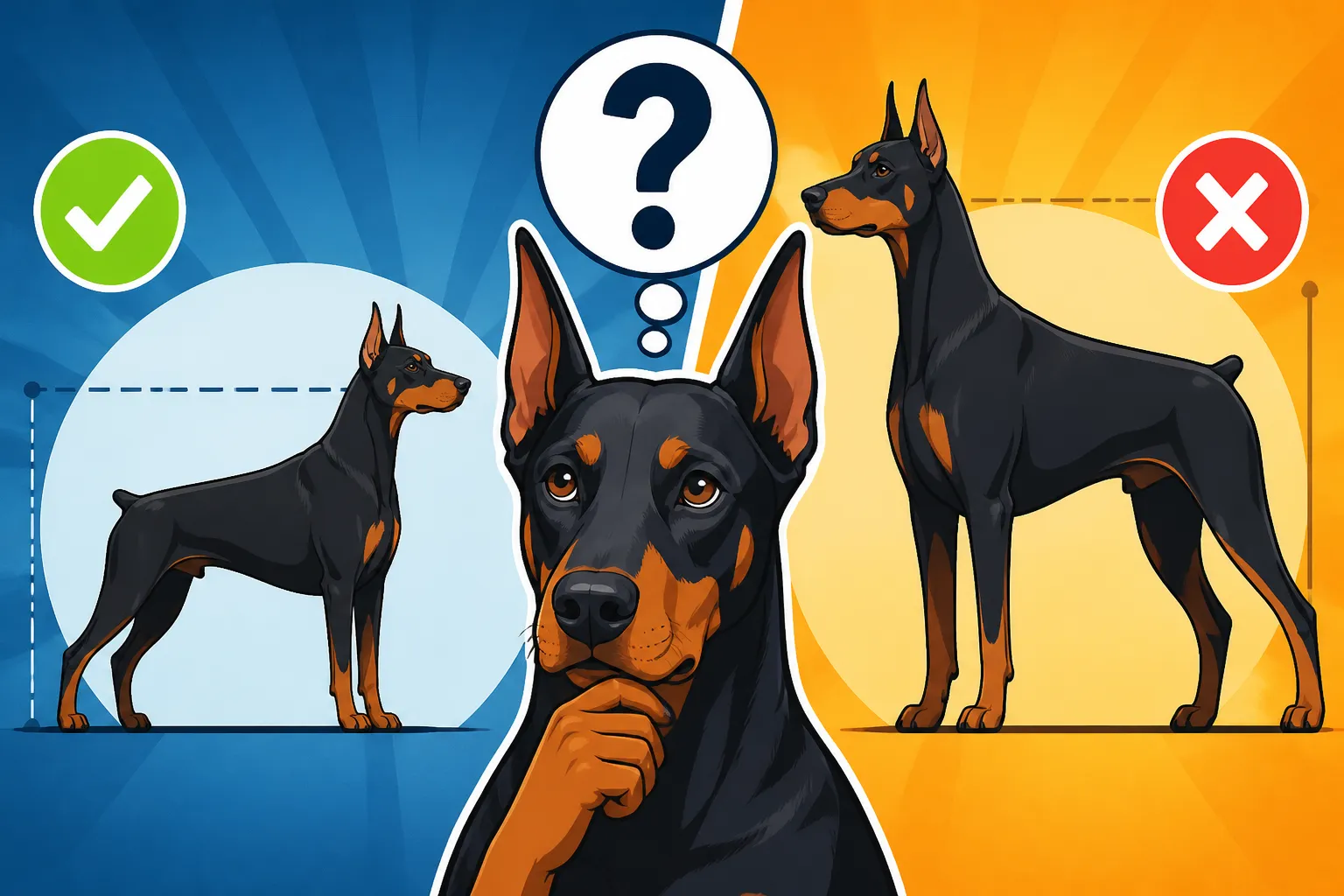
It’s a common scenario: you’re looking at Dobermans, perhaps falling in love with the majestic, powerful build you often see in pictures of European lines, and you start to wonder if that impressive size might actually be considered "too much" by official breed standards. It's a valid concern, because while a big, imposing Doberman can certainly turn heads, there's a fine line between a substantial, well-built dog and one that deviates from what the breed was intentionally developed to be. This guide will help you understand the nuances of Doberman size, especially regarding European lines, and clarify what "over standard" truly means in the Doberman world.
The Intent Behind Breed Standards: More Than Just Aesthetics
When we talk about breed standards, it’s not just about what looks pretty in a show ring. These standards are foundational documents, carefully crafted by national breed clubs and international kennel clubs (like the AKC in America or the FCI in Europe), that describe the ideal characteristics of a breed. This includes everything from temperament and gait to coat color, head shape, and, yes, size.
Why Standards Matter for Dobermans
For a Doberman, the breed standard is particularly important because it outlines the blueprint for a dog designed for a very specific purpose: protection and companionship. Karl Dobermann, the breed's originator, wasn't just trying to make a pretty dog; he was aiming for an alert, intelligent, and physically capable guardian. The specified size, musculature, and athleticism in the standard are all there to ensure the Doberman can perform its historical roles effectively without being cumbersome or fragile. Deviation from these standards can sometimes mean a deviation from the breed's intended function and, more importantly, its long-term health and soundness.
Think of it like a recipe. You can add a little more spice, but too much can fundamentally change the dish. Similarly, a Doberman that’s significantly outside the standard might struggle with the agility, endurance, or even the balanced temperament that makes the breed so unique. It’s about preserving the integrity of the breed, ensuring that a Doberman remains a Doberman, generation after generation.
The Role of Responsible Breeders
Responsible breeders pour their hearts and souls, and significant resources, into producing Dobermans that adhere as closely as possible to these standards. They study pedigrees, understand genetics, and health test their dogs meticulously. Part of this responsibility means selecting breeding pairs that, among other things, produce offspring within the accepted height and weight ranges. When you see a breeder emphasizing adherence to the standard, it’s not just about trophies; it's about honoring the breed's history and ensuring its future health and functional capabilities. They are trying to produce dogs that fit The Doberman the AKC Standard Describes or its FCI equivalent.
Decoding Doberman Size Standards: American vs. European
One of the biggest sources of confusion when it comes to Doberman size is the perceived difference between American and European lines. It’s true that there can be visual distinctions, but understanding the official standards helps clarify what’s considered "correct."
The AKC Standard for American Dobermans
In the United States, the American Kennel Club (AKC) sets the standard for the Doberman Pinscher. For males, the ideal height at the withers (the highest point of the shoulder blades) is 26 to 28 inches. For females, it's 24 to 26 inches. The standard also specifies that "The ideal Doberman Pinscher is a dog of medium size, squarely built, and muscular." It further states that "Neither oversized nor undersized Dobermans are desirable."
What does this mean in practice? It means that an AKC-conforming male Doberman that measures 29 inches at the withers is technically "over standard." While judges might allow for slight variations, significant deviations can be considered a fault. The emphasis is on a balanced, elegant, and athletic dog, rather than sheer mass. They should have a strong, moderate bone structure, not a heavy, bulky one.
The FCI Standard for European Dobermans
The Fédération Cynologique Internationale (FCI) is the world canine organization, and its standard is used by many European countries. The FCI standard defines the ideal height for males as 68 to 72 cm (approximately 26.8 to 28.3 inches) and for females as 63 to 68 cm (approximately 24.8 to 26.8 inches). It also provides weight guidelines: males 40-45 kg (88-99 lbs) and females 32-35 kg (70-77 lbs).
If you compare these numbers, you'll notice a slight overlap with the AKC standard, but the FCI range for males does extend a little higher. This minor difference in the upper end of the male height range can contribute to the perception that Whether a European Doberman Is Bigger than American Dobermans is always true. However, the crucial point is that both standards specify ranges, and a Doberman that falls significantly outside those ranges, regardless of its origin, is technically over standard. The FCI also calls for a "medium size" dog, not an oversized one, and describes a dog of "powerful and muscular construction" but also "elegant."
Perceived vs. Actual Differences
The visual difference often attributed to "European Dobermans" typically points to dogs that are more substantial in bone, often with a broader chest and heavier head. This can make them appear larger and more powerful even if they fall within the same height ranges as an American Doberman. This is part of How a European Doberman Is Built Differently in terms of overall substance and structure. So, while a European Doberman might appear "bigger" due to its more robust build and Why European Dobermans Have Heavier Heads, it doesn't necessarily mean it's "over standard" in terms of height, especially if it's within the FCI's upper limits.
However, sometimes breeders or individuals, chasing the "bigger is better" trend, might intentionally breed for size beyond even the FCI's upper limits. This is where the issue truly arises, as a Doberman that is genuinely oversized, regardless of its lineage, can face a host of problems.
When "Big" Crosses the Line: Understanding Oversized Dobermans
So, you've seen the numbers. But what does it really mean for a Doberman to be "over standard," and why is it something to be mindful of? It's more than just a measurement; it speaks to the overall balance and health of the dog.
The Definition of "Over Standard"
A Doberman is considered "over standard" when its height at the withers consistently exceeds the maximum specified by the breed's official standard. For AKC Dobermans, this means consistently over 28 inches for males and 26 inches for females. For FCI Dobermans, it means over 72 cm (approx. 28.3 inches) for males and 68 cm (approx. 26.8 inches) for females.
It’s not just about one measurement, but often accompanied by a heavier, bulkier frame that sacrifices the Doberman's characteristic athleticism and elegance. While some variance naturally occurs, a Doberman that is visibly and consistently larger than the upper limit of its respective standard is stepping outside the breed's intended design. These dogs would likely be faulted in a show ring, as The Doberman Faults a Judge Cannot Overlook include significant deviations from the ideal type.
Why Oversize Is a Concern
Pushing a breed beyond its intended size isn't a benign choice; it can introduce or exacerbate a range of health and structural issues. The Doberman's skeletal and muscular system is designed to support a specific frame. When that frame becomes significantly larger, it can put undue stress on joints, ligaments, and the heart.
Imagine a finely tuned sports car. If you suddenly make it much heavier without upgrading the engine, suspension, and brakes proportionally, you compromise its performance and durability. A Doberman is similar. It's built for power, speed, and agility within a certain envelope. Expanding that envelope can lead to problems.
Common Misconceptions
There's a prevailing idea that bigger automatically means "more protective" or "more impressive." This often leads people to seek out the largest Dobermans they can find, sometimes even being misled by unscrupulous breeders who market "King Dobermans" or similar exaggerated types. However, a Doberman's protective instincts and impressive presence come from its temperament, intelligence, and balanced athleticism, not from being overly large. An oversized Doberman might actually be less agile and therefore less effective in a true protection scenario. The breed was developed for a specific set of physical and mental attributes, and extreme size detracts from that overall package.
It's crucial for prospective owners to educate themselves on the legitimate standards and to look for breeders who prioritize soundness, health, and true breed type over inflated size.
Beyond the Tape Measure: The Practical Implications of an Oversized Doberman
While breed standards might seem like arbitrary rules, they exist for very good reasons. When a Doberman, whether American or European in lineage, exceeds the established size, it can lead to tangible challenges and health risks that impact their quality of life and your wallet.
Increased Strain on Joints and Skeletal System
One of the most immediate concerns with an oversized Doberman is the extra strain placed on their joints and developing skeletal system. Dobermans are already prone to certain orthopedic issues, and adding excessive weight and height can make these problems worse. Conditions like Doberman Hip Dysplasia or elbow dysplasia can be exacerbated. A larger, heavier dog means more impact on the joints with every step, every jump, and every play session. This can lead to earlier onset of arthritis, increased pain, and a need for more extensive veterinary care over their lifetime. Protecting a growing Doberman's joints is vital, and excessive size during crucial growth stages can undermine even the best preventative measures.
Potential for Cardiovascular Stress
The Doberman breed is tragically predisposed to Dilated Cardiomyopathy (DCM), a devastating heart disease. While size alone isn't the sole cause, a larger body requires the heart to work harder to pump blood throughout the system. Anecdotal evidence among Doberman enthusiasts and some veterinarians suggests that excessively large Dobermans may experience increased strain on an already susceptible heart, potentially impacting the progression or severity of heart conditions. While there's no definitive scientific consensus directly linking oversize to DCM, anything that puts extra stress on an already compromised system is a concern.
Shorter Lifespan and Reduced Mobility
Generally, larger dog breeds tend to have shorter lifespans than smaller ones. While Dobermans already have a relatively short lifespan compared to many breeds, adding further to their size might, in some cases, contribute to shortening it even more. Beyond lifespan, an oversized Doberman might experience reduced mobility as they age. What starts as an impressive, powerful puppy could turn into a dog struggling with movement and comfort in its senior years, long before you’d expect it. This impacts their ability to enjoy walks, play with family, and perform the activities that make them happy.
Managing an Oversized Doberman in Daily Life
Beyond health, sheer size can present practical challenges.
- Space: An oversized Doberman takes up more room in your home, car, and even on your sofa.
- Equipment: Finding appropriately sized crates, beds (especially those that can cushion a bony Doberman well), harnesses, and car restraints can become more difficult and expensive. You might find yourself needing to order specialty items online, for instance, from retailers like Chewy, to get the right fit for an exceptionally large dog.
- Food Costs: A larger dog eats more! Feeding an eighty-pound Doberman well is already a significant expense; one that's even larger will consume proportionally more, increasing your monthly budget for food.
- Perception: While you might love your big Doberman, public perception can be a hurdle. An already imposing breed that appears even larger can sometimes heighten fear or prejudice in others, making public outings more challenging.
Here’s a quick comparison of the common breed standards for male Dobermans:
| Standard | Height at Withers (Male) | Weight (Male) | Key Emphasis |
|---|---|---|---|
| AKC | 26-28 inches | Not specified | Medium size, squarely built, muscular, elegant, athletic. |
| FCI | 68-72 cm (26.8-28.3 inches) | 40-45 kg (88-99 lbs) | Powerful, muscular, elegant, strong bone, balanced. |
As you can see, even between the two primary standards, there's a small window of difference at the upper end. It's when a Doberman pushes beyond even the FCI's upper limit that the term "oversized" truly becomes relevant in a potentially detrimental way.
Finding the Right Doberman for You: Prioritizing Health and Type
Ultimately, when searching for a Doberman, your focus should always be on health, temperament, and adherence to the breed standard, rather than chasing extreme size. A Doberman bred to standard is a marvel of form and function.
The Dangers of "Bigger Is Better" Breeding
Unfortunately, the desire for bigger dogs can lead to irresponsible breeding practices. Breeders who advertise "giant Dobermans" or "King Dobermans" are often prioritizing size over health, temperament, and structural soundness. These dogs might come from lines with inadequate health testing, or they might be prone to the very issues discussed above due to their exaggerated size. Always be wary of language that promotes extreme deviations from the standard. A truly knowledgeable breeder, whether of American or European lines, will be proud to tell you that their dogs fall within the acceptable ranges and will prioritize health clearances above all else. They understand that The Health Testing a Doberman Breeder Must Show is paramount, regardless of size.
Choosing a Reputable Breeder
A reputable Doberman breeder will be transparent about their dogs' pedigrees, health testing, and how their dogs conform to the breed standard. They won't shy away from discussing potential health issues common to the breed, but rather will demonstrate how they actively work to mitigate them through careful breeding choices. They'll show you not just the height and weight of their adult dogs, but also proof of genetic testing for conditions like DCM and Von Willebrand Disease. You can also expect them to ask you a lot of questions, ensuring that their puppies are going to suitable homes that understand the needs of the breed, including its physical requirements for proper exercise and nutrition. Finding a puppy from a breeder who can show you Reading a Doberman Puppy's Test Certificates for parents is a good start.
Enjoying a Well-Bred Doberman
A Doberman that fits the breed standard is a magnificent companion. They are athletic, intelligent, loyal, and capable. Their size allows them to be powerful without being cumbersome, agile without being delicate. Whether you choose an American or European line, focus on a dog that embodies the core characteristics of the breed. This means a Doberman with a sound structure, a clear mind, and a healthy genetic background. You'll want to ensure you are Feeding an Eighty-Pound Doberman Well from a young age to support healthy growth within the standard's bounds. And for all your Doberman's needs, from quality food to durable toys, knowing where to find reliable supplies, perhaps on sites like Chewy, will be incredibly helpful.
In conclusion, while there might be subtle differences in build and substance between American and European Dobermans, both types are expected to fall within specific height and weight ranges. A Doberman that is significantly "oversized" beyond these parameters, regardless of its lineage, deviates from the breed standard and may come with increased health risks and practical challenges. The most impressive Doberman isn’t necessarily the biggest, but the healthiest, best-tempered, and most true to its intelligent and athletic heritage.
Disclaimer
This article is for general informational purposes only and does not constitute professional advice. Laws, prices and regulations vary by location and change over time. Consult a qualified professional for guidance on your specific situation.