Winter Coats Sized for a Doberman
If you're a Doberman parent, you've probably noticed your sleek, elegant companion shivering when the temperature dips, even indoors. It's a common frustration, seeing your powerful dog tremble at the first sign of a chill, making you wonder if they're truly comfortable. This guide is here to help you navigate the world of winter coats, focusing specifically on how to find one that actually fits your Doberman's unique physique and provides the warmth they genuinely need to stay cozy and healthy.
Why Dobermans Need Winter Coats in the First Place
Dobermans, with their striking appearance and intelligent demeanor, are incredibly sensitive to cold weather. This isn't just a quirk; it's rooted deeply in their physiology, which is designed more for speed and agility than for insulating against harsh elements. Understanding why they get cold so easily is the first step to ensuring they stay comfortable during those frosty months.
The Doberman's Unique Physiology
Unlike many other breeds, Dobermans possess a single, short coat without the insulating underlayer that acts like built-in thermal underwear for dogs like Huskies or German Shepherds. This lack of an undercoat means there's very little trapped air to keep them warm against their skin. Their sleek, fine hair offers minimal protection against wind, rain, or snow. You can feel it yourself – run your hand over their coat, and you'll notice how thin it is, offering little barrier to the cold.
Beyond their minimalist fur, Dobermans are also naturally lean with very little body fat. That athletic, sculpted physique we admire so much means they don't have the natural fat reserves that help chunkier breeds stay warm. Think of it like a human athlete with low body fat; they often feel the cold more acutely than someone with more insulation. This combination of a single coat and low body fat makes them particularly vulnerable to temperature drops, both outdoors and sometimes even within a cool house.
Their skin is also relatively thin, adding to their sensitivity. When cold winds cut through their short coat, it goes right to their skin, making them uncomfortable very quickly. For many Doberman owners, seeing their dog shiver is a stark reminder of this vulnerability. It's not just about comfort; prolonged exposure to cold can lead to more serious health concerns, making a well-chosen coat a necessity rather than a luxury.
Recognizing When Your Doberman is Cold
Your Doberman can't tell you in words that they're cold, but they certainly communicate it through their behavior and physical signs. Learning to read these cues is crucial for knowing when it's time to bundle them up. The most obvious sign, of course, is shivering. This involuntary muscle contraction is your dog's body attempting to generate heat, and if you see it, it's a clear signal they're feeling the chill. It might start subtle, a slight tremor, and then become more pronounced as they get colder.
Beyond shivering, look for changes in their posture and activity levels. A cold Doberman might hunch their back, tuck their tail tightly between their legs, and try to make themselves as small as possible. They might lift their paws off the cold ground, one by one, or stand rigidly, unwilling to move. Out on a walk, they might slow down, drag their feet, or even try to cut the walk short by heading back towards home. They might seek out warm spots, curling up tightly in a sunbeam or burying themselves under blankets.
It’s not just about immediate discomfort; consistently being too cold can impact their health. Dogs can get hypothermia just like humans, and while a Doberman is less likely to suffer severe frostbite than a breed like a Chihuahua, prolonged exposure can suppress their immune system, making them more susceptible to respiratory infections or exacerbating existing joint issues. Keeping them warm with a proper coat helps mitigate these risks, ensuring their well-being throughout the colder months. Remember, for a Doberman, The Degrees at Which a Doberman Starts Shivering can be surprisingly mild.
Understanding Doberman-Specific Coat Sizing Challenges
Finding a winter coat for a Doberman isn't like buying a standard sweater for a Golden Retriever. Their distinct build presents unique sizing challenges that often leave owners frustrated with ill-fitting garments. You can't just pick a coat based on weight or a generic "large" label; you need to understand their specific proportions.
The Doberman's Athletic Build
The Doberman's silhouette is truly unique: a deep, broad chest that tapers dramatically to a narrow waist and a relatively long back. This athletic, powerful build is what makes them so striking, but it also creates a headache for off-the-rack dog apparel. Many coats are designed for more uniformly built dogs, leading to common fit issues. You might find a coat that fits around their deep chest but is then far too loose around their slender abdomen, allowing cold air to sneak in.
Conversely, a coat that fits snugly around the waist might be painfully tight across their chest and shoulders, restricting their movement and making them uncomfortable. Dobermans are active dogs, even in the cold, and a coat that prevents them from moving freely is counterproductive. Imagine trying to run or play fetch in a jacket that pinches every time you extend your arm – that's what a poorly fitting coat can feel like for your Doberman. The length of their back also poses a challenge; many coats end too abruptly, leaving a significant portion of their hindquarters exposed to the elements.
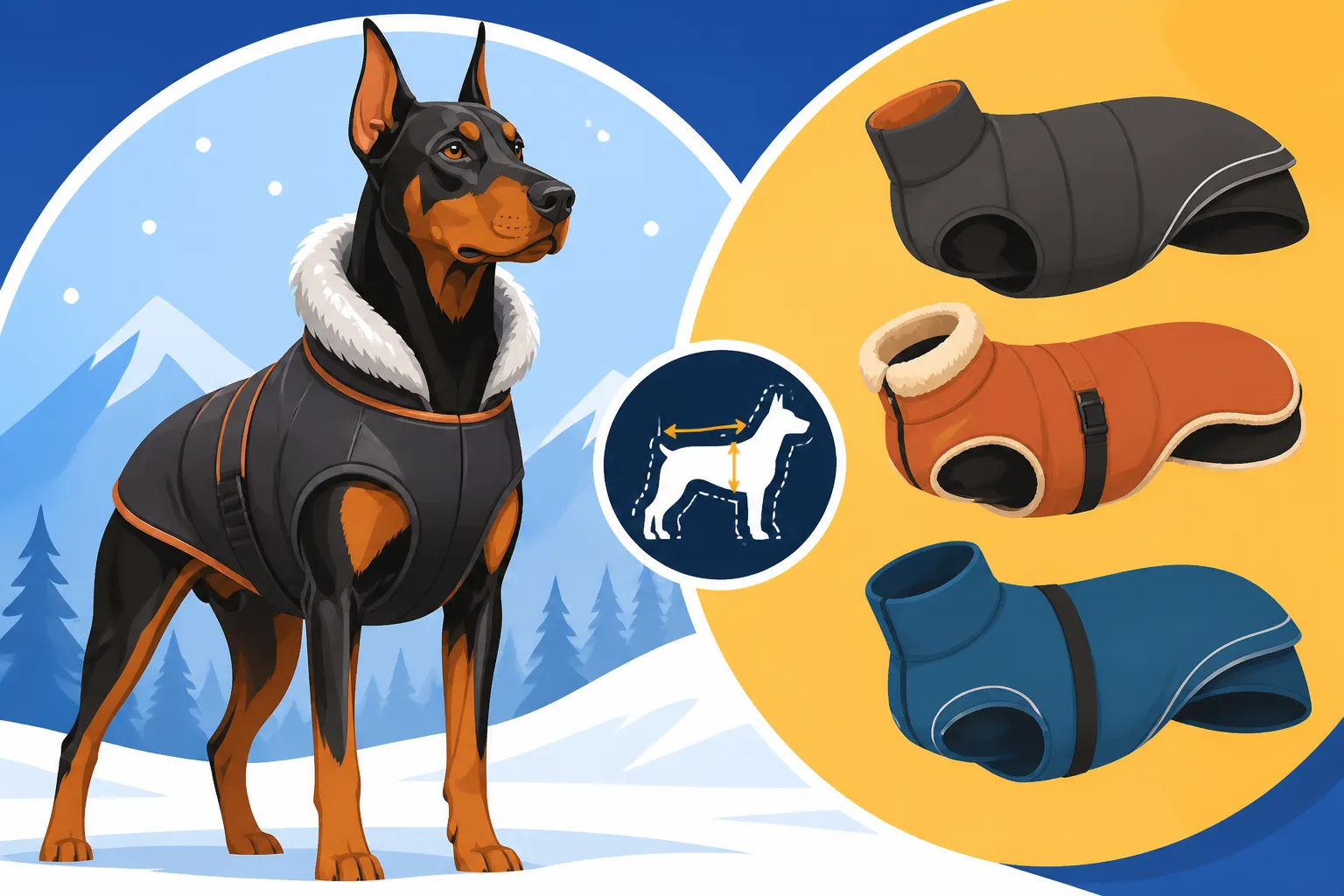
Accurate measurement is your secret weapon. Don't guess. You'll need a soft tape measure and a calm Doberman. Measure these key areas:
- Back Length: From the base of the neck (where a collar sits) to the base of the tail. This is often the primary measurement for many coat brands.
- Chest Girth: The widest part of their chest, usually right behind their front legs. This is critical for Dobermans due to their deep chests.
- Neck Circumference: Around the thickest part of their neck, where a standard collar would comfortably sit.
Here's a general guide for typical Doberman measurements, but always measure your individual dog:
| Measurement | Male Doberman (Approx. Range) | Female Doberman (Approx. Range) |
|---|---|---|
| Back Length | 24-28 inches | 22-26 inches |
| Chest Girth | 28-34 inches | 26-32 inches |
| Neck Circumference | 18-22 inches | 16-20 inches |
These ranges are just a starting point, and individual dogs will vary significantly. Always double-check a specific brand's sizing chart against your Doberman's unique measurements. This diligent approach will save you the frustration of returns and ensure your Doberman gets a coat that truly fits and functions. You want a coat that provides Coats That Actually Fit a Doberman's Chest, not one that just drapes over it.
Common Fit Problems and How to Avoid Them
Beyond the general sizing issues, Dobermans face specific fit problems that need careful consideration. One common complaint is a gaping neckline. Because their necks are typically smaller in proportion to their deep chests, coats designed with a more generic "large dog" neck opening will often gape, allowing cold air and moisture to funnel down to their back. Look for coats with adjustable neck closures – drawstrings, elastic, or Velcro straps – that can be cinched to create a snug, warm seal without choking them.
Another frequent problem is restricted shoulder movement. A Doberman's powerful shoulders and broad chest are central to their movement. If a coat is too tight across this area, it can chafe, cause discomfort, and even restrict their natural gait, making walks a chore rather than a joy. Pay close attention to descriptions that mention gussets or anatomical cuts around the shoulders, designed to allow for a full range of motion. Some coats might look good aesthetically, but functionally, they fail if they impede natural movement.
Finally, belly coverage is often overlooked but critical for a Doberman. Their short fur and low body fat mean their underside is just as vulnerable to the cold, wet, and snow as their back. Many standard coats leave the belly exposed, which is not ideal, especially for males or when walking through deeper snow. Look for coats that extend down the chest and provide good coverage of the abdomen, ideally with adjustable straps that keep the belly panel secure without digging in. Retailers like Chewy often provide detailed product images and sometimes even videos that show how a coat fits on various dog breeds, which can be incredibly helpful for visualizing the fit on your Doberman's unique frame.
Key Features to Look for in a Doberman Winter Coat
Once you have your Doberman's measurements and a clear understanding of their unique body shape, it's time to dive into the features that make a truly effective winter coat. It's not just about looking good; it's about providing genuine warmth, protection, and comfort for your active companion.
Material and Insulation Choices
The outer shell of your Doberman's winter coat should be, first and foremost, water-resistant or waterproof. Dobermans have no undercoat to repel moisture, so a wet coat against their skin means they'll quickly become chilled and miserable. Materials like ripstop nylon, polyester blends with DWR (durable water repellent) finishes, or even laminated fabrics are excellent choices. These will shed rain, sleet, and melting snow, keeping the primary insulation layer dry and effective. A durable outer layer also stands up better to adventures in the brush or rough play.
Beneath the protective outer shell, the insulation is what truly keeps your Doberman warm. Fleece linings are a popular choice because they are soft, lightweight, and provide excellent warmth, even when slightly damp. Synthetic fills, similar to those found in human winter jackets, offer superior thermal properties without adding excessive bulk. The amount of insulation you need will depend on your local climate and how much time your Doberman spends outdoors in the extreme cold. For milder winters, a fleece-lined shell might suffice, but for truly frigid temperatures, a more heavily insulated coat is a must.
While warmth is important, breathability is also a factor, especially if your Doberman is active. A coat that traps all moisture, even from their own body heat, can lead to dampness and discomfort. Look for materials that offer a balance, keeping external moisture out while allowing some internal moisture to escape. This prevents them from getting clammy and then cold if they stop moving. The overall durability of the materials is also key; Dobermans are strong, athletic dogs, and their coats need to withstand their energy levels.
Design Elements for Functionality and Safety
Beyond the core materials, several design elements contribute to a coat's functionality and your Doberman's safety. Optimal coverage is paramount. We've already discussed the importance of chest and belly coverage, but also consider how much of their neck is covered. A high collar or even a snood-style extension can protect their vulnerable neck from biting winds and driving snow. Some coats also offer extended rear coverage, sometimes with leg loops, to keep their hindquarters warmer, especially helpful for Winter Coats and Cold-Weather Gear for a Doberman.
Visibility is another critical safety feature, particularly for walks during short winter days or in the evening. Look for coats that incorporate reflective strips or piping. These elements catch the light from headlights, streetlights, or flashlights, making your Doberman much more visible to drivers, cyclists, and pedestrians. This simple addition can drastically reduce the risk of accidents during low-light conditions, offering peace of mind when you're out and about.
Practical features like leash and harness access points are also essential. Most Dobermans wear a harness, especially if they're strong on the leash. A coat should have a reinforced opening, often a zippered or Velcro-secured slot, that allows you to attach a leash to a harness or collar without compromising the coat's weatherproofing. Finally, consider the ease of putting the coat on and taking it off. Large, easy-to-use buckles, wide Velcro straps, and minimal fuss are ideal, especially if your Doberman is squirmy or you're dealing with cold fingers.
Where to Find and How to Care for Your Doberman's Winter Coat
Finding the right coat is just one part of the equation; knowing where to look and how to maintain it ensures your investment lasts and continues to provide comfort for your Doberman season after season.
Shopping Options and Specialist Brands
When it comes to sourcing a Doberman winter coat, you'll find the widest selection and best fit options online. Large online pet retailers like Chewy are an excellent starting point. They typically carry a vast array of brands and often have detailed product descriptions, customer reviews, and comprehensive sizing charts. Many also feature user-submitted photos of dogs wearing the coats, which can give you a better idea of how a particular style might fit your Doberman's unique proportions. Look for brands that specifically mention "athletic fit," "deep chest," or offer adjustable features tailored for unique body shapes.
Specialty pet outfitters or brands that cater to active or working dogs can also be great resources. These companies often design their gear with performance and specific breed types in mind, meaning their sizing might be more forgiving or their designs more accommodating for a Doberman's deep chest and lean frame. While you might not find a dedicated "Doberman coat," looking for products geared towards Greyhounds, Weimaraners, or other sighthound-type breeds can sometimes yield better results than generic options, as these breeds often share a similar body type.
Visiting local pet stores can be useful for physically trying on coats, but be prepared for a potentially limited selection of styles and sizes that truly fit a Doberman well. If you have a specific Doberman in mind, bringing your dog with you (if allowed) can save a lot of guesswork. For those who struggle to find an off-the-rack solution, custom-made coats are an option. Several small businesses specialize in bespoke dog apparel, taking precise measurements to craft a coat that fits perfectly. While more expensive, this guarantees an ideal fit and can be a worthwhile investment for optimal comfort and longevity. Always check customer reviews, especially those from other Doberman owners, to gauge real-world satisfaction with fit and durability.
Maintenance and Longevity of Your Doberman's Coat
A quality winter coat is an investment, and proper care will ensure it lasts for many seasons. Always follow the manufacturer's washing instructions, which are usually found on a label inside the coat. Most coats with waterproof or water-resistant outer layers require gentle washing, often on a cold cycle with a mild detergent, and air drying. Harsh detergents, fabric softeners, or high heat in a dryer can degrade the waterproof coating and insulation, reducing the coat's effectiveness. Avoid excessive washing; often, a spot clean or a gentle rinse with water is all that's needed to remove mud or superficial dirt.
Between washes, inspect the coat regularly for any signs of wear and tear. Check seams for loose stitching, look for tears or abrasions on the outer fabric, and test buckles or Velcro closures to ensure they're still secure. Small repairs, like patching a minor tear, can prevent bigger damage from developing. If the waterproof coating starts to fail over time, there are specialized wash-in or spray-on treatments available that can help restore the water repellency of technical fabrics. You want to maintain the coat so that you don't have to replace it prematurely.
When winter ends, don't just toss the coat in a dusty corner. Clean it thoroughly and allow it to dry completely before storing it in a breathable garment bag or container. Storing a damp coat can lead to mildew and damage. Proper storage protects the fabric and insulation from dust, pests, and crushing, ensuring it's fresh and ready for the next cold snap. While a quality coat is robust, remember that constant use and exposure to the elements will eventually take their toll. Be realistic about replacement frequency, especially if your Doberman is particularly hard on their gear or if its ability to provide warmth and protection significantly diminishes. Knowing How Long a Doberman Can Be Out at Thirty-Five Degrees often depends heavily on the coat they're wearing.
Disclaimer
This article is for general informational purposes only and does not constitute professional advice. Laws, prices and regulations vary by location and change over time. Consult a qualified professional for guidance on your specific situation.