Nose Work as a Low-Impact Doberman Sport
It’s a common frustration for Doberman owners: you have this incredibly intelligent, high-energy dog, but finding activities that truly engage their minds without putting undue stress on their strong, yet sometimes fragile, bodies can be a real challenge. High-impact sports might be a worry as they age, and simply walking isn't always enough to tire out that clever Doberman brain. This comprehensive guide will delve into nose work, a fantastic low-impact sport that taps into your Doberman's innate abilities, providing immense mental satisfaction and a healthy outlet for their boundless drive.
What is Nose Work: A Canine Treasure Hunt
Nose work, often called scent work, is essentially a sophisticated game of hide and seek where your Doberman uses their incredible sense of smell to locate specific target odors. It mimics the real-world tasks of detection dogs, but in a fun, accessible, and non-competitive way for most pet owners. Think of it as giving your Doberman a "job" that is entirely natural to them – sniffing! It validates their most powerful sense and provides an outlet that many dogs, especially intelligent breeds like Dobermans, truly crave.
The Basics: Hide and Seek with Scent
At its core, nose work involves teaching your Doberman to identify and alert you to a particular odor. This starts very simply, often with a high-value treat in a box or container, which is easy for your dog to find. The game gradually increases in complexity, moving from easily accessible treats to hidden odors in various environments. The goal isn't speed or flashiness; it's methodical, focused searching. For a Doberman who thrives on purpose and partnership, this structured activity can be incredibly fulfilling. It's not about being a "police dog"; it's about harnessing a natural ability in a controlled, rewarding way.
You might start in a quiet room at home, placing a treat under one of several overturned cups. As your Doberman sniffs and investigates, they learn that using their nose leads to a reward. This early success builds confidence and sets the stage for more advanced challenges. The joy of watching your Doberman work, completely engrossed in their task, is truly something special. It's a wonderful way to interact and bond, as you become their partner in discovery, trusting their nose to lead the way.
The "Target Odors" and How They Work
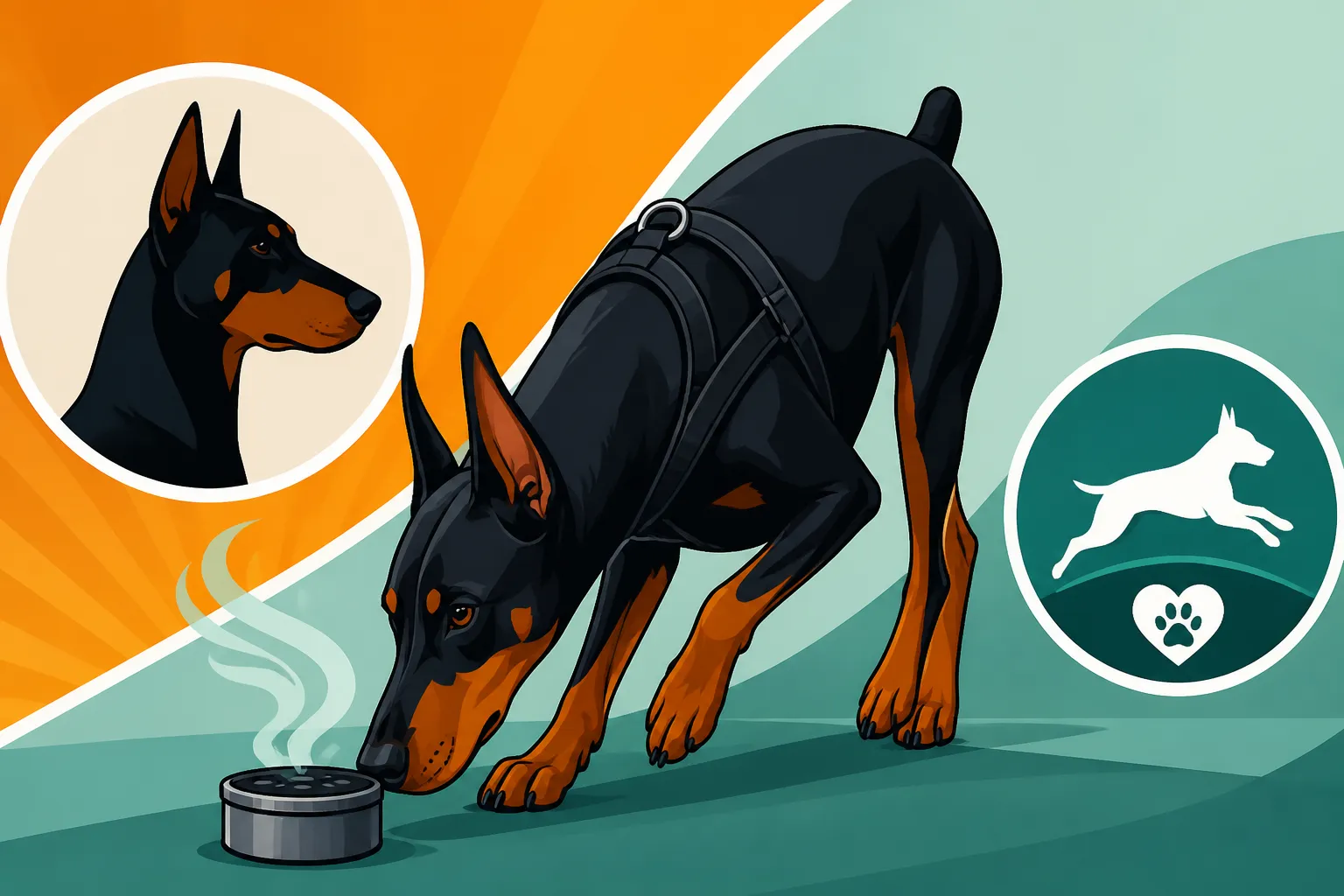
As your Doberman progresses beyond finding treats, they are introduced to specific "target odors." These are typically essential oils, highly diluted and usually applied to cotton swabs, placed inside a small tin or vessel. The most common odors used in organized nose work are birch, anise, and clove. These are chosen because they are distinctive, stable, and easily sourced. Your Doberman learns to associate these specific scents with a reward, much like a drug or bomb detection dog learns to associate certain smells with finding contraband.
The training involves pairing the target odor with a high-value treat initially, so your Doberman creates a strong positive association. For example, a small container with a birch-scented swab might be placed right next to a delicious piece of chicken. Over time, the odor itself becomes the predictor of the reward, even if the treat isn't immediately present. The beauty of this is that the Doberman isn't looking for the treat directly; they are searching for the smell that tells them a treat will appear. This abstraction is a significant mental workout and allows the game to expand into countless scenarios. You can find excellent starter kits, often including the essential oils and scent vessels, on platforms like Amazon, making it easy to begin your journey at home.
Why Dobermans Excel at Nose Work
Dobermans are renowned for their intelligence, athleticism, and keen senses. While often celebrated for their guarding instincts and physical prowess, their olfactory capabilities are frequently underestimated. Nose work is a fantastic way to celebrate and develop these often-overlooked traits, providing a fulfilling activity that truly aligns with their inherent makeup.
Leveraging Natural Instincts and Drive
Dobermans possess a powerful prey drive and an instinct to investigate their surroundings. This natural curiosity and drive, combined with a surprisingly sharp nose, make them prime candidates for nose work. They enjoy the "hunt" and the problem-solving aspect of tracking down a hidden scent. Unlike some breeds specifically bred for scent work (like Beagles or Bloodhounds), the Doberman's focus and desire to work in partnership with their human handler give them an edge in structured search tasks. They are often eager to please and will put immense effort into understanding what's asked of them.
When a Doberman locks onto a scent, their concentration is incredible. You'll see their body language shift – tail maybe wagging a little lower, nose glued to the ground, ears swiveling to catch every auditory cue. This intense focus is exactly what nose work cultivates. It channels their inherent drive into a constructive and mentally taxing activity, perfect for channeling that famous Doberman energy. For dogs that are always "on," providing an outlet for this mental energy is crucial for a calm and balanced life.
Mental Stimulation for a Clever Breed
Dobermans are notoriously intelligent. Without adequate mental stimulation, they can become bored, restless, and even destructive. They need a "job" to do, even if that job is just finding a hidden treat in the living room. Nose work provides exactly this kind of rigorous mental workout. It forces them to think, strategize (in a canine way), and problem-solve. Why a Clever Doberman Is Harder to Train is a common challenge, but activities like nose work turn that intelligence into an asset rather than a source of mischief.
Each search is a new puzzle. Where is the odor? How is the air moving? What distractions are present? Your Doberman has to process all this information to pinpoint the source. This constant engagement burns mental energy much more effectively than endless physical exercise alone. After a good nose work session, your Doberman will likely be pleasantly tired, content, and ready for a nap – a welcome state for any owner of a high-drive breed! This mental exhaustion contributes significantly to their overall well-being and can lead to a calmer demeanor around the house. When you consider Keeping a Doberman Mentally Tired, nose work absolutely nails it.
Getting Started with Nose Work
Starting your Doberman on their nose work journey doesn't require elaborate equipment or specialized facilities right away. You can begin right in your home with simple items, gradually building up skills and confidence. The key is to make it fun, positive, and always end on a high note.
From Treats to Target Odors
The easiest way to introduce your Doberman to nose work is to start with a food reward. Take a handful of their favorite high-value treats (small, smelly pieces of cheese or cooked chicken often work wonders) and show them to your dog. Let them sniff, then hide one or two in plain sight – under a towel, behind a chair leg, or in an easily accessible box. Encourage them to "find it!" and celebrate enthusiastically when they do. Repeat this several times, gradually making the hides a tiny bit harder. This teaches them the game of searching.
Once your Doberman understands the concept of searching for treats, you can introduce a target odor. As mentioned, diluted essential oils (birch, anise, clove) are standard. Many beginner kits will come with the oil and cotton swabs. Take a single swab, put a drop or two of the diluted oil on it, and place it in a small metal tin or vial. Now, hide this tin alongside a high-value treat. Every time your Doberman sniffs the tin, they get the treat. They quickly associate the distinct smell with the reward. Over successive sessions, you can start separating the treat from the tin, so they find the odor, and then you reward them immediately at the source of the smell. This transition is crucial and builds their understanding that the odor itself is the prize.
Finding a Class or Trainer
While you can certainly start at home, finding a qualified instructor or class can accelerate your progress and provide valuable guidance. Look for trainers who specialize in scent work or K9 Nose Work® (the official trademarked sport). A good instructor will understand how to motivate your Doberman, introduce new challenges appropriately, and help you "read" your dog's subtle cues when they've found the odor. They can also ensure you're using proper handling techniques and setting your Doberman up for success.
Many local dog training clubs or private facilities offer beginner nose work classes. Online resources can also be invaluable, especially if in-person classes are hard to come by. For those who prefer a structured approach from home, online courses, such as those offered by BAXTER & Bella, can provide a solid foundation and guide you through the initial steps. A good class environment is also fantastic for building your Doberman's confidence and focus, even around other dogs, without the high-pressure interactions of other group activities. It's often a quiet, individual endeavor, which suits many Dobermans well.
Essential Gear You'll Need
One of the great things about nose work is how little specialized equipment it demands, especially when you're just starting out. Here’s a quick rundown of what you’ll likely need:
| Item | Purpose | Notes |
|---|---|---|
| High-Value Treats | Initial motivators and rewards. | Soft, smelly, pea-sized pieces work best (e.g., cheese, hot dogs, cooked chicken). Keep them hidden and only produce them for rewards. |
| Target Odor Kit | Essential oils (birch, anise, clove), cotton swabs, and tins/vials. | You can purchase these pre-made. Always handle essential oils carefully to avoid contaminating your hands or training area. |
| Search Containers | Boxes, buckets, plastic containers, or even just household items for initial hides. | Start with simple cardboard boxes. As you advance, you might use plastic tubs, luggage, or even outdoor structures. |
| Leash and Collar/Harness | For safety and control, especially when working in new environments or around distractions. | A regular leash is fine. Many handlers prefer a harness to avoid putting pressure on the Doberman's neck, particularly useful if your dog is prone to pulling when excited about a search. |
| Treat Pouch | Keeps treats easily accessible for quick rewards. | Being able to reward immediately at the source of the odor is critical for effective training. |
| Clicker (Optional) | A marker for precise timing of rewards. | If you already use a clicker for training, it can be a useful tool here. Otherwise, a verbal marker like "Yes!" works just as well. |
Remember, consistency is key. Keep your training sessions short (5-10 minutes is often plenty for a Doberman, especially when they're new to it) and positive. End before your Doberman gets bored or frustrated.
The Profound Benefits of Nose Work for Dobermans
Beyond simply being a fun pastime, engaging your Doberman in nose work offers a wealth of benefits that contribute to their overall health, happiness, and balanced behavior.
Physical and Mental Health Perks
One of the standout advantages of nose work, particularly for Dobermans, is its low physical impact. Unlike agility or flyball, which can put significant strain on joints, ligaments, and the cardiovascular system, nose work is much gentler. This makes it an ideal activity for Dobermans who may have underlying health concerns that preclude high-impact sports, or for those simply looking to preserve their joint health as they age. If you're pondering Whether Agility Suits a Doberman's Joints, nose work offers a fantastic alternative that still provides an immense workout for the brain. It also ensures that a Doberman can continue to enjoy an active and engaging "job" even if their physical capabilities diminish later in life.
Mentally, the benefits are profound. The intense concentration required for searching builds focus and endurance. It taps into a primal instinct, satisfying a deep canine need to hunt and explore. For Dobermans who often carry the weight of an "intimidating" appearance, engaging in a thoughtful, quiet activity like nose work can be incredibly grounding. It helps reduce stress, channel nervous energy, and promote a sense of calm accomplishment.
Building Confidence and Focus
Nose work is a powerful confidence builder. Every time your Doberman successfully finds an odor, they experience a surge of self-assurance. They learn to trust their own senses and problem-solving abilities, which can translate into greater confidence in other areas of their life. For shy or environmentally sensitive Dobermans, nose work can be a game-changer. It allows them to engage with new environments, objects, and even people (from a distance) in a low-pressure, positive context, reinforcing that these novel experiences can lead to good things.
The focus required for nose work also has carry-over benefits. A Doberman who learns to ignore distractions and concentrate on a scent during a search will often show improved focus and self-control in other training situations. They learn to tune out the world and dedicate themselves to the task at hand. This enhanced focus can improve general obedience and make them more responsive to commands, deepening the bond and communication between you and your intelligent companion. It's a fantastic way to train their brains to concentrate on your cues and their task, even when the world around them is busy.
Nose Work in Practice: What to Expect
Once you and your Doberman have the basics down, nose work can expand into a wide variety of engaging and challenging scenarios. This adaptability is part of what makes it such a great long-term sport.
Different Search Environments
One of the exciting aspects of nose work is the sheer variety of search environments. You'll move beyond simple boxes in a room to more complex scenarios, simulating real-world detection challenges.
- Container Searches: This is often where many begin, moving from simple cardboard boxes to more diverse containers like luggage, metal tins, or even plastic bins. The challenge comes from varying the number, size, and material of containers.
- Interior Searches: Bringing the search indoors, but expanding beyond a single room. Your Doberman might search an entire living room, kitchen, or even an office space, with hides placed on furniture, shelves, or in unexpected nooks.
- Exterior Searches: Taking the game outside! This introduces natural elements like wind, changes in temperature, and a plethora of environmental odors that your Doberman must learn to ignore. Hides might be on fences, trees, park benches, or buried slightly in grass.
- Vehicle Searches: A particularly fun and challenging element where your Doberman searches the exterior of vehicles – cars, trucks, or even trailers – for the target odor. This teaches them to work around different surfaces, heights, and vehicle materials.
Each new environment brings its own set of challenges, keeping the sport fresh and continually engaging for your Doberman. They learn to generalize the odor, understanding it's the smell they're seeking, not the specific container or location.
Competitive Opportunities
For those who enjoy a bit of friendly competition, nose work offers a structured trial environment through organizations like the National Association of Canine Scent Work (NACSW) or the American Kennel Club (AKC) Scent Work. These trials provide opportunities to earn titles and test your Doberman's skills against a defined standard.
- Trial Structure: Trials are typically broken into different elements (Container, Interior, Exterior, Vehicle) and levels of difficulty, from Novice to Excellent and beyond. Dogs search individually, with a designated time limit to find a certain number of hides.
- Judging: Judges look for accurate detection of the odor source and clear indication from the dog. The focus is on the dog's ability to work independently and effectively, with the handler acting as a supportive guide.
- Titles and Progression: As your Doberman successfully clears searches at each level, they earn titles, progressing through the sport. This sense of achievement can be incredibly rewarding for both dog and handler.
While competition is an option, it's certainly not a requirement. Many Doberman owners enjoy nose work purely as a fun, stimulating hobby they share with their dog, without ever stepping into a trial ring. The beauty of it is that it offers something for everyone, whether you're a casual enthusiast or a dedicated competitor. It’s truly a wonderful way to offer your Doberman a purposeful, low-impact activity that celebrates their natural talents.
Disclaimer
This article is for general informational purposes only and does not constitute professional advice. Laws, prices and regulations vary by location and change over time. Consult a qualified professional for guidance on your specific situation.