Tracking Work With a Doberman
Many Doberman owners find themselves constantly searching for ways to channel their dog's incredible intelligence and boundless energy. It’s a common frustration, isn't it? You know your Doberman is smart, capable of so much more than just a walk around the block, but finding an outlet that truly engages their mind and body can feel like a never-ending quest. This guide will walk you through the exciting world of tracking work, showing you how to tap into your Doberman's natural instincts, build an incredible bond, and provide the mental and physical stimulation they so desperately need to thrive.
Understanding the Doberman's Natural Scenting Abilities
When most people think of Dobermans, they picture a sleek, powerful protector, perhaps a little intimidating, always alert. What often gets overlooked, however, is the incredible intelligence and sensitive nose hidden behind that watchful gaze. Dobermans aren't just about brawn and bark; they're thinkers, problem-solvers, and surprisingly adept at using their sense of smell.
The Doberman's Nose: More Than Just a Pretty Face
Let's be honest, we usually associate breeds like Beagles or Bloodhounds with elite sniffing capabilities. But your Doberman's nose is a powerful tool, finely tuned to detect and follow scent. While perhaps not built for the same endurance as a dedicated scent hound, their ability to discriminate between scents and focus on a specific trail is remarkable. It's a primal instinct, honed over generations, that often goes untapped in our modern homes. They might not be tracking a lost person in the wilderness every day, but that innate drive is still very much alive within them, waiting to be unleashed.
Think about how your Doberman investigates the yard, nose to the ground, processing a complex tapestry of smells from the neighborhood. They can tell who walked by, what animal was there, and sometimes even when it happened. This isn't just casual sniffing; it's detailed analysis, and it shows the incredible potential locked within their olfactory system. Engaging this sense through tracking offers a deep level of fulfillment that a simple game of fetch can't quite match. It taps into a fundamental part of who they are, making them feel useful and satisfied.
Prey Drive and Focus: How Instincts Translate to Tracking
Dobermans possess a strong prey drive, a natural inclination to pursue and catch. While we certainly don't want them chasing every squirrel or rabbit they see, this instinct can be beautifully channeled into productive activities like tracking. Instead of focusing on a live animal, we teach them to pursue a scent trail, leading to a "prize" at the end. This redirection is incredibly powerful, transforming a potentially problematic drive into a highly motivated and controlled behavior.
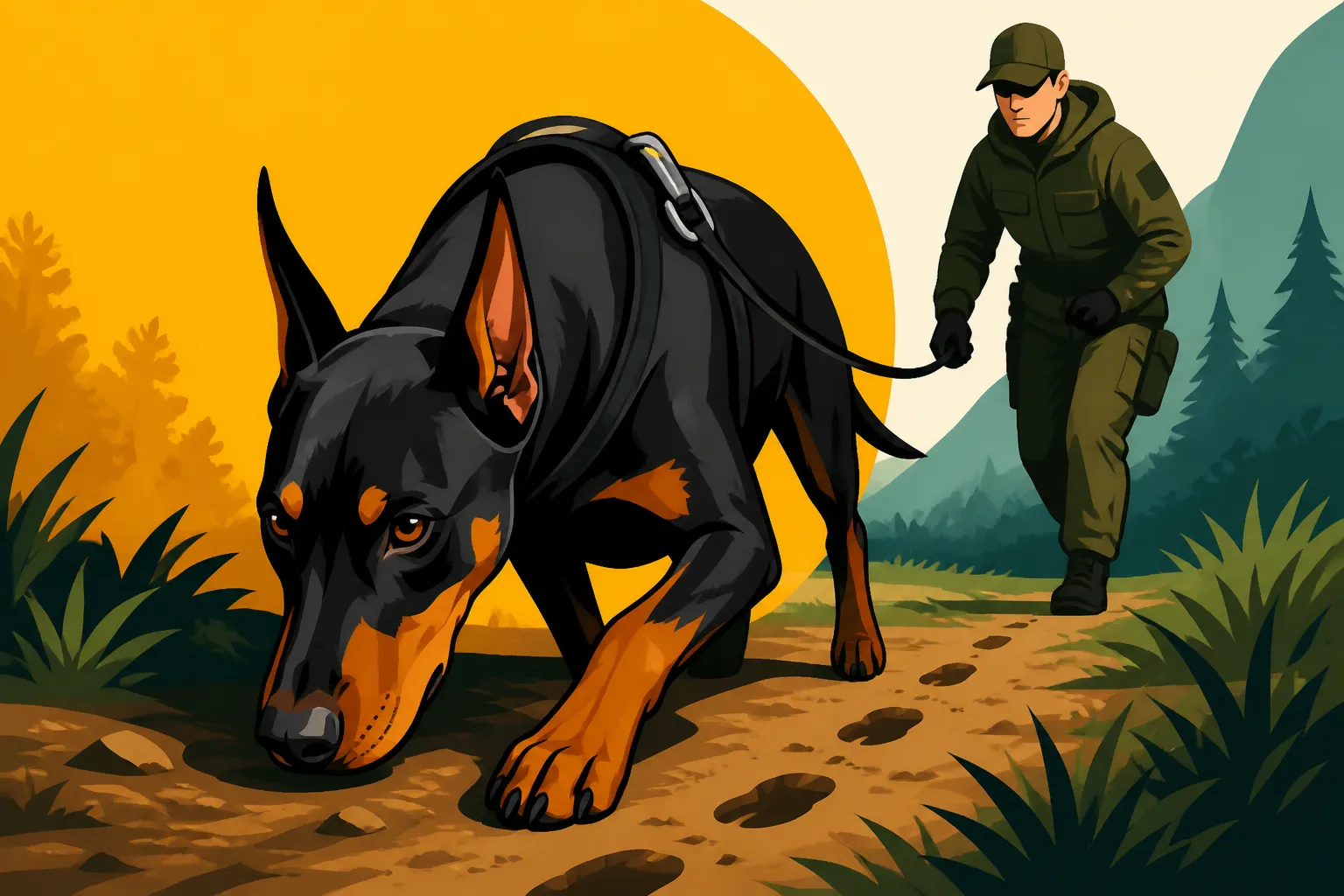
Their intense focus and desire to please their handler, combined with that natural drive, make them excellent candidates for tracking. When a Doberman is engaged in tracking, their entire being is dedicated to the task. You'll see their ears cock forward, their tail might give a slight, focused wag, and their nose will be glued to the ground, systematically working out the puzzle of the scent. This isn't just physical exercise; it's a deep mental workout that exhausts them in the best possible way. A tired Doberman is often a well-behaved Doberman, and tracking is one of the most effective ways to achieve that coveted state of calm contentedness. It also helps to build their confidence, as they learn to trust their own senses and problem-solving abilities. You can even apply this principle to other areas of training where Keeping a Doberman Mentally Tired is key.
Getting Started with Tracking: The Basics
Embarking on a tracking journey with your Doberman doesn't require a special degree or tons of expensive equipment. It's truly something anyone can learn with a little patience and consistency. The key is to start simple, make it fun, and build success upon success. Remember, this is about teaching your Doberman to use their nose in a structured way, and that means setting them up for victory from the very first step.
Essential Gear for Your Tracking Journey
You don't need much to begin, which is fantastic news for anyone hesitant to invest a lot upfront. The core items are usually quite accessible. First and foremost, you'll need a long line. This isn't your everyday leash; we're talking about a lead that's 15 to 30 feet long. This allows your Doberman freedom to work the scent without you crowding them, while still keeping them safely connected to you. A durable material like biothane or nylon is best. You can find excellent options on Amazon, often bundled with other outdoor dog essentials.
Next, a tracking harness is crucial. This is different from a walking harness. A tracking harness is designed to sit farther back on your dog's torso, usually with the leash attachment point on the back. This design prevents pressure on their throat and allows them to pull comfortably and naturally into the harness as they follow the scent. A Y-front design is often preferred as it allows for full shoulder movement. Again, reputable pet supply stores or online retailers like Amazon offer a wide selection. Finally, you'll need high-value treats that are small, soft, and extremely palatable. Think pieces of hot dog, cheese, or cooked chicken – something your Doberman rarely gets and will be absolutely desperate to find at the end of a track. And don't forget scent articles – small, personal items like a leather glove, a piece of wood, or even a folded handkerchief, infused with your scent, to mark the beginning and end of your tracks.
| Item | Purpose | Key Features for Dobermans | Where to Find (Example) |
|---|---|---|---|
| Long Line | Allows freedom to work, maintains control | 15-30 ft, durable biothane or nylon | Online retailers, pet stores (e.g., Amazon) |
| Tracking Harness | Distributes pressure, prevents choking | Y-front design, comfortable, back clip | Specialty dog stores, online |
| High-Value Treats | Motivation and reward | Small, soft, smelly, easy to swallow | Butcher, pet stores, home-cooked |
| Scent Articles | Start/end markers for track | Leather, wood, fabric; infused with handler's scent | DIY, existing items, online |
Laying Your First Simple Tracks
This is where the magic begins! Your first tracks should be incredibly simple and set your Doberman up for guaranteed success. Choose a quiet, low-distraction environment like a grassy field or a large, unused lawn. Start by having your Doberman wait or be held by a helper a short distance away – maybe 20 feet. Then, walk a straight line for about 10-15 feet, dropping a high-value treat every few steps. At the end of this short line, place a scent article and a small pile of those amazing treats. This is the "reward." Your steps create a crushed-vegetation scent trail, and the treats along the way reinforce the idea that following your path leads to good things.
Walk away from the track, circling wide to avoid laying a new scent trail over the old one. Then, bring your Doberman to the start. Let them sniff the ground where you began, give your tracking command (e.g., "Find it!" or "Track!"), and allow them to follow the scent. Don't pull them; let them work it out. As they discover each treat along the way, they'll build confidence. When they reach the scent article and the jackpot of treats, celebrate! Praise them enthusiastically. This positive reinforcement is key. Remember, you want to make this the most rewarding game they've ever played. Consistent, clear Rewards a Doberman Will Work For will make all the difference here.
The "Motivation" Behind the Track
For a Doberman, motivation isn't usually an issue when food is involved! However, it's about making the tracking experience irresistibly rewarding. The high-value treats are your primary currency. The goal is for your Doberman to associate the act of putting their nose to the ground and following a trail with finding something incredible. This isn't just about the food at the end; it's about the entire process leading to that ultimate payoff.
Beyond treats, your enthusiasm and praise play a huge role. When your Doberman successfully navigates a track, even a short one, let them know they've done something amazing. Your voice, your touch, and your body language all communicate their success. This builds their internal motivation and strengthens your bond. Some Dobermans are also highly motivated by a favorite tug toy at the end of a track. Experiment to see what truly ignites their drive. The more excited they are to start a track, the harder they'll work. Think of it as a Puzzle Work That Actually Tires a Doberman – the mental effort of solving the puzzle, combined with the physical exertion, leads to immense satisfaction for them.
Progression and Challenges in Doberman Tracking
Once your Doberman has mastered the basic straight line, it's time to gently introduce new challenges. Tracking is a journey, not a sprint, and each new element should be introduced incrementally to ensure continued success and build confidence. It's about gradually shaping their understanding of scent work, preparing them for more complex real-world scenarios.
Increasing Difficulty: Turns, Longer Tracks, and Age
Adding turns is the natural next step. Instead of just straight lines, start by adding a gentle 90-degree turn to your track. Lay the turn a bit heavier with extra treats and perhaps linger a moment longer yourself, creating a stronger scent picture. Your Doberman will learn to work out the changes in direction. After turns, you can start increasing the length of the track. Gradually stretch it from 15 feet to 50, then 100, and beyond. This builds stamina and focus. You can also vary the age of the track. Instead of tracking immediately after you've laid it, wait 5, 10, or even 20 minutes before bringing your Doberman to the start. This teaches them to work with fainter, older scent.
As your Doberman gains experience and confidence, you can also reduce the frequency of "helper" treats along the track, relying more on the jackpot at the end. This encourages them to follow the entire trail, rather than just bouncing from treat to treat. Always remember to praise and reward heavily when they successfully complete a more challenging track. Dobermans are quick learners, and they thrive on mastering new skills. Whether a Doberman learns your routine too well applies here too – you'll want to keep introducing novelty so they don't anticipate the track but truly read the scent.
Environmental Factors and Distractions
The world outside your quiet field is full of distractions. Wind, varying terrain, and other scents will all challenge your Doberman's focus. Start by introducing tracks in lightly different environments – perhaps a short grass area next to longer grass, or a path that crosses a patch of dirt. The wind is a significant factor; a Doberman will often work into the wind or "air scent" if it's strong, picking up the scent cone rather than following your exact footsteps. This is natural, but it's important to understand how it influences their work.
When you're ready, you can introduce very mild distractions. Maybe lay a track near a parked car, or where a person has recently walked. Never set your Doberman up for failure with overwhelming distractions too soon. The goal is to gradually expose them to these elements while ensuring they can still succeed. If they struggle, go back a step or simplify the environment. This methodical approach builds resilience and problem-solving skills, and they learn to filter out irrelevant information. This kind of Nose Work as a Low-Impact Doberman Sport can truly transform a dog that struggles with focus in busy environments, teaching them to tune into their task.
When to Seek Professional Guidance
While you can certainly start tracking on your own, there comes a point where professional guidance can be incredibly beneficial. A good tracking instructor can help you identify subtle cues in your Doberman's body language, troubleshoot specific challenges, and guide you through more advanced techniques. They can teach you how to read the wind, understand different scent conditions, and prepare for formal tracking titles if that's your goal.
Many communities have dog clubs that offer tracking classes, or you might find independent trainers specializing in scent work. If in-person classes aren't feasible, online resources can be a fantastic alternative. Companies like BAXTER & Bella offer comprehensive online training programs that cover everything from puppy basics to advanced obedience, and many include modules or advice on scent work and mental stimulation. These platforms can provide structured lessons, video demonstrations, and sometimes even personalized feedback. Remember, learning from an experienced tracker can accelerate your progress and prevent you from inadvertently developing bad habits, either in yourself or your Doberman. This is especially true for Training a Doberman That Is Smarter Than You Expect, as a clever Doberman will quickly exploit any inconsistencies.
Benefits Beyond the Track: How Tracking Enriches Your Doberman's Life
Tracking work is so much more than just a fun game; it's a holistic activity that profoundly impacts your Doberman's overall well-being. The benefits extend far beyond the field, seeping into their daily lives and strengthening the bond you share. It addresses many of the common challenges Doberman owners face, making for a happier, more harmonious household.
Mental Stimulation and Energy Release
Dobermans are highly intelligent, and an under-stimulated Doberman is often a destructive or anxious Doberman. They need a job to do, and tracking provides that job in spades. The mental effort required to discriminate scents, follow a trail, and ignore distractions is incredibly taxing – in a good way! Ten minutes of focused tracking can be as tiring, if not more so, than an hour of vigorous physical exercise. When your Doberman comes home from a tracking session, they’re not just physically tired; their brain has had a workout, leaving them calm, content, and ready for a long nap.
This kind of deep mental engagement is vital for preventing boredom-related behaviors like excessive barking, chewing, or pacing. It taps into their natural instincts in a constructive manner, giving them a sense of purpose. Instead of finding their own (often undesirable) ways to entertain themselves, they look to you for their next tracking adventure. It's a fantastic outlet for that boundless Doberman energy, ensuring that both their bodies and minds are exercised thoroughly. Think of it as a healthy alternative to destructive behaviors that can arise from their intense intelligence and drive.
Building an Unbreakable Bond
Tracking is a team sport. You are your Doberman's guide, their supporter, and their biggest cheerleader. You learn to trust their nose, even when your eyes tell you they're going in the "wrong" direction. They learn to trust your cues and the fact that you will always lead them to something wonderful. This mutual reliance deepens the connection between you in a way few other activities can. You're working together, communicating on a level that transcends simple commands.
Watching your Doberman intently work a track, completely absorbed in their task, is truly a magical experience. You see their focus, their determination, and the sheer joy when they find the prize. Sharing these moments of intense concentration and triumphant discovery builds a unique partnership. It’s about understanding and respecting their innate abilities, and celebrating their successes together. This deepens the trust and respect, fostering an The Owner a Doberman Actually Needs – one who is engaged, patient, and appreciative of their dog's incredible capabilities.
Problem-Solving Skills and Confidence
Every track is a puzzle. The wind shifts, a new scent blows across the trail, or the ground changes texture. Your Doberman has to process these variables and adapt. This constant problem-solving hones their cognitive abilities and builds incredible confidence. As they successfully navigate more complex tracks, they learn to trust their own senses and instincts, becoming more self-assured in their decision-making.
This boost in confidence often translates into other areas of their life. A Doberman who feels competent and successful in their "job" is often more resilient, less prone to anxiety, and generally more well-adjusted. They learn that challenges can be overcome, and that their efforts lead to rewarding outcomes. This is particularly beneficial for Dobermans who might be a bit cautious or sensitive, as tracking empowers them and gives them a tangible skill they excel at. Starting this journey, even with Five-Minute Sessions With a Young Doberman, can lay the foundation for a lifetime of confidence and mental sharpness.
Disclaimer
This article is for general informational purposes only and does not constitute professional advice. Laws, prices and regulations vary by location and change over time. Consult a qualified professional for guidance on your specific situation.