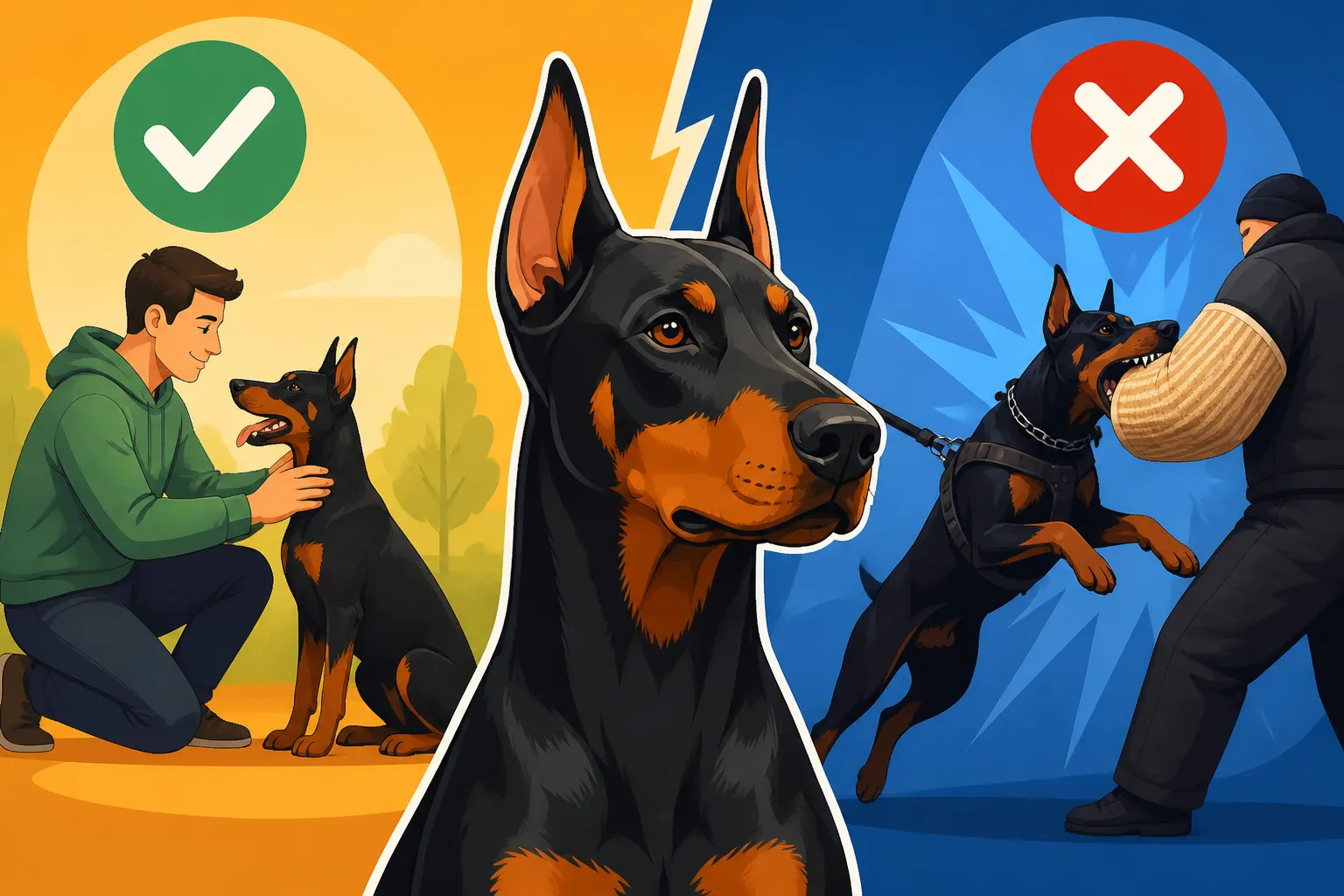
Whether a Pet Doberman Should Do Bite Work
It's completely understandable to look at your majestic Doberman, with their alert posture and undeniable presence, and wonder about their natural protective instincts. Many Doberman owners feel a pull towards exploring activities that harness these traits, often leading them to consider "bite work." This guide isn't here to judge, but to provide a realistic, empathetic look at what bite work truly entails, especially for a beloved pet Doberman, and to help you navigate whether it's the right path for your family and your dog.
Understanding What "Bite Work" Really Means
When people hear "bite work," images can range from highly trained police K9s to a Doberman aggressively lunging at a perceived threat. It's crucial to understand that these images, while part of the spectrum, don't fully capture the nuance of what professional bite work entails. For most pet owners, the term evokes a sense of enhanced protection, but the reality is far more complex and demanding than simply teaching a dog to bite.
Protection Sport Versus Personal Protection Training
There's a significant difference between protection sport and personal protection training, though both involve a dog biting a padded sleeve or suit. Protection sports like IPO (now known as IGP), Ring Sport, or Mondioring are highly structured, rule-bound activities. They assess a dog's courage, control, obedience, and ability to respond to a decoy (a specially trained person wearing protective gear) under various scenarios. The emphasis is always on control, discipline, and the dog's ability to "out" (release the bite) on command. These are competitive sports, much like agility or competitive obedience, with titles and rankings. It's a game, a very serious one, but a game nonetheless. The dog learns to bite a specific target, in a specific context, on cue, and, crucially, to stop on cue.
On the other hand, "personal protection training" for a civilian pet owner often aims to make a dog a real-world deterrent or defender. This is where things get incredibly murky and dangerous. True personal protection training involves simulating real-life attack scenarios, often without the strict rules and controlled environment of sport. The goal is a dog that will defend you or your property against a genuine threat. However, without the immense discipline, highly specialized trainers, and constant maintenance, this can easily devolve into a dog that is unpredictable, overly suspicious, or even dangerous in everyday situations. A dog that is trained to bite without the rock-solid foundation of obedience and discernment becomes a significant liability, not a guardian. Think about the difference between a martial artist who trains for sport and a street fighter – the control and context are entirely different.
The Doberman's Natural Instincts Versus Trained Aggression
Dobermans, by their very nature, possess strong guarding instincts. They are alert, observant, and naturally protective of their family and home. This is part of their inherent temperament, as described in the breed standard: "fearless, loyal, and obedient." They are often described as "Velcro dogs" precisely because of their intense bond with their people, which fuels their desire to keep them safe. You can probably already see your Doberman's focus when a stranger approaches or their quick bark at an unexpected noise. This is their natural protective drive at work.
However, training a Doberman for bite work, even in a sport context, is about channeling and intensifying specific aspects of this drive, not simply allowing it to run wild. It's about teaching them when and how to use their mouth as a tool, under precise command. This is a far cry from nurturing general guarding instincts. It requires a dog with immense nerve, resilience, and a solid, stable temperament to begin with. You aren't just making a dog "more protective"; you're teaching them a very specific, high-arousal behavior. A Doberman's natural protectiveness means they are often willing to stand between you and a perceived threat, bark, or posture. This usually deters intruders more effectively than an actual bite, as most people looking for trouble would rather avoid a confrontation with a large, barking Doberman. Whether a Doberman Would Really Defend You is often a question of instinct and presence, which they already possess.
The Risks and Realities for a Pet Doberman
Bringing a Doberman into your home is a huge responsibility, and adding bite work, even sport, to the equation amplifies that responsibility exponentially. It's not a decision to be taken lightly, and it comes with significant practical, ethical, and legal considerations that every pet owner must deeply consider.
Temperament and the Pet Home Environment
The ideal candidate for bite work, even sport, is a dog with exceptional nerve and a rock-solid temperament. They need to be confident, not reactive or fearful, and possess a high drive to work. They must be able to switch from calm companion to intense working dog and back again, seamlessly. Most pet Dobermans, while wonderful companions, simply don't have the specific genetic predisposition or the mental fortitude required for this kind of rigorous training without developing behavioral issues.
Consider your home life: Do you have children? Other pets? Do you entertain guests frequently? A Doberman engaged in bite work needs an owner who can consistently manage and train them, ensuring their "off switch" is always reliable. If the training isn't perfect, if the dog misunderstands a cue, or if their arousal spills over into everyday life, you risk having a dog that is a danger in your own home or community. Imagine a visitor moving quickly or playfully wrestling with your child – could your dog misinterpret this as a threat and react with a bite? The risk, though small with proper training, is ever-present and catastrophic if it goes wrong. Building a Doberman Puppy That Is Confident, Not Sharp is paramount, and bite work can inadvertently undermine this if not handled by an absolute expert.
Legal and Liability Concerns
This is perhaps one of the most sobering realities of bite work for a pet owner. If your Doberman is trained in bite work, and they ever bite someone – whether legitimately provoked or not – the legal ramifications can be severe. In many jurisdictions, a dog trained for bite work is automatically considered a "dangerous dog," regardless of the circumstances of the bite. This can lead to your dog being seized, muzzled for life, or even euthanized. Your homeowner's insurance policy might be canceled, or you could face exorbitant liability premiums. Many insurance companies already have breed restrictions on Dobermans, and adding bite training can make obtaining coverage nearly impossible.
Even if you believe your Doberman would only act in a true emergency, proving that in a court of law after an incident can be incredibly difficult, especially if the dog has been trained to bite. The perception alone, that your dog is trained for protection, can work against you. It shifts the burden of proof onto you to demonstrate impeccable control and judgment in a highly stressful situation. It’s a very different scenario than a family pet reacting defensively to a home invasion, which typically falls under different legal interpretations than a dog actively trained for attack.
The Commitment Required from Owners
Embarking on bite work, even for sport, is not a casual hobby; it's a lifestyle. It requires:
- Significant Time: You'll spend hours each week training, traveling to specialized facilities, and practicing obedience drills. This isn't just about the bite; it's about the foundation of obedience that makes the bite safe and controllable.
- Substantial Financial Investment: The fees for experienced protection sport trainers are high. You'll need specialized equipment, travel costs, entry fees for trials, and potentially specialized veterinary care to keep your highly athletic Doberman in top condition. These trainers are often few and far between, meaning long drives.
- Unwavering Consistency: Bite work isn't something you can do inconsistently. A dog needs regular, structured sessions to maintain their training and ensure their responses remain sharp and reliable. If you slack off, the potential for dangerous behavior increases.
- Finding the Right Trainer: This is critical. You cannot attempt this on your own. You need an experienced, ethical trainer who understands working Dobermans, focuses heavily on control and safety, and can assess if your specific dog has the temperament for it. Beware of anyone who promises a "personal protection dog" quickly or cheaply, or who encourages aggression over control. Finding a Trainer Who Has Worked With Dobermans is essential for any advanced training.
Many people underestimate What a First Doberman Demands of Its Owner even without adding bite work into the equation. It's a demanding breed, and this training amplifies that tenfold.
Alternatives to Bite Work for Your Pet Doberman
If the goal is to have a well-trained, confident, and protective Doberman companion, there are many avenues that can fulfill these desires without the inherent risks and intensive demands of bite work. These alternatives harness your Doberman's natural intelligence and drive in constructive, safe ways.
Engaging Their Natural Drives Through Other Sports
Dobermans are intelligent, athletic, and thrive on having a job. There are numerous dog sports that can channel their energy, focus, and protective instincts without ever involving a bite. These sports build confidence, strengthen your bond, and provide immense mental and physical stimulation.
- Competitive Obedience: Dobermans excel at obedience. Their desire to please and their sharp minds make them naturals. This solid foundation of obedience is critical for any well-adjusted Doberman, making them a joy to live with and manage in public. A highly obedient Doberman, who responds instantly to commands, is already a strong deterrent.
- Agility: This fast-paced sport involves navigating an obstacle course. It requires focus, coordination, and teamwork between dog and handler. It's a fantastic way to burn off Doberman energy and build their problem-solving skills.
- Tracking and Scent Work: Dobermans have surprisingly good noses! Teaching them to follow a scent trail or find hidden articles is incredibly mentally stimulating and taps into their natural prey drive in a controlled, non-aggressive way. This is often called "nose work" and it's a wonderful, low-impact activity.
- Rally Obedience: A less formal version of competitive obedience, Rally offers a great way to build your Doberman's skills and confidence in a supportive environment.
- Dock Diving: If your Doberman loves water, this sport where dogs jump for distance or height off a dock is a blast! It’s great exercise and fun for spectators.
These activities allow your Doberman to use their minds and bodies, develop confidence, and maintain their keen intelligence, without any of the risks associated with bite work. They are great ways to engage in The Working Sports a Doberman Was Built For without the controversial elements. You can find equipment and resources for many of these sports, like puzzle toys for mental stimulation or durable training leads, easily on platforms like Amazon or through specialized training programs like BAXTER & Bella.
Building Confidence and Obedience for Real-World Safety
The most effective "protection" a pet Doberman can offer is a rock-solid temperament, impeccable obedience, and a confident demeanor. A dog that is calm and well-mannered in all situations, yet instantly responsive to your commands, is truly the safest and most reliable companion.
Here’s how to build that real-world safety:
- Early and Consistent Socialization: Expose your Doberman puppy to a wide variety of sights, sounds, people, and environments from a young age. This helps them become well-adjusted and confident, rather than fearful or reactive. A confident Doberman knows when to be calm and when to be alert.
- Advanced Obedience Training: Go beyond basic commands. Work on advanced off-leash obedience, proofing commands in distracting environments, and building a strong recall. A Doberman who will reliably come when called, no matter the distraction, is invaluable.
- Muzzle Training: Even if you never pursue bite work, Muzzle Training a Doberman Before It Is Needed is a responsible practice for any large, powerful breed. It's a safety tool for vet visits, emergencies, or if you ever encounter a situation where your dog might feel overwhelmed. It allows you to protect your dog and the public.
- Boundary Training: Teach your Doberman that visitors are welcome when you say so. This can involve teaching them to go to a designated "place" or mat when guests arrive, rather than allowing them to guard the door. Teaching a Doberman to Accept Visitors is crucial for a harmonious household.
- Confident Handling: Your Doberman looks to you for guidance and confidence. If you project calm assurance, your dog will be more likely to follow suit. Learn to read your dog's body language and understand Doberman Guarding Instinct and Where It Tips Over to prevent escalation of natural guarding behaviors.
- Public Manners: Focus on having a Doberman that is a pleasure to take out. This means leash manners, polite greetings (or ignoring) strangers and other dogs, and settling calmly in public places. Handling a Doberman in Public Without Alarming People builds positive perceptions and reduces potential conflict.
By investing in these areas, you create a Doberman that is respected, admired, and truly safe in your home and community. Their natural presence combined with your solid training is often the most formidable and responsible form of "protection" a pet Doberman can provide.
| Aspect | Protection Sport (for pet owners) | Personal Protection (for pet owners) | Alternative Dog Sports / Obedience |
|---|---|---|---|
| Primary Goal | Channel natural drives into a highly controlled, competitive activity. | Create a real-world defensive dog for the home. | Mental & physical stimulation, bond-building, practical obedience. |
| Control & Rules | Extremely high, precise commands, specific targets, "out" on command. | Often less formal, focuses on real-world scenarios, less predictable. | High control, positive reinforcement, no biting involved. |
| Risk to Public/Dog | Moderate (if highly trained), but potential for legal issues if misused. | Very High, unpredictable, significant legal liability, public perception issues. | Very Low (focus on safety, manners, and controlled environments). |
| Trainer Expertise | Absolute expert, specialized in protection sport, ethical focus on safety. | Requires extreme vetting, many trainers are not equipped for responsible PP. | Wide availability of certified, positive reinforcement trainers. |
| Time/Cost | Very High commitment in both time and money for training, travel, equipment. | Exorbitant, often lifelong, extremely high commitment. | Moderate to High, depending on chosen sport/level. |
| Doberman Temperament | Needs exceptional nerve, drive, confidence, and stability; specific genetics. | Requires the absolute pinnacle of temperament and nerve, rare in pets. | Suitable for most Dobermans with typical healthy drives. |
| Home Suitability | Requires a very managed home environment, careful around children/guests. | Extremely challenging and dangerous for a typical pet home. | Highly suitable, enhances family life and public interactions. |
Ultimately, for the vast majority of Doberman owners, focusing on comprehensive obedience, proper socialization, and engaging in constructive dog sports will lead to a far more fulfilling, safer, and less stressful life for both you and your magnificent Doberman. They are natural guardians, and with thoughtful training, their presence and loyalty are more than enough.
Disclaimer
This article is for general informational purposes only and does not constitute professional advice. Laws, prices and regulations vary by location and change over time. Consult a qualified professional for guidance on your specific situation.