Retraining an Adult Doberman From Rescue
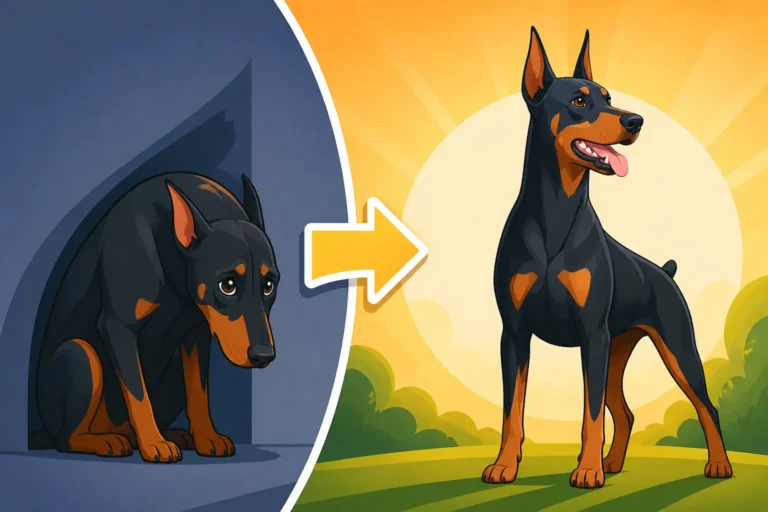
Bringing an adult Doberman into your home from a rescue organization is an incredibly generous act, but let's be honest, it often comes with a unique set of challenges. You might find yourself with a stunning dog who is sweet as pie one moment and then completely bewildered by a simple request the next, or worse, reacting to something you can't even perceive. This guide is here to walk you through the practical steps and empathetic understanding needed to successfully retrain and integrate your rescue Doberman, helping both of you build a strong, trusting bond.
Understanding Your Rescue Doberman's Past (Or Lack Thereof)
One of the biggest hurdles when you open your heart and home to an adult Doberman from a rescue is the sheer mystery surrounding their past. Sometimes, you'll get a detailed history, which is a blessing. Other times, you're looking at a big, beautiful question mark, and that can feel incredibly daunting.
The Blank Slate vs. Known History
Imagine you bring home a Doberman, let's call him "Titan," who was found as a stray. The rescue organization might tell you he's estimated to be three years old, sweet with people, but reactive to other dogs. That's it. You have no idea if he was house-trained, if he ever had boundaries, if he experienced trauma, or if he was simply left to fend for himself. This "blank slate" can be both frustrating and liberating. It's frustrating because you can't pinpoint the why behind certain behaviors, making it harder to address. It's liberating because you get to write his new story, building positive associations from scratch without undoing deeply ingrained bad habits you know nothing about.
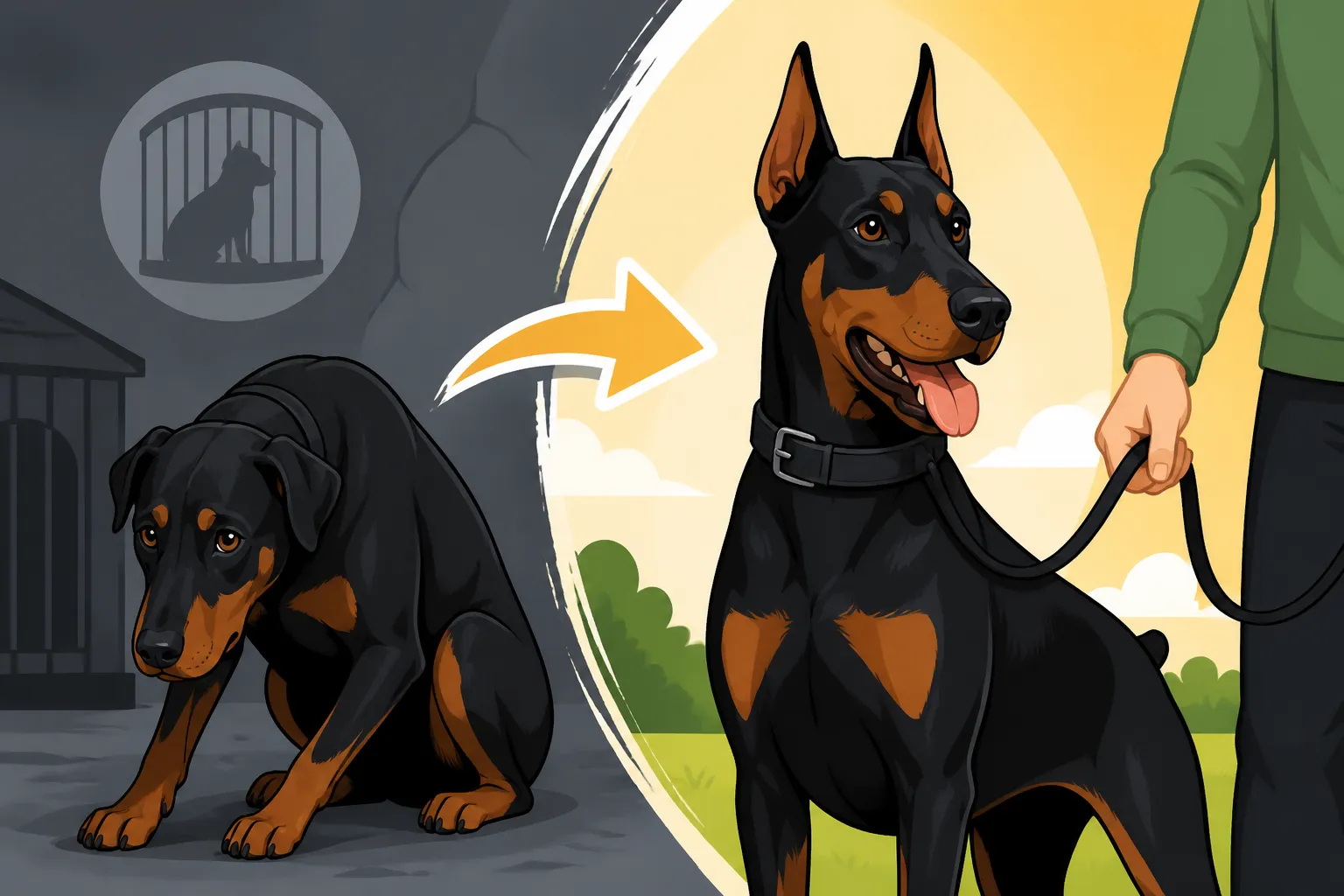
On the flip side, sometimes you get a dog with a known history – perhaps surrendered because their previous owner couldn't handle their energy, or because they developed fear aggression. While knowing the history helps you anticipate issues, it also means you're often dealing with deeply established patterns that take immense patience and consistent effort to reframe. For example, if you know your Doberman was kept tied up in a yard for years, their discomfort with enclosed spaces or even just being on a leash for extended periods suddenly makes a lot more sense. However, this knowledge also highlights the deep-seated fear you'll need to overcome. In either scenario, approaching your new Doberman with an open mind, boundless patience, and a detective's keen eye for subtle cues is your best strategy. They communicate so much through their body language, if only we learn to read it. What a Doberman Yawn Actually Means is a great resource for understanding some of these subtle signals.
Common Issues in Rescued Adult Dobermans
Adult Dobermans in rescue often come with a baggage claim that includes a variety of behavioral quirks and challenges. It’s not their fault, of course, but it certainly lands in your lap to help them overcome it. Many Dobermans end up in rescue due to their intense energy and intelligence, which can be overwhelming for unprepared owners. If these traits aren't channeled properly, they can manifest as destructive chewing, excessive barking, or even neurotic behaviors born out of boredom and frustration.
You might encounter a Doberman who exhibits severe separation anxiety, pacing and crying the moment you leave the room, let alone the house. This is heartbreaking to witness and incredibly disruptive to your daily life. Others might have developed resource guarding, fiercely protecting their food bowl, a favorite toy, or even you from other family members or pets. This can be a scary behavior to manage, especially in a powerful breed like a Doberman. A Doberman That Reacts to Every Dog It Sees is another common issue, stemming from poor socialization or negative experiences, making walks a constant battle. Then there's the possibility of fear-based aggression towards strangers, certain sounds, or even specific objects, which can make introducing guests or taking them to new environments a high-stress event. Perhaps your Doberman wasn't properly house-trained or had accidents due to neglect, meaning you're back to basics with potty training. It's a lot to take on, and it's perfectly normal to feel overwhelmed or frustrated by these challenges. Just remember, these behaviors are often a cry for help, a dog trying to cope with a world they don't understand or feel safe in. They aren't doing it to spite you.
Building Trust and a New Foundation
Retraining an adult Doberman, especially one with a murky past, isn't about breaking their spirit; it's about building a solid foundation of trust, predictability, and positive experiences. This is where you become their anchor in a confusing new world.
Establishing a Predictable Routine
For a Doberman who might have experienced chaos, neglect, or inconsistency, a predictable daily routine is like a warm, comforting blanket. It reduces anxiety because they learn what to expect, when to expect it, and what's expected of them. This isn't just about feeding times; it's about everything. Wake-up times, potty breaks, meal times, play sessions, training sessions, quiet time, and bedtime should all happen around the same schedule every single day.
Imagine your Doberman, newly arrived, unsure of where they belong or what the rules are. If every day is different, they'll constantly be on edge, trying to anticipate what's next. But if they learn that after their morning potty break, they get breakfast, then a short training session, then a nap in their crate, they start to relax into the rhythm of your home. This predictability builds confidence and allows them to conserve mental energy, rather than constantly scanning for threats or surprises. It’s also incredibly helpful for house-training, as regular potty breaks become ingrained. Toilet Training a Doberman Puppy in Two Weeks principles can actually apply surprisingly well to an adult needing a refresher, focusing on consistency and reward. Keep it simple, keep it consistent, and celebrate every successful step, no matter how small.
Positive Reinforcement and Relationship Building
When dealing with a rescue Doberman, especially one who may have been harshly treated or misunderstood in the past, positive reinforcement is not just a training method—it's the cornerstone of rebuilding trust. Dobermans are incredibly intelligent and sensitive; they don't respond well to heavy-handed corrections or punishment. Such methods often shut them down, making them fearful, or worse, lead to aggression as they try to protect themselves.
Instead, focus on rewarding the behaviors you want to see. Did your Doberman walk nicely on the leash for a few steps? "Yes! Good dog!" followed by a high-value treat. Did they settle quietly in their crate? "Good settle!" and a gentle head scratch. You want to become the source of all good things in their life: delicious treats, exciting toys, enthusiastic praise, and comforting affection. This creates a positive association with you and with learning, making them eager to engage and please. The BAXTER & Bella online puppy training program, while geared towards puppies, offers fantastic positive reinforcement principles that can be adapted for adult rescue dogs. Their focus on relationship building and clear communication is invaluable. You'll find a wide array of excellent training treats, durable chew toys, and comfortable harnesses (for those leash walks) on Amazon that can aid in your positive reinforcement efforts. Building this relationship is a marathon, not a sprint. Rebuilding Trust With a Harshly Handled Doberman is a profoundly important concept to embrace if you suspect your Doberman has experienced a difficult past.
Creating a Safe Space
Every rescue Doberman needs a designated safe space in your home, a place where they can retreat and feel secure, unbothered by the comings and goings of the household. This is particularly crucial for dogs who might be overwhelmed by their new environment, have anxiety, or simply need a quiet spot to decompress. A crate is often the ideal solution, but it must be introduced and utilized in a positive manner.
Don't just shove your Doberman into a crate and expect them to love it. Instead, make it a den. Drape a blanket over it to make it feel more enclosed, place a soft, comfortable bed inside, and offer high-value chew toys or treats only when they are in their crate. Feed meals in the crate. Never use the crate as punishment; it should always be a place of comfort and calm. If a crate isn't feasible, a dedicated room or a cozy dog bed tucked away in a quiet corner can serve a similar purpose. The goal is for your Doberman to associate this space with safety, relaxation, and positive experiences. This haven will be invaluable during times of stress, when guests are over, or when they just need to get away from the hustle and bustle. It teaches them to self-soothe and provides them with a sense of control in their new world. For practical tips, consider Getting a Doberman to Rest in a Crate.
Tackling Specific Behavioral Challenges
Once you've established trust and routine, you can begin to systematically address the specific behavioral challenges your rescue Doberman might exhibit. Remember, patience and consistency are your greatest allies here.
House Training an Adult Doberman
It might seem wild to house train an adult dog, but for many rescues, it's a necessary step. Perhaps they were never properly trained, or their previous living situation didn't prioritize it. The key is to approach it as if you have a brand-new puppy, setting them up for success from day one.
Start by taking your Doberman out frequently: first thing in the morning, last thing at night, after every meal, after every nap, and periodically throughout the day. Take them to the exact same spot each time, say your chosen potty cue ("Go potty!"), and wait patiently. The moment they eliminate, praise them profusely and give a high-value treat. Make it the best thing that's ever happened. If they don't go, bring them back inside and try again in 10-15 minutes. Supervise them indoors like a hawk. If you can't actively supervise (e.g., you need to cook dinner), confine them to their safe space, like their crate, for a short period. Any accidents indoors should be cleaned thoroughly with an enzymatic cleaner to remove all scent, preventing future marking. Never punish them for accidents; they won't understand why, and it will only damage your trust. If they've had a history of stress-related urination, consider talking to your vet, but for most, a consistent routine and positive reinforcement will eventually lead to a clean home.
| Behavior | Initial Approach Strategy |
|---|---|
| Indoor Accidents | Establish strict potty schedule; reward outdoor success; supervise indoors or crate. |
| Leash Pulling/Reactivity | Use appropriate gear (e.g., front-clip harness); reward loose-leash walking; avoid triggers where possible; engage in desensitization. |
| Resource Guarding | Management (e.g., feed alone, put away high-value items); controlled counter-conditioning (trading up). Professional help advised. |
| Separation Anxiety | Gradual increase in alone time; make departures low-key; enrichment; consider professional behaviorist. |
| Fear of Strangers | Controlled, positive introductions; create distance; reward calm behavior; never force interaction. |
| Destructive Chewing | Provide appropriate chew toys; ensure adequate exercise and mental stimulation; manage access to forbidden items. |
Leash Manners and Reactivity
Walking an eighty-pound Doberman who pulls like a freight train or barks frantically at every passing dog can be incredibly frustrating and even embarrassing. It’s not just a nuisance; it’s a safety issue. Addressing leash manners and reactivity requires a multi-pronged approach.
First, let's talk equipment. A flat collar is often not enough to control a strong Doberman, and while prong collars might offer quick "control," they can be detrimental to trust and exacerbate reactivity if not used expertly and sparingly. A front-clip harness can be an excellent tool, as it redirects their pulling power back towards you, making it physically harder for them to drag you along. Brands like Ruffwear or similar durable options available on Amazon are often good choices. The key is to teach them that walking on a loose leash earns them rewards. Start in a quiet area with minimal distractions. Every time the leash is loose, mark the behavior with a "Yes!" and a treat. If they pull, stop dead in your tracks. Don't move until the leash loosens. This teaches them that pulling gets them nowhere.
For reactivity, whether it's barking at other dogs, people, or cars, the approach is often desensitization and counter-conditioning. This means exposing your Doberman to their triggers at a distance where they notice them but don't react. The moment they see the trigger and remain calm, mark and reward. Slowly, over weeks and months, you can gradually decrease the distance. The goal is to change their emotional response from fear/frustration to a more neutral or even positive one. This process often benefits immensely from the guidance of a certified professional dog trainer who has experience with powerful, reactive breeds. Don't be afraid to seek this help; it's an investment in your peace of mind and your Doberman's well-being. Harnesses That Hold a Strong Doberman provides more specific recommendations for sturdy gear.
Managing Resource Guarding and Anxiety
Resource guarding, where a Doberman protects items like food, toys, or even their people, is a serious behavior rooted in insecurity or a past experience of deprivation. Anxiety often fuels these behaviors. The primary goal here is management and building confidence, often requiring professional intervention.
First, identify what they are guarding. If it's food, always feed them in a quiet, undisturbed area, perhaps their crate, and leave them alone while they eat. If it's toys, rotate toys frequently and always trade up: offer a higher-value treat for a toy they're guarding, rather than trying to snatch it away. Never challenge a guarding dog directly; this can escalate the situation dramatically. Instead, focus on building positive associations. For example, if they guard their bed, walk by and toss a high-value treat onto it as you pass, showing that your presence near their "resource" brings good things, rather than taking them away.
Anxiety can manifest in many ways – pacing, excessive licking, destructive behavior, or even aggression. Just like with resource guarding, understanding the root cause is crucial. Is it separation anxiety when you leave? Fear of certain sounds? A general uneasiness in new situations? For separation anxiety, gradually building up alone time, making departures and arrivals calm and undramatic, and providing enriching activities when you're gone can help. Kongs stuffed with frozen treats (which you can easily find on Amazon) can be excellent for this. For generalized anxiety, a predictable routine (as discussed earlier) is paramount. In many cases, especially with more severe anxiety or guarding, consulting a veterinary behaviorist is highly recommended. They can provide tailored behavior modification plans and, if necessary, discuss medication to help your Doberman cope while you work through the underlying issues. Medication for a Doberman With Separation Distress can sometimes be a lifeline for these dogs, allowing them to relax enough to learn.
Ongoing Training and Integration into Family Life
Retraining an adult Doberman from a rescue isn't a one-and-done process. It's an ongoing journey of learning, reinforcing, and deepening your bond. Think of it as continuously adding layers to your relationship, always striving for more understanding and harmony.
Continuing Basic Obedience
Just because your Doberman is an adult doesn't mean their learning journey is over. In fact, continuing with basic obedience cues is vital for mental stimulation and reinforces the communication between you two. Your Doberman might already know "sit" or "stay," but practicing these cues in different environments, with varying distractions, solidifies their understanding and builds their confidence.
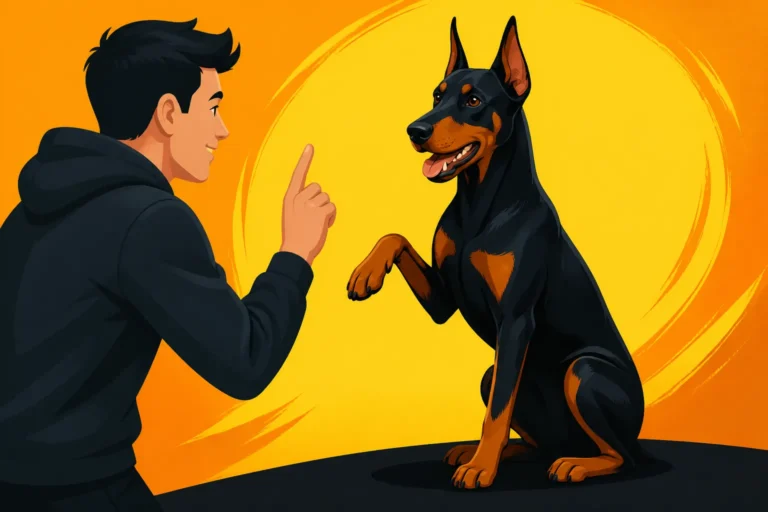
Think beyond the basic commands. Dobermans thrive on having a job, and mental exercise can be just as tiring as physical exercise, if not more so. Teach them new tricks – "paw," "roll over," "spin" – using positive reinforcement. Engage them in puzzle toys (again, Amazon has a great selection) that make them think to get their treats. Nose work, even simple hide-and-seek games with treats around the house, can tap into their natural instincts and provide immense satisfaction. Regular, short training sessions, 5-10 minutes a few times a day, are more effective than one long, tedious session. These consistent interactions keep their minds engaged, prevent boredom (a common cause of unwanted behaviors), and strengthen your bond. Puzzle Work That Actually Tires a Doberman highlights how important mental stimulation is for this intelligent breed.
Socialization and Exposure
Socialization isn't just for puppies; it's a lifelong process, especially for a rescue Doberman who might have missed out on crucial early experiences or developed negative associations. However, "socialization" for an adult rescue is about quality, not quantity, and it needs to be managed carefully to avoid overwhelming your dog or creating new negative experiences.
Instead of throwing your Doberman into a crowded dog park, focus on controlled, positive exposures. If they are reactive to other dogs, start with parallel walks with a calm, known dog and owner, maintaining a comfortable distance. The goal is for your Doberman to observe calmly, not necessarily to interact. Reward any calm behavior. Introduce new people one at a time, ensuring they understand how to approach your Doberman respectfully – no looming, no reaching over the head, perhaps offering a treat gently. Going to different, quiet locations (a park early in the morning, an empty store that allows dogs) allows them to experience new sights, sounds, and smells without high-pressure interactions. The aim is to build positive associations with new experiences and demonstrate to your Doberman that the world isn't such a scary or threatening place after all. Remember, you are your Doberman's advocate; it's your job to protect them from situations that might trigger a fearful or aggressive response. Exposing a Doberman Puppy to Strangers offers principles that can be adapted, focusing on gentle, positive introductions for your adult rescue.
Patience, Persistence, and Professional Help
Let's be real: retraining an adult Doberman from a rescue is not for the faint of heart. There will be days when you feel like you've made no progress, days when old habits resurface, and days when you question if you're doing anything right. This is normal. It's a marathon, not a sprint, and there's no magic bullet or quick fix.
Your Doberman has a history, and it takes time to unravel that history and build new, positive patterns. Patience is your most valuable virtue. Celebrate small victories: a walk without pulling, a calm greeting with a stranger, a quiet evening spent by your side. These are huge steps! Persistence is equally critical. Inconsistency is the enemy of progress; every family member needs to be on the same page with commands, rules, and rewards. If you allow your Doberman to jump on guests one day but scold them for it the next, they'll become confused and less likely to learn.
And please, if you find yourself struggling, don't hesitate to seek professional help. A certified professional dog trainer, especially one who has experience with Dobermans and understands positive reinforcement, can be an invaluable resource. For more complex behavioral issues like severe aggression or separation anxiety, a veterinary behaviorist (a DVM with specialized training in behavior) can provide comprehensive diagnoses and treatment plans, including medication if appropriate. There is absolutely no shame in asking for help; it's a sign of a responsible and loving owner dedicated to their dog's well-being. Sometimes, even the most experienced owners benefit from an outside perspective to pinpoint issues and guide them through challenging behaviors. Finding a Trainer Who Has Worked With Dobermans is essential to ensuring you get the right kind of support.
Disclaimer
This article is for general informational purposes only and does not constitute professional advice. Laws, prices and regulations vary by location and change over time. Consult a qualified professional for guidance on your specific situation.