Building a Doberman’s Alone Time From Minutes
One of the most common worries I hear from Doberman owners, new and seasoned alike, is about how intensely their dogs bond with them. It’s lovely to feel so loved and cherished, but it can quickly turn into a nightmare if your Doberman struggles to be alone. This guide is all about tackling that challenge head-on, starting with baby steps to help your Doberman learn to cope – and even thrive – when you can’t be by their side.
Understanding the Doberman's Need for Company
It's easy to feel guilty when your Doberman whines or paces the moment you stand up to leave the room. You might wonder if you've done something wrong, or if your dog is just unusually clingy. The truth is, Dobermans are inherently wired to be close to their people, and understanding this breed trait is the first step toward helping them adjust.
The "Velcro Dog" Phenomenon
The nickname "Velcro Dog" wasn't given to Dobermans by accident. These intelligent, loyal, and often sensitive dogs were originally bred for personal protection and companionship, a role that required them to be constantly aware of and connected to their human handler. They thrive on interaction and often see themselves as an extension of their family, desiring to be involved in every aspect of your life, from cooking dinner to binge-watching TV. This isn't just a quirky habit; it’s deeply ingrained in their genetic makeup and breed purpose. They are truly devoted creatures, and that devotion manifests as a strong desire for proximity. This innate need for closeness means that being left alone can feel unnatural and even threatening to them, triggering a natural instinct to seek out their pack.
Many owners experience their Doberman leaning on them, following them from room to room, or even trying to squeeze into the bathroom with them. While this can be endearing, it highlights their profound need for presence and connection. It’s this very characteristic that makes them incredible guardians and companions, but it also means that the concept of "alone time" is often a foreign and sometimes frightening one for them to grasp initially. Understanding Where the Velcro Doberman Nickname Comes From helps us appreciate this inherent trait rather than seeing it as a flaw.
Differentiating Between Clinginess and Anxiety
It’s crucial for us as Doberman parents to learn the difference between a dog who simply loves being with us and one who is genuinely distressed when left alone. A clingy Doberman might follow you around, sit on your feet, or whine softly if you close a door between you. They might even try to nudge your hand for attention or push their head into your lap. This is typically just an expression of their strong bond and desire for connection. It’s often easily managed by teaching them to settle on a mat or bed nearby, or simply by giving them a job to do.
However, separation anxiety or distress is a whole different ballgame. This goes beyond mere clinginess and manifests as a genuine panic response when left alone. Signs can include destructive chewing (often around exit points like doors or windows), excessive barking, howling or crying, inappropriate urination or defecation (even if house-trained), drooling, panting, pacing, or even self-harm attempts. These behaviors aren't about being "naughty"; they are outward expressions of internal terror. Imagine being absolutely terrified and alone – that's what a Doberman with severe separation anxiety might be experiencing. It’s heartbreaking to witness, and it’s why addressing it with patience and understanding is so vital.
Here's a quick comparison to help you tell the difference:
| Behavior Trait | Simple Clinginess | Separation Anxiety/Distress |
|---|---|---|
| Vocalizations | Soft whines, sighs, quiet nudges | Excessive barking, howling, frantic crying |
| Destructive Behavior | Mild chewing of personal items (not sustained) | Chewing walls, doors, crates; attempts to escape |
| Potty Habits | Rarely, if ever, accidents when left alone | Urinating/defecating even if recently relieved, indoor only |
| Physical Manifestations | Relaxed body language, seeks proximity | Pacing, panting, drooling, trembling, frantic attempts to escape |
| Reactions to Departure | May watch you leave, settle after a few minutes | Immediate panic, hyper-vigilance to departure cues |
| Post-Departure | Settles relatively quickly | Ongoing distress, can last entire absence |
Why Early Intervention is Key
You might think, "Oh, my Doberman puppy is just being cute following me around." While it is undeniably adorable, it’s also the perfect window for early intervention. Addressing potential separation issues, or simply building a healthy sense of independence, when your Doberman is a puppy or a young adult is exponentially easier than trying to unravel deeply ingrained panic behaviors in an older dog. Puppies are like sponges, constantly learning about their world and how to navigate it. If you establish positive alone time experiences from the get-go, you're laying a strong foundation for a well-adjusted adult dog.
Think of it like teaching a child to ride a bike. It's much simpler to teach them when they're young and adaptable, starting with training wheels, than trying to get an adult who's never ridden to hop on and go. For Dobermans, allowing constant proximity without any breaks can inadvertently teach them that your presence is essential for their safety and comfort. This can make future absences truly terrifying for them. By starting early, even with just a few minutes of alone time, you're teaching them a vital life skill: that they are safe, loved, and capable of being content even when you're not right there. This proactive approach can save both you and your Doberman a world of stress and heartache down the line.
Setting the Stage for Success: Preparing Your Doberman for Alone Time
Before you even think about stepping out the door for five minutes, there's some groundwork to lay. Preparation is crucial, especially with a sensitive and intelligent breed like the Doberman. We want to set them up to win, not to fail and become more anxious.
Creating a Safe and Positive "Alone Zone"
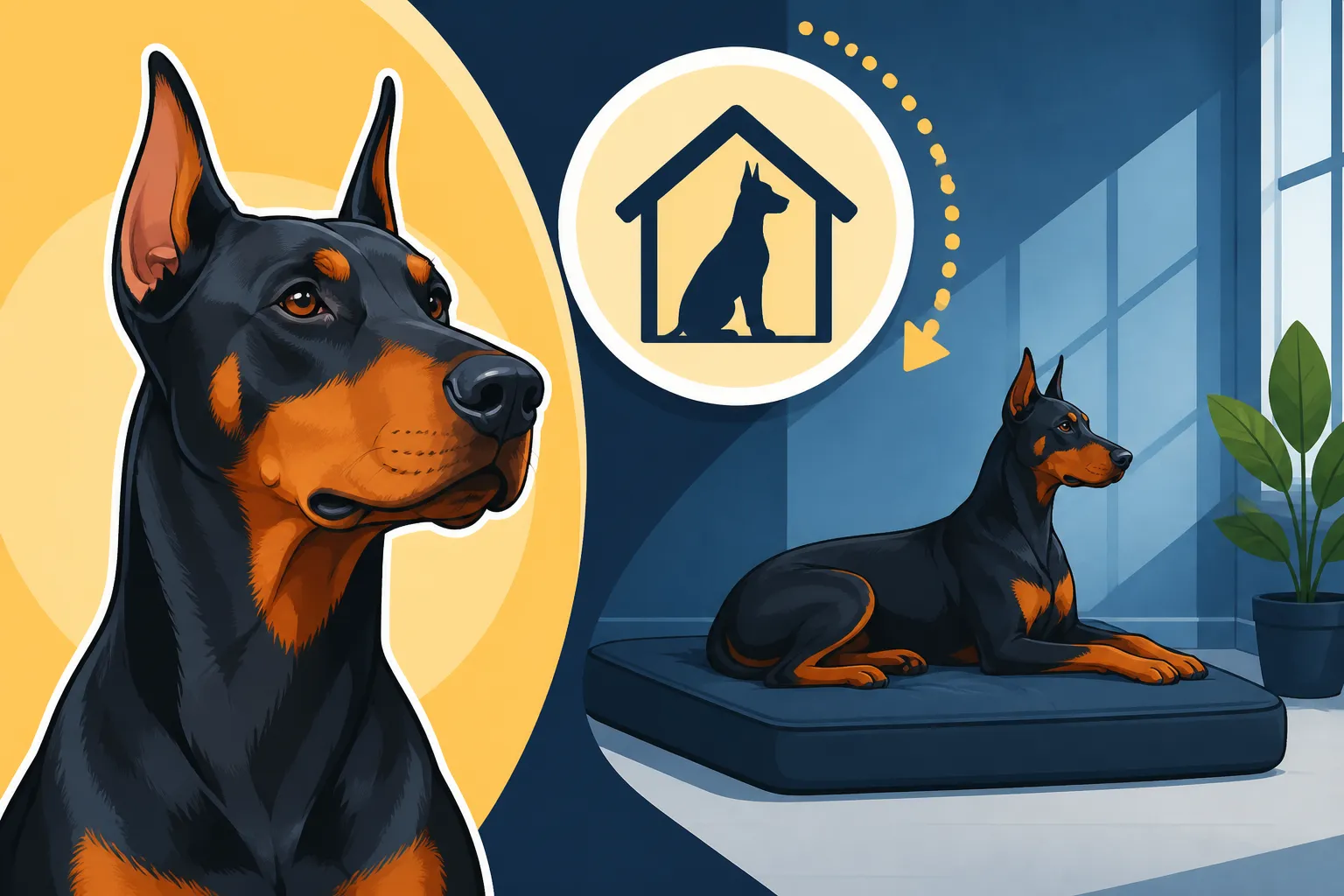
The first thing your Doberman needs is a designated space where they feel safe, secure, and comfortable when you're not around. For many Dobermans, this means a crate. A crate, when introduced correctly, becomes their den – a personal sanctuary where they can relax without feeling exposed or overwhelmed. It's not a punishment; it's their safe room. Make sure the crate is appropriately sized, allowing them to stand, turn around, and lie down comfortably. Crate Sizing for a Doberman at Full Height is important to get right, as an overly small crate can cause anxiety rather than relieve it.
To make this "alone zone" truly positive, always associate it with good things. Feed them meals in the crate, give them special long-lasting chews or puzzle toys only when they're in the crate, and make sure it’s a cozy spot with soft bedding. Some Dobermans prefer a more open space, like a gated-off room or a secure playpen. The key is consistency and positive reinforcement. Never use this space for punishment. The goal is for your Doberman to view their alone zone as a predictable, enjoyable place where good things happen, rather than a place of confinement or abandonment. You can even cover the crate with a blanket to make it feel more den-like and reduce visual stimuli that might trigger barking.
The Importance of Physical and Mental Exercise
A tired Doberman is a much calmer Doberman, and this holds especially true for preparing them for alone time. Dobermans are high-energy, intelligent working dogs. If they haven't had their physical and mental needs met, they'll have a surplus of energy and a mind brimming with unused processing power, which can easily translate into restless anxiety when left alone. Before any planned alone time, make sure your Doberman has had a good, vigorous walk or run. This isn't just a quick potty break; it should be a solid session of physical exertion that gets their heart rate up.
Beyond physical exercise, mental stimulation is equally, if not more, important for a Doberman. Their keen minds need to be engaged. Training sessions, puzzle toys, scent work, or even a game of "find the treat" can be incredibly tiring for them. A dog whose brain has been worked will often settle down much more readily. Consider a session of Puzzle Work That Actually Tires a Doberman right before you need to leave. This dual approach of physical and mental exhaustion significantly increases their chances of relaxing and sleeping through your absence, rather than pacing and fretting.
Establishing a Predictable Routine
Dobermans thrive on routine. They are creatures of habit and find immense comfort in knowing what to expect. Establishing a predictable routine around your departures and returns can significantly reduce anxiety because it eliminates the element of surprise. If your Doberman knows that after breakfast, a walk, and a puzzle toy, you'll leave for a short period and then return, it becomes less of a shock to their system.
This doesn't mean you need to be rigidly scheduled down to the minute, but having a general flow to your day helps. For example, consistently feeding them at certain times, taking them out for exercise before you leave, and even having a specific departure ritual (that you’ll later desensitize, but we’ll get to that) creates predictability. When their world feels stable and predictable, Dobermans are far more likely to feel secure and capable of handling brief periods of solitude. An unpredictable schedule, conversely, can keep them on edge, constantly anticipating your next move and stressing about when you might leave. A consistent routine helps teach them that your departures are a normal, temporary part of life, not an abandonment.
The Gradual Approach: Incrementally Increasing Alone Time
This is where the real work begins, and it's all about patience. You're teaching your Doberman a new skill, and just like any skill, it takes practice, small wins, and consistent reinforcement. Rushing this process will almost certainly backfire.
Starting with Minutes, Not Hours
The core principle here is to start incredibly small – we're talking seconds, not minutes, initially. Your goal is to leave before your Doberman shows any signs of distress. You want every single departure to be a success, reinforcing the idea that you always come back and that being alone is not scary.
Here's how to do it:
- Prep: Get your Doberman exercised and mentally stimulated. Give them a high-value chew or puzzle toy in their "alone zone."
- Departure: Walk out of sight (e.g., step behind a baby gate, into another room, or out the front door) for just a few seconds.
- Return: Come back in before they start to whine, bark, or show any signs of anxiety. Act calm and casual, as if you just went to the fridge. Don't make a big fuss.
- Repeat: Do this many times a day, gradually increasing the time you're out of sight by just a few seconds at a time. Go from 5 seconds to 10, then 15, then 30.
The key is to always return before the distress begins. If you come back to a whining Doberman, you’ve waited too long, and you’ve just inadvertently taught them that whining brings you back. The next time, shorten the duration. This process requires a lot of repetition and takes serious patience. You might spend days just getting to a minute. Don’t get discouraged; every successful second builds confidence. This is a vital step in helping your Doberman handle being alone, turning what might feel like a frantic ordeal into a calm, predictable experience. Remember, we’re aiming to help them understand How Long a Doberman Copes Alone by gradually stretching their comfort zone.
Desensitizing Departure Cues
Dobermans are smart. They quickly pick up on your routine and develop a finely tuned sense for the subtle cues that signal your impending departure. The jingle of your keys, putting on your shoes, grabbing your purse or wallet, even just standing up or putting on your coat – these can all become triggers for anxiety. Your Doberman learns that these actions predict you leaving, and their stress response ramps up even before you're out the door.
To counter this, you need to desensitize these cues. This means performing these actions randomly throughout the day, without actually leaving. Grab your keys, walk to the door, then put them back down and go sit on the couch. Put on your coat, then take it off and make a cup of coffee. Repeat this frequently and unpredictably. The goal is to break the association between these cues and your departure, making them meaningless signals rather than triggers for panic. When your Doberman no longer reacts with heightened alert or anxiety to the sound of your keys, you’ll know you’re making progress. This step is about dissolving the prelude to anxiety, allowing for a calmer baseline before you even begin your brief absences. Practicing Teaching a Doberman to Wait for Permission for various actions can also help instill a sense of calm and control.
Managing Returns and Avoiding Over-Excitement
The moment you walk back through the door is just as important as your departure. Many owners, out of love and maybe a little guilt, greet their Doberman with an explosion of enthusiastic petting, baby talk, and general over-the-top excitement. While it feels natural, this inadvertently reinforces the idea that your return is the most exciting event ever, which then makes your departure feel like a devastating loss. Your Doberman associates your return with high-energy chaos, which can heighten their anxiety during your absence.
Instead, when you return, aim for a calm, understated reunion. Walk in, put your things down, ignore your Doberman for the first few minutes until they've settled down. Wait until they are no longer jumping, whining, or frantically seeking attention. Once they are calm (even if it's just a moment of quiet sitting or lying down), then you can offer a calm greeting, a gentle pat, and perhaps a quiet "good dog." The message you want to send is: "Your presence is wonderful, but my coming and going is a normal, low-key part of life." This helps flatten the emotional curve associated with your comings and goings, making the entire experience less stressful for your Doberman. This calm approach helps them understand that A Doberman That Cannot Cope When You Go Out will eventually learn that you always return, and it's not a monumental event.
Tools, Training, and Troubleshooting
Even with the most meticulous planning, there will be bumps in the road. Luckily, there are many tools and resources to support you and your Doberman through this process.
Utilizing Enrichment Toys and Long-Lasting Chews
Enrichment toys and durable chews are absolute game-changers when teaching your Doberman to enjoy alone time. They serve a dual purpose: they provide mental stimulation and act as a distraction, redirecting any budding anxiety into a productive, enjoyable activity. When you leave, offering a stuffed Kong, a West Paw Zogoflex toy filled with peanut butter, or a durable chew like a Nylabone or an elk antler can keep your Doberman happily occupied for a significant period.
The trick is to offer these only when you're leaving for alone time. This makes the departure a positive event, as it's associated with a special, high-value treat. For something that really makes your Doberman work, look on Amazon for brands like Kong, LickiMats, or Snuffle Mats. These aren't just idle toys; they tap into your Doberman's natural instincts to forage and chew, helping them self-soothe and burn mental energy. A Doberman engrossed in trying to get every last bit of frozen peanut butter out of a Kong is less likely to be pacing at the door.
Incorporating Training Programs and Resources
Sometimes, tackling alone time issues feels overwhelming, and you might need more structured guidance. This is where dedicated training programs and online resources can be incredibly valuable. Many programs offer step-by-step instructions, video tutorials, and even personalized coaching to help you navigate the nuances of Doberman behavior.
One example is BAXTER & Bella, which offers an online puppy training program that includes guidance on crate training and building alone-time confidence. These types of programs break down complex behaviors into manageable steps, often providing exercises tailored to specific challenges like separation distress. They can teach you positive reinforcement techniques, how to read your Doberman's body language more effectively, and strategies for managing frustrating setbacks. Access to a comprehensive curriculum can equip you with the knowledge and confidence to implement a successful plan, allowing your Doberman to thrive independently. Don't underestimate how much a well-structured plan can help you, even with seemingly simple tasks like getting your Doberman to calmly settle in another room.
When to Seek Professional Help
Despite your best efforts, some Dobermans simply cannot overcome severe separation anxiety on their own. If your Doberman is exhibiting extreme distress – self-harm, frantic escape attempts that cause injury, prolonged incessant barking, or inappropriate urination/defecation every time you leave – it’s a clear sign that you need professional help. This is not a failure on your part; it's recognizing that your dog's anxiety is beyond what standard training can address alone.
A certified professional dog trainer (CPDT) or, ideally, a veterinary behaviorist (DACVB) can provide invaluable assistance. A veterinary behaviorist is a veterinarian with specialized training in animal behavior, who can diagnose underlying medical conditions that might contribute to anxiety and prescribe appropriate medication if necessary. They can create a tailored behavior modification plan that might include counter-conditioning, desensitization, and sometimes, anti-anxiety medication to help your Doberman learn to cope. Medications like Medication for a Doberman With Separation Distress are not a magic bullet but can be a crucial tool to lower your dog's anxiety levels enough for the training to actually take hold. Remember, severe anxiety is a medical issue, and just like any medical issue, it often requires professional diagnosis and treatment for true relief.
Disclaimer
This article is for general informational purposes only and does not constitute professional advice. Laws, prices and regulations vary by location and change over time. Consult a qualified professional for guidance on your specific situation.