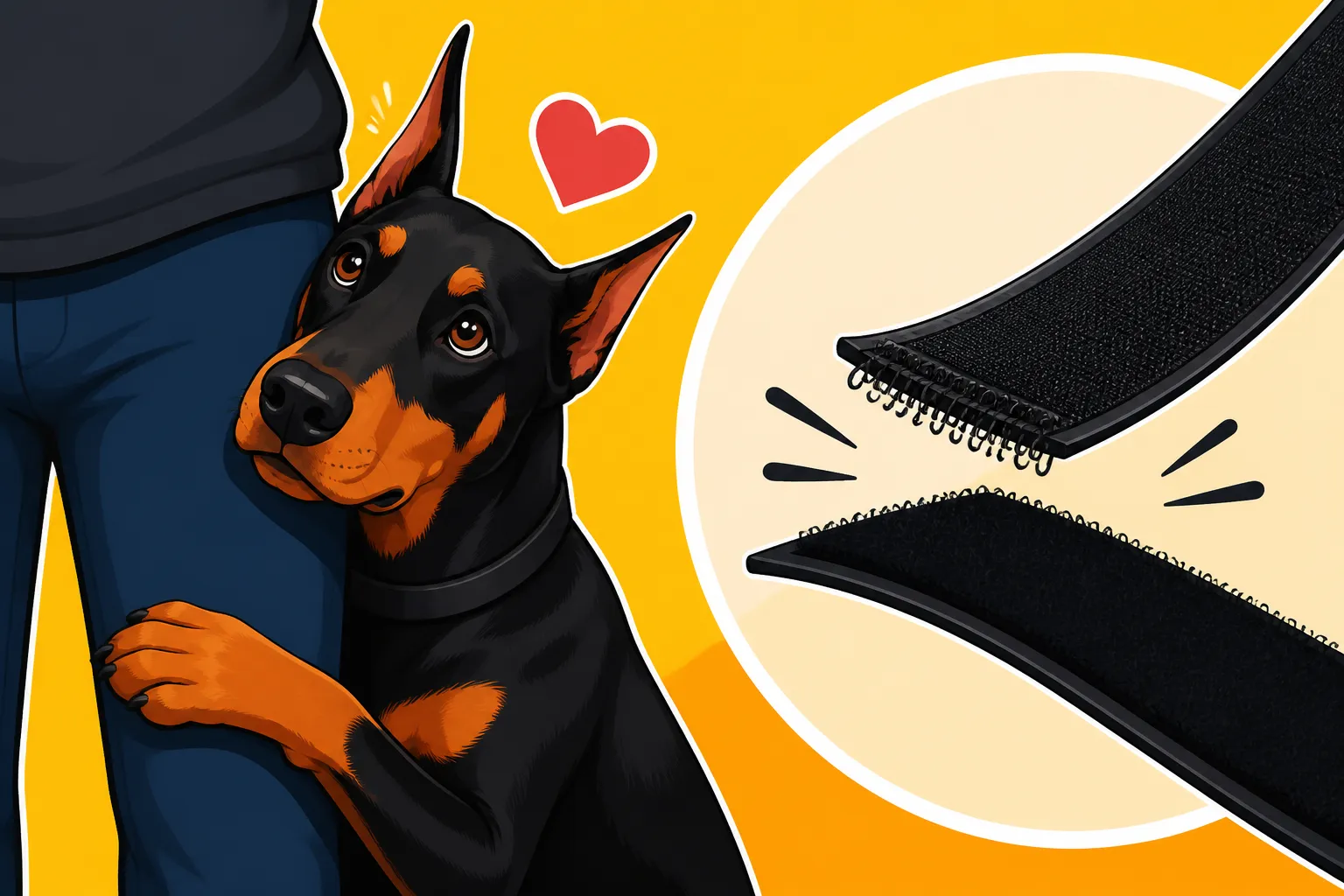
Where the Velcro Doberman Nickname Comes From
It's a common, and often endearing, complaint among Doberman owners: they're known as "Velcro dogs." This isn't just a cute nickname; it’s a deeply ingrained behavioral trait that can lead to some amusing, and occasionally challenging, situations. This comprehensive guide will delve into why Dobermans earn this reputation, what it looks like in daily life, and how to navigate their intense desire to be by your side.
Understanding the Doberman's Innate Clinginess
The Doberman Pinscher was originally bred for personal protection, but a lesser-known aspect of their history is the close bond they formed with their human companions. This isn't a flaw; it's a feature, deeply woven into their genetic tapestry and intended purpose.
A History of Close Partnership
Imagine the origins of the Doberman: a tax collector named Karl Friedrich Louis Dobermann, who needed a steadfast companion to accompany him on his rounds, protecting him from danger while also being a loyal, intelligent presence. He didn't just need a guard dog; he needed a shadow, a partner who was constantly aware of his movements and intentions. The breeds he chose, including early German Shepherds and Rottweilers, contributed to a dog that was not only formidable but also intensely focused on its primary handler. This history means your Doberman's desire to be near you isn't a quirk; it’s a callback to their very creation. They were designed to be extensions of their owner, always vigilant, always present.
This historical context helps explain why modern Dobermans often struggle when left alone for extended periods. Their ancestors were rarely solitary; their job was intrinsically linked to human companionship and protection. Understanding this can help owners cultivate patience and empathy when their Doberman follows them from room to room. It’s not just a habit; it’s a deeply embedded instinct.
The Guarding Instinct at Home
While many people think of Dobermans as external guard dogs, their protective nature extends profoundly to their home environment and, crucially, to their primary family. This translates into a desire to keep you within sight and often within touch. They want to be aware of your location and who is approaching you, whether it's a delivery person at the front door or another family member coming into the kitchen. This isn't necessarily aggression, but rather a constant state of readiness and a deep sense of responsibility.
This internal alarm system means your Doberman constantly monitors your well-being. If you get up to grab a drink, they might follow, not just for affection, but to ensure you're safe on your journey to the refrigerator and back. This protective impulse, while comforting, is a significant contributor to the "Velcro" behavior. They are quite literally guarding you, even from perceived non-threats, simply by staying close. This is why you might notice your Doberman positioning themselves in doorways or at the foot of your bed, maintaining a strategic vantage point.
Sensitive Souls Beneath the Tough Exterior
Despite their formidable appearance, Dobermans are surprisingly sensitive dogs. They are highly attuned to their owner's emotions and body language, often mirroring their human's moods. This sensitivity, combined with their intelligence, makes them seek reassurance and connection. They thrive on interaction and can become anxious if they feel disconnected or unsure of their place within the "pack."
This emotional depth contributes significantly to their clinginess. A Doberman often seeks physical contact not just for warmth or affection, but for comfort and a sense of security. They pick up on subtle cues, and if you're feeling stressed or upset, your Doberman might become even more insistent on being close, offering their silent, reassuring presence. It’s part of what makes them such devoted companions, but it also means they don't easily tolerate being ignored or feeling out of the loop. If you’re wondering Why a Clever Doberman Is Harder to Train, this sensitivity also plays a role, as they can be easily shut down by harsh methods.
The Manifestations of "Velcro" Behavior
So, what does living with a "Velcro Doberman" actually look like on a day-to-day basis? It's more than just a dog who enjoys a cuddle; it's a dog whose entire existence seems to revolve around your proximity.
The Constant Shadow
One of the most defining characteristics of a Velcro Doberman is their uncanny ability to be your constant shadow. You get up from the couch, and they're up. You walk to the kitchen, they're right behind you, often bumping into your legs as you turn. Need to use the bathroom? Don't expect privacy; they'll likely be waiting just outside the door, or perhaps even nudging it open to join you. This constant accompaniment can be both adorable and a tripping hazard, depending on the moment!
They seem to anticipate your next move. If you pick up your keys, they're instantly alert, wondering if they're coming with you. If you head towards the stairs, they’re often already ascending or descending just ahead of you. This isn't just a matter of following; it's an ingrained vigilance. My own Doberman, for instance, knows the sound of my specific coffee mug being picked up from the drainer and will immediately appear in the kitchen, just in case I might need a furry assistant (or perhaps, a dropped crumb). It’s a full-time job for them, being your shadow, and they take it very seriously. It’s truly Living With a Doberman That Follows You Everywhere.
Physical Closeness and Leaning
Beyond simply following, Dobermans have a distinctive way of asserting their presence through physical contact. It’s not uncommon for a Doberman to lean heavily against your legs while you're standing, or to nudge their head under your arm for a perpetual petting session. When you sit down, they often try to occupy the same piece of furniture, even if it means perching precariously on the edge of the sofa with their head on your lap. This physical need for closeness is incredibly strong.
If you're sitting on the floor, expect them to be practically in your lap. If you're lying in bed, they might try to wedge themselves under the covers, or at the very least, occupy a significant portion of the mattress, ensuring skin-to-skin contact. This isn't just polite lounging; it's an active seeking of connection and reassurance through touch. Many owners recognize A Doberman That Leans on You Constantly as a classic Doberman trait, a warm, heavy assertion of their presence and affection.
The Doorway Defender
The doorway defender behavior is a direct manifestation of their guarding instinct combined with their need for proximity. A Doberman will often position themselves in doorways, whether it's the entrance to a room you're in or the main front door. This isn't just about blocking your path; it's about controlling access and monitoring activity. They act as a living barrier, observing who comes and goes, and ensuring your safety.
This can be particularly noticeable when guests arrive. Instead of greeting them openly, your Doberman might place themselves between you and the visitor, subtly asserting their role as guardian. Similarly, if you're moving between rooms, they might stand in the threshold, forcing you to step around them. It’s their way of keeping tabs on the flow of traffic in their territory and, more importantly, ensuring you remain protected. You'll often find they're guarding the exit when you're preparing to leave, making it clear they'd prefer you didn't go anywhere without them.
Why This Clinginess Can Be Both a Blessing and a Challenge
Living with a Velcro Doberman is a unique experience. While their devotion is one of their most beloved traits, it's essential to recognize that this extreme attachment can present both wonderful joys and significant hurdles in daily life.
The Joy of an Inseparable Companion
There's no denying the profound joy that comes from having a dog so utterly devoted to you. The constant presence, the leaning, the soft nudges—it all translates into an unparalleled sense of companionship. For many Doberman owners, this intense bond is precisely why they choose the breed. You are never truly alone, and their unwavering loyalty can be incredibly comforting, especially during difficult times. This profound connection is a big part of what makes Dobermans so special.
They are intuitive and responsive to your moods, often offering a comforting head nudge when you're feeling down. This deep emotional intelligence means they often act as a sensitive sounding board, always there to listen without judgment. The feeling of being "chosen" by such a powerful and intelligent animal is truly rewarding, fostering a bond that feels almost telepathic at times. This is especially true if Whether a Doberman Bonds to One Person is a concern for you; for many Dobermans, that primary bond is fiercely strong and central to their happiness.
When Clinginess Becomes Anxiety
However, what starts as charming clinginess can, in some cases, escalate into true separation anxiety. A Doberman who cannot cope with being out of your sight for even a few minutes, or who becomes destructive when left alone, is not just being "Velcro" – they are experiencing genuine distress. This isn't a behavior problem as much as it is an anxiety disorder, and it requires a different approach than simply ignoring or punishing the dog.
Signs that clinginess might be turning into anxiety include excessive vocalization (barking, howling, whining) when you leave, destructive chewing of household items (especially around exit points like doors or windows), inappropriate urination or defecation indoors, and attempts to escape their confinement. A Doberman experiencing true separation anxiety is suffering, and it’s a serious issue that needs to be addressed. It's heart-wrenching to witness A Doberman That Cannot Cope When You Go Out, and it highlights the crucial difference between a strong bond and a debilitating fear of being alone.
Impact on Daily Life and Independence
The sheer intensity of a Doberman's need for proximity can, understandably, impact an owner's daily life and personal independence. Simple tasks like showering, cooking, or even just sitting down to read a book can become a joint effort. It can make having guests over a challenge, as your Doberman might feel the need to constantly insert themselves into interactions. Leaving your Doberman alone, even for short errands, can become a source of guilt or anxiety if you know they will be stressed.
Furthermore, if the clinginess is not managed, it can hinder the dog's ability to be a well-adjusted, confident individual. A dog that is too dependent on its owner might lack the resilience to handle new situations or people without immediate reassurance. This can manifest in other behavioral issues, such as fearfulness or reactivity, as they lack the independent coping skills necessary to navigate the world without their human security blanket. It’s important for their overall well-being to ensure they have some sense of self-reliance.
Strategies for Managing the "Velcro" Tendency
While you can't, and probably wouldn't want to, eliminate your Doberman's natural desire for closeness, you can manage it in a way that promotes their independence and confidence, and makes your shared life more harmonious.
Building Independent Play and Confidence
One of the most effective ways to mitigate excessive clinginess is to teach your Doberman that being independent can be rewarding. This starts with encouraging independent play. Provide a variety of engaging toys, especially puzzle toys or durable chew items that can keep them occupied without your direct involvement. Rotate these toys regularly to maintain novelty and interest. Brands available on platforms like Amazon offer a vast selection of interactive feeders and chew toys designed to keep intelligent dogs busy.
Start with short periods of independent play in the same room as you, gradually increasing the distance and duration. Praise them calmly when they engage with a toy on their own, rather than constantly seeking your attention. This helps them build confidence in their own company and discover that their joy isn't solely dependent on your direct interaction. For puppies, early exposure to enrichment activities is crucial for Building a Doberman Puppy That Is Confident, Not Sharp.
Establishing Personal Space Boundaries
While you adore their cuddles, it's vital to teach your Doberman about personal space and when it's appropriate to be close, and when they need to settle on their own. This doesn't mean pushing them away harshly, but rather setting clear, consistent boundaries. Teach a "place" command, directing them to a specific bed or mat where they can relax away from your immediate vicinity. Reward them heavily for staying on their place, even for short periods.
Practice having them settle in a different room while you move about the house. Start with the door open, then gradually close it for increasing durations. This helps them understand that "out of sight" doesn't mean "gone forever." Use a calming tone and reward them for settling. Avoid inadvertently reinforcing clingy behavior by constantly petting or talking to them every time they demand attention. Instead, reward them for moments of calm, independent relaxation. For example, you might practice Teaching a Doberman to Settle in Another Room for short intervals.
Gradual Separation Training and Alone Time
For Dobermans prone to separation anxiety, gradual separation training is non-negotiable. This involves desensitizing them to your departure cues and slowly building up their tolerance for alone time. Start by simply picking up your keys or putting on your shoes without actually leaving. Repeat these actions many times a day without fanfare, so they become less significant. Then, practice leaving for just a minute or two, returning before they become distressed. Gradually increase the duration of your absences.
A crate can be a valuable tool if introduced positively and used correctly. It provides a safe, den-like space where your Doberman can feel secure. Ensure the crate is a comfortable haven, not a punishment. For those who need more structured guidance, online puppy and dog training programs, such as those offered by BAXTER & Bella, can provide step-by-step instructions for separation training, helping owners establish routines and build confidence. Remember, the goal is to teach your Doberman that How Long a Doberman Copes Alone can be managed calmly, and that you always come back.
When to Seek Professional Guidance
While managing normal Doberman clinginess is often achievable with consistent training, there are times when professional intervention is necessary, especially if the behavior is escalating into genuine anxiety or destructive tendencies.
Recognizing Signs of Separation Anxiety
It's crucial to differentiate between a dog who prefers your company and one who suffers from true separation anxiety. If your Doberman exhibits severe distress when left alone, beyond just following you around, it’s a sign that you need to take action. This distress can manifest as destructive chewing, often focused on exit points like doors or windows, indicating an attempt to escape. Excessive barking, howling, or whining that persists for prolonged periods after you leave is another key indicator.
Other symptoms include inappropriate elimination (urination or defecation) even in a house-trained dog, drooling, pacing, or even self-harm through frantic escape attempts that can result in broken nails or bloody paws. If you come home to a home that looks like a war zone, or have neighbors complaining about incessant noise, your Doberman is likely experiencing significant emotional pain. A Doberman that A Doberman That Chews Through the Door is communicating extreme distress, not defiance. These are not behaviors they choose to do; they are panic responses.
Consulting a Doberman-Experienced Trainer
When you suspect your Doberman's clinginess has tipped into anxiety, the first step is often to consult a professional dog trainer, specifically one with experience working with Dobermans and separation-related behaviors. A good trainer can help you identify the root cause of the anxiety, implement a desensitization and counter-conditioning program, and provide strategies tailored to your dog's individual needs. They can also teach you how to properly use tools like crates and enrichment toys (many available through Amazon) to support your Doberman's alone time.
A trainer can observe your Doberman's behavior patterns, help you understand their body language, and guide you through the process of building their confidence and resilience. They can also advise on appropriate exercise and mental stimulation, as a tired Doberman is often a calmer Doberman. Engaging in activities like The Working Sports a Doberman Was Built For can provide an outlet for their intelligence and energy, helping to alleviate underlying anxieties. A professional can make all the difference in achieving a breakthrough. When looking for help, it's invaluable to be Finding a Trainer Who Has Worked With Dobermans.
The Role of Veterinary Behavioral Specialists
In more severe cases of separation anxiety, particularly those that don't respond to training alone, a veterinary behavioral specialist (a veterinarian with advanced training in animal behavior) may be necessary. These specialists can conduct a thorough medical evaluation to rule out any underlying health issues contributing to the behavior. They can also prescribe medication, such as anti-anxiety drugs, to help manage your Doberman's panic levels while you work through behavioral modification protocols.
Medication is typically used as a temporary aid to reduce anxiety to a level where the dog can actually learn and respond to training. It's not a standalone solution but a valuable tool when combined with a comprehensive behavioral plan developed by the specialist and implemented consistently by the owner. They can provide a holistic approach, addressing both the physical and psychological aspects of your Doberman's distress, ensuring they get the best possible chance at a peaceful, independent life.
Healthy Clinginess vs. Anxious Clinginess
It's important to understand the difference between a Doberman who simply enjoys your company and one who is truly suffering from separation anxiety. Here's a quick comparison to help you assess your dog's behavior:
| Trait | Healthy Doberman Clinginess | Anxious Doberman Clinginess |
|---|---|---|
| Following | Follows you between rooms, settles nearby when you stop. | Panics if out of sight, even briefly; tries to break through barriers. |
| Alone Time | Relaxed while you're gone, might nap, waits patiently for return. | Excessive barking/howling, destructive chewing, attempts to escape. |
| Greeting | Happy to see you, wagging tail, calm enthusiasm. | Frantic, uncontrollable excitement, prolonged whining, sometimes submissive urination. |
| Destruction | Chews appropriate toys, no damage to household items. | Destroys doors, window frames, furniture; self-harm during escape attempts. |
| Elimination | House-trained, has no accidents indoors. | Urinates/defecates indoors, even after being outside, typically within minutes of owner leaving. |
| Reassurance | Accepts affection, then settles; enjoys independent play. | Constantly seeks contact, cannot settle, rarely plays independently. |
| Body Language | Relaxed posture, soft eyes, gentle lean. | Pacing, panting, tense muscles, wide "whale eyes," drooling. |
This article is for general informational purposes only and does not constitute professional advice. Laws, prices and regulations vary by location and change over time. Consult a qualified professional for guidance on your specific situation.