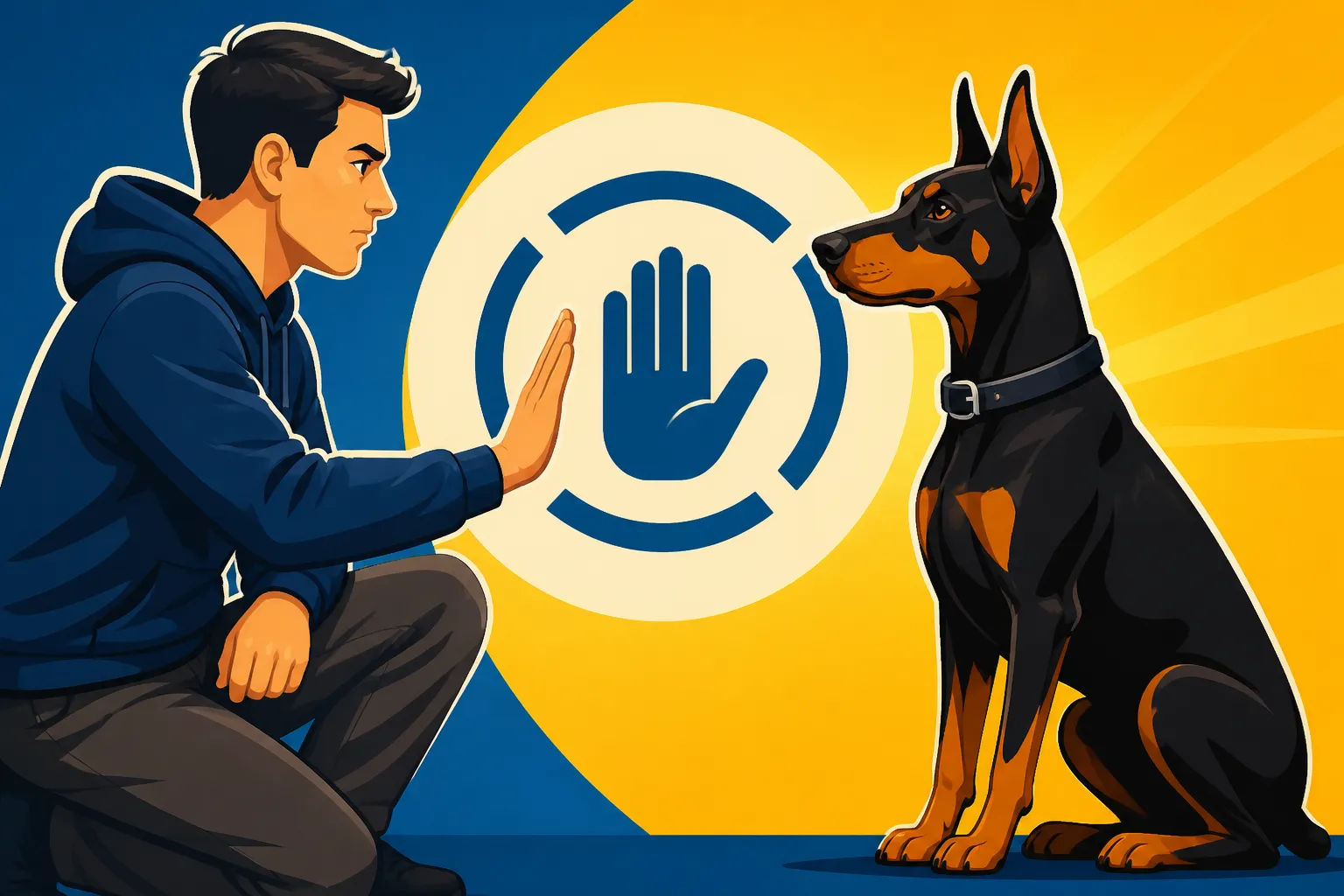
Teaching a Doberman to Wait for Permission
Living with a Doberman often means constantly navigating their boundless energy, sharp intelligence, and sometimes, a tendency to act first and think later. If you've ever had your Doberman burst through a doorway, lunge for their food bowl before you've even put it down, or try to bolt from the car the moment the door opens, you know the frustration—and potential danger—of a dog who hasn't learned to wait. This guide will walk you through the process of teaching your Doberman the invaluable "wait" command, transforming chaotic moments into calm, respectful interactions and reinforcing essential impulse control.
The Core Challenge: Why "Wait" is a Game-Changer for Dobermans
Dobermans are incredible dogs, loyal, athletic, and incredibly smart. But these very traits can make them prone to impulsivity. Their intelligence means they learn quickly, but their drive means they often want to do things now. Teaching a solid "wait" isn't just about good manners; it's a critical safety measure and a powerful tool for shaping their behavior in almost any situation.
Understanding the Doberman's Drive and Impulsivity
Think about your Doberman's natural instincts. They were bred to be vigilant guardians, quick to respond and act. This inherent drive to engage, to protect, or to simply get to the exciting thing – whether it's a squirrel, a new person, or their dinner – is hardwired. While this makes them formidable and capable, it also means they don't naturally default to a patient, waiting state. They see an opportunity, and their instinct is to seize it. Without a strong "wait" command, this can lead to them pushing past you, jumping on guests, or even putting themselves in harm's way. It's not defiance; it's often just their high-energy, proactive nature asserting itself. This breed thrives on having a job, and sometimes, that job is simply to wait. For more on their impressive minds, check out Training a Doberman That Is Smarter Than You Expect.
Safety First: Preventing Accidents with a Solid "Wait"
Imagine trying to unload groceries while your Doberman is trying to squeeze past your legs at the open door, or worse, darting into a busy street the second you open the car. These aren't just inconvenient moments; they're genuinely dangerous situations. A reliable "wait" command creates a crucial pause. It gives you control, allowing you to assess the environment, ensure safety, and give permission for them to proceed. This is especially vital given the Doberman's size and strength; an eighty-pound dog moving impulsively can easily knock over a child or an elderly person, or even pull you off your feet if they decide to bolt. It’s about creating predictable boundaries that keep everyone, including your Doberman, safe. This command is an essential layer of protection, building on Leash Manners for an Eighty-Pound Doberman by teaching them to hold position before any movement.
Building the Foundation: "Wait" in Everyday Scenarios
The key to teaching "wait" is starting small, in low-distraction environments, and making it incredibly clear what you expect. Consistency is your best friend here. We're not asking for a "stay" – which implies a fixed duration and location. "Wait" means "pause what you're doing, hold still, and don't proceed until I give you the release cue."
Mastering the Food Bowl "Wait"
The food bowl is often the easiest and most motivating place to start teaching "wait," because what Doberman isn't motivated by dinner?
- Prepare the Meal, Create the Expectation: Get your Doberman's food ready. While you're doing this, if your Doberman is already bouncing and mugging for food, ask for a "sit" or "down." Don't put the bowl down until they are calm for a few seconds. If they break position, simply stand up, hold the bowl, and wait for them to resettle.
- Introduce the "Wait" Command: Lower the bowl to the floor, but don't let go immediately. As you place it down, say "Wait!" clearly. Keep your hand on the bowl or hover over it. If your Doberman tries to dive in, quickly lift the bowl slightly and say "Ah-ah!" or "No!" in a firm but neutral tone. Reset them to a sit or down. Repeat.
- Short Durations, Quick Release: Once the bowl is on the floor and your Doberman is waiting, even for just a second or two, give your release cue – something distinct like "Okay!" or "Free!" – and let them eat. The goal is success, so start with very short waits.
- Gradually Increase Time and Distance: Over several meals, slowly extend the waiting time. Go from one second to two, then five, then ten. Once they're reliably waiting, start adding a step back. Take one step, then release. Two steps, release. You can eventually walk across the room, return, and release. Remember to keep it positive and rewarding. If they break, go back to the previous successful step.
The Doorway Drill: Politeness at Every Threshold
Doorways are high-traffic, high-excitement areas, making them perfect for practicing impulse control. This isn't just about front doors; it's about any threshold: crates, gates, car doors, even walking out of a room.
- Approach the Door, Demand Calm: Walk with your Doberman towards a door (start with an interior door, then move to exterior ones). As you reach it, ask for a "sit." If they push past you or try to bolt, immediately close the door (or stop your forward movement) and gently block them with your body.
- The "Wait" Cue and Controlled Opening: Once they are sitting calmly, open the door just a crack. Say "Wait!" If they try to push through, immediately close the door again. Wait for them to resettle. Repeat this process, gradually opening the door wider.
- Your Release, Their Permission: Only when the door is fully open and your Doberman is sitting calmly, waiting patiently, do you give your release cue. Step through first, then invite them to follow. This reinforces that you control access, not them. This practice helps build confidence, ensuring they understand boundaries, which can also tie into Building a Doberman Puppy That Is Confident, Not Sharp.
- Consistency is Key: Every single door, every single time. It takes work, but it pays off in safety and polite behavior. You might find resources like BAXTER & Bella's online puppy training courses offer structured approaches to these kinds of foundational commands, ensuring you cover all bases.
Practicing "Wait" with Valued Resources and Toys
Dobermans can be possessive, especially over their favorite toys or chew bones. Teaching them to "wait" before grabbing a toy helps manage this drive and reinforces that you are the one who initiates access to these exciting items.
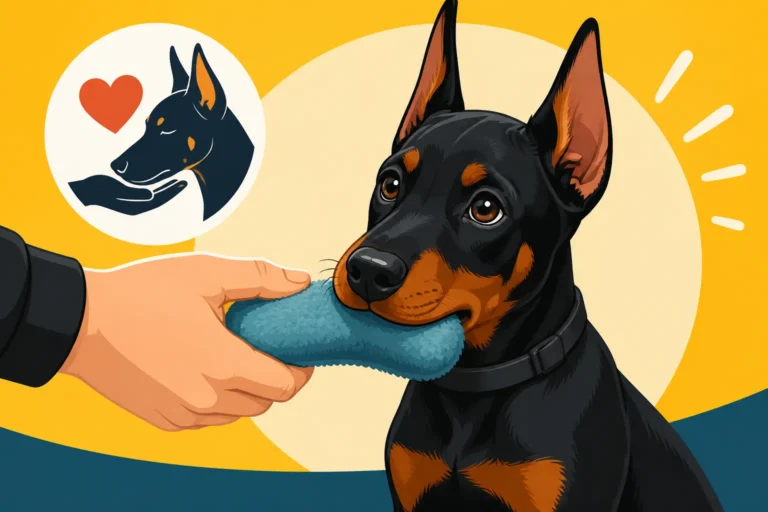
- Present the Toy, Hold the Line: Get a favorite toy. Hold it in your hand and ask your Doberman for a "sit" or "down." Say "Wait!"
- Lower and Release: Slowly lower the toy towards the ground. If your Doberman tries to snatch it, pull it back up and reset. Only when the toy is on the ground and they are waiting, give your release cue and let them have it.
- Fetch with a Twist: During a game of fetch, instead of throwing the ball immediately, make them "wait" for a few seconds after you say the cue, before you launch it. This builds anticipation and impulse control. You can also practice retrieving the toy, asking them to "wait" before you throw it again. This helps with Puzzle Work That Actually Tires a Doberman by adding a mental element to physical play.
- Managing Chew Bones: If your Doberman gets a high-value chew, practice having them "wait" before they take it from your hand. You can even practice taking it away temporarily (using a "drop it" command first), having them "wait" while you hold it, and then giving it back with a "wait" and release. This teaches them that good things come from you, and patience is rewarded.
Here's a quick comparison of common "wait" scenarios:
| Scenario | Initial Position Expected | Cue Location | Release Trigger | Common Pitfall |
|---|---|---|---|---|
| Food Bowl | Sit or Down | Near bowl | Verbal "Okay!" | Lunging before release |
| Doorway | Sit | At threshold | Verbal "Okay!", handler steps first | Pushing through, bolting |
| Toy/Chew | Sit or Down | Handler's hand/floor | Verbal "Okay!" | Snatching, guarding |
| Car Exit | Sit or Down | Inside car | Verbal "Okay!", handler opens door | Leaping out before door is fully open |
Taking "Wait" to the Real World: Advanced Applications
Once your Doberman has a solid grasp of "wait" in predictable, low-distraction settings, it's time to generalize the command to more complex, real-life situations. This is where the true value of their patience shines.
Calm Car Exits and Entries
For a Doberman, the car often signals adventure – a walk in the park, a visit to the vet, or a trip to grandma's house. This excitement can lead to frantic attempts to jump out or scramble in, which can be unsafe for them and for you.
- Loading Up with Patience: Before they jump into the car, ask your Doberman to "wait" while the car door is open. Guide them to sit or stand patiently by the entrance. If they lunge, gently close the door partially or fully and restart. Once they wait calmly, give your release cue to allow them to enter. This can be particularly useful with a car restraint, which you can find on Amazon, to ensure their safety during the ride itself.
- The Controlled Unload: This is arguably even more critical for safety. With your Doberman in the car, open the door only a crack and immediately say "Wait!" If they try to push out, close the door slightly or put your hand up as a block. Repeat until they hold their position calmly with the door fully open. Only when you've surveyed the area, ensured there are no immediate hazards, and given your verbal release cue, do you allow them to exit. Always have them exit on the side away from traffic, if possible.
- Practice Makes Perfect: Don't just practice this at your destination. Spend a few minutes practicing loading and unloading in your driveway or a quiet parking lot. This desensitizes them to the car door opening and closing without the immediate reward of a walk, reinforcing the "wait" itself as the primary behavior.
Greeting Guests and New People Respectfully
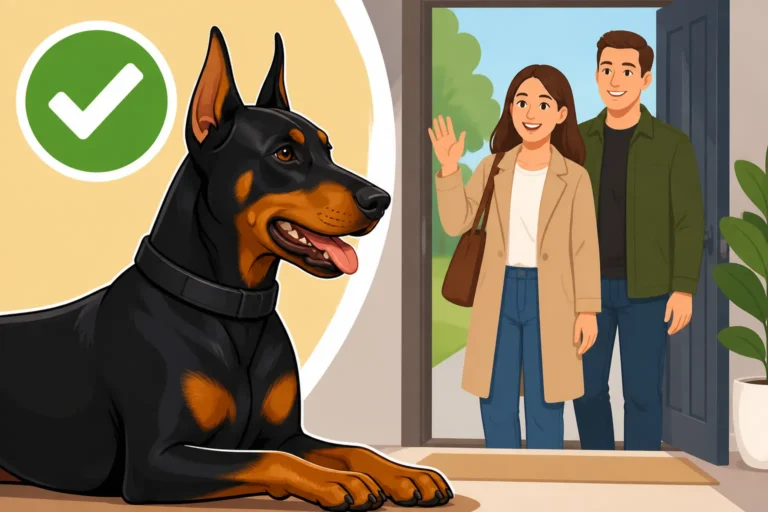
Many Dobermans, while protective, are also enthusiastic about meeting new people, especially if those people are exciting or offer attention. This enthusiasm often manifests as jumping, barking, or pushing past you. A well-trained "wait" can completely change these interactions.
- The Doorbell Drill: Start by having someone ring the doorbell while your Doberman is on a leash. As they react, calmly ask them to "sit" and "wait" a few feet from the door. If they lunge or bark excessively, redirect their attention to you with a treat or a verbal marker, then re-establish the "wait."
- Controlled Entry: When the guest enters, keep your Doberman on a loose leash, holding them in their "wait" position. Instruct your guest to ignore your Doberman initially. Only after your Doberman has held their "wait" calmly for a few seconds, give your release cue, allowing them to greet politely. If jumping occurs, immediately withdraw the privilege, have them "wait" again, and restart the greeting.
- "Go to Your Mat" Integration: For Dobermans who are particularly exuberant or anxious with guests, combine "wait" with a "go to your mat" command. Have them "wait" on their designated mat or bed while guests enter and settle. This teaches them to settle away from the chaos and receive attention when they are calm. Teaching a Doberman to Go to a Mat for Guests dives deeper into this specific skill.
- Consistency with Everyone: Make sure everyone who interacts with your Doberman follows the same rules. If one person allows jumping, it undermines all your hard work. This consistency is vital for a Doberman, who will quickly learn which behaviors work with which people.
Holding a Position Amidst Distractions
The true test of a "wait" command isn't in your quiet living room; it's when there are squirrels, other dogs, or interesting smells nearby. Proofing the command against distractions is an ongoing process.
- Gradual Increase in Distractions: Start by introducing very mild distractions. Perhaps someone walks quietly past your Doberman while they are waiting for their food. Or you drop a non-food item nearby during a doorway wait. Gradually increase the intensity: a squeaky toy, a person walking by further away, then closer.
- Real-World Scenarios: Take your training to public parks or busy sidewalks during quieter times. Ask your Doberman to "wait" before crossing a street, waiting for you to scan for traffic and give the all-clear. Have them "wait" before approaching a friendly stranger or another dog.
- Reward High-Value Waiting: When your Doberman successfully holds a "wait" in the face of a tempting distraction, make sure your reward is fantastic. This could be a particularly tasty treat, a quick game of tug with a favorite toy, or enthusiastic praise. They need to understand that choosing to wait is more rewarding than giving in to impulse. The online training platform BAXTER & Bella emphasizes positive reinforcement in these scenarios, helping you find what truly motivates your Doberman.
- Know Your Doberman's Limits: Don't set your Doberman up for failure. If they are too overstimulated to "wait," move to a less distracting environment, or simply manage the situation by keeping them on a short leash and providing redirection until you can train in a calmer setting. It's better to build success incrementally.
Troubleshooting Common "Wait" Hurdles
Even the smartest Doberman will have moments where the "wait" command seems to vanish from their memory. This isn't a failure, it's just part of the training journey. Understanding why they break the wait and how to get back on track is crucial.
When Your Doberman Breaks the Wait
It happens to the best of us: you give the "wait" command, and your Doberman just… doesn't. Or they hold it for a second and then burst forward. Don't get discouraged!
- Identify the Trigger: Why did they break the wait? Was the distraction too high? Was the duration too long? Were you too far away? Understanding the "why" helps you adjust your training. For example, if they're struggling at the front door, it might be tied to their natural Doberman Guarding Instinct and Where It Tips Over.
- Reset, Don't Punish: When your Doberman breaks the wait, calmly and immediately interrupt the unwanted behavior. If they bolted through the door, gently guide them back inside. If they lunged for food, lift the bowl. Avoid yelling or physical corrections, as this can create a negative association with training. Instead, simply remove the opportunity to continue the unwanted action.
- Go Back a Step (or Two): If they broke the wait, it means you asked for too much, too soon. Go back to a scenario where they were successful. If they can't wait at the front door with a guest, go back to waiting at an interior door with no distractions. Reinforce the basics, build their confidence again, and then slowly increase the difficulty. Think of it like building blocks; if one falls, you don't keep adding more on top.
- Shorten the Wait, Increase the Reward: When you reset, ask for a shorter wait than before, and make the reward extra fantastic for success. This re-establishes the positive association and rebuilds their motivation. Consistency, as always, is key. If you're struggling with finding the right motivation, remember Whether a Doberman Works Better for Food or Tug – tailor your rewards to your individual Doberman.
Proofing "Wait" in Distracting Environments
Proofing is the process of practicing a command in various locations, with different people, and amidst increasing distractions, ensuring your Doberman understands "wait" everywhere, not just in your living room.
- Vary Locations: Once "wait" is solid at home, practice in your yard, then a quiet park, then a slightly busier park, then a pet-friendly store. Each new location introduces novel sights, sounds, and smells that act as distractions.
- Introduce Different People: Have various family members or trusted friends practice the "wait" command with your Doberman. This ensures your Doberman isn't just listening to your voice but understands the command universally. Make sure they understand Correcting a Doberman Without Breaking It to avoid undermining trust.
- Manage Distractions Intentionally: Don't just throw your Doberman into a chaotic environment and expect perfection. Intentionally introduce distractions one at a time. Have a friend walk by with a leashed dog at a distance, then closer. Practice "wait" as people walk by with strollers, skateboards, or bicycles.
- Maintain High Reinforcement: During proofing, be extra generous with your rewards. When your Doberman chooses to "wait" when a tempting squirrel runs by, that deserves the jackpot treat! They are actively choosing to override their natural instincts, and that's a huge win. You might even find useful training tools, like long lines or treat pouches for high-value rewards, on Amazon to aid your proofing efforts.
- Build Duration and Distance: Once your Doberman is reliably waiting in various distracting environments, start extending the duration of the wait and increasing the distance you can walk away. The goal is for them to hold that "wait" even if you're out of sight for a moment, knowing you'll return with their release cue and reward. This systematic approach ensures that "wait" becomes a rock-solid command, no matter what the world throws at your Doberman.
Disclaimer
This article is for general informational purposes only and does not constitute professional advice. Laws, prices and regulations vary by location and change over time. Consult a qualified professional for guidance on your specific situation.