What an Old Doberman Should Eat Differently
Senior Doberman nutrition adjustments explain lower caloric needs, protein requirements, and fiber changes for aging dogs.
The daily stuff, done right.
Feeding amounts by life stage, coat and skin routines, dental and nail care, exercise needs, and what changes as they age.
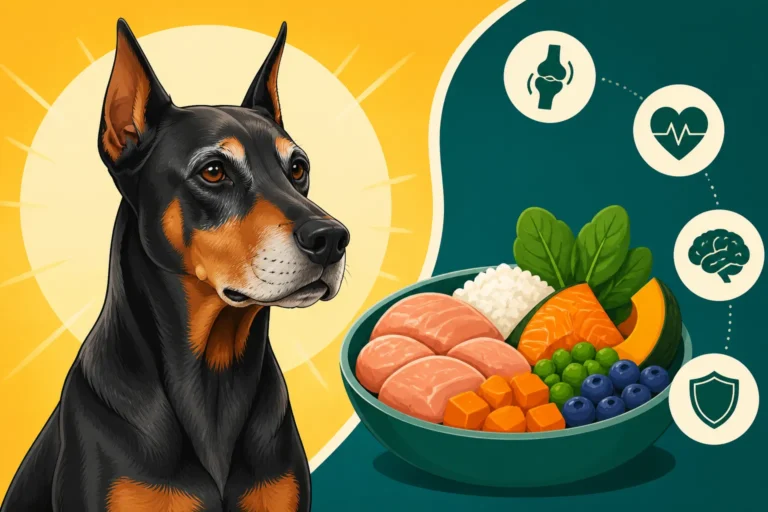
Senior Doberman nutrition adjustments explain lower caloric needs, protein requirements, and fiber changes for aging dogs.
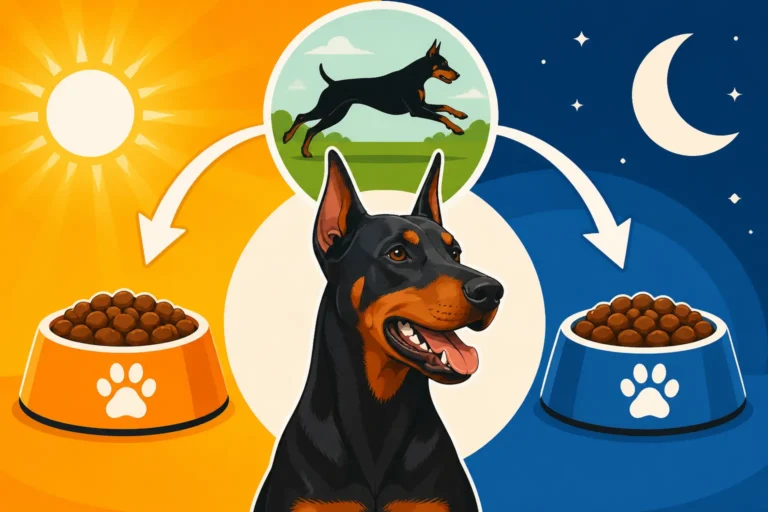
Splitting daily meals and timing exercise prevents dangerous stomach twists in deep-chested Dobermans with high metabolisms.
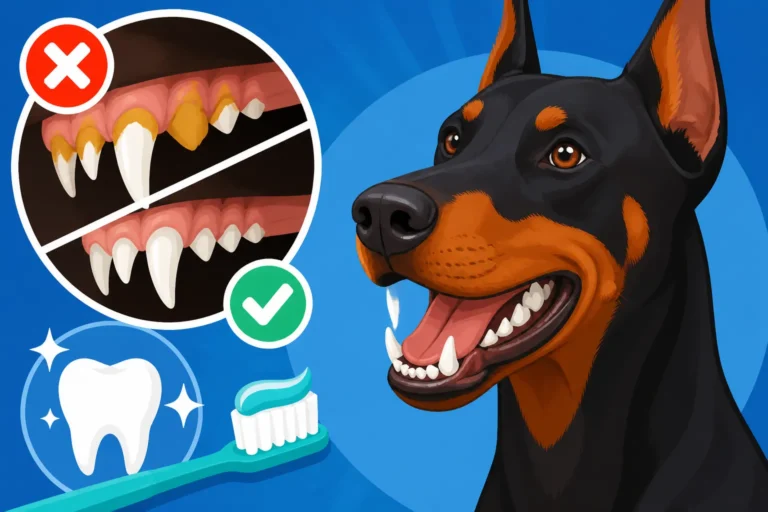
Doberman dental anatomy and daily brushing routines explain how to remove plaque and prevent gingivitis, periodontal disease, and tooth loss.
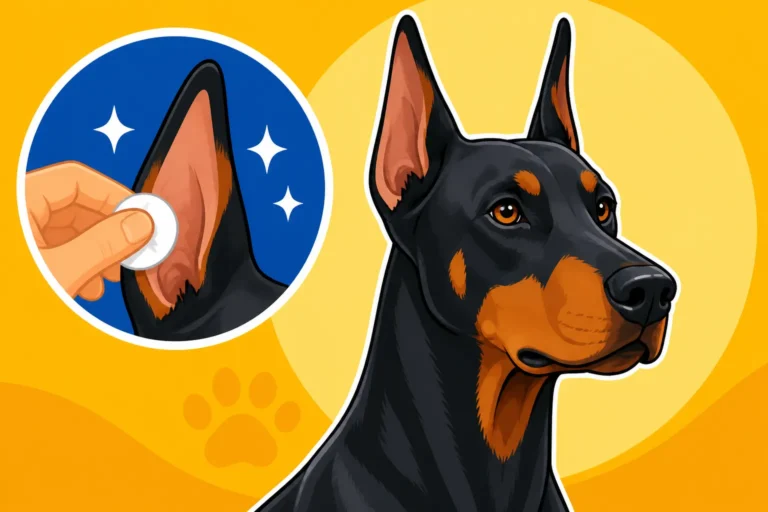
Uncropped Doberman ear care involves managing moisture and hygiene to prevent yeast and bacteria overgrowth in dogs.
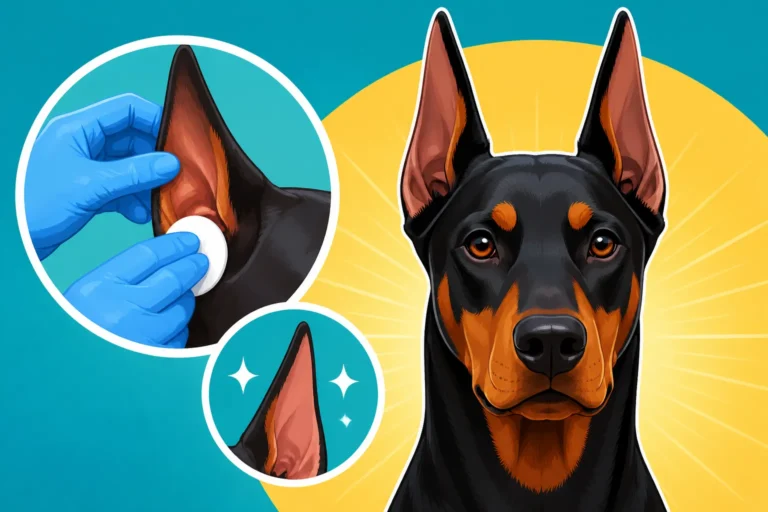
Ear hygiene for a healed cropped Doberman prevents painful infections by cleaning the L-shaped canal to remove wax and debris.
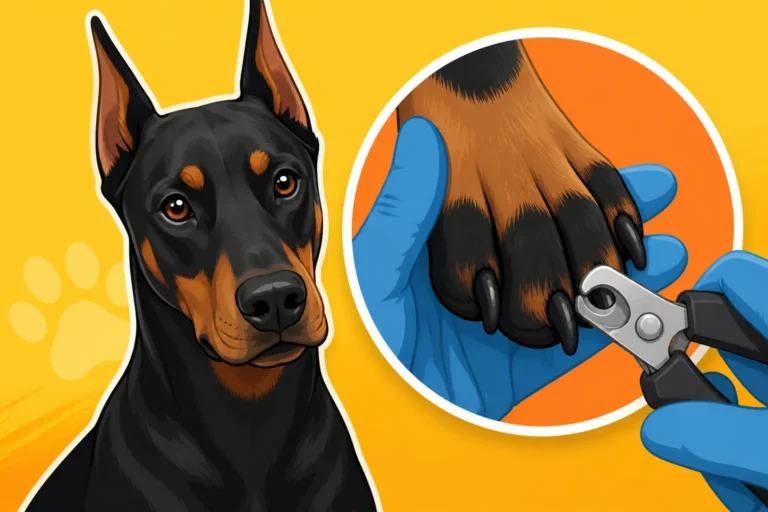
Doberman nail trims involving thick black nails explain how the hidden quick causes bleeding and why long nails impact joints.
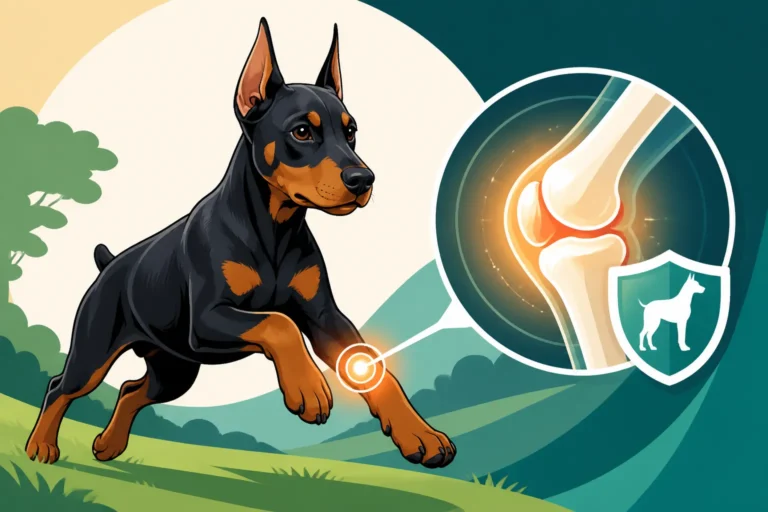
Growing Doberman joint protection strategies prevent hip dysplasia, elbow dysplasia, and osteochondritis dissecans during rapid puppy development.

Large breed puppy food manages rapid Doberman development by controlling growth rates to prevent joint problems during the first twelve to eighteen months.
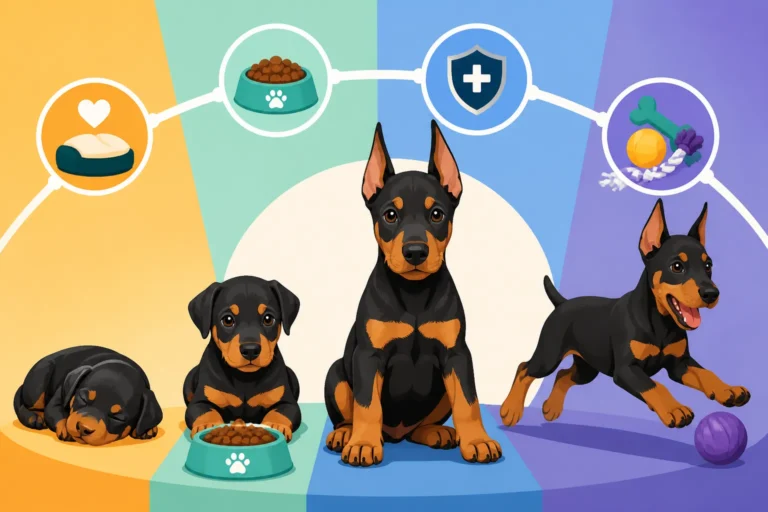
Doberman puppy development stages from birth to sixteen weeks require proper breeder care, early socialization, and structured home routines.
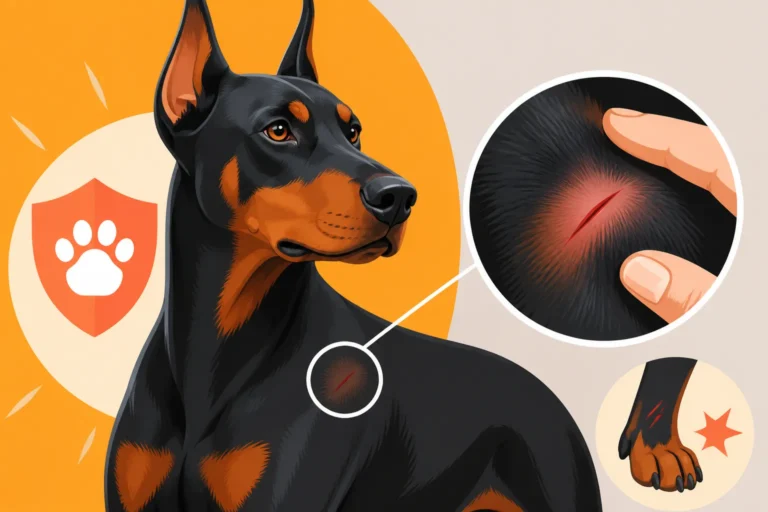
Thin Doberman skin and everyday cuts explain why the breed experiences frequent minor injuries and how owners manage them.