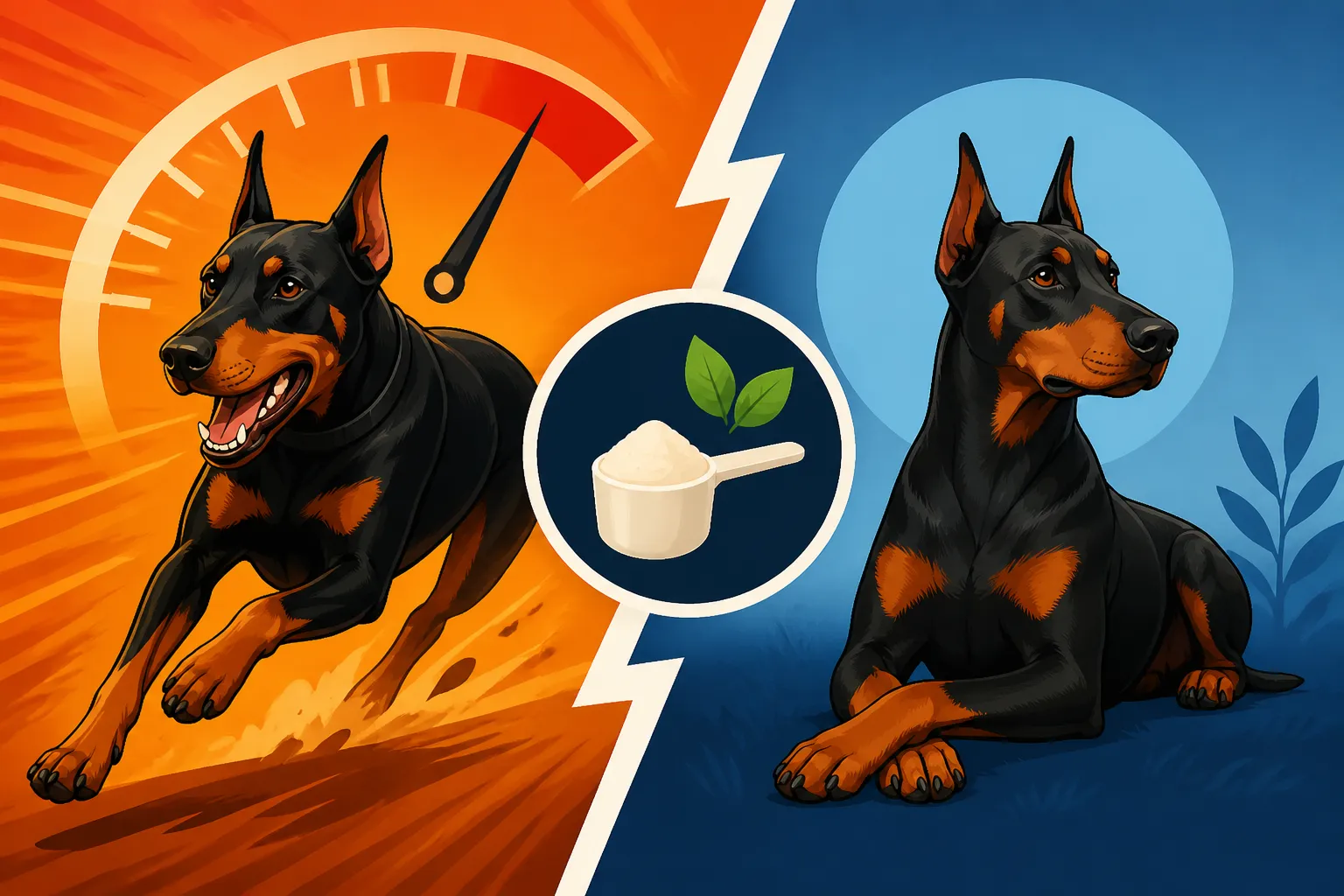
Whether Growth Formula Slows a Doberman Down Enough
That eager, gangly Doberman puppy growing like a weed is a joy to behold, but for many owners, it also sparks a deep anxiety: are they growing too fast? The sheer speed at which these dogs develop can feel alarming, and the worry about potential joint problems down the line is very real and keeps us up at night. This guide is here to untangle the truth about large breed growth formulas, how they aim to manage your Doberman's rapid development, and what you can do to support healthy, steady growth for a long, happy life.
The Doberman's Unique Growth Spurt and Its Challenges
Dobermans are truly magnificent athletes, and their bodies are designed for power and speed. But this impressive physique doesn't just appear overnight; it's the result of an incredibly fast and demanding growth period that, if not managed correctly, can set the stage for health issues later in life. Understanding this unique trajectory is the first step in ensuring your Doberman grows into the robust adult you envision.
The Early Acceleration Phase
From the moment they arrive home as tiny, clumsy pups, Dobermans are on a fast track. They gain weight and height at an astonishing rate, sometimes seemingly overnight. This intense period of rapid bone and muscle development is exhilarating to witness, but it's also where many of the anxieties about growth stem from. Unlike smaller breeds that might take a year or more to reach their adult height and weight, Dobermans hit many of their growth milestones much sooner. We're talking about a puppy that can double or even triple its size in just a few months. It's during this phase that the foundational structures of their joints and bones are forming, and any undue stress or nutritional imbalance can have lasting consequences. Owners often feel a frantic need to "feed them up" to keep pace with this growth, which can, paradoxically, be one of the biggest mistakes.
Filling Out Versus Growing Tall
There's a common misconception that once a Doberman reaches its adult height, usually around 12 to 18 months, its growth is complete. However, this isn't entirely accurate. While the vertical growth largely tapers off, a Doberman will continue to "fill out" for another year or even two. They'll add muscle mass, broaden their chest, and develop that deep, powerful Doberman build that we all admire. This second phase of development is just as crucial, albeit less dramatic than the initial height gains. It's a period where good nutrition continues to support muscle development and overall body conditioning, rather than just bone elongation. Owners who stop paying attention to controlled feeding during this phase, thinking the puppy stage is over, might inadvertently allow their Doberman to become overweight, which puts additional strain on still-developing joints. The Age a Doberman Reaches Full Height really focuses on the initial vertical growth, but the "filling out" is a marathon, not a sprint.
What "Growth Formula" Really Means for a Doberman
The term "growth formula" can be a bit misleading. For large and giant breed puppies like Dobermans, it’s not about making them grow faster or bigger – quite the opposite, in fact. It’s about ensuring they grow at a controlled, steady rate, minimizing the risks associated with overly rapid development. This distinction is incredibly important for any Doberman owner to grasp.
"Large Breed Puppy" Food vs. Generic Puppy Food
The primary difference between a generic puppy food and a high-quality "large breed puppy" formula tailored for breeds like Dobermans lies in its careful balance of nutrients, specifically calories, calcium, and phosphorus. Generic puppy foods are often formulated with higher calorie densities to support the rapid growth of smaller breeds, which is exactly what we want to avoid in a Doberman. If a Doberman consumes too many calories too quickly, it can lead to an accelerated growth rate that puts undue stress on their developing bones and joints.
Large breed puppy formulas, on the other hand, are designed to deliver sufficient nutrition for growth without overdoing it on the calories. They aim for a more moderate growth curve, allowing bones and joints to mature at a more natural, resilient pace. Additionally, the calcium-to-phosphorus ratio is critical. An imbalance, particularly too much calcium, can interfere with normal bone development and contribute to conditions like osteochondritis dissecans (OCD). A good large breed formula maintains a precise balance, usually around 1.1:1 to 1.5:1 calcium to phosphorus, and also has a lower overall percentage of calcium compared to standard puppy foods. When searching for food, whether on Chewy or at your local pet store, always look for the "large breed puppy" designation.
Misconceptions About Protein Levels
There's a persistent myth that high protein levels in puppy food are detrimental to large breed growth, often cited as a cause of rapid growth and joint problems. This isn't entirely accurate. Research has actually shown that appropriate protein levels are essential for muscle and tissue development and do not, in themselves, cause developmental orthopedic diseases. The real culprits are excess calories and imbalanced mineral ratios, especially calcium.
A quality large breed puppy food will have a protein content suitable for a growing Doberman, typically in the range of 23-26% (dry matter basis). What matters more than the raw percentage is the overall nutritional profile, including fat content and the previously mentioned mineral balance. Focusing solely on a low protein percentage might lead owners to choose a food that doesn't adequately support muscle development, which is also crucial for Doberman health. It’s about the overall package of the food, not just one single component. Don't fall into the trap of thinking a lower protein means a healthier puppy if the rest of the formula isn't specifically balanced for large breed growth.
The Risks of Too-Rapid Growth in Dobermans
The Doberman's athletic build is a double-edged sword when it comes to growth. While we want them to develop into strong, powerful adults, forcing that process too quickly can lead to significant, painful, and often irreversible skeletal problems. It's a critical balancing act that every Doberman owner needs to understand.
Joint Issues Like Hip and Elbow Dysplasia
One of the most concerning outcomes of rapid growth is the increased risk of developmental orthopedic diseases, particularly hip and elbow dysplasia. These conditions occur when the joints don't form properly, leading to looseness, pain, and eventually arthritis. In Dobermans, who are genetically predisposed to certain joint issues like Doberman Hip Dysplasia, overly fast growth exacerbates this risk. When a puppy grows too quickly, their bones can outpace the development of supporting soft tissues like ligaments and cartilage. This leads to laxity in the joint, causing the bones to rub incorrectly within the socket, leading to abnormal wear and tear.
Imagine a construction project where the framework goes up faster than the supporting beams and concrete can be properly set. The structure would be unstable and prone to collapse. Similarly, a Doberman's rapidly growing bones need time for the surrounding tissues to strengthen and stabilize the joints. Overfeeding calories during the critical growth phase, even with a technically "large breed" food, can tip the scales toward accelerated growth and increase the likelihood of these debilitating conditions. This is why controlled growth is not just a recommendation, but a necessity for breeds like the Doberman.
Developmental Orthopedic Diseases DODs
Beyond hip and elbow dysplasia, Dobermans are susceptible to other Developmental Orthopedic Diseases (DODs) that are often linked to rapid growth. These can include Osteochondritis Dissecans (OCD) and Panosteitis ("pano"). OCD is a condition where cartilage in the joints fails to mature properly, resulting in a flap of cartilage that can detach and cause pain, lameness, and eventual arthritis. Common sites for OCD in large breeds include the shoulder, elbow, stifle (knee), and hock (ankle).
Panosteitis, while often self-limiting and migrating from limb to limb, causes sudden, shifting lameness and deep bone pain in growing puppies. While the exact cause isn't fully understood, rapid growth and high-calorie diets are often implicated as contributing factors. These conditions can be incredibly distressing to witness, as your energetic puppy suddenly becomes reluctant to move, cries in pain, or holds up a limb. While many cases of pano resolve with rest and pain management, OCD often requires surgical intervention to remove the cartilage flap. Preventing these conditions through careful growth management is far easier, and kinder, than treating them. This is also where understanding The Doberman Years When Everything Shows Up becomes crucial, as many of these issues manifest during the most active growth phases.
Long-Term Skeletal Problems
The impact of unchecked rapid growth isn't just limited to the puppy years; it can set the stage for long-term skeletal problems that persist throughout a Doberman's life. Even if a Doberman doesn't develop severe dysplasia or OCD early on, the stresses of accelerated growth can lead to subtle architectural changes in their bone structure and joint alignment. This might manifest as increased susceptibility to arthritis at a younger age, chronic stiffness, or a reduced capacity for strenuous activity.
A Doberman's skeletal system is the foundation for its entire life. If that foundation is compromised during its formative months, it will inevitably affect their mobility and quality of life as an adult and senior. Think about the impact of Whether a Doberman Should Be Screened Before Breeding – part of that screening aims to identify parents who might pass on predispositions, but proper puppy rearing is equally vital. Owners often share heartbreaking stories of Dobermans that, despite seemingly being fine as puppies, developed debilitating arthritis by middle age, severely limiting their joy of movement. Much of this could potentially have been mitigated by carefully controlling their growth rate during those critical early months.
How to Properly Manage a Doberman Puppy's Growth
Managing a Doberman puppy's growth isn't just about picking the right bag of food; it's a holistic approach that involves careful feeding, diligent monitoring, and appropriate exercise. It’s an active partnership between you and your vet to give your Doberman the best possible start.
Controlled Feeding and Portion Sizes
The most impactful way to manage your Doberman's growth is through strict portion control. Even the best large breed puppy food can lead to excessive growth if fed in quantities larger than recommended. Always follow the guidelines on the food packaging, but be prepared to adjust based on your puppy's individual needs and body condition. Not all puppies metabolize food at the same rate.
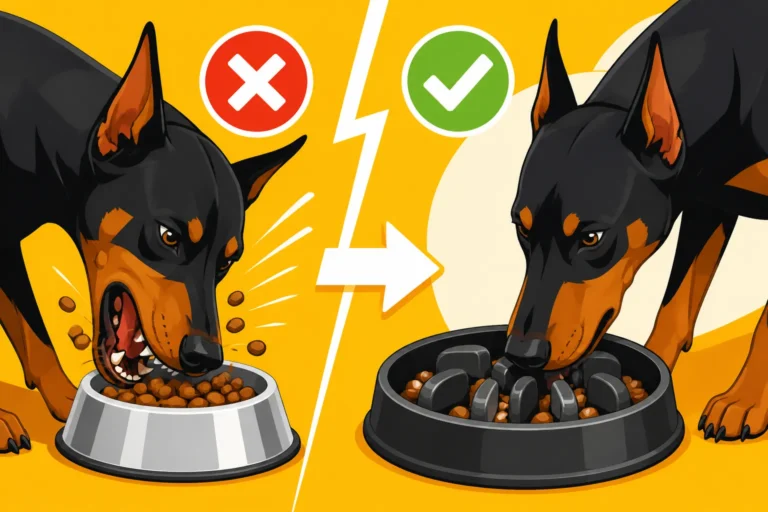
It's far better for a Doberman puppy to be on the leaner side during growth than to be plump. A slightly hungry puppy is a healthy puppy, as the saying goes. Resist the urge to "free-feed" (leaving food out all day) your Doberman. Instead, feed measured meals two to three times a day. If you're struggling to decide on quantities, your veterinarian is your best resource. They can help you calculate the appropriate caloric intake based on your puppy's age, weight, and activity level. Using a kitchen scale to measure kibble, rather than relying on scoops, ensures accuracy, especially for families with multiple members who might all contribute to feeding.
Monitoring Body Condition Score
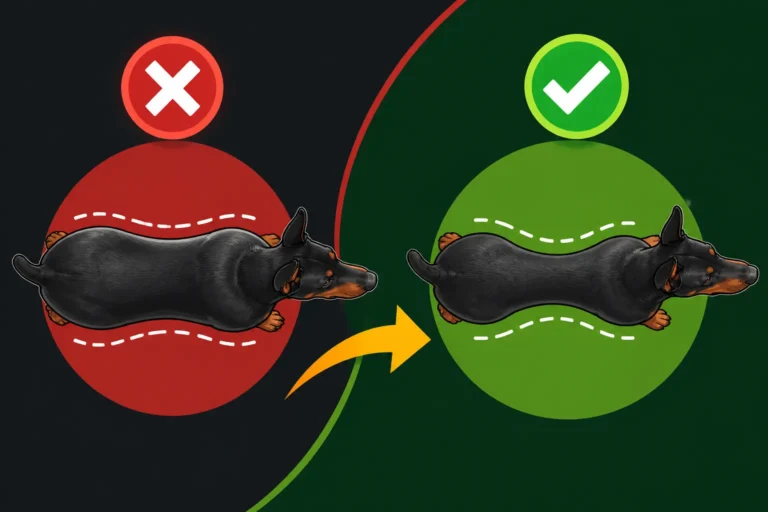
Beyond the numbers on the scale, regularly assessing your Doberman's Body Condition Score (BCS) is crucial. This involves feeling their ribs, spine, and hip bones. You should be able to easily feel your Doberman's ribs without pressing hard, and they should have a visible tuck-up at their waist when viewed from the side, and an hourglass shape when viewed from above. If their ribs are difficult to feel, or they lack a distinct waist, they are likely overweight, which means their growth might be too rapid or they are just carrying too much weight for their frame.
Your vet can show you how to accurately assess BCS. It's a skill that will serve you well throughout your Doberman's life. Don't compare your Doberman to other breeds or even other Dobermans, as genetics and individual metabolism can vary. Focus on your dog's ideal lean body condition. Make it a weekly ritual, perhaps during grooming or cuddle time, to feel your Doberman's ribs and check their waistline. This proactive monitoring allows you to make subtle adjustments to their food intake before any potential issues become significant. Regularly feeling their developing frame helps protect Protecting a Growing Doberman's Joints.
Appropriate Exercise Regimen
While Dobermans are incredibly active and intelligent dogs, high-impact or excessive exercise during their rapid growth phase can be detrimental to their developing joints. This doesn't mean your puppy shouldn't play; it means the type and duration of exercise need to be carefully managed. Long, strenuous hikes, repetitive jumping, or intense agility training should be avoided until their growth plates have closed, usually between 12 and 18 months of age.
Instead, focus on controlled, low-impact exercise like leash walks, short play sessions on soft surfaces, and mental stimulation through training games. Short, frequent play periods are better than one long, exhausting session. Allow your puppy plenty of rest throughout the day. Activities like swimming can be excellent low-impact exercise. Remember that Dobermans also need a lot of mental work, so training sessions can tire them out without stressing their joints. Don't push your puppy to keep up with an adult dog's exercise routine. They might have the energy, but their bodies aren't ready for it. This is why we often discuss Whether Stairs Hurt a Doberman Growing Fast – repetitive impact, even on stairs, can be too much for rapidly developing joints.
Choosing the Right Food and Supplements
Navigating the world of dog food and supplements can feel overwhelming, especially with a Doberman puppy. There are so many brands and so much conflicting advice out there. The key is to prioritize foods specifically designed for large breed puppies and to be very cautious about supplements.
The Importance of Calcium-Phosphorus Balance
As mentioned, the calcium-to-phosphorus ratio is arguably the most critical nutritional aspect for a growing Doberman. Too much calcium, or an imbalanced ratio, can lead to serious skeletal abnormalities. For large breed puppies, a calcium content between 1.0% and 1.5% (on a dry matter basis) and a calcium-to-phosphorus ratio of 1.1:1 to 1.5:1 is generally recommended. Always check the guaranteed analysis on the back of the dog food bag. If these numbers aren't within the ideal range, or if the food isn't specifically labeled for "large breed puppies," it's best to look elsewhere.
Resist the temptation to add calcium supplements to your Doberman puppy's diet if you are already feeding a balanced large breed puppy food. Doing so can easily throw off the delicate balance and cause more harm than good. Whether a Doberman Puppy Should Take Calcium is a common question, and for puppies on appropriate large breed diets, the answer is almost always no. The idea that more calcium makes stronger bones is a myth for growing large breed dogs; it actually disrupts normal bone development.
Reputable Brands and Formulations
When it comes to selecting a food, look for reputable brands that conduct feeding trials and have veterinary nutritionists on staff. Brands like Purina Pro Plan Large Breed Puppy, Royal Canin Large Breed Puppy, or Hill's Science Diet Large Breed Puppy are often recommended because they invest heavily in research and formulate their diets specifically to support the controlled growth of large and giant breeds. These companies are transparent about their nutrient profiles and have a long track record of producing healthy foods.
Be wary of boutique diets that make grand claims but lack scientific backing, or "all life stages" foods that are not specifically formulated for large breed puppy growth. While a fresh food diet like Ollie might offer high-quality ingredients, you must ensure it is precisely balanced for large breed puppy growth, ideally with input from a veterinary nutritionist, as homemade diets can be notoriously difficult to balance correctly. When purchasing, whether from Amazon for convenience or a specialized pet store, scrutinize the labels. Don't be swayed by marketing jargon; focus on the "large breed puppy" designation and the guaranteed analysis for calcium and phosphorus.
Here’s a quick comparison of what to look for:
| Feature | Generic Puppy Food (Often for smaller breeds) | Large Breed Puppy Food (For Dobermans) |
|---|---|---|
| Calorie Density | Higher | Moderate/Lower |
| Calcium (% Dry Matter) | Often > 1.5% | 1.0% – 1.5% |
| Calcium:Phosphorus Ratio | Can be higher, less controlled | 1.1:1 – 1.5:1 (Carefully balanced) |
| Protein Level | Varies, but less critical than Ca/P | Appropriate (e.g., 23-26%), not excessively low |
| Growth Rate Supported | Rapid | Controlled, steady |
| Risk of DODs | Higher for large breeds | Lowered |
When to Transition to Adult Food
The transition from large breed puppy food to adult maintenance food is another critical milestone. Generally, Dobermans can transition to an adult formula between 12 and 18 months of age, once their major growth plates have closed. Some veterinary nutritionists recommend keeping large breeds on puppy food slightly longer, up to 18 months, if they are still showing signs of growing or are from particularly slow-maturing lines.
The key is to observe your Doberman's body condition and growth. If they are maintaining a lean weight and their growth has visibly slowed, they are likely ready for adult food. Adult foods typically have fewer calories and sometimes slightly lower protein and fat, which is perfect for maintaining a healthy weight once the intense growth phase is over. Transitioning gradually over 7-10 days by mixing increasing amounts of the new food with decreasing amounts of the old food will help prevent digestive upset. Consult with your veterinarian to determine the best time for your individual Doberman, as their advice will be tailored to your dog's specific development. This ties into understanding Feeding a Doberman Puppy Through a Fast Growth Curve and recognizing when that curve starts to level off.
Beyond Diet: Other Factors in Healthy Doberman Growth
While nutrition plays a starring role in healthy Doberman growth, it's not the only act in the show. Several other factors, from their environment to their genetics, contribute significantly to how they develop. As responsible Doberman owners, we need to consider the whole picture.
Avoiding Rough Play and Environmental Stressors
A Doberman puppy is a whirlwind of energy, and it's natural for them to want to play hard. However, uncontrolled, rough play, especially with older, larger dogs or rambunctious children, can place excessive strain on their still-developing joints and ligaments. Imagine a puppy leaping off furniture, sliding on slick floors, or being tackled vigorously. These seemingly innocent activities can cause micro-traumas that contribute to long-term joint issues.
It's your job to supervise play and create a safe environment. Provide appropriate toys that encourage safe play, and ensure play sessions are structured and monitored. Avoid long periods of running on hard surfaces like concrete or asphalt. Non-slip rugs on slick floors can prevent slips and falls that might injure growing joints. Think of your Doberman puppy as an athlete in training—they need a conditioning program, not just random bursts of intense activity. This careful approach also extends to topics like Whether a Doberman Should Be Screened Before Breeding, where the health of the parents contributes, but the puppy's environment is equally critical.
Maintaining Ideal Weight and Muscle Tone
Beyond the specific growth phase, maintaining your Doberman's ideal weight throughout their life is paramount for joint health. An overweight Doberman, even an adult one, carries extra strain on their joints, accelerating the onset and severity of conditions like arthritis. We want our Dobermans to be lean, athletic, and well-muscled, not bulky or soft.
Regular exercise tailored to their age and fitness level, combined with careful portion control, will help maintain that ideal body condition. Remember, Dobermans don't have a thick undercoat, so it's often easier to see their body condition. You should be able to clearly feel their ribs without seeing them protruding, and they should have a well-defined waist. If you notice your Doberman starting to gain too much weight, adjust their food intake or increase their appropriate exercise. This ongoing vigilance ensures that the hard work you put into controlled growth as a puppy continues to benefit them as adults.
Regular Veterinary Check-ups and Monitoring
Consistent veterinary care is your best partner in navigating your Doberman's growth. Regular check-ups allow your vet to monitor their growth curve, assess their body condition, and catch any potential issues early. Your vet can also provide guidance on diet, exercise, and any necessary health screenings. They are the best resource for objective, professional advice tailored to your individual Doberman.
During these visits, don't hesitate to discuss any concerns you have about your Doberman's development. Are they growing too fast? Is their gait normal? Are there any signs of lameness or discomfort? Your vet can perform physical examinations, and if necessary, recommend diagnostic tests. For Dobermans, who are prone to various health issues, early detection is often key to effective management. For example, The Health Testing a Doberman Breeder Must Show emphasizes the importance of parental health, but your vet continues that legacy with your puppy's ongoing health. Remember that even beyond growth concerns, Dobermans need regular preventative care, including vaccinations and parasite control. Taking your Doberman to the vet doesn't have to be a stressful experience; many Dobermans learn to tolerate it well, especially if you prioritize positive experiences and muzzle training when they're young.
Understanding Genetic Predispositions and Screening
While proper feeding and care are vital, we can't ignore the genetic hand our Dobermans are dealt. Reputable breeders play a crucial role in minimizing the risk of inherited conditions that can be exacerbated by growth issues. Understanding these predispositions helps you make informed choices and advocate for your Doberman's health.
The Role of Responsible Breeding
Responsible breeders are dedicated to producing healthy Dobermans, and a significant part of that commitment involves health testing their breeding stock. For conditions like hip and elbow dysplasia, breeders should have their breeding dogs evaluated by organizations like the Orthopedic Foundation for Animals (OFA) or PennHIP. These certifications indicate that the parents have healthy joints, reducing the likelihood of passing on genetic predispositions to their offspring.
A responsible breeder will openly share these health certificates with you and explain what they mean. They will also be knowledgeable about the health history of their lines, including any incidence of conditions like DCM or Von Willebrand's disease. While genetics aren't the sole determinant of a Doberman's health, starting with a puppy from health-tested parents significantly stacks the odds in your favor. Never buy a Doberman puppy from a breeder who cannot, or will not, provide verifiable health clearances for the parents. This is where Reading a Doberman Breeder's Heart Paperwork and other health certificates become invaluable.
Knowing Your Doberman's Ancestry
Beyond the immediate parents, understanding your Doberman's broader ancestry can provide valuable insights into potential health risks. A good breeder will be able to discuss the health and longevity of previous generations in their pedigree. While no breeder can guarantee perfect health, a clear history of healthy, long-lived dogs in the lineage is a positive indicator.
This knowledge empowers you to be more proactive in your Doberman's care. For example, if there's a history of a specific condition like Wobbler Syndrome in the line, you might be more vigilant for early signs and discuss preventative measures with your vet. Websites like the Doberman Pinscher Club of America (DPCA) often provide resources for researching pedigrees and understanding breed-specific health concerns. This isn't about dwelling on potential problems, but about being an informed advocate for your dog. For instance, knowing if a condition like The Heart Disease That Reaches Most Dobermans is prevalent in a line can inform your screening schedule.
When to Consider Proactive Health Screenings
Even with responsible breeding and careful growth management, Dobermans can still be susceptible to certain health issues. Proactive health screenings, under the guidance of your veterinarian, can help detect problems early, often before clinical signs appear. For Dobermans, regular cardiac screenings (echocardiograms and Holter monitors) are crucial due to the prevalence of Dilated Cardiomyopathy (DCM).
While these screenings are more commonly initiated when the Doberman is a young adult, typically around two years old, your vet might recommend earlier screenings if there's a strong family history of early-onset disease or other concerns. Discuss a preventative health schedule with your vet that is tailored to your Doberman's specific age, genetic background, and lifestyle. This proactive approach, while sometimes costly, can significantly improve the prognosis for many conditions by allowing for earlier intervention. For instance, Annual Echo and Holter Screening for a Doberman is a standard recommendation for most Doberman owners.
Disclaimer
This article is for general informational purposes only and does not constitute professional advice. Laws, prices and regulations vary by location and change over time. Consult a qualified professional for guidance on your specific situation.