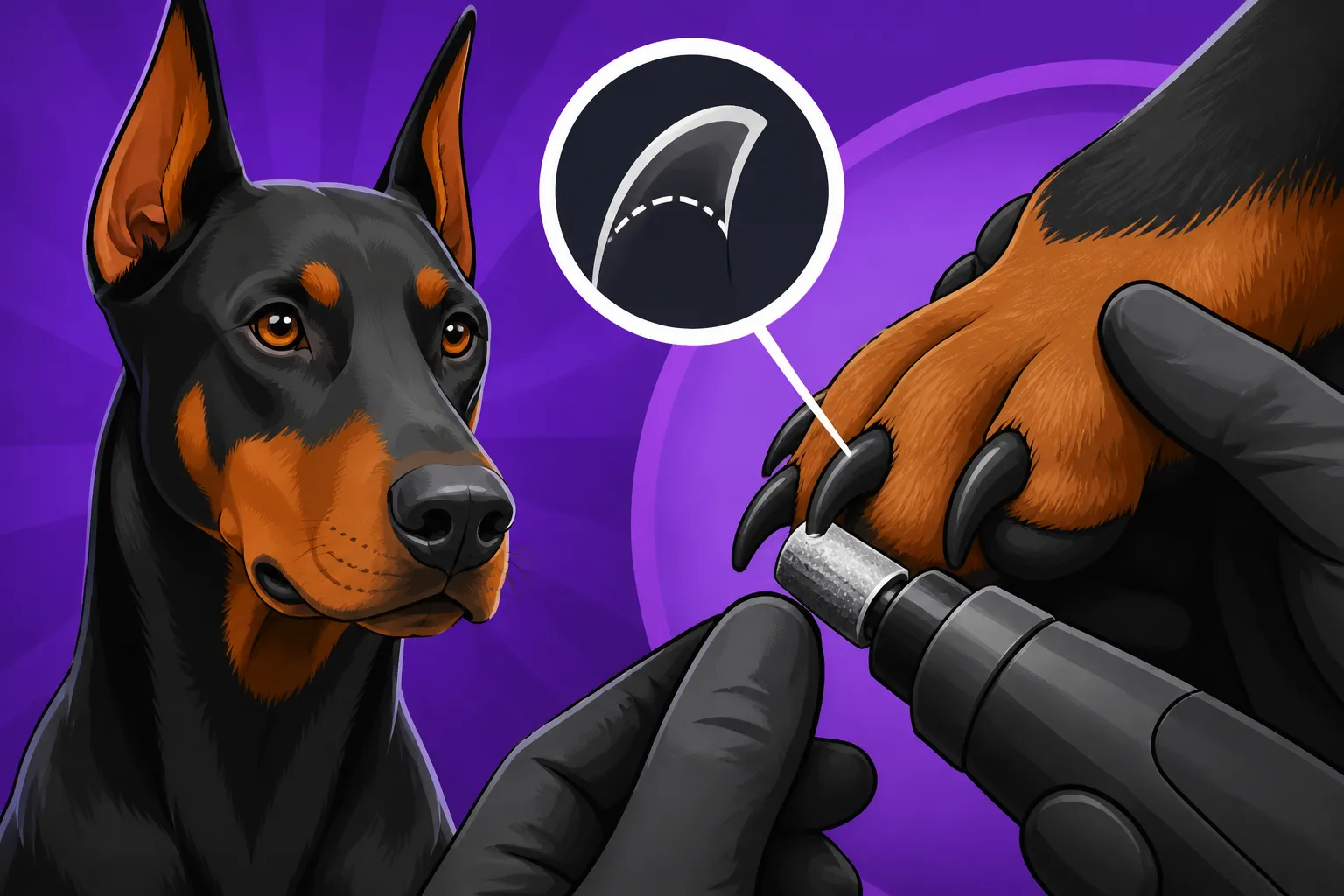
Grinding a Doberman Nail You Cannot See Through
It's a common frustration for Doberman owners: you want to keep those nails trimmed and healthy, but when your dog has dark, almost black nails, it feels like you're guessing where the quick ends and the living nail begins. That fear of hitting the quick and causing pain (and bleeding!) can make nail grinding feel like a high-stakes gamble. This guide is here to take the guesswork out of the process, offering a clear, step-by-step approach to safely grind those tough, opaque Doberman nails, ensuring your dog's comfort and your peace of mind.
Understanding the Challenge of Dark Doberman Nails
Dobermans are stunning dogs, often with sleek black or deep red coats, and with those dark coats often come dark nails. While many breeds have clear or light-colored nails where the pink quick is easily visible, our Dobermans often present us with solid, opaque nails that hide the sensitive quick entirely. This isn't just an aesthetic issue; it's a practical challenge that makes routine nail care significantly more nerve-wracking.
Why Doberman Nails Are Often Black or Dark
The pigmentation in a Doberman's coat extends right down to their nails, which means most Dobermans, especially the black and rust variety, will have jet-black nails. Even red Dobermans often have very dark brown or black nails. This dark color simply makes the interior structures of the nail invisible to the naked eye. You can't hold it up to the light and see a shadow, which is a trick many owners use with lighter-nailed dogs. It truly is like looking at a black box and trying to guess what's inside. This natural coloring is beautiful, but it certainly adds a layer of complexity to what should be a straightforward grooming task.
The "Quick" and Why It Matters So Much
Inside every dog's nail is something called the "quick." This isn't just some fleshy bit; it's a living tissue that contains blood vessels and nerves. If you accidentally cut or grind into the quick, it will bleed, and it will be painful for your Doberman. The quick grows with the nail; if nails are left long, the quick will extend further down the nail. This is why keeping nails consistently short is so important – it helps the quick recede, making it safer to trim further over time. For a Doberman with long, dark nails, the quick might be much longer than you anticipate, increasing the risk of an accidental nick. That's why grinding, which allows for smaller, more controlled removal of nail, is often preferred over clipping for dark nails, giving you more control and a better feel for changes in the nail's texture.
The Frustration of Not Seeing Where to Cut
Let's be honest, trying to trim a dark nail with clippers when you can't see the quick is incredibly frustrating. It's a constant battle between wanting to do the best for your Doberman and the fear of hurting them. Many owners err on the side of caution, only taking off the very tips, which often isn't enough to keep the nails truly short. This leads to that dreaded "click-clack" sound on the floor, and sometimes even splayed toes or discomfort for your Doberman when they walk or stand. The lack of visual guidance can make even the most confident dog owner feel completely helpless, and it's a valid concern. You want to avoid the trauma of a quicking experience, both for your dog and for your own stress levels.
Essential Tools and Setup for Nail Grinding
Before you even think about touching your Doberman's paw, having the right tools and creating a calm environment are paramount. A Doberman, being intelligent and sensitive, will pick up on your anxiety, so a prepared and confident approach is key. Gathering everything beforehand ensures a smooth session.
Choosing the Right Nail Grinder
When it comes to Dobermans, you need a grinder with enough power to handle their strong nails without bogging down. Cordless, rechargeable models are often preferred for flexibility, allowing you to work in different locations without being tethered to an outlet. Look for grinders with adjustable speeds, as this gives you more control – a lower speed for initial comfort, and a higher speed for faster, smoother grinding once your Doberman is accustomed to it. Brands like Dremel offer various rotary tools that are popular for dog grooming, and many dedicated pet nail grinders are available. You can find a wide selection of these tools and replacement grinding bands on sites like Chewy or Amazon. Make sure to consider the grit of the grinding bands; a coarser grit will remove material more quickly, while a finer grit is good for smoothing and finishing.
Creating a Calm Environment for Your Doberman
This step is arguably more important than the tool itself. Your Doberman's temperament and willingness to cooperate will heavily depend on how comfortable and safe they feel. Choose a quiet time of day when your Doberman is already relaxed, perhaps after a good walk or a play session when they're a bit tired. Find a well-lit area where you can comfortably position yourself and your dog. Some Dobermans prefer to lie down, others might be happy standing if you can support them.
Bring out the grinder before you intend to use it, just to let them see and sniff it. Turn it on briefly, away from them, so they can get used to the sound and vibration. Pair this with high-value treats and praise. The goal is to associate the grinder with positive experiences. For Dobermans particularly wary of handling, consider starting with just touching their paws without the grinder on, then with it off, then with it on but not touching them, slowly building up. Consistency is crucial here; even five minutes a day of positive exposure can make a huge difference. You might want to check out resources on Getting a Doberman Used to Vet Handling for broader tips on making these experiences positive.
Safety Precautions and What to Have Handy
Safety first, always! Here’s a quick checklist of things to have at the ready:
- Styptic Powder: This is your best friend if you accidentally hit the quick. It quickly stops bleeding. Keep it close by.
- High-Value Treats: Think really good stuff – cheese, cooked chicken, peanut butter (xylitol-free!). This helps create positive associations and distracts your Doberman.
- A Mat or Towel: For your Doberman to stand or lie on, providing comfort and traction.
- Good Lighting: Essential for seeing the subtle changes in the nail.
- Comfortable Clothing: For you, because you might be in some awkward positions!
- Glasses/Eye Protection: Tiny bits of nail dust can fly, especially if your Doberman suddenly moves. Protecting your eyes is a smart move. You can find these easily on Amazon.
Having everything organized minimizes stress for both you and your Doberman. A prepared owner is a calm owner, and a calm owner makes for a calmer Doberman.
The Step-by-Step Process of Grinding Dark Nails
Now that you're prepared, let's dive into the actual grinding. The key with dark nails is a methodical, gradual approach. You're not aiming to remove a lot of nail at once; instead, you're looking for subtle cues from the nail itself that tell you when to stop.
Getting Started: Short Bursts and Angle
Hold your Doberman's paw firmly but gently, isolating the nail you're working on. Ensure their fur is out of the way – you don't want it getting caught in the grinder! Turn the grinder on and approach the nail at a slight angle, roughly 45 degrees, aiming for the bottom edge of the nail first.
Instead of holding the grinder on the nail for a long time, use short, quick bursts – just a second or two at a time. This prevents the nail from getting too hot, which can be uncomfortable for your Doberman, and gives you more control. Think of it like sanding wood; you're gently shaping and shortening, not aggressively cutting. After each short burst, pull the grinder away and examine the nail. Give your Doberman a treat and praise after each successful (even tiny) grind. This positive reinforcement is absolutely vital, especially if your Doberman is new to this.
Watching for the "Bullseye" or "Dust" Signal
This is the golden rule for dark nails. As you grind down the tip of the nail, you'll start to see a tiny, distinct change in the nail's texture or appearance.
- Initial Grind: The tip of the nail will look solid and dark, usually black or dark brown, with white dust accumulating from the outer keratin layers.
- Mid-Grind: As you grind further, you'll notice a small, greyish or lighter circle appearing in the center of the nail, surrounded by the darker outer ring. This is your first warning sign – the quick is getting closer!
- The "Bullseye" Quick: Keep going in tiny bursts, and you'll eventually see a small, darker, almost shiny black or pinkish circle appear right in the center of that greyish ring. This is often called the "bullseye." This distinct darker spot is the very tip of the quick.
- STOP HERE! When you see this bullseye, you're at the ideal length. Any further, and you risk hitting the quick. You want to leave a tiny bit of that bullseye showing, as evidence you're just shy of the quick.
- This technique is particularly important, as detailed in guides like Quicking a Black Doberman Nail, because it relies on visual cues from the nail's internal structure rather than external estimation.
The key is to grind slowly, examine frequently, and look for these changes. The moment you see that bullseye, you've gone far enough for that nail.
When to Stop and What to Do If You Go Too Far
As mentioned, the moment you spot that bullseye, cease grinding on that particular nail. It’s better to be conservative and leave the nail slightly longer than to cause pain and bleeding. Consistency over time will allow the quick to recede, enabling you to trim or grind shorter in future sessions.
However, accidents happen, especially when you're first learning or if your Doberman makes a sudden movement. If you do accidentally hit the quick:
- Don't Panic: Your Doberman will likely yelp and pull away. Stay calm.
- Apply Styptic Powder: Immediately apply pressure with a pinch of styptic powder directly to the bleeding tip of the nail. Hold it there for about 30 seconds. The bleeding should stop fairly quickly. If you don't have styptic powder, cornstarch or flour can work in a pinch, though not as effectively.
- Offer Comfort: Reassure your Doberman gently. Give them a special treat or a quiet cuddle. Don't punish them for reacting; it was an accident.
- Take a Break: It's often best to stop the session for a while, or even for the day, if you've quicked a nail. You can come back to the remaining nails later. Trying to push through might make your Doberman more fearful of future grooming sessions.
Remember, the goal is always a positive experience. While quicking is unpleasant, it's not the end of the world, and with proper preparation, you can manage it if it occurs.
Troubleshooting and Maintaining Healthy Nails
Even with the best intentions and tools, nail care can sometimes be a struggle. Dobermans are smart, and if they have a negative experience, they can develop a strong aversion. But with patience and consistency, you can overcome these hurdles.
Dealing with a Reluctant Doberman
If your Doberman is less than thrilled about having their nails ground, don't force it. Forcing them can lead to fear, aggression, and make future sessions impossible. Instead, go back to basics with desensitization and counter-conditioning:
- Short, Positive Sessions: Keep sessions extremely short – literally 30 seconds to a minute at first, focusing solely on positive interaction.
- High-Value Rewards: Use only their absolute favorite treats. If they tolerate a quick touch of the grinder, they get a jackpot!
- Associate with Good Things: Have the grinder out when you're just cuddling or playing. Turn it on briefly at a distance while they're eating a meal or chewing a favorite bone. This creates a positive association rather than just fear.
- Paws First: If they're nervous about the grinder, focus on simply handling their paws comfortably first. Work on gently massaging their toes, spreading their pads, and touching each nail. This builds trust and gets them used to the physical sensation.
- Professional Help: If you're truly struggling, a professional groomer or vet tech can often help. They might have tips, techniques, or even specialized restraint methods that can make the process easier. In some extreme cases, particularly fearful or aggressive Dobermans might benefit from mild sedation prescribed by a vet for grooming procedures, especially if they freeze up or become aggressive. This can sometimes be a better option than continued trauma for a sensitive dog, as described in Sedating a Doberman for a Dental and What It Costs.
Remember, building trust takes time. Be patient, be calm, and celebrate every small victory.
The Importance of Consistency
This cannot be stressed enough, especially with dark-nailed Dobermans. Regular grinding, typically once a week or every two weeks, is crucial for several reasons:
- Quick Recession: Consistent, small removals of nail encourage the quick to recede over time. This means that gradually, you'll be able to grind the nails shorter and shorter without risking the quick, eventually achieving that ideal short length where the nails don't touch the floor.
- Preventing Overgrowth: Long nails can lead to discomfort, splayed toes, and even alter your Doberman's gait, potentially affecting their joints and posture. Think about how Whether Long Nails Alter How a Doberman Stands can impact their long-term health. Regular grinding keeps them at a healthy length.
- Habit Formation: The more consistently you do it, the more your Doberman gets used to it. It becomes a routine, rather than a scary, infrequent event.
- Easier Maintenance: When nails are maintained, each session is quicker and requires less aggressive grinding.
Make nail grinding a regular part of your Doberman's routine, just like feeding or walks. Short, frequent sessions are far better than long, infrequent ones where you're trying to make up for lost time. Consider adding it to your weekly grooming schedule, perhaps alongside their weekly brush down, as covered in The One Brush a Doberman Coat Needs.
When to Seek Professional Help
There’s absolutely no shame in needing professional help. Sometimes, despite your best efforts, it’s just not working, or you simply don’t feel confident enough. Here are a few scenarios where professional intervention is a wise choice:
- Extreme Fear or Aggression: If your Doberman becomes genuinely aggressive, growls, snaps, or panics to the point of injuring themselves or you, it's time for a professional. A vet, vet tech, or an experienced groomer can often handle these situations more safely.
- Overly Long Nails: If your Doberman's nails are severely overgrown, curling, or causing them pain, a vet visit is essential. They might need a deeper trim, possibly under mild sedation, to get them back to a manageable length without causing undue trauma.
- Lack of Confidence: If you simply don't feel confident enough to do it yourself, or the thought fills you with dread, a professional can provide the service. Many vet clinics and groomers offer nail grinding as a standalone service.
- Learning Curve: If you're new to this and want to learn directly, ask your vet or groomer if you can observe them or even participate in a session. Hands-on guidance can be invaluable.
Always remember that seeking professional help is a sign of a responsible owner who prioritizes their Doberman's well-being and comfort. Don't let pride get in the way of proper care. Whether you manage it yourself with the right tools from Chewy or Amazon, or enlist the help of a professional, keeping your Doberman's nails short and healthy is a critical part of their overall care.
Disclaimer
This article is for general informational purposes only and does not constitute professional advice. Laws, prices and regulations vary by location and change over time. Consult a qualified professional for guidance on your specific situation.