Liver Biopsy in a Doberman
It’s a truly unsettling experience when your Doberman starts acting a little off, maybe a bit more tired than usual, or you notice a strange yellowish tint to their eyes. Your vet runs some blood tests, and the news comes back: elevated liver enzymes. Suddenly, you’re plunged into a world of uncertainty, wondering what’s going on inside your beloved companion. While initial tests offer clues, a liver biopsy is often the critical next step to get a definitive diagnosis and map out the best path forward, and this guide is here to demystify that process for you.
Why a Liver Biopsy Becomes Necessary for Your Doberman
The liver is a powerhouse organ, performing hundreds of vital functions, from detoxification to digestion. When something goes wrong, the signs can be vague, leaving both you and your vet searching for answers. For Dobermans, who are unfortunately predisposed to certain liver conditions, getting to the bottom of these issues quickly is paramount.
Early Warning Signs and Initial Diagnostics
Often, the first hint of liver trouble comes from subtle changes in your Doberman's behavior or appearance. You might notice they're lethargic, eating less, or even experiencing occasional vomiting. Sometimes, the whites of their eyes or their gums might take on a yellowish hue, known as jaundice, which is a significant red flag. Increased thirst and urination are also common.
When you bring these concerns to your vet, the first line of investigation will typically involve blood work. A complete blood count (CBC) and a chemistry panel are standard. These tests look at various markers, including liver enzymes like ALT (alanine aminotransferase), ALP (alkaline phosphatase), and GGT (gamma-glutamyltransferase). Elevated levels of these enzymes often indicate liver cell damage or cholestasis (bile flow obstruction). However, these tests can only tell us that there's a problem; they don't pinpoint the exact nature of the disease. For a deeper dive into what these numbers mean, you might find our article on Liver Enzyme Results in a Doberman particularly helpful. Your vet might also recommend a urinalysis to check for related kidney issues or bile acids testing, which assesses liver function more directly.
When Non-Invasive Tests Fall Short
While blood tests, X-rays, and ultrasounds are invaluable diagnostic tools, they sometimes don't provide the complete picture needed to formulate a precise treatment plan. An ultrasound can show changes in liver size, texture, and identify masses or gallstones, but it can't tell you the type of cells involved or the specific cause of inflammation. For instance, a Doberman might have a liver that appears enlarged on ultrasound, but this could be due to anything from infection to benign hyperplasia or more serious conditions like chronic active hepatitis or even cancer.
Dobermans, as a breed, are known to have a genetic predisposition to certain liver conditions, most notably chronic active hepatitis (CAH) associated with copper storage disease. This means their livers can accumulate excessive amounts of copper, leading to inflammation and damage over time. Understanding Why Doberman Livers Store Copper is crucial for any Doberman owner. Without a biopsy, it's impossible to confirm if copper is indeed the culprit, how much damage has occurred, or whether other conditions are at play. This is why a biopsy becomes the gold standard – it provides a direct tissue sample for pathological examination, allowing veterinary pathologists to identify specific cell changes, the presence of inflammation, fibrosis (scarring), and crucially, the amount of copper or other abnormal substances within the liver cells. This microscopic view is often the only way to get a definitive diagnosis and guide specific treatment protocols.
Navigating the Doberman Liver Biopsy Procedure
Once your veterinarian determines that a liver biopsy is necessary, understanding the different methods and what to expect during the process can help alleviate some of your concerns. It’s a surgical procedure, so it naturally comes with considerations, especially for a Doberman.
Pre-Procedure Preparations and Screening
Before any biopsy, a thorough pre-anesthetic workup is non-negotiable. This typically includes updated blood work, a urinalysis, and often a coagulation profile. This is especially vital for Dobermans, as the breed has a high incidence of Von Willebrand Disease (vWD), a common inherited bleeding disorder. A Doberman with undiagnosed vWD could experience severe or even fatal bleeding complications during or after surgery. Therefore, a clotting profile, and potentially specific testing for The Von Willebrand DNA Test for Dobermans, should be performed. If your Doberman is found to be affected by vWD, your vet will discuss strategies to mitigate bleeding risks, such as administering desmopressin acetate (DDAVP) or fresh frozen plasma before the procedure.
Additionally, your Doberman will need to fast for 8-12 hours prior to the procedure to minimize the risk of vomiting during anesthesia. Your vet will also review any current medications your Doberman is on, as some might need to be temporarily discontinued. The veterinary team will conduct a thorough physical exam to ensure your Doberman is otherwise stable for anesthesia. Many owners find that reputable pet insurance providers, such as Healthy Paws, can significantly ease the financial burden of these extensive preliminary diagnostics and the procedure itself.
Biopsy Techniques: Needle, Laparoscopic, or Surgical
There are several methods for obtaining a liver biopsy, each with its own advantages and considerations, especially when performed on a Doberman:
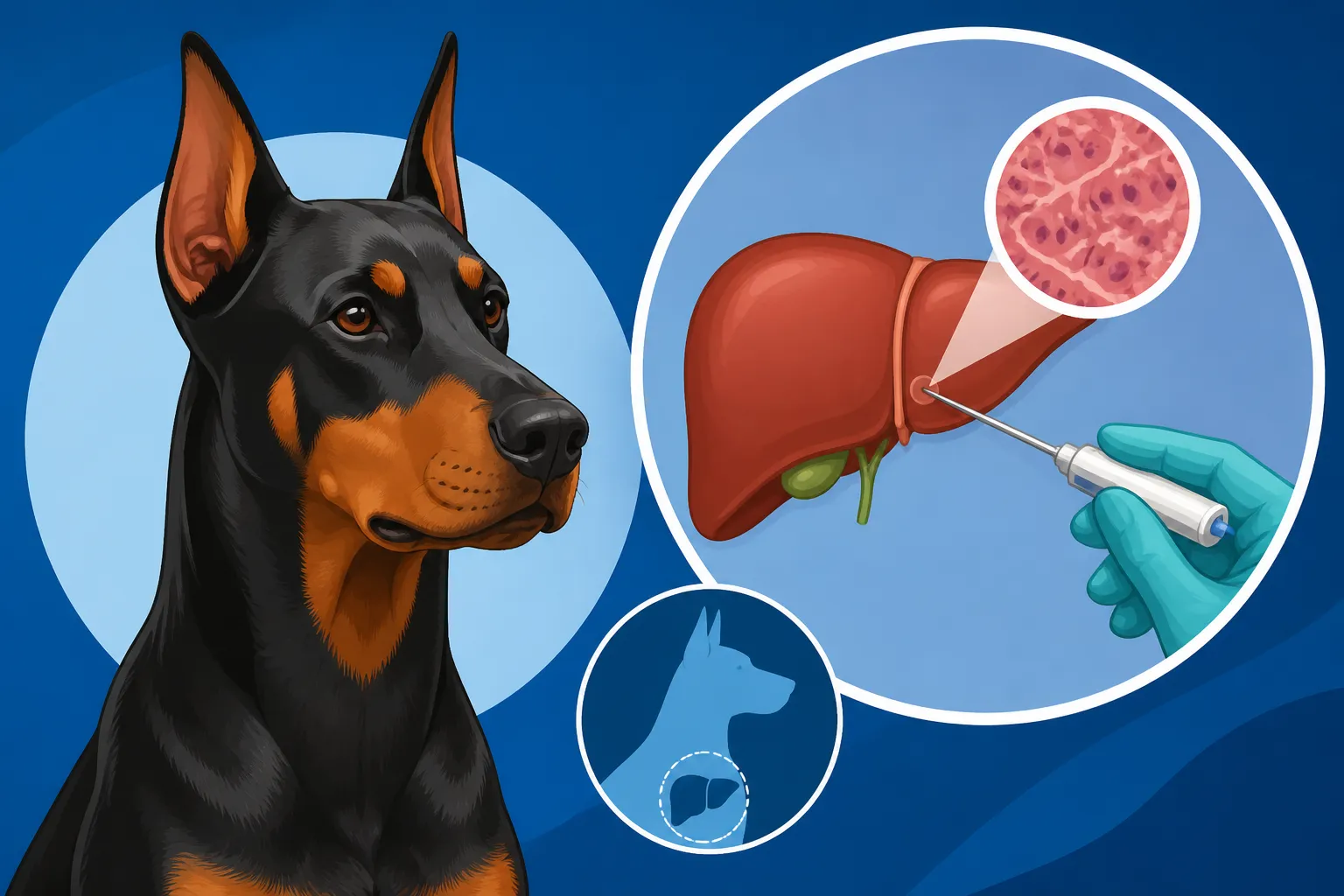
- Percutaneous (Needle) Biopsy: This is the least invasive method. After your Doberman is sedated or under light general anesthesia, a specialized biopsy needle is inserted through the abdominal wall into the liver, often guided by ultrasound to ensure accurate placement and avoid other organs. Multiple samples are typically taken. While less invasive, the samples obtained are smaller, and there's a higher risk of not getting a diagnostic sample, or the sample might only represent a small, potentially healthy, area of a diseased liver. Bleeding is a concern, though often manageable with this technique.
- Laparoscopic (Keyhole) Biopsy: This method uses a laparoscope, a thin tube with a camera, inserted through a small incision in the abdomen. This allows the veterinary surgeon to visually inspect the liver, identify abnormal areas, and take targeted biopsies with specialized instruments. It provides larger samples than a needle biopsy while still being less invasive than open surgery. Recovery is generally quicker, and the surgeon can often achieve better hemostasis (stopping bleeding) under direct visualization.
- Surgical (Open) Biopsy: This is the most invasive method, requiring a full abdominal incision. However, it offers the best visualization and allows the surgeon to obtain larger, wedge-shaped samples from specific areas of concern. It also allows for direct control of bleeding, which is a significant advantage for breeds like Dobermans. If there are other abdominal issues, or if the Doberman is also undergoing another procedure (like a gastropexy to prevent bloat), an open surgical biopsy might be preferred.
The choice of technique often depends on the Doberman's overall health, the suspected liver condition, the specific area of the liver to be biopsied, and the expertise and equipment available at your veterinary clinic. Your vet will discuss the pros and cons of each method with you.
Once the samples are collected, they are carefully preserved and sent to a veterinary pathologist for microscopic examination. This crucial step is where the definitive diagnosis is made.
| Biopsy Method | Pros | Cons |
|---|---|---|
| Percutaneous Needle | Least invasive, quicker recovery | Smaller samples, higher chance of non-diagnostic sample, blind spots |
| Laparoscopic | Minimally invasive, targeted samples, good visualization | Requires specialized equipment, may not be suitable for all cases |
| Surgical (Open) | Largest samples, best visualization, direct bleeding control | Most invasive, longer recovery time, larger incision |
Post-Biopsy Care and Potential Challenges for Dobermans
The period immediately following a liver biopsy is critical for your Doberman's recovery. While the specific care routine will vary slightly depending on the biopsy method used, certain aspects are universal, and Doberman owners need to be particularly vigilant due to breed-specific predispositions.
Monitoring for Complications
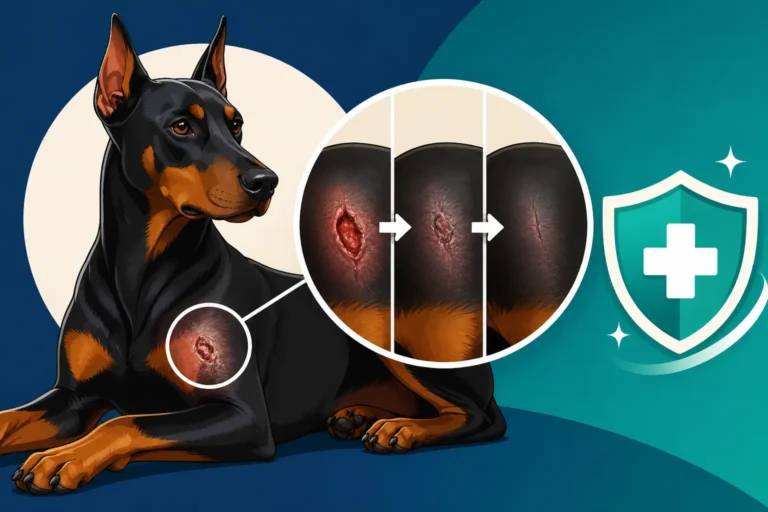
The most significant immediate concern after any liver biopsy, especially in a Doberman, is bleeding. Even with pre-screening for Von Willebrand Disease, the liver is a highly vascular organ, and some oozing is possible. Your Doberman will be closely monitored at the veterinary clinic for several hours, and often overnight, following the procedure. The veterinary staff will watch for signs of internal bleeding, such as pale gums, an increased heart rate, difficulty breathing, abdominal distension, or weakness. You may also notice some bruising or swelling around the incision site, which is generally normal, but excessive bruising or persistent oozing from the incision should be reported to your vet immediately.
Infection is another potential complication, though less common with sterile surgical techniques and prophylactic antibiotics. Signs of infection include redness, warmth, discharge, or excessive pain at the incision site, along with systemic signs like fever or lethargy.
Anesthetic complications are always a possibility with any surgical procedure. While modern anesthesia protocols are very safe, Dobermans, like all deep-chested breeds, have unique considerations. For general information about anesthesia and recovery, you might find our article on Vaccination and Anesthesia in a Doberman helpful. Your vet will have chosen the safest protocol for your individual Doberman based on their pre-anesthetic screening.
Managing Pain and Promoting Healing
Your Doberman will likely be sent home with pain medication to keep them comfortable during the initial recovery period. This might include NSAIDs (non-steroidal anti-inflammatory drugs) or opioids, depending on the severity of the discomfort. It’s crucial to administer these medications exactly as prescribed and to never give human pain relievers, as they can be toxic to dogs.
Rest is paramount for healing. Limit your Doberman's activity, avoiding strenuous exercise, jumping, or rough play for at least 10-14 days, or as advised by your vet. Leash walks for potty breaks should be short and controlled. If your Doberman is particularly active, you might need to use a crate to restrict movement and ensure adequate rest. Keep the incision site clean and dry, and prevent your Doberman from licking or chewing it, possibly with the help of an Elizabethan collar (e-collar or "cone of shame"). Many Dobermans find these collars frustrating, but they are essential for preventing self-trauma and infection. Your vet will schedule a follow-up appointment, typically in 10-14 days, to check the incision and remove any sutures.
Remember, the recovery process requires patience and vigilant observation. It’s a temporary inconvenience for a long-term benefit: a clear diagnosis and the start of effective treatment.
Interpreting Results and Next Steps
Receiving the biopsy results is often a moment of both anxiety and relief. Finally, you’ll have concrete answers about what’s been affecting your Doberman. The pathologist's report will be detailed, and your veterinarian will walk you through its findings and implications.
What the Pathologist Looks For
When the liver tissue arrives at the pathology lab, highly trained veterinary pathologists examine it under a microscope. They are looking for several key indicators:
- Inflammation: Is there an infiltration of inflammatory cells? If so, what type of cells are present (e.g., lymphocytes, neutrophils, macrophages), and where are they located within the liver tissue? This helps differentiate between various forms of hepatitis.
- Fibrosis and Cirrhosis: Is there evidence of scarring (fibrosis)? If severe and widespread, it could indicate cirrhosis, where normal liver architecture is replaced by scar tissue, significantly impairing function.
- Cellular Changes: Are the liver cells (hepatocytes) enlarged, damaged, or showing signs of degeneration? Are there abnormal cell growths that might indicate a tumor, either benign or malignant?
- Copper Accumulation: For Dobermans, this is a critical finding. Special stains (e.g., rhodanine or rubeanic acid) are used to detect and quantify copper within the liver cells. Significant copper accumulation confirms a diagnosis of copper storage disease. Our article on Copper Liver Disease in Doberman Females delves deeper into why this condition is often more prevalent or severe in females.
- Other Abnormalities: The pathologist will also look for evidence of other diseases, such as infectious agents, abnormal fat accumulation (hepatic lipidosis), or bile duct issues.
The detailed report will classify the type of liver disease, its severity, and whether specific elements like copper or cancerous cells are present.
Tailoring a Treatment Plan
With a definitive diagnosis in hand, your veterinarian can then formulate a specific and targeted treatment plan. This is where the liver biopsy truly makes a difference, moving beyond guesswork to precise intervention.
If copper storage disease is confirmed, treatment will likely involve:
- Copper Chelation Therapy: Medications like D-penicillamine or trientine (e.g., Cupramine or Syprine) are prescribed to bind to excess copper in the body, promoting its excretion. This is a long-term commitment, but it can significantly improve prognosis. You can learn more about this in Copper Chelation for a Doberman Liver.
- Low-Copper Diet: Dietary management is crucial to reduce further copper intake. Prescription diets specifically formulated for liver support are often recommended, as they are low in copper and can also help support liver regeneration. For more details on feeding strategies, refer to Low-Copper Diets for a Doberman.
- Antioxidants and Liver Protectants: Supplements like S-adenosylmethionine (SAMe) or milk thistle can help support liver function and protect cells from damage.
- Anti-inflammatory and Immunosuppressive Drugs: If significant inflammation (hepatitis) is present, corticosteroids or other immunosuppressants might be used to control the immune response.
In cases where a different diagnosis, such as a specific type of tumor or chronic hepatitis without copper involvement, is made, the treatment approach will be tailored accordingly. This might involve surgery, chemotherapy, long-term Medication for a Doberman With Hepatitis, or other supportive care.
The journey doesn't end with the diagnosis. Many liver conditions require ongoing monitoring, including regular blood tests and sometimes repeat ultrasounds, to assess the effectiveness of treatment and adjust as needed. The cost of long-term medication and specialized diets can add up, which is why pet insurance like Healthy Paws is a lifeline for many Doberman owners. Having a policy that helps cover these recurring expenses can make managing a chronic liver condition much more manageable. Understanding How Long a Doberman Lives With Liver Disease can vary greatly depending on the specific diagnosis and the adherence to the treatment plan. While a liver biopsy can feel overwhelming, it is often the most critical step toward providing your Doberman with the best possible chance at a healthy, happy future.
Disclaimer
This article is intended for informational purposes only and does not constitute medical advice. Always consult with a qualified veterinarian for any health concerns or before making any decisions about your Doberman's care.