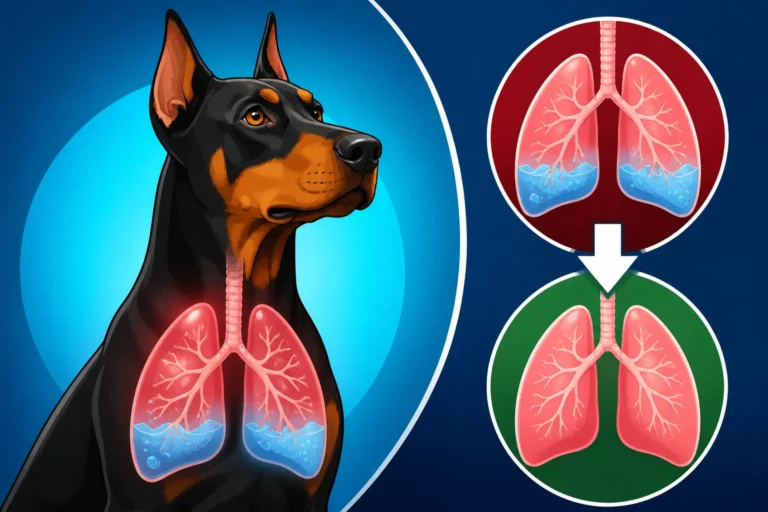
Whether Doberman Hepatitis Hits Females Harder
It's an absolutely heartbreaking reality for Doberman owners to learn about the various health challenges our beloved dogs face, and liver disease, specifically copper storage hepatopathy, is certainly high on that list. There's a persistent concern among us about whether our female Dobermans might be more susceptible or suffer more severely from this condition. This guide will dive deep into what we know about Doberman hepatitis, exploring whether there's truly a gender difference, what signs to watch for, and how best to manage this serious illness if it ever touches your furry family member.
Understanding Copper Storage Disease in Dobermans
When we talk about Doberman hepatitis, we're usually referring to a genetic condition called copper storage disease, or copper storage hepatopathy. This isn't just a simple liver infection; it's a deeply rooted issue where the liver struggles to process and excrete copper properly. Instead of eliminating excess copper, the liver starts to accumulate it, much like a leaky bucket slowly filling up. Over time, this copper build-up becomes toxic, leading to inflammation, cell damage, and eventually, chronic hepatitis and cirrhosis.
Imagine your Doberman's liver as a sophisticated filter and processing plant for its body. Every bit of food, every medication, every environmental toxin passes through it. In a Doberman with this genetic predisposition, that copper-filtering mechanism isn't working as it should. The copper, instead of being bound to proteins and safely excreted, remains in the liver cells, causing oxidative stress. This stress slowly but surely destroys liver tissue, which is then replaced by fibrous scar tissue, leading to a condition known as cirrhosis. Once cirrhosis sets in, the liver's ability to function properly is severely compromised, and the damage is often irreversible. The insidious part is that this accumulation can happen silently for years, with no outward signs that anything is wrong until the damage is extensive. This is why many owners are left blindsided when a diagnosis finally comes. For a deeper understanding of this process, you can learn more about Why Doberman Livers Store Copper.
The Role of Genetics and Predisposition
Copper storage hepatopathy in Dobermans is unequivocally an inherited condition. It’s not something your dog "catches" from the environment, though environmental factors like diet can certainly influence the rate of copper accumulation. Dobermans, along with several other breeds like Bedlington Terriers, West Highland White Terriers, and Labrador Retrievers, have a known genetic susceptibility. For Dobermans, specific genetic mutations have been identified that interfere with copper metabolism, leading to this dangerous build-up.
What does this mean for you, the owner? It means that understanding your Doberman's lineage and the health history of its parents and grandparents is absolutely crucial. A responsible breeder will be keenly aware of these genetic risks and will be actively testing their breeding stock to avoid passing on these predispositions. While genetic tests can identify carriers or affected individuals for certain copper metabolism genes in some breeds, it's a complex picture in Dobermans, where multiple genes might be at play, and not all mutations are fully understood or testable yet. So, a "clear" genetic test doesn't always guarantee immunity, but it significantly reduces risk. This complex genetic puzzle underscores the importance of The Health Testing a Doberman Breeder Must Show to give puppies the best start.
Do Female Dobermans Face a Higher Risk?
This is the question that weighs heavily on many Doberman owners' minds, and it's a valid one. Anecdotally, some veterinarians and Doberman enthusiasts have long suspected that female Dobermans, particularly unspayed females, might be more severely affected or diagnosed at a younger age than their male counterparts. However, the scientific literature and definitive research on a clear, overwhelming sex predisposition in Doberman copper storage disease are a bit more nuanced.
While some studies in other breeds, like Bedlington Terriers, have pointed towards sex-linked inheritance or a slight male predisposition, for Dobermans, the picture isn't as clear-cut as a simple "females get it worse" statement. Some veterinary pathologists and researchers have observed a trend where clinical signs of liver disease might manifest earlier or progress more rapidly in female Dobermans, especially those that are intact. This doesn't necessarily mean they accumulate copper more than males, but rather that the disease might become symptomatic or reach a critical stage faster. It's a subtle but important distinction. The disease itself is widespread in the breed; it's startling to consider How Many Dobermans Have Silent Liver Disease before any signs are evident.
The general consensus from several veterinary sources indicates that while there isn't a universally accepted, strong male or female predisposition to developing the disease, there might be factors that influence the progression or severity once copper accumulation begins. Some theories revolve around hormonal influences, which we’ll delve into next, but it's important not to assume that having a female Doberman automatically means a worse prognosis or higher risk of getting the disease compared to a male. Both sexes are at risk, and individual genetic makeup, rather than just sex, remains the primary determinant of susceptibility.
Hormonal Influences and Disease Progression
The idea that female Dobermans might show more severe signs or faster progression often circles back to hormonal influences, particularly estrogen. Hormones play a vast and complex role in metabolism throughout the body, including copper regulation. Estrogen, for example, is known to influence copper metabolism in humans and other animals, including its transport and storage. Some researchers hypothesize that higher estrogen levels in intact female dogs could potentially affect the liver's ability to cope with copper overload, perhaps by altering certain enzyme activities or inflammatory responses. This could theoretically accelerate liver damage or inflammation, leading to more pronounced clinical signs earlier in the disease course.
However, it's crucial to understand that this is largely still an area of ongoing research and theoretical discussion rather than a universally proven fact for Doberman copper storage disease. It's plausible, but not fully established, that the cyclical hormonal changes in intact females, or even the general hormonal environment, might create a situation where the liver is under more stress or less equipped to handle the copper burden compared to a male Doberman. This is why some veterinarians might suggest spaying female Dobermans at risk, though the direct impact on copper storage disease progression isn't definitively proven to halt or reverse the process. The complexity of these hormonal interactions means we can't draw simple conclusions, but it highlights the intricate dance between genetics, environment, and internal physiology that determines a Doberman's health.
Recognizing the Subtle Signs of Liver Disease
One of the most frustrating and heartbreaking aspects of copper storage disease in Dobermans is its often insidious onset. For a long time, sometimes years, your Doberman can appear perfectly healthy, showing no outward signs of the progressive damage happening within their liver. This "silent phase" makes early detection incredibly challenging and is why many dogs aren't diagnosed until the disease has significantly advanced and irreversible scarring (cirrhosis) has occurred. It's a terrible waiting game where you might not even know you're playing until it's too late. The Doberman years when everything tends to surface are usually middle to senior age, but for liver disease, the groundwork is laid much earlier.
When signs do eventually appear, they can be vague and easily mistaken for other conditions or just general "slowing down." These might include:
- Lethargy and Weakness: Your normally energetic Doberman might seem less enthusiastic about walks or play, spending more time resting.
- Decreased Appetite and Weight Loss: A sudden disinterest in food or a noticeable loss of muscle mass, despite regular eating, can be a red flag.
- Vomiting and Diarrhea: Intermittent digestive upset, which can sometimes be chronic.
- Increased Thirst and Urination: The damaged liver can impact kidney function, leading to polyuria and polydipsia.
- Jaundice: A yellowing of the gums, whites of the eyes, or skin, indicating a severe build-up of bilirubin, meaning significant liver dysfunction. This is often a late-stage sign.
- Ascites: A distended abdomen due to fluid accumulation, another sign of advanced liver failure.
- Neurological Signs: In very advanced stages, a buildup of toxins that the liver usually filters can affect the brain, leading to disorientation, circling, seizures, or behavioral changes (hepatic encephalopathy).
The critical takeaway here is that if you notice any of these subtle changes, especially if they persist, it's imperative to consult your veterinarian immediately. Early intervention is the only real chance at managing this disease effectively.
Diagnostic Steps for Suspected Hepatitis
Diagnosing copper storage disease isn't a straightforward process, largely because those early blood tests can be deceptively normal even as copper builds up. When your vet suspects liver issues, they’ll likely start with routine blood work, including a complete blood count (CBC) and a biochemistry panel. While elevated liver enzymes (like ALT, AST, ALP) are often the first indicators of liver damage, they don't tell you why the liver is damaged, nor are they always elevated in early copper storage disease. Liver enzyme results in a Doberman can fluctuate and don't always point directly to copper storage.
A more specific blood test, a bile acid stimulation test, can assess liver function, but again, it doesn't pinpoint copper as the cause. An abdominal ultrasound can reveal changes in liver size, texture, or the presence of ascites, but it's not diagnostic for copper accumulation itself.
The gold standard for definitively diagnosing copper storage hepatopathy is a liver biopsy. This involves taking a small tissue sample from the liver, which is then sent to a specialized laboratory for histopathology (examination under a microscope) and quantitative copper analysis. The biopsy allows pathologists to:
- Confirm Inflammation/Damage: Determine the type and severity of hepatitis.
- Quantify Copper Levels: Measure the actual amount of copper present in the liver tissue. This is crucial for confirming the diagnosis and guiding treatment.
- Rule Out Other Conditions: Ensure that the liver issues aren't due to other causes like infections, cancer, or other metabolic disorders.
Undergoing a liver biopsy often requires general anesthesia, which carries its own risks, and it can be a significant financial undertaking. However, without it, an accurate diagnosis and appropriate treatment plan are very difficult to establish. Understanding the need for this invasive but essential step is critical for a Doberman owner; for more details, read about Liver Biopsy in a Doberman.
Managing and Treating Doberman Copper Storage Disease
Once a definitive diagnosis of copper storage disease has been made, the good news is that there are treatment options available. The goal of treatment is twofold: to reduce the amount of copper in the liver and to minimize inflammation and support liver function. This is a lifelong commitment, requiring dedication and consistent veterinary care. The financial implications can be substantial, which is where careful planning and perhaps pet insurance like Healthy Paws can truly make a difference, helping you manage the costs of ongoing medications, special diets, and regular monitoring.
Dietary Management
The cornerstone of managing copper storage disease is a specialized low-copper diet. Since the body struggles to excrete copper, reducing the intake is paramount. This isn't just about avoiding obvious copper-rich foods; it means a complete overhaul of your Doberman's diet. Many commercial dog foods contain higher levels of copper than are suitable for a dog with this condition, even premium brands.
Your veterinarian or a veterinary nutritionist will recommend a therapeutic prescription diet specifically formulated for liver support and low copper content. These diets are carefully balanced to provide all necessary nutrients while minimizing copper intake. Common ingredients like organ meats (especially liver), shellfish, mushrooms, and certain grains can be high in copper, so feeding a truly low-copper diet means no cheating with table scraps or inappropriate treats. It is vital to adhere strictly to the recommended diet to prevent further copper accumulation. For a comprehensive guide on suitable options, explore Low-Copper Diets for a Doberman.
Chelation Therapy
Dietary management alone is often not enough to remove the copper that has already accumulated. This is where chelation therapy comes in. Chelating agents are medications that bind to heavy metals, including copper, in the body and facilitate their excretion through urine or feces. The most commonly used chelating agent for dogs with copper storage disease is D-penicillamine.
D-penicillamine is typically administered orally, and its use requires careful monitoring by your veterinarian. It's a powerful drug, and while effective, it can have side effects such as nausea, vomiting, or appetite loss, especially when first started. The dosage may need to be adjusted, and often, it's given on an empty stomach to improve absorption. Other chelators, like trientine, might be used in cases where D-penicillamine is not tolerated or effective. Chelation therapy is not a short-term fix; it's a long-term treatment often required for several months or even years to bring copper levels down. It’s an involved process, and understanding Copper Chelation for a Doberman Liver is key.
Supportive Care and Monitoring
Beyond diet and chelation, supportive medications are often prescribed to manage symptoms and protect the liver. These can include:
- Anti-inflammatory and Immunosuppressive Drugs: Such as corticosteroids (e.g., prednisone), which help reduce the liver inflammation caused by copper toxicity.
- Antioxidants: Supplements like S-adenosylmethionine (SAMe) and silymarin (milk thistle) are often used to help protect liver cells from further damage and promote regeneration. These work to combat the oxidative stress caused by excess copper.
- Ursodiol: A bile acid that helps improve bile flow, protect liver cells, and potentially reduce fibrosis.
- Antibiotics: If a secondary bacterial infection is present or suspected.
Regular follow-up appointments, including blood work (to monitor liver enzymes and other parameters) and sometimes repeat liver biopsies, are essential to assess the effectiveness of treatment and adjust protocols as needed. This frequent monitoring and medication regimen can be costly, highlighting again how beneficial a robust pet insurance plan like Healthy Paws can be in making these vital treatments accessible. Detailed information on managing these drug regimens can be found in Medication for a Doberman With Hepatitis.
Prognosis and Long-Term Outlook
The prognosis for Dobermans with copper storage disease is highly variable and depends significantly on how early the disease is diagnosed and how consistently and aggressively it is managed. If caught in the early, asymptomatic stages, before extensive cirrhosis has developed, many Dobermans can lead relatively normal lives with dedicated treatment. With proper dietary management, chelation therapy, and supportive care, it is possible to reduce copper levels, slow the progression of liver damage, and improve quality of life.
However, if the disease is diagnosed at an advanced stage, with significant liver damage and cirrhosis already present, the prognosis becomes much more guarded. At this point, the liver's ability to regenerate is severely compromised, and the focus shifts to managing symptoms and providing comfort. While treatments can still offer some relief and extend life, the long-term outlook is poorer. Liver failure is a serious, life-limiting condition, and unfortunately, Dobermans with severe, end-stage copper hepatopathy often have a significantly shortened lifespan.
This is why vigilance for subtle signs, regular veterinary check-ups (especially if your Doberman's lineage includes known carriers or affected dogs), and early diagnostic testing are so incredibly important. It gives your Doberman the best possible chance at a good outcome. Understanding How Long a Doberman Lives With Liver Disease often depends heavily on these factors.
| Feature | Early Stage Copper Storage Disease | Advanced Stage Copper Storage Disease |
|---|---|---|
| Symptoms | Often none, dog appears healthy | Lethargy, vomiting, weight loss, jaundice, ascites, neurological signs |
| Liver Enzymes | May be normal or mildly elevated | Often significantly elevated |
| Liver Biopsy | Crucial for definitive diagnosis | Confirms diagnosis, assesses damage |
| Prognosis | Good with consistent treatment | Guarded to poor |
| Treatment Focus | Copper reduction, liver protection | Symptom management, supportive care |
| Quality of Life | Excellent | Severely impacted |
| Lifespan Impact | Minimal with good management | Significantly shortened |
The journey of caring for a Doberman with copper storage disease is certainly challenging, both emotionally and financially. It requires a deep commitment from the owner and a strong partnership with a knowledgeable veterinary team. With proactive care, early diagnosis, and consistent management, many Dobermans can continue to enrich our lives for years, even with this genetic predisposition.
Disclaimer
This article is for general informational purposes only and does not constitute professional advice. Laws, prices and regulations vary by location and change over time. Consult a qualified professional for guidance on your specific situation.