Trimming Whiskers on a Show Doberman
Oh, the age-old question that many Doberman owners, especially those with an eye on the show ring, often grapple with: "To trim or not to trim the whiskers?" It’s a debate that pits tradition against natural function, and it can leave you feeling a bit torn about what’s best for your magnificent Doberman. This guide is here to cut through the confusion, explaining the history, purpose, and practicalities of dealing with those distinctive facial hairs on your show Doberman.
The Long-Standing Tradition of Trimming Whiskers in the Show Ring
For decades, trimming a Doberman's whiskers has been a quiet, almost unspoken expectation in the conformation ring. It’s one of those grooming rituals, much like ear cropping and tail docking, that became deeply ingrained in the presentation of the breed. The primary driver behind this practice is purely aesthetic, aimed at enhancing the "clean lines" and sculpted appearance that the breed standard emphasizes.
Why the "Clean Look" Became So Important
The Doberman Pinscher, as described in The Doberman the AKC Standard Describes, is a dog of elegant appearance, proud carriage, and noble temperament. Every aspect of their presentation in the show ring is designed to highlight these qualities. Whiskers, or vibrissae, while natural and functional, are often perceived by judges and handlers as detracting from this sleek, chiseled look. They can create a slightly "unruly" or "busy" appearance on a face meant to be sharp and refined. The idea is to present a dog where every line flows seamlessly, without anything to interrupt the striking silhouette.
Historically, this tradition likely developed from a desire to perfect the visual appeal of the breed. In the early days of dog showing, meticulous grooming was a sign of dedication and artistry. A Doberman presented with perfectly smooth muzzle and brow, free of stray hairs, was seen as the epitome of care and attention to detail. This emphasis on refinement meant that anything that broke the smooth contour of the skull and muzzle was deemed undesirable for the show ring, regardless of its biological function. It’s a practice passed down through generations of handlers, almost a rite of passage for showing the breed.
Historical Context and What it Implies
When you delve into the historical roots of dog showing, many grooming practices were established long before we fully understood the sensory capabilities of our canine companions. The focus was heavily on human perception of beauty and adherence to an idealized physical form. For the Doberman, a breed developed for its imposing presence and utility, every feature was eventually refined to contribute to that image. The whiskers, though vital for the dog, simply didn't fit the human-defined aesthetic of a sharp, alert, and clean-cut guardian.
It’s interesting to note that while the Doberman standard might detail ear and tail characteristics, it rarely, if ever, explicitly mentions whiskers. Yet, the unspoken rule persists. This implies a cultural expectation within the showing community rather than a strict written requirement. Handlers, aspiring to win, observe what successful exhibitors do and naturally emulate it. If winning Dobermans consistently have trimmed whiskers, it creates a precedent that can feel like a requirement, even if it's not codified. It’s part of the silent language of the show ring, where a perfect presentation speaks volumes.
Understanding the Anatomy and Function of Doberman Whiskers
Before you reach for those grooming shears, it's really important to understand what those seemingly simple whiskers actually do for your Doberman. They're not just random hairs; they are sophisticated sensory organs with a crucial role in how your dog navigates and perceives its world. It's a bit like taking away a person's fingertips – imagine trying to feel your way around in the dark without them!
The Sensory World of Vibrissae
Doberman whiskers, scientifically known as vibrissae, are thick, specialized hairs that are deeply embedded in your dog's skin, surrounded by a rich supply of nerves and blood vessels. Think of them as a dog’s sixth sense. They're found primarily on the muzzle, above the eyes, on the chin, and sometimes on the forelegs. Each whisker acts like a tiny antenna, picking up subtle changes in air currents and vibrations.
When a whisker touches something, or even when air currents shift around it, the follicle sends a rapid signal to the dog's brain. This information helps your Doberman create a detailed mental map of its surroundings, even in the dark or in unfamiliar territory. It's not just about touch; it's about detecting spatial relationships, depth, and the presence of objects without needing to see or physically bump into them. This is especially vital for a dog moving through tight spaces or investigating new environments.
How Dobermans Utilize Their Whiskers Daily
From the moment your Doberman puppy is exploring the world to an adult navigating your home, whiskers play an integral role in their daily life. Imagine your Doberman sniffing out a treat dropped under the couch; those muzzle whiskers help it gauge the exact distance and retrieve the item without bumping its nose. When they walk through a doorway in low light, the whiskers on their face help them determine if they can fit without hitting their head.
They are also crucial for communication. A Doberman might subtly adjust its whiskers when interacting with other dogs or even with you, indicating interest, curiosity, or sometimes even caution. While we might focus on their body language or tail wags, the subtle movements of their vibrissae are part of a larger communication repertoire. Removing them, therefore, can diminish their ability to sense and react to their environment as effectively. It can be disorienting, particularly in new or dimly lit situations, making tasks like finding a dropped toy in the evening harder than it needs to be. For pet Dobermans, there's generally no good reason to remove these important sensory tools.
Methods for Safe and Effective Whisker Trimming
If you’ve decided that trimming your show Doberman’s whiskers is part of their show preparation, doing it safely and effectively is paramount. You want to achieve the desired aesthetic without causing any distress or accidental injury to your dog. This isn't a task to be rushed, and patience is definitely a virtue here.
Choosing the Right Tools and Preparation
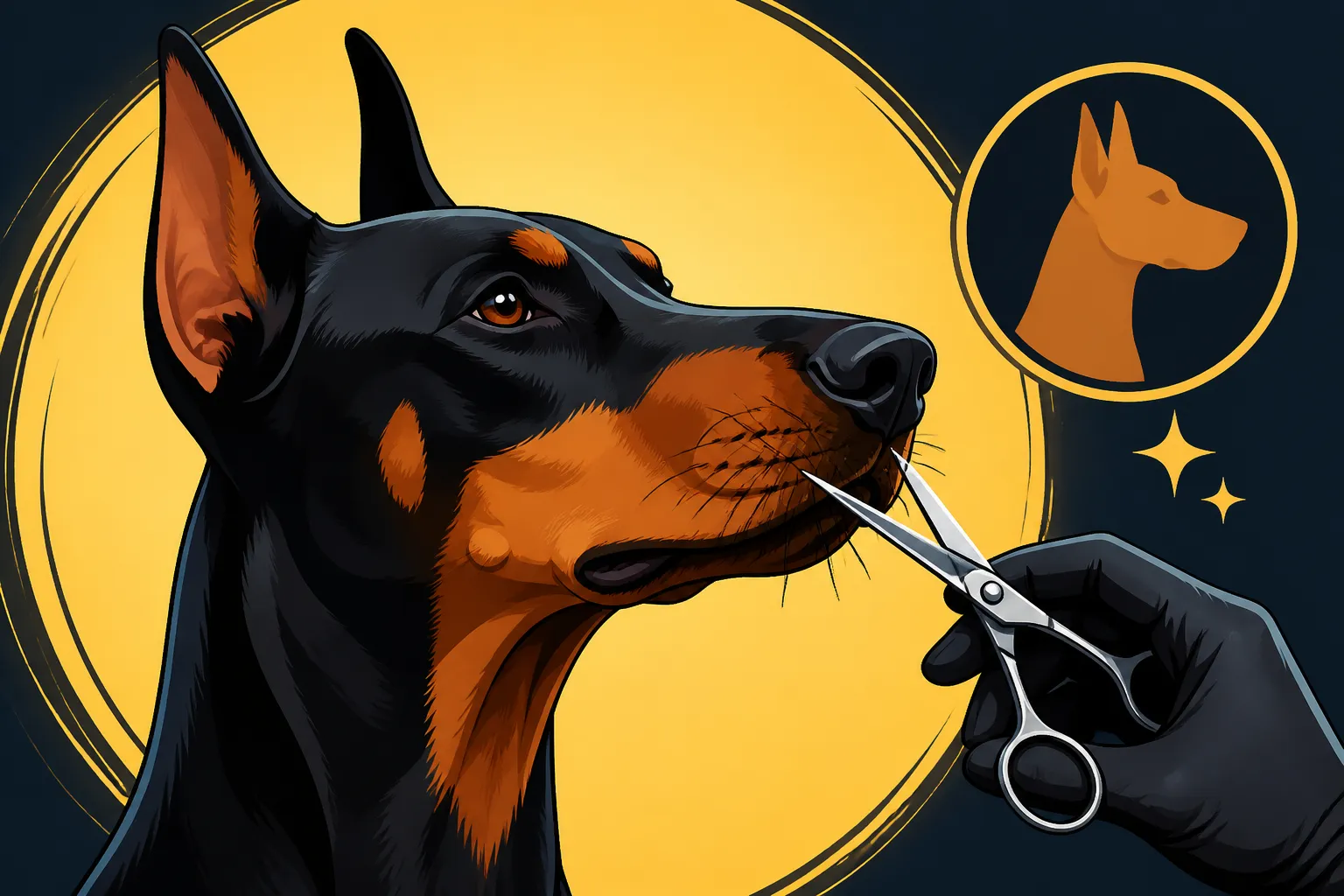
First things first, gather your tools. You’ll need a good quality pair of grooming scissors, preferably with blunt tips to minimize the risk of accidental pokes, or a small, quiet electric trimmer designed for pet use. Many owners find a small, cordless trimmer provides a cleaner, closer cut on the muzzle without the risk of scissor nips. You can find excellent options on platforms like Amazon or Chewy, which offer a variety of specialized grooming tools. Make sure your tools are clean and sharp to ensure a smooth cut and prevent pulling the hair, which can be uncomfortable for your dog.
Before you even pick up the tools, make sure your Doberman is calm and relaxed. A stressed or fidgety dog is an accident waiting to happen. It's often helpful to introduce the tools gradually, letting your dog sniff them and associating them with positive experiences, like treats. A good brushing session beforehand can also help relax your dog and remove any loose hair, making the trimming process smoother. Remember, you're working very close to sensitive areas like eyes and nostrils, so their cooperation is key.
Step-by-Step Guide to Trimming Your Doberman's Whiskers
Once your Doberman is settled, you can begin. It's often easiest to start with the muzzle whiskers, as these are the most prominent and usually the main target for trimming.
- Secure Your Doberman: Have your dog in a comfortable, well-lit area. If they are accustomed to a grooming table, that’s ideal. Otherwise, a non-slip mat on a sturdy surface, or even sitting on the floor with them, can work. You might need a second person to gently hold your Doberman's head still, especially if they are new to the process.
- Muzzle Whiskers: Using your blunt-tip scissors or electric trimmer, carefully and precisely trim the whiskers flush with the surrounding hair. For scissors, hold the blades perpendicular to the skin and snip quickly. If using a trimmer, gently press it against the skin and sweep. Be extra cautious around the lips and nose.
- Brow Whiskers: These are the long, stiff hairs above the eyes. These can be particularly tricky as you are very close to the eye. Use extreme caution. Gently pull the whisker away from the skin slightly and snip it. Alternatively, a small trimmer can be used carefully, but always be aware of the eye itself.
- Chin and Cheek Whiskers: Don't forget the whiskers on the chin and along the cheeks. Follow the same careful trimming technique.
- Foreleg Whiskers: Some Dobermans also have whiskers on their forelegs. While less critical for the show ring "face" aesthetic, they are often trimmed for a complete, clean presentation. These are generally easier to trim as they are further from very sensitive areas.
Table: Whisker Trimming Tools Comparison
| Tool Type | Best For | Pros | Cons | Safety Considerations |
|---|---|---|---|---|
| Blunt-Tip Scissors | Precise snipping | Affordable, quiet, good for individual hairs | Can accidentally nip skin if dog moves, slower | Always use blunt tips. Keep fingers between blades and skin. |
| Small Electric Trimmer | Fast, close cut on large areas | Quick, efficient, reduced risk of skin nips | Can be noisy (spooking some dogs), requires charging/batteries | Ensure blade is clean. Use a quiet model for anxious dogs. |
Frequency and Safety Precautions
How often you need to trim will depend on your Doberman’s individual growth rate, but typically, show Dobermans will have their whiskers trimmed a few days before each show. This allows for any minor skin irritation to subside and ensures a fresh, clean look for the ring. Consistent, positive reinforcement during the process will make it easier for both of you.
Always prioritize your dog's safety and comfort. If your Doberman becomes overly anxious or stressed, stop and try again later. Never force the issue, as a negative experience can make future grooming sessions much harder. Be mindful of their thin skin; a Doberman's skin can be quite delicate, so Thin Doberman Skin and Everyday Cuts are a real concern if you're not careful. If you’re unsure, consider asking an experienced Doberman handler or a professional groomer to demonstrate the technique first.
Ethical Considerations and Alternatives to Trimming
The decision to trim whiskers on a show Doberman isn't just about aesthetics; it brings up important ethical questions regarding animal welfare and natural function. While deeply rooted in show tradition, it’s worth pausing to consider the broader implications.
The Debate: Welfare vs. Aesthetics
On one side, you have the historical show ring tradition and the desire to present a Doberman that aligns with specific aesthetic ideals. For many exhibitors, it's simply "what you do" to compete successfully. They might argue that dogs adapt, and that the minor sensory impact is outweighed by the importance of presenting the breed as intended in the show environment. It's part of the extensive grooming routine, which also includes things like keeping their Doberman Grooming on a Coat With No Undercoat sleek and healthy.
However, a growing number of advocates and pet owners question the practice. They emphasize the critical role whiskers play in a dog’s sensory perception, arguing that removing them is akin to hindering a natural function without any health benefit for the dog. They point out that in natural environments, Dobermans rely on these hairs for critical information. While a domestic Doberman likely isn't tracking prey in dense undergrowth, even navigating a familiar home in the dark, sensing changes in air pressure, or interacting socially can be subtly affected. For pet Dobermans who aren't in the show ring, there’s truly no functional reason to remove them, and many owners prefer to leave their dogs as nature intended.
How Judges View Untrimmed Whiskers
It's a nuanced topic within the judging community. As mentioned earlier, breed standards usually don't explicitly command whisker removal. This leaves it open to individual interpretation by judges. Some judges, deeply entrenched in tradition, may indeed view untrimmed whiskers as a lack of proper grooming and presentation, potentially marking down a dog that otherwise meets The Doberman Neck and Topline Judges Want and other criteria. They see it as part of the overall "finished" look required for top competition.
Other judges, perhaps those with a stronger emphasis on natural function and animal welfare, might be more forgiving or even indifferent to the presence of whiskers, as long as the dog's overall conformation and temperament are excellent. The trend in some dog communities is slowly shifting towards a greater acceptance of natural presentation, mirroring debates around practices like ear cropping and tail docking, as highlighted in articles like Whether an Uncropped Doberman Can Win. Ultimately, while it may not be an explicit disqualifier, untrimmed whiskers can sometimes put a Doberman at a perceived disadvantage in a highly competitive ring where every small detail is scrutinized.
Embracing Natural Presentation for Pet Dobermans
For Doberman owners whose primary goal is companionship, not conformation titles, the decision is much simpler: leave the whiskers alone! Your Doberman relies on them. There's no benefit to removing them for a pet, and doing so only takes away a valuable sensory tool. Instead of focusing on trimming, concentrate on aspects of care that genuinely enhance their quality of life, such as proper nutrition. While a fresh food diet from a brand like Ollie won’t make whiskers grow back faster or prevent shedding (which happens even with a Doberman Grooming on a Coat With No Undercoat), providing excellent nutrition helps maintain overall health, leading to a vibrant coat and healthy skin. For all your other Doberman needs, from bedding to toys, check out stores like Chewy and Amazon, which cater to every aspect of a Doberman's life.
Ultimately, whether you trim your Doberman's whiskers for the show ring or choose to let them thrive naturally, understanding their purpose and making an informed decision is key. It's about balancing tradition, aesthetics, and your Doberman's well-being.
Disclaimer
This article is for general informational purposes only and does not constitute professional advice. Laws, prices and regulations vary by location and change over time. Consult a qualified professional for guidance on your specific situation.