Why a White Doberman Is Really an Albino
It’s a common sight to see photos circulating online of what people call "white Dobermans" – majestic, cream-colored dogs with startling blue eyes and soft pink noses. They're often marketed as rare, exotic, or special, fetching high prices from unsuspecting enthusiasts. However, the truth behind these striking Dobermans is far less glamorous and significantly more concerning for their welfare. This guide will clarify why these "white" Dobermans are, in fact, albinos, and what that genetic reality means for their health and the responsibilities of their owners.
The Appearance of a "White" Doberman: More Than Just Pale
When you first see a so-called "white" Doberman, your eye is immediately drawn to its unusual coloring. It’s certainly a unique look, far removed from the classic black and rust or even the less common blue and fawn Dobermans we usually encounter. But this isn't just a lighter shade; it's a profound lack of pigment that carries serious implications.
The Distinctive Look of a Diluted Doberman
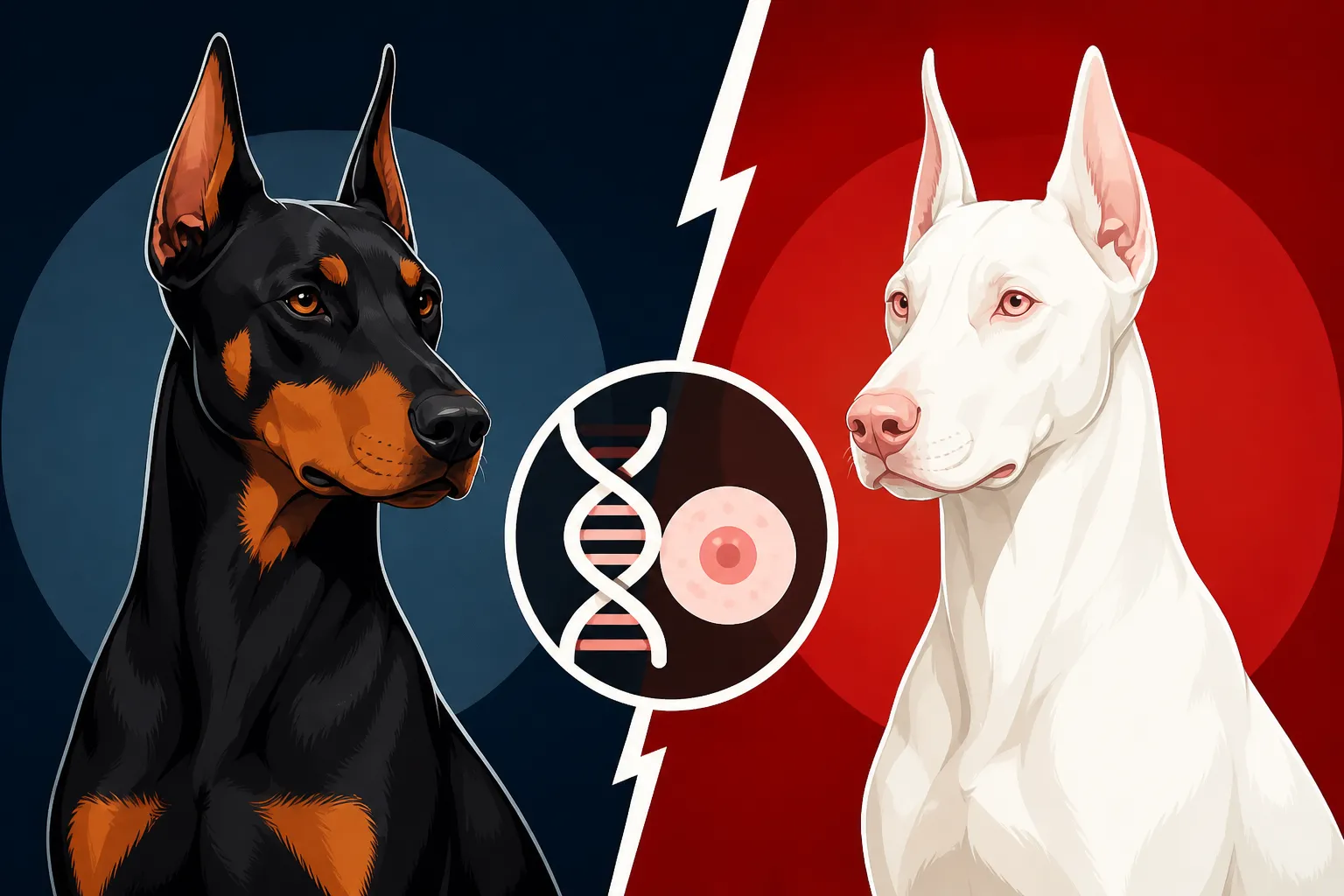
A true albino Doberman, often referred to as a "white" Doberman, typically displays a cream or pale ivory coat that can sometimes appear almost white in certain lighting. What truly sets them apart, however, are their distinct features. Their eyes are frequently a striking blue, but upon closer inspection, they can sometimes appear reddish or pinkish due to the lack of pigment in the iris, allowing blood vessels to show through. This isn't just a pretty color; it's a visual indicator of their genetic condition.
Their noses, paw pads, and inner mouth membranes are usually a soft, unpigmented pink. Even their skin, where visible, lacks the normal dark pigmentation found in typical Dobermans. These aren't subtle variations you might see in a red Doberman with lighter rust markings; these are clear signs of a severe pigment deficiency across the board. The overall impression is one of extreme paleness, which can be captivating but should also raise immediate questions about their underlying genetics.
Dispelling the "Rare White Doberman" Myth
For years, some breeders have capitalized on the novelty of these dogs, advertising them as "rare white Dobermans" to justify exorbitant prices. This marketing tactic plays on people's desire for something unique and exclusive. However, this "rarity" is not a mark of special genetic excellence or a desirable trait within the breed standard. In fact, it's quite the opposite.
The Doberman Pinscher Club of America and other reputable Doberman organizations do not recognize white Dobermans as a standard color. Instead, they consider them to be albinos. Understanding this distinction is crucial because it moves the conversation from aesthetic appeal to serious health concerns. When you hear "rare white Doberman," a red flag should immediately go up, prompting you to investigate further rather than be swayed by the perceived exclusivity. The true rarity is not in their color, but in the unfortunate genetic lottery they've drawn. This is also why they are assigned The Z in a Doberman Registration Number by some registries, which flags them as albinos rather than a recognized color variant.
Understanding Albinism in Canines
To truly grasp why a "white" Doberman is an albino, we need to delve into the biological definition of albinism and how it manifests in the canine world. It's a condition rooted deep within their genetic code, affecting fundamental processes of pigment production.
What is Albinism? The Genetic Reality
Albinism, in its simplest terms, is a congenital condition characterized by a partial or total lack of melanin, the pigment responsible for coloring skin, hair, and eyes. It's not just about a white coat; it's about the complete inability of the body to produce or distribute melanin. In dogs, as in humans and other animals, albinism is typically caused by a specific genetic mutation that disrupts the melanin synthesis pathway.
This means that while a dog might look white because of extreme white spotting or a dominant white gene (which allows for normal pigment production in the skin and eyes, just not in the coat), an albino dog lacks pigment everywhere. Their eyes don't just appear blue; they appear blue because the iris lacks pigment, allowing underlying blood vessels to give it that hue. In severe cases, they can look pink or red. Their skin is pink because there's no protective melanin. This distinction is vital because a white coat without the other hallmarks of albinism is an entirely different genetic phenomenon.
The Specific Gene Behind Doberman Albinism
In Dobermans, the condition commonly seen in "white" individuals is indeed albinism, specifically oculocutaneous albinism type 1 (OCA1). This particular form of albinism is caused by a recessive gene mutation affecting the tyrosinase enzyme, which is critical for melanin production. For a Doberman to be an albino, it must inherit two copies of this specific recessive gene – one from each parent. Dogs with only one copy are carriers but will not display albinism themselves.
This is a key point of differentiation from other "dilute" colors like blue or fawn Dobermans. Blue and fawn Dobermans carry a different gene, the dilution gene, which reduces the amount of pigment but doesn't eliminate it entirely. You'll notice What the Dilution Gene Does to a Doberman is different; these dogs still have dark eye rims, dark noses (grey for blue, liver for fawn), and pigmented paw pads. Their eyes are typically amber or gold, not blue or pinkish. Albinism, conversely, is a complete or near-complete absence of all melanin, leading to the distinct unpigmented features. It's not just a lighter shade; it's a fundamental breakdown in the pigment-making process itself.
Health Implications and Challenges for Albino Dobermans
The lack of pigment in albino Dobermans isn't merely a cosmetic difference; it brings with it a host of serious health challenges that potential owners need to be fully aware of. These dogs require specialized care and attention to live a comfortable life, often demanding more resources and vigilance than a typically pigmented Doberman.
Eye Health: Sensitivity and Vision Issues
One of the most immediate and impactful health concerns for an albino Doberman relates to their eyes. Without melanin in the iris, their eyes cannot filter light effectively, leading to a condition called photophobia – extreme sensitivity to light. Imagine stepping outside on a bright sunny day without sunglasses, but feeling that intensity every moment the light touches your eyes. This constant discomfort can make outdoor activities challenging and stressful for them.
Beyond light sensitivity, many albino Dobermans experience various degrees of visual impairment. This can manifest as reduced visual acuity, making it harder for them to see clearly, especially in bright conditions or at a distance. Some may also exhibit nystagmus, an involuntary rhythmic movement of the eyes, further hindering their ability to focus. Their eyes, often a captivating pale blue or even pinkish-red as blood vessels show through the unpigmented iris, are a constant reminder of their vulnerability. Owners must take proactive steps, such as ensuring they have shaded areas, providing doggy sunglasses (yes, they exist!), and limiting exposure to harsh sunlight. For more information, you can read about Light Sensitivity in an Albino Doberman.
Skin Health: Sunburn and Cancer Risks
Perhaps the most critical health concern for albino Dobermans is their extremely delicate skin. Melanin acts as a natural sunscreen, protecting the skin from harmful ultraviolet (UV) radiation. Without this protection, albino Dobermans are highly susceptible to severe sunburn, even with minimal exposure. This isn't just an uncomfortable burn; repeated sunburns significantly increase their risk of developing skin cancers, such as squamous cell carcinoma and hemangiosarcoma.
Imagine having skin that blisters and peels after just a short time in the sun. This is the reality for many albino Dobermans. Protecting their skin requires constant vigilance. They often need to be indoor-only dogs during peak daylight hours, or if outside, must be outfitted in specialized UV-protective clothing and generously slathered with dog-safe sunscreen on any exposed areas. Walks should be timed for dawn or dusk. Neglecting these precautions can lead to painful skin lesions, chronic discomfort, and ultimately, life-threatening cancers. This is why Sun Protection for a Thin-Coated Doberman is so vital for them, even more so than for other dilute Dobermans. Why a White Doberman Burns and Blisters really delves into these risks. Many owners find a good selection of these protective items at retailers like Chewy.
Behavioral and Temperamental Concerns
While not a direct physiological illness, many reports suggest that albino Dobermans can exhibit certain behavioral tendencies that differ from their typically pigmented counterparts. Anecdotally, these dogs are sometimes described as shyer, more anxious, or even fearful. This could be a direct result of their physical limitations; imagine living with impaired vision and constant discomfort from light. It's bound to make the world a more overwhelming and potentially frightening place.
Their reduced vision might make them startle more easily, leading to a defensive reaction. Constant skin discomfort or the general feeling of being unwell could also contribute to a less confident or more withdrawn temperament. Early, careful, and gentle socialization is crucial for any Doberman, but it's even more paramount for an albino. Creating a predictable, calm, and safe environment, coupled with positive reinforcement training, can help them navigate the world with greater confidence. While not every albino Doberman will display these traits, it's a factor owners must be prepared to address with patience and understanding.
Ethical Considerations and Breeder Responsibility
The topic of albino Dobermans extends beyond just individual health challenges; it brings up significant ethical questions regarding breeding practices and the responsibility breeders have to the welfare of the breed.
Why Responsible Breeders Avoid Breeding Albino Dobermans
For any truly responsible breeder, the health and sound temperament of their dogs are paramount. Breeding for a trait that is known to cause severe health problems and potential quality of life issues goes directly against these ethical principles. The Doberman Pinscher Club of America (DPCA), the parent club for the breed in the United States, and other reputable Doberman organizations globally, unequivocally discourage the breeding of albino Dobermans. They consider albinism a serious fault that compromises the dog's well-being.
Ethical breeders invest heavily in health testing their breeding stock for genetic conditions prevalent in Dobermans, such as DCM, Von Willebrand's disease, and Wobbler syndrome. Intentionally breeding dogs that could produce albinos, or selling albino puppies as desirable "rare" specimens, undermines the entire ethos of responsible breeding. Such practices prioritize profit or novelty over the health and longevity of the dogs, often leading to heart-wrenching outcomes for unsuspecting families. For more on this, consider reading Why the Doberman Club Opposes White Dogs to understand the official stance. These breeders understand the profound impact of Albino Dobermans and Their Health Problems and strive to eliminate them from their lines.
The Difference Between "Dilute" and "Albino"
It’s easy to get confused between a true albino Doberman and the other non-standard, but still pigmented, colors like blue or fawn. It’s a distinction that often needs clarification because the genetic basis and health implications are quite different. As mentioned earlier, blue and fawn Dobermans are products of a dilution gene. This gene affects how pigment is expressed, essentially "diluting" black to blue (a greyish color) and red to fawn (a sandy beige).
Crucially, these dilute Dobermans still produce melanin. Their eyes are typically amber, gold, or light brown, not blue or pink. Their noses, paw pads, and eye rims are also pigmented, albeit in a diluted shade (grey for blue Dobermans, liver for fawn Dobermans). While blue and fawn Dobermans can have their own set of health concerns, most notably Color Dilution Alopecia in Blue and Fawn Dobermans, they do not suffer from the extreme light sensitivity, vision problems, and severe skin cancer risks associated with the complete lack of melanin in albinos. Understanding this difference is key to being an informed Doberman enthusiast.
Comparing Doberman Pigmentation Types
Let's break down the key differences in how pigment (or lack thereof) manifests across Doberman varieties:
| Feature | Standard Doberman (Black/Red) | Dilute Doberman (Blue/Fawn) | Albino Doberman ("White") |
|---|---|---|---|
| Coat Color | Deep black or rich red with rust marks | Greyish-blue or sandy fawn with rust | Cream to pale ivory (appears white) |
| Nose Color | Black or liver (matching coat) | Grey or liver (matching coat) | Pink (unpigmented) |
| Eye Color | Dark brown to medium brown | Amber, golden, or light brown | Blue, or pinkish-red |
| Paw Pads | Black or liver | Grey or liver | Pink (unpigmented) |
| Melanin Present? | Yes, full pigment | Yes, diluted pigment | No (or almost none) |
| Photophobia | No | No | Yes (severe light sensitivity) |
| Skin Cancer Risk | Normal breed risk | Increased (due to CDA, less common) | Highly increased (severe sunburn) |
| Breed Standard | Recognized | Recognized by AKC (faults in some) | Not recognized (considered albino) |
In conclusion, when you see a "white" Doberman, remember that you are looking at an albino. This isn't a rare, desirable color, but a genetic condition that places significant burdens on the dog's health and requires a lifelong commitment to specialized care from its owner. Choosing a Doberman from a reputable breeder who prioritizes health and adherence to the breed standard is the best way to ensure you bring home a healthy, happy companion.
Disclaimer
This article is for general informational purposes only and does not constitute professional advice. Laws, prices and regulations vary by location and change over time. Consult a qualified professional for guidance on your specific situation.