The Greyhound Line Behind Doberman Speed
It’s easy to look at a Doberman standing noble and alert, and immediately think of their guarding prowess and imposing presence. But if you’ve ever seen one truly open up their stride, you know there’s an incredible burst of speed and agility lurking beneath that sleek coat. Many people wonder where this surprising athleticism comes from, often associating it primarily with their protective instincts. This guide will delve into the fascinating origins of the Doberman, particularly focusing on the ancestral lines, especially the Greyhound, that contributed to their remarkable speed and how it impacts living with these incredible dogs today.
Understanding the Doberman's Inherent Athleticism
When Karl Dobermann set out to create the ultimate guard dog, he wasn't just looking for a fearless protector; he needed a dog that could cover ground swiftly, intercept threats, and possess incredible endurance. The Doberman's original purpose was far more active and dynamic than merely standing guard. They were companions to a tax collector in 19th-century Apolda, Germany, who needed a robust, intelligent, and agile partner for navigating potentially dangerous routes, often at night. This practical need for quick movement and sustained effort profoundly shaped the breed's athletic foundation.
The Doberman as a Working Breed: A Foundation of Function
The Doberman Pinscher was intentionally bred as a working dog from its very inception. This wasn't a breed developed for parlor tricks or aesthetic appeal alone, but rather for a very specific, demanding job. Their lineage was carefully selected to produce a dog with a formidable combination of courage, intelligence, and physical capability. They needed to be able to react instantly, accelerate rapidly, and maintain high speeds over varied terrain, often alongside their owner, not just in a fenced yard. This emphasis on functionality meant that traits like speed, stamina, and muscular efficiency were paramount in the breeding program. Without these physical attributes, they simply couldn't fulfill the demanding roles they were created for.
More Than Just a Guard Dog: Speed and Agility in Their Original Role
While their guarding instinct is legendary, the early Dobermans were not static sentinels. Imagine a situation where Dobermann himself, carrying collections, might be set upon. His dog wouldn't just bark; it would need to move like lightning to intercede, to outmaneuver an aggressor, or to pursue someone attempting to flee. This required a dog capable of incredible bursts of speed and remarkable agility to navigate obstacles and change direction on a dime. They were, in essence, canine bodyguards, and a slow bodyguard is a less effective one. The sleek, muscular build of the Doberman, which allows for such swift movement, is a direct inheritance from these early functional requirements. You can see this dedication to purpose reflected in The Doberman the AKC Standard Describes, which emphasizes their elegant yet powerful physique, perfectly suited for both speed and strength.
Tracing the Ancestry: The Greyhound's Contribution to Doberman Speed
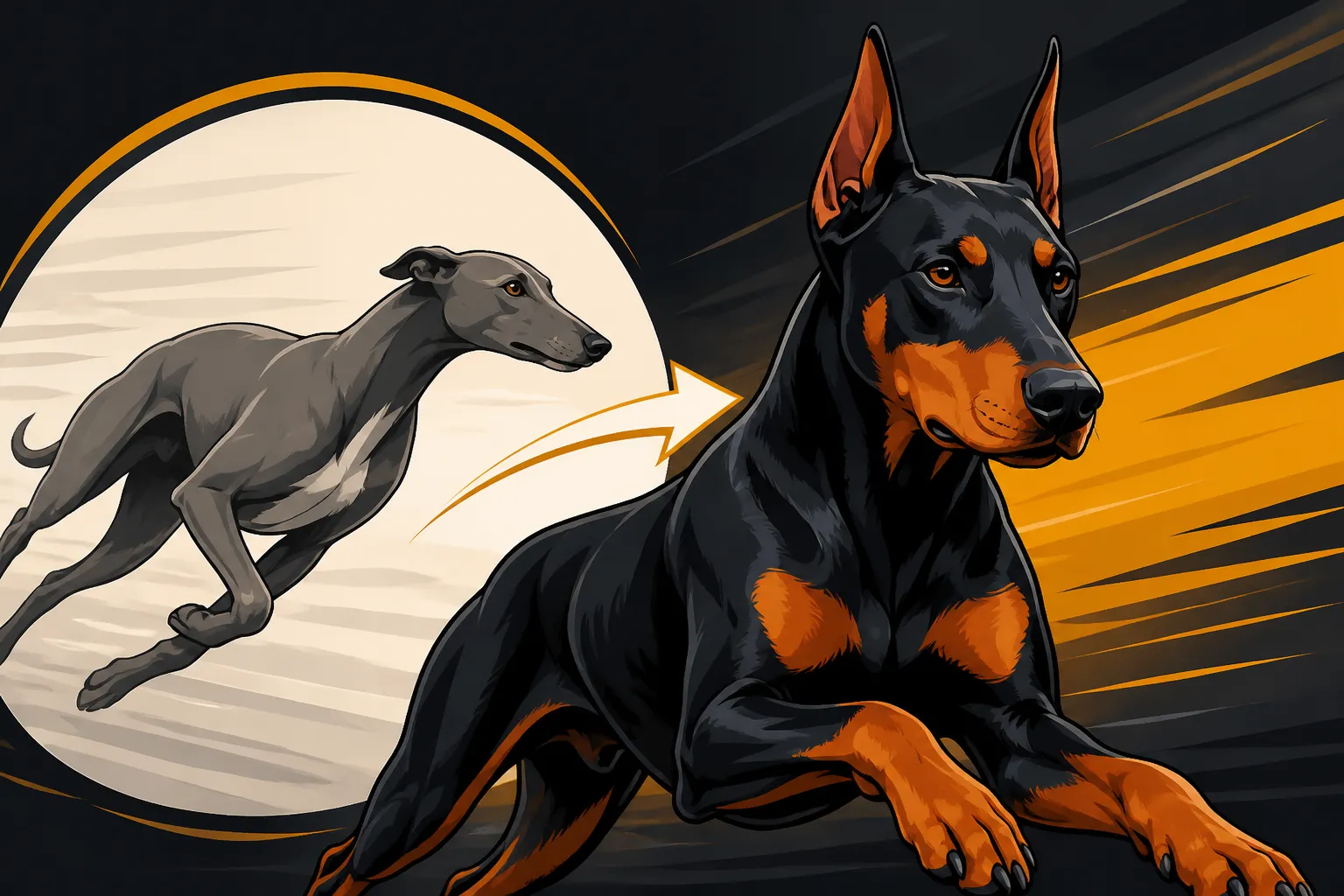
Delving into the Doberman's ancestry is a fascinating journey, albeit one sometimes shrouded in the mists of history, as Karl Dobermann didn't keep meticulous records of his exact crosses. However, consistent anecdotal accounts and phenotypic analysis point strongly to specific breeds, and among those believed to have lent considerable speed and grace is the Greyhound. This isn't just speculation; when you observe a Doberman in full sprint, the way their body extends, contracts, and covers ground bears a striking resemblance to a sighthound.
Karl Dobermann's Vision: The Need for Swiftness
Karl Dobermann's motivation was deeply practical. As a tax collector and night watchman, he needed a dog that was more than just fearless; it had to be quick. Quick to react, quick to move, quick to catch. When you consider The Tax Collector Who Invented the Doberman and his demanding profession, it becomes clear that a slow, lumbering dog simply wouldn't cut it. He sought to combine the sharp intelligence of a terrier with the imposing presence of a mastiff-type, but crucially, he also incorporated the lightning-fast reflexes and ground-covering ability of sighthounds. This infusion of speed was critical for a dog intended to protect its master in potentially dangerous situations, where a fraction of a second could make all the difference.
The Evidence for Greyhound Influence: Speed and Form
While definitive DNA evidence from the 19th century is, of course, impossible, the physical and behavioral characteristics of the Doberman strongly suggest the inclusion of sighthound breeds like the Greyhound or a similar swift, short-coated dog. Look at the Doberman's deep chest, narrow waist, and powerful hindquarters – these are all hallmarks of a dog designed for speed, much like a Greyhound. Their long, powerful legs and flexible spine allow for the characteristic "double suspension gallop," where all four feet are off the ground twice during each stride, maximizing reach and efficiency.
Consider the following comparison:
| Trait | Doberman Pinscher | Greyhound |
|---|---|---|
| Body Shape | Lean, muscular, deep chest, tucked abdomen, athletic | Extremely lean, deep chest, highly tucked abdomen |
| Legs | Long, strong, well-angulated for power and reach | Very long, slender yet powerful, built for propulsion |
| Gait | Efficient, ground-covering, capable of double suspension | Signature double suspension gallop, incredibly fast |
| Temperament (Active) | Energetic, alert, intelligent, requires significant exercise | Reserved but capable of explosive speed, loves to run |
| Coat | Short, smooth, close-lying | Short, very fine, smooth |
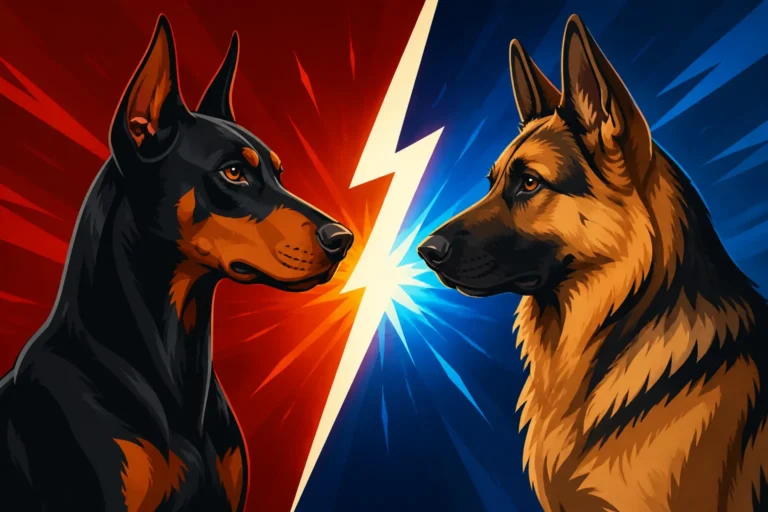
This table illustrates how many of the physical traits optimized for speed in the Greyhound are mirrored in the Doberman. The Doberman's elegance isn't just for show; it's the result of carefully curated genetics aimed at creating a highly functional and fast working dog. The contributions of breeds like the Greyhound provided that crucial component of swift movement that complemented the Doberman's protective instincts, making them a truly formidable and capable companion.
How Greyhound Traits Manifest in the Modern Doberman
The ancestral contributions, particularly those from swift breeds, are clearly visible in the modern Doberman. They aren't merely fast; they move with a characteristic grace and power that sets them apart. This isn't just about winning a race; it's about an inherent capability for rapid, controlled movement that influences everything from their play style to their response in training. Owners often remark on their Doberman's almost cat-like agility despite their size.
Physical Adaptations for Explosive Speed and Endurance
The Doberman's physique is a testament to its speed-bred heritage. Their sleek, streamlined body minimizes air resistance, while their deep chest provides ample room for large lungs and a powerful heart, essential for both short bursts of speed and sustained running. The long, well-muscled legs act like springs, absorbing impact and propelling them forward with tremendous force. The flexible spine, characteristic of sighthounds, allows for extreme extension and contraction during a gallop, increasing stride length and overall velocity. This combination of skeletal and muscular structure makes them efficient movers, capable of reaching impressive speeds and maintaining them, especially important for breeds engaging in activities like Agility With a Doberman's Long Frame or various protection sports. Even their relatively thin skin, which sometimes makes them prone to minor scrapes, contributes to their streamlined profile, further enhancing their speed.
Instinct and Drive: Beyond Just Physicality
Beyond the physical attributes, the "Greyhound line" also imparted an instinctive drive for movement and pursuit. While Dobermans aren't typically used for lure coursing like Greyhounds, that innate desire to run and chase is undeniably present. This drive, combined with their sharp intelligence, means they often excel in activities that require both speed and mental engagement. Think of a Doberman darting through an agility course, anticipating obstacles, or rapidly closing the distance during protection work. This isn't just brute force; it's an intelligent application of their physical gifts. This mental sharpness and physical prowess are why Training a Doberman That Is Smarter Than You Expect is both a joy and a challenge – they pick up on cues quickly and are eager to engage their bodies and minds. Providing stimulating, active toys from a place like Chewy can really help channel this energy and drive constructively.
Living with a Lightning-Fast Doberman: Training and Exercise Needs
Understanding the Doberman's capacity for speed isn't just an interesting historical fact; it has profound implications for their daily care and overall well-being. A Doberman is not a sedentary dog. To thrive, they require consistent, engaging exercise that allows them to utilize their impressive athleticism. Neglecting this aspect can lead to frustration, boredom, and behavioral issues in these intelligent, high-energy dogs.
Providing Adequate Outlets for Their Energy
Because of their inherited speed and stamina, Dobermans need more than just a quick walk around the block. They require opportunities to really stretch their legs and run, ideally in a safe, fenced area. Think about activities like fetch with a fast-moving disc or ball, trail running alongside you, or structured dog sports like competitive obedience, Schutzhund, or even nose work, which engages both their physical and mental faculties. Two or three brisk 20-minute walks a day simply won't cut it for a healthy, adult Doberman. They need substantial daily activity, often totaling an hour or more of vigorous exercise, to be truly content. Consider a sturdy, comfortable harness and lead for those fast-paced adventures; Chewy offers a wide range of options suitable for a strong, energetic dog like a Doberman. For some specific guidance on how to manage their significant energy levels, you might find insight in Feeding an Eighty-Pound Doberman Well to ensure they have the fuel for their activities, or Daily Calories for an Adult Doberman for a more precise nutritional breakdown.
Safety Considerations for a High-Speed Dog
The Doberman's speed and powerful prey drive also necessitate careful management, especially when off-leash. That quick burst of speed, combined with a strong instinct to chase, means they can cover a surprising amount of ground in a very short time. This is why a solid recall is absolutely non-negotiable for a Doberman. Training them to come back consistently, even when distracted by a squirrel or another dog, is paramount for their safety and the safety of others.
Furthermore, their speed means they can generate considerable force. When playing with other dogs or interacting with people, their sheer velocity can lead to accidental collisions if not properly managed. Teaching impulse control and appropriate play behaviors from a young age is crucial. Ensure your Doberman wears a durable collar and leash, perhaps one of the robust options available on Chewy, especially during walks where you need maximum control. Finally, remember that even the fastest Doberman can have health vulnerabilities; understanding potential issues such as The Heart Disease That Reaches Most Dobermans is vital for any owner, ensuring that their exercise is always safe and appropriate for their physical condition.
Disclaimer
This article is for general informational purposes only and does not constitute professional advice. Laws, prices and regulations vary by location and change over time. Consult a qualified professional for guidance on your specific situation.