Brushes That Suit a Doberman Coat
Let's be honest, living with a Doberman means living with a lot of love, a lot of loyalty, and, surprisingly, a lot more shedding than most people expect from a short-coated dog! You might think a sleek, short coat like theirs would be a breeze to maintain, but finding the right tools and techniques can feel like a guessing game. This comprehensive guide is here to walk you through exactly which brushes suit your Doberman's unique coat, why they're important, and how to use them to keep your beloved companion looking their best while minimizing shedding around your home.
Understanding Your Doberman's Unique Coat
When people think of Dobermans, they often picture that gleaming, almost painted-on coat. It looks so easy, doesn't it? No mats, no tangles, no endless hours at the groomer. But the reality is a little more nuanced. While they don't have the long, flowing locks of a Golden Retriever or the dense undercoat of a Husky, their short, single coat still comes with its own set of challenges and needs. Ignoring these unique characteristics can lead to excessive shedding, dullness, or even skin irritation, making your Doberman less comfortable and your home a bit hairier than you'd like.
The Anatomy of a Doberman Coat
A Doberman's coat is distinct – it's short, hard, and thick, lying close to the body. This is a single coat, meaning they lack the soft, insulating undercoat that many other breeds possess. This absence of an undercoat is a double-edged sword: it means less serious matting potential, but it also makes them more susceptible to cold weather and more prone to continuous shedding throughout the year, rather than just seasonal "blow-outs." The hairs themselves are quite coarse and stiff, designed to protect them from minor abrasions and weather, but they can be surprisingly sharp when shed, embedding themselves into carpets and upholstery with tenacious glee. Understanding this basic anatomy is the first step in choosing the right grooming tools; you wouldn't use a rake designed for a double-coated breed on a Doberman, for instance. You need something that respects their skin-close, single-layer hair.
Because their coat is so short and lies so flat, every little detail stands out. A healthy Doberman coat should be naturally shiny and smooth, reflecting light beautifully. If you notice dullness, excessive dandruff, or a brittle texture, it's often a sign that something is amiss, whether it's their diet, their grooming routine, or even an underlying health issue. The closeness of their coat also means that debris, like dust or loose hair, can get trapped right against their skin, potentially leading to irritation if not regularly removed. This makes routine brushing not just about aesthetics, but about their overall skin health and comfort.
Common Doberman Coat Concerns
Despite their seemingly low-maintenance coat, Dobermans can face a few common issues that good brushing practices can help mitigate. The most prevalent complaint is, without a doubt, the shedding. While they don't shed in huge clumps, they consistently shed individual hairs, which can accumulate quickly if not managed. This is where the right brush can make a world of difference, effectively pulling out those dead hairs before they end up on your couch or embedded in your favorite dark trousers. We delve into Why a Doberman With No Undercoat Still Sheds in more detail, but suffice it to say, it’s a constant battle that regular grooming can win.
Beyond shedding, Dobermans are prone to certain skin conditions, some of which are exacerbated by improper grooming. For instance, dry skin can lead to Dandruff and Flaking on a Doberman, making their sleek coat look less than pristine. Over-brushing with harsh tools, or using brushes not suited for their skin, can actually strip natural oils or cause micro-abrasions, leading to further irritation. Color dilute Dobermans (blues and fawns) are particularly susceptible to skin issues like Color Dilution Alopecia, which manifests as Hair Loss on a Blue Doberman and fragile skin. For these dogs, gentle grooming is paramount. The goal with any Doberman, but especially those with sensitivities, is to remove dead hair and stimulate the skin without causing undue stress or damage.
The Core Grooming Tools Every Doberman Owner Needs
Don't let the short coat fool you; a Doberman still benefits immensely from a consistent grooming routine. The right brushes aren't just about looking good, they're about keeping their skin healthy, reducing shed hair in your home, and strengthening the bond you share. You won't need a massive arsenal, but a few key tools are absolutely indispensable. Think of these as your daily drivers, the workhorses of your Doberman's beauty regimen.
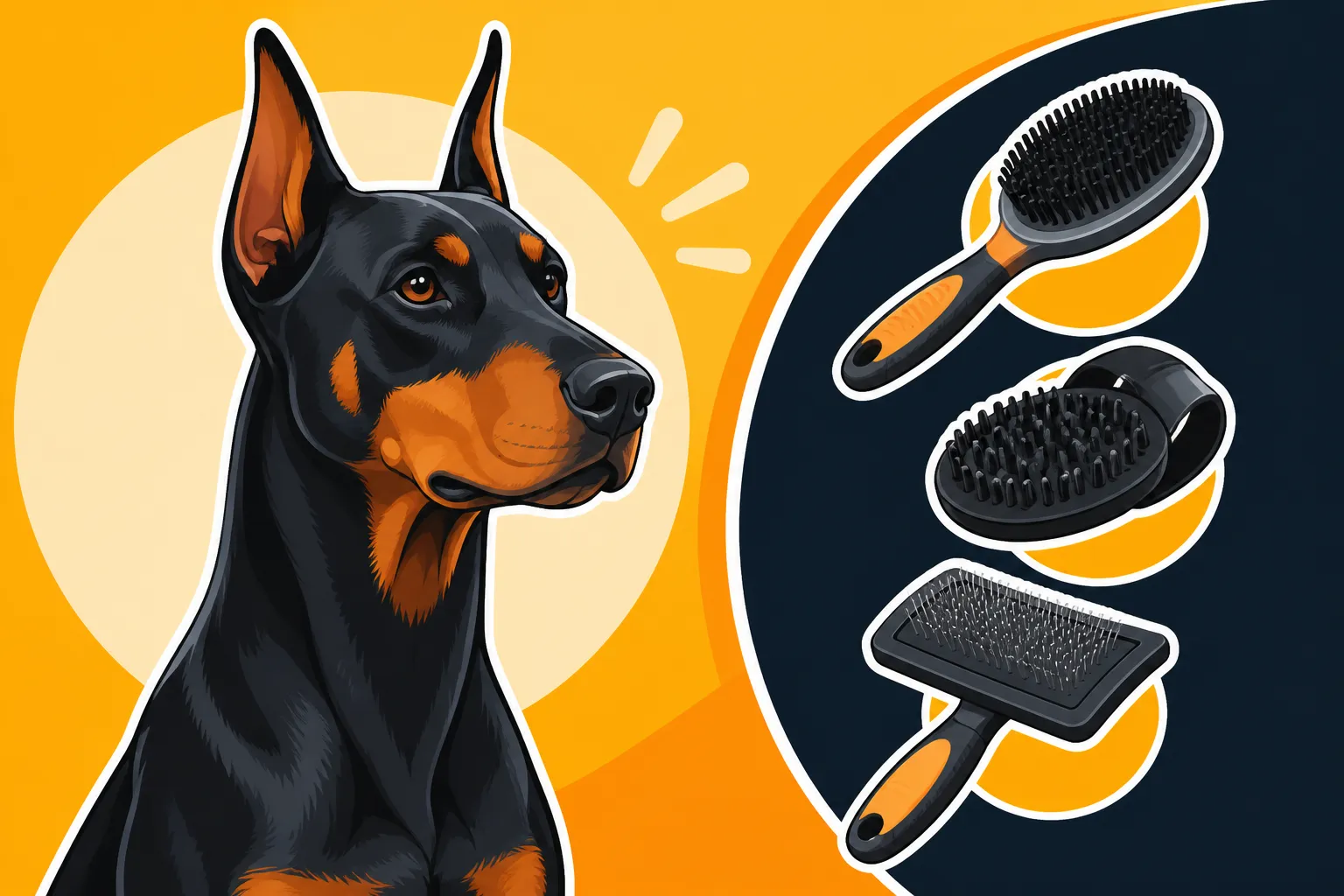
Rubber Curry Brushes and Mitts
If there's one tool that every Doberman owner should have, it's a rubber curry brush or grooming mitt. These are absolute superstars for their short, sleek coats. Unlike stiff bristle brushes or metal tools, rubber curry combs are gentle on the skin while being incredibly effective at collecting loose hair and stimulating blood circulation. The flexible rubber teeth glide over the coat, massaging the skin, dislodging dead hairs, and distributing natural oils, which helps promote a healthy, shiny finish. They are perfect for daily use, or every few days, to keep shedding to a minimum and to give your Doberman a pleasant, stimulating massage. My own Doberman, Brutus, practically leans into the brush with a happy sigh every time I bring out his curry mitt.
These tools are also fantastic during bath time. The rubber nubs work wonders to really get shampoo down to the skin and help work out even more loose hair that might be clinging to the coat, ensuring a thorough clean. They're also incredibly easy to clean themselves – usually just a quick rinse under the tap. You can find excellent quality rubber curry brushes and mitts on platforms like Amazon or through pet supply retailers such as Chewy, often with different patterns or flexibility to suit your preference. Just be sure to choose one with soft, rounded nubs to avoid irritating your Doberman's sensitive skin. Regular use of a rubber curry brush is one of the easiest ways to keep your Doberman's coat pristine and minimize those persistent short black (or red, or blue, or fawn) hairs from taking over your life.
Soft Bristle Brushes for Shine
Once you've tackled the loose hair with a rubber curry brush, a soft bristle brush is your go-to for adding that final, show-stopping gleam to your Doberman's coat. These brushes typically feature natural bristles, like boar bristles, or very soft synthetic ones. Their primary function isn't to remove large amounts of hair, but rather to smooth the coat, polish each strand, and further distribute those healthy skin oils that the curry brush helped to bring to the surface. It's like buffing a fine piece of furniture – it brings out the inherent beauty and luster.
Using a soft bristle brush regularly helps to prevent the coat from looking dull or dusty, especially important for Dobermans who love to roll in the yard. The gentle action is also incredibly soothing for most dogs, turning grooming into a relaxing experience. For Dobermans with Thin Doberman Skin and Everyday Cuts, a soft bristle brush is far less likely to cause irritation compared to harsher alternatives. It's the perfect finishing tool after a more rigorous de-shedding session or just for a quick daily spruce-up. The result is a coat that feels incredibly soft to the touch and looks vibrant and healthy, a true testament to the Doberman's elegant appearance.
Specialized Brushes for Deeper Cleaning and Shedding Management
While your everyday curry brush and bristle brush are fantastic for routine maintenance, there will be times, especially during seasonal shedding cycles, when you need a little more firepower. This is where specialized tools come into play. These aren't necessarily for daily use but are invaluable for those times when the Doberman "glitter" seems to be everywhere, or when you need to address specific areas with a bit more precision.
Shedding Blades and De-Shedding Tools
Let's face it, Dobermans shed. Constantly. Even though they don't have a thick undercoat, those short, stiff hairs come out year-round. For periods of heavier shedding, or if you've missed a few days of grooming, a shedding blade or a purpose-built de-shedding tool can be a game-changer. Shedding blades are often metal loops with dull, serrated edges. They work by gently raking across the coat, catching and pulling out dead, loose hair that's clinging to the body. It's surprisingly effective, but you must use it with a very light hand to avoid irritating the skin. Imagine trying to pull out every strand of loose hair one by one – this tool does a similar job, just much faster.
More modern de-shedding tools, like those from brands such as FURminator (though I can't recommend specific brands by name, you know the type I mean), often feature fine, comb-like teeth that reach through the topcoat to grab loose undercoat (even if minimal in Dobermans) and dead outer hairs. These can be incredibly effective, but again, caution is key. The Doberman's skin is thin and sensitive, and overusing these tools, or applying too much pressure, can cause irritation, brush burn, or even damage the healthy coat. I recommend using these tools sparingly, perhaps once a week during heavy shedding periods, and always following up with a gentler brush to smooth the coat and check for any redness. The goal is efficient hair removal, not a skin abrasion!
Fine-Toothed Combs for Detail Work
While primarily known for their short hair, Dobermans still have areas where a fine-toothed comb comes in handy, especially around the face, ears, and tail. These combs are invaluable for tackling tiny bits of debris, dust, or burrs that might get caught in their finer hairs, or for gently teasing out small tangles that can sometimes form behind the ears or where the leg meets the body. For an uncropped Doberman, a fine-toothed comb is essential for maintaining good Ear Hygiene Once a Doberman's Crop Has Healed, ensuring no wax or dirt accumulates in the folds of their natural ears.
A flea comb, which is a very fine-toothed comb, also serves a dual purpose beyond pest detection. It's excellent for removing "sleep crust" from around the eyes or any small, dried discharge. For Dobermans with more pronounced Flaky Skin Along a Doberman's Back, using a fine comb gently can help lift some of the flakes away, allowing topical treatments to penetrate better. Just remember to be exceedingly gentle, especially near sensitive areas, and always brush in the direction of hair growth. This isn't a tool for bulk hair removal, but for precision work and ensuring your Doberman is truly clean from nose to tail.
Mastering the Art of Brushing Your Doberman
Brushing isn't just a chore; it's an opportunity to connect with your Doberman, check their skin for any abnormalities, and reinforce good behavior. Many Dobermans actually learn to love their grooming sessions, especially if they're introduced early and done correctly. The key is consistency, patience, and using the right touch with the right tools.
Establishing a Positive Grooming Routine
The best time to start a grooming routine is when your Doberman is a puppy. Short, frequent sessions with lots of praise and treats will help them associate brushing with positive experiences. Even if you've got an adult Doberman, it's never too late to begin. Start with very brief sessions, maybe just a minute or two, focusing on areas they tolerate well. As they get more comfortable, gradually increase the duration and expand to more sensitive areas. Always end on a positive note, even if it means cutting a session short before they become agitated. Consistency is more important than length initially. Make it a predictable part of your week, perhaps after a walk when they're a bit tired and more willing to settle.
Think of it as a massage. Use long, smooth strokes in the direction of hair growth. Talk to your Doberman in a calm, soothing voice. If you encounter a sensitive spot, lighten your pressure or switch to a softer brush. This routine isn't just about removing hair; it's about building trust and ensuring your Doberman views handling as a pleasant interaction. This can pay dividends for future vet visits or when dealing with minor injuries, as they'll be more tolerant of being touched and examined. A well-socialized Doberman that enjoys being handled is a joy to live with.
Gentle Techniques for Sensitive Skin
Dobermans, with their close-lying coat and minimal body fat, tend to have quite thin and sensitive skin. This means that aggressive brushing or using tools with sharp edges can quickly lead to irritation, redness, or even brush burn. When using any brush, but especially shedding blades or de-shedding tools, always maintain a light hand. Imagine you're gently dusting rather than scrubbing a surface. Always brush in the direction the hair grows, never against the grain, as this can pull at the skin and cause discomfort. If your Doberman flinches or shows signs of discomfort, stop, reassess your technique, or switch to a softer tool.
Periodically, run your hands over your Doberman's body during brushing. This allows you to check for any lumps, bumps, hot spots, or areas of tenderness that might indicate an underlying issue. For Dobermans prone to specific skin conditions, like those with Color Dilution Alopecia in Blue and Fawn Dobermans, extra care is needed. You might consider using grooming gloves instead of traditional brushes for maximum gentleness. If you notice any persistent skin issues, dullness, or excessive shedding, it's always a good idea to consult your veterinarian. They can help rule out dietary deficiencies or medical conditions that might be affecting coat health. Remember, a comfortable Doberman is a happy Doberman, and gentle grooming is key to their well-being.
Beyond the Brush: Holistic Coat Health for Your Doberman
While the right brushes and consistent technique are foundational to a healthy Doberman coat, they're only one piece of the puzzle. A truly radiant coat that sheds minimally and reflects overall well-being is often a result of a holistic approach, encompassing everything from what goes into their bowl to how often they get a bath. Neglecting these other factors can make even the best brushing routine feel like an uphill battle.
The Role of Nutrition in Coat Quality
You've heard the saying, "you are what you eat," and it absolutely applies to your Doberman's coat. A diet rich in high-quality protein, essential fatty acids (especially Omega-3s and Omega-6s), and vitamins is crucial for skin and coat health. A Doberman eating a poor-quality diet, or one that lacks the necessary nutrients, will often display it through a dull, dry, brittle coat, and potentially excessive shedding or flaky skin. These are all signs that their body isn't getting what it needs to produce healthy hair and maintain skin integrity. We discuss Omega Oils for a Doberman With Coat Loss and the benefits they can bring.
Many commercial dog foods are formulated with coat health in mind, but sometimes a Doberman needs a little extra. Supplements, such as fish oil or specific skin and coat supplements, can often provide a noticeable improvement. If you're feeding a fresh food diet, like those offered by Ollie, or considering home-cooked meals, it's vital to ensure they are nutritionally balanced to meet all your Doberman's needs. Always consult with your vet or a canine nutritionist before making significant dietary changes or adding supplements, as too much of a good thing can sometimes be detrimental. A healthy gut and a balanced diet are truly the first lines of defense against a lackluster coat and excessive shedding, making your brushing efforts far more effective.
Bathing and Skin Care Considerations
While Dobermans don't require frequent bathing, when they do need a wash, it's important to use the right products and techniques to support their sensitive skin. Over-bathing can strip their natural skin oils, leading to dryness, irritation, and even more shedding. I typically recommend bathing a Doberman only when they are genuinely dirty or every few weeks, rather than a weekly ritual. When you do bathe them, choose a mild, moisturizing dog shampoo specifically formulated for sensitive skin. Avoid human shampoos, which often have a different pH balance and can be too harsh for canine skin. For Dobermans with specific skin issues, your vet might recommend a medicated shampoo.
After bathing, ensure you rinse thoroughly, as any shampoo residue left on the skin can cause irritation. Gently towel dry your Doberman, and if they're tolerant, a low-heat blow dryer can help ensure they are completely dry, especially in colder weather, as their single coat offers little insulation. Regularly checking their paws, ears (especially if uncropped), and between their toes can also prevent minor issues from becoming bigger problems. Don't forget that their thin coat offers less sun protection than a denser coat, so if your Doberman spends extended time in direct sunlight, especially on a sunny day or during summer, consider Sun Protection for a Thin-Coated Doberman. A thoughtful bathing and skin care routine complements your brushing efforts perfectly, contributing to a truly healthy and beautiful Doberman coat.
Table: Doberman Brushes at a Glance
Here's a quick comparison of the brushes we've discussed, outlining their main uses and considerations for your Doberman:
| Brush Type | Primary Use | Doberman Benefit | Considerations |
|---|---|---|---|
| Rubber Curry Brush/Mitt | Loose hair removal, massage, circulation | Excellent for daily de-shedding, gentle on skin, distributes oils | Easy to clean, great for bath time, must be soft rubber |
| Soft Bristle Brush | Polishing coat, distributing oils, smoothing | Adds shine, smooths coat, soothing for dog, final touch | Not for heavy de-shedding, may not remove much loose hair on its own |
| De-Shedding Tool | Deep loose hair removal, heavy shedding | Highly effective for reducing significant shed, reduces hair in home | Use sparingly and gently, can irritate thin skin if overused, follow instructions |
| Fine-Toothed Comb | Detail work, eye crust, small debris removal | Precision grooming around face/ears, checks for fleas, untangles fine hairs | Not for overall coat, requires gentle hand, can pull if not careful |
Disclaimer
This article is for general informational purposes only and does not constitute professional advice. Laws, prices and regulations vary by location and change over time. Consult a qualified professional for guidance on your specific situation.