Whether a Doberman Needs Yearly Scaling
It’s a common scenario: you’re at the vet for your Doberman’s annual check-up, and suddenly the conversation turns to their teeth. The vet suggests a professional dental cleaning, perhaps even implying it should be a yearly affair. You look at your Doberman, whose breath isn't that bad, and wonder if this is truly necessary, or just another expense in a long list of Doberman-specific care. This guide is here to unravel the complexities of Doberman dental health, helping you understand when and why professional scaling might be crucial, and how to best care for those powerful jaws.
Why Your Doberman's Dental Health is More Than Just Bad Breath
Many Doberman owners shrug off a bit of "dog breath," thinking it's just part of having a canine companion. But what smells unpleasant to us is often a red flag for something far more serious brewing beneath the surface. Dental health in Dobermans isn't just about fresh breath; it's intricately linked to their overall well-being and can significantly impact their quality of life and even their lifespan. Ignoring it can lead to chronic pain, infection, and issues in other parts of their body.
The Silent Threat of Periodontal Disease
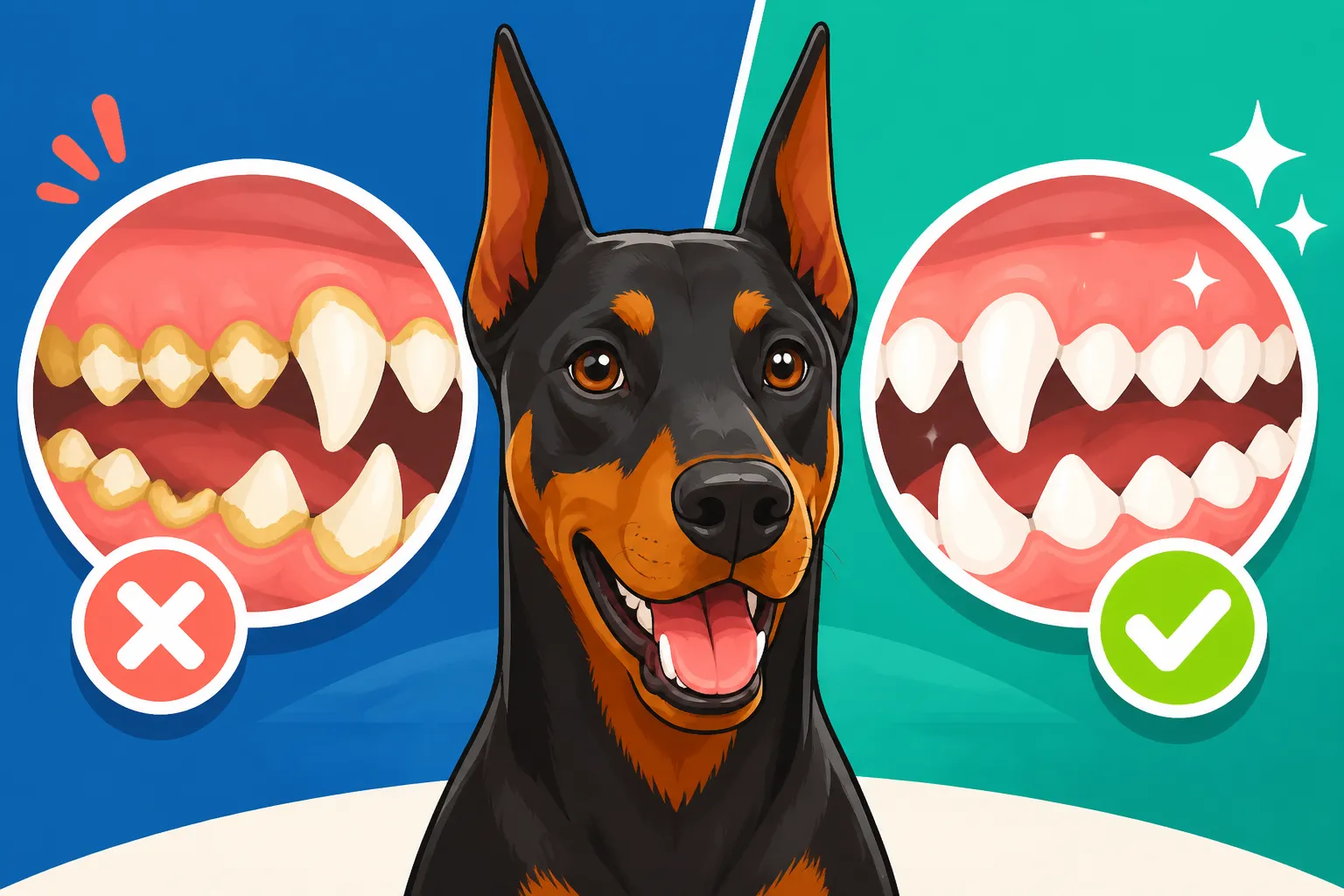
What starts as a seemingly harmless layer of plaque—a sticky film of bacteria, food particles, and saliva—can quickly escalate. If not removed, this plaque hardens into tartar, or calculus, which is incredibly difficult to remove with just brushing. Once tartar forms, it creates a rough surface for even more bacteria to latch onto, and it starts to push against the gumline. This is where periodontal disease begins.
Periodontal disease is a progressive inflammation of the gums and the supporting structures of the teeth. At first, you might notice gingivitis – red, swollen, or bleeding gums. This is often the point where the breath starts to get noticeably foul. Left unchecked, the infection travels below the gumline, destroying the bone and soft tissues that hold the teeth in place. This can lead to loose teeth, painful abscesses, and even teeth falling out. Your Doberman, being a stoic breed, might not show obvious signs of pain until the problem is quite advanced, making it difficult for you to spot until significant damage has occurred. Imagine living with a constant toothache or infected gums; that's often what our dogs endure silently.
Recognizing Dental Trouble Signs in Your Doberman
Because Dobermans are so good at hiding discomfort, recognizing the subtle signs of dental issues is paramount. It's not always a dramatic event; sometimes, it's a gradual change that you might attribute to age or personality. Foul breath, often described as a strong, rotting smell, is the most obvious early warning sign. Don't dismiss it.
Beyond the smell, observe your Doberman's eating habits. Are they suddenly reluctant to chew on their favorite hard toys or kibble? Do they drop food, chew only on one side of their mouth, or hold their head at an unusual angle while eating? You might also notice pawing at their face, excessive drooling, or even blood in their saliva or on their chew toys. Visually, look for red, swollen, or receding gums. You might see significant tartar buildup, which looks like a yellow or brown crust along the gumline. Sometimes, a Doberman might become more irritable or withdrawn due to chronic pain. These are all indicators that it's time for a professional veterinary dental assessment. This is another example of Why a Doberman Can Look Fine and Be Ill.
Understanding Professional Dental Scaling for Dobermans
When at-home care isn't enough, or when dental disease has already taken hold, professional dental scaling becomes indispensable. This isn't just a quick scrub; it's a comprehensive medical procedure performed by veterinary professionals to thoroughly clean your Doberman's teeth and assess their oral health under anesthesia.
What Happens During a Doberman Dental Procedure
A full dental scaling, often referred to as a COHAT (Comprehensive Oral Health Assessment and Treatment), involves several critical steps, all performed while your Doberman is safely under general anesthesia. Anesthesia is crucial because it allows the veterinary team to conduct a thorough and pain-free examination, as well as to perform the deep cleaning necessary both above and below the gumline. Before anesthesia, your Doberman will undergo a pre-anesthetic blood panel to ensure they are healthy enough for the procedure. This is especially important for Dobermans, who can have underlying health issues, like certain heart conditions, that need to be carefully monitored. You'll want to review Sedating a Doberman for a Dental and What It Costs to understand the financial commitment involved.
Once anesthetized, the process typically includes:
- Full Oral Exam: The vet will visually inspect every tooth, gum, tongue, and the overall oral cavity, looking for abnormalities, lesions, or hidden pockets of infection that might be missed on a conscious exam.
- Dental X-rays: This is a non-negotiable step. Just like in human dentistry, dental X-rays reveal the health of the tooth roots and jawbone, identifying issues like abscesses, bone loss, or unerupted teeth that are invisible to the naked eye. Many significant problems lie hidden beneath the gumline.
- Ultrasonic Scaling: A specialized ultrasonic scaler is used to meticulously remove plaque and tartar from the tooth surfaces, both above and, crucially, below the gumline. This subgingival cleaning is vital to address the root of periodontal disease, where bacteria thrive.
- Hand Scaling: Fine hand instruments are used to remove any remaining tenacious tartar and to smooth out rough spots on the tooth surface.
- Polishing: After scaling, the teeth are polished to create a smooth surface, which helps to deter new plaque and tartar from attaching quickly.
- Fluoride Treatment (optional): Some clinics apply a fluoride treatment to strengthen enamel and reduce sensitivity.
- Extractions: If severe periodontal disease or damaged teeth are found through examination and X-rays, extractions might be necessary. This is often the most painful part of advanced dental disease, and removing these problematic teeth can bring immense relief to your Doberman. The vet will discuss this with you if identified during the procedure.
The Dangers of Anesthesia-Free "Dental Cleanings"
You might encounter advertisements for "anesthesia-free dental cleanings" at grooming salons or even some non-veterinary facilities. It's important to understand that these procedures are largely cosmetic and can be dangerous for your Doberman. While they might scrape some visible tartar off the surface of the teeth, they cannot address the critical areas below the gumline, where periodontal disease truly takes hold and causes the most damage.
Furthermore, without anesthesia, a thorough examination, including probing pockets and taking X-rays, is impossible. A dog, even a well-behaved Doberman, won't tolerate sharp instruments scraping their sensitive gums and teeth for an extended period. This means the procedure is often rushed, incomplete, and potentially stressful or painful for your pet. In essence, these "cleanings" give a false sense of security while leaving the underlying problems unaddressed, allowing serious dental disease to progress silently. Always opt for a full veterinary dental scaling with anesthesia for your Doberman's safety and effective treatment.
Factors Influencing the Need for Yearly Scaling
So, does your Doberman definitely need yearly scaling? The answer, like with many aspects of Doberman care, isn't a simple yes or no. It depends on a confluence of factors, including their age, genetics, diet, and, perhaps most importantly, the consistency and effectiveness of their at-home dental care. Understanding these variables will help you work with your vet to determine the best schedule for your individual Doberman.
Age, Genetics, and Lifestyle: How They Play a Role
- Age: Younger Dobermans, especially puppies and adolescents, typically have healthier mouths and may not require professional scaling as frequently. Their teeth are newer, and plaque hasn't had as much time to accumulate and harden into tartar. However, as Dobermans age, just like people, their teeth are more prone to wear, tear, and disease. Most Dobermans start showing significant tartar buildup and early signs of gingivitis by the time they are 3-5 years old. This aligns with The Doberman Years When Everything Shows Up for various health conditions. Older Dobermans, particularly those over 7-8, often require more frequent attention, as dental disease can progress rapidly in their senior years.
- Genetics: While not as widely discussed as other Doberman health concerns, some individual dogs and even certain lines might be genetically predisposed to poorer dental health. This could manifest as softer enamel, crowded teeth, or an altered oral microbiome that makes them more susceptible to plaque buildup. If your Doberman's parents or siblings developed severe dental issues early, it's a good indicator that your dog might also need more proactive care.
- Diet and Chewing Habits: What your Doberman eats can influence plaque and tartar accumulation. A diet consisting solely of soft, wet food may offer little abrasive action to clean teeth, potentially leading to faster buildup. Conversely, a high-quality kibble or appropriate dental chews can offer some mechanical cleaning. Some Doberman owners exploring options like Ollie fresh food might notice some differences, but it’s crucial to remember that no diet is a complete substitute for active brushing. Dogs who are avid chewers of safe, appropriate chew toys might naturally scrape off some plaque, but aggressive chewers can also cause tooth fractures. You'll want to carefully consider Feeding an Eighty-Pound Doberman Well and how it impacts their dental health.
The Role of At-Home Dental Care
This is where you, as a Doberman owner, can make the biggest difference in reducing the frequency of professional cleanings. Consistent and effective at-home dental care is the cornerstone of good oral hygiene for your Doberman.
- Brushing: Daily tooth brushing is the gold standard. It's the most effective way to remove plaque before it hardens into tartar. Start slowly with your Doberman puppy, making it a positive experience with a flavored pet toothpaste (never human toothpaste, as it contains xylitol which is toxic to dogs) and a soft-bristled brush designed for dogs. Even a few minutes a day can make a significant impact. You can find excellent dental kits and individual brushes through retailers like Chewy or on Amazon.
- Dental Chews and Treats: While not a substitute for brushing, certain dental chews can help reduce plaque and tartar. Look for products that are veterinary oral health council (VOHC) approved, as these have been scientifically proven to be effective. Be mindful of calorie content and choose the appropriate size for your Doberman. You might find ideas in Dental Chews Sized for a Doberman.
- Water Additives and Oral Rinses: Some owners find success with dental water additives or oral rinses designed to reduce bacteria in the mouth. These can be a helpful adjunct but should not be relied upon as the sole method of dental care.
- Regular Oral Checks: Get into the habit of lifting your Doberman’s lips regularly to check for any redness, swelling, or excessive tartar buildup. This helps you catch problems early. If you notice significant Tartar on an Older Doberman's Molars or signs of discomfort, it's time to call the vet.
The more diligent you are with at-home care, the longer you can often extend the time between professional cleanings. However, even with the best home care, professional scaling will likely still be necessary at some point to address plaque and tartar below the gumline that brushing simply cannot reach.
Balancing Professional Care with At-Home Prevention
Finding the right balance between proactive at-home dental care and necessary professional veterinary intervention is key to ensuring your Doberman maintains a healthy mouth throughout their life. It's not an either/or situation; rather, these two approaches work hand-in-hand to prevent disease and address issues when they arise.
Creating a Comprehensive Dental Health Plan with Your Vet
The most effective dental health plan for your Doberman is one that's tailored to their individual needs, and that means working closely with your veterinarian. Your vet can perform regular oral examinations during routine check-ups, assessing the current state of your Doberman's teeth and gums. They'll consider their age, breed, history of dental disease, and how effective your at-home routine has been.
During these annual check-ups, don't be afraid to discuss your Doberman's specific dental challenges and your capacity for at-home care. If you're struggling with brushing, your vet can offer tips, demonstrate techniques, or suggest alternative products like dental wipes or enzymatic gels. They can also recommend specific dental diets, if appropriate, to help manage plaque. For many Doberman owners, the cost is a major consideration, and discussing the Monthly Spending on an Adult Doberman and potential The Vet Bills a Doberman Runs Up Outside Screening for dental work upfront can help you budget and plan.
A good vet will help you understand the stages of periodontal disease and explain why early intervention is always better, both for your Doberman's health and your wallet in the long run. They're your best resource for deciding if and when a professional cleaning is warranted.
When to Schedule That Next Scaling
The idea of "yearly scaling" is often a guideline, not a strict rule set in stone for every single dog. For many Dobermans, especially those with diligent home care, scaling every 18-24 months might be perfectly sufficient. However, for Dobermans who are genetically prone to plaque buildup, have crowded teeth, or whose owners find consistent at-home brushing challenging, yearly (or even more frequent) scaling might indeed be recommended.
Here's a general guideline for determining the frequency:
- Young Dobermans (under 2-3 years old): If you're brushing regularly and your vet sees no signs of disease, professional scaling might not be needed yet. Focus on establishing good habits.
- Adult Dobermans (3-7 years old): This is often when the first signs of tartar and gingivitis appear. A professional cleaning might be recommended every 1-2 years, depending on your dog's oral health and your home care routine.
- Senior Dobermans (8+ years old): Older dogs tend to accumulate tartar faster, and dental disease can be more advanced. Yearly or even bi-annual cleanings might be necessary to maintain comfort and prevent systemic health issues. Remember, Doberman Lifespan and Why It Is Short is often impacted by overall health, and dental disease is a chronic inflammatory condition.
Ultimately, the decision should always be made in consultation with your veterinarian based on a thorough examination of your Doberman's mouth. They can visually assess the plaque and tartar levels, check for gum inflammation, and identify any concerning issues that warrant immediate attention. Don't wait until your Doberman is in pain or losing teeth; proactive dental care is one of the kindest things you can do for your beloved companion.
Here’s a quick comparison of at-home dental care versus professional veterinary scaling:
| Feature | At-Home Dental Care | Professional Veterinary Dental Scaling |
|---|---|---|
| Primary Goal | Preventative, reduce plaque buildup, maintain gum health | Treat existing dental disease, remove tartar, assess full oral health |
| Methods | Brushing, dental chews, water additives, oral rinses | Anesthesia, full oral exam, dental X-rays, ultrasonic scaling, polishing, extractions (if needed) |
| Plaque/Tartar Removal | Removes soft plaque; limited impact on hardened tartar | Removes all plaque and tartar, including below the gumline |
| Disease Treatment | Prevents gingivitis; cannot reverse advanced periodontal disease | Treats gingivitis, manages and can halt progression of periodontal disease |
| Frequency | Daily (brushing); as directed for other products | Typically every 1-2 years, or as recommended by vet based on need |
| Anesthesia Required? | No | Yes, for safety and thoroughness |
| Cost | Low (toothpaste, brushes, chews from Chewy or Amazon) | Higher (procedure, anesthesia, X-rays, potential extractions) |
| Odor Impact | Reduces bad breath from plaque | Significantly improves bad breath by addressing root cause |
Disclaimer
This article is for general informational purposes only and does not constitute professional advice. Laws, prices and regulations vary by location and change over time. Consult a qualified professional for guidance on your specific situation.