Whether Dobermann Kept Records of His Crosses
It’s a common frustration when delving into the history of any dog breed: you want to understand its very foundations, yet often find yourself facing a brick wall of missing information. For Doberman owners and enthusiasts, one of the most persistent questions revolves around Karl Dobermann himself and the detailed records of his breeding program. This guide aims to shed light on why comprehensive records from the Doberman's inception are so elusive and what this means for our understanding of the breed today.
The Unwritten History: Why Karl Dobermann's Records Are So Scarce
When we talk about the origins of the Doberman, we're talking about the late 19th century in Apolda, Germany. This wasn't an era of meticulously kept stud books and genetic databases as we know them today. The very concept of "breed standards" and systematic record-keeping was still in its infancy for many working dog types. For Karl Dobermann, a tax collector, night watchman, and dog catcher, his breeding efforts were driven by a very practical and immediate need: a loyal, fearless protector by his side.
The Man Behind the Breed and His Circumstances
Karl Dobermann wasn't a professional dog breeder in the modern sense. He was a man with a specific goal, and his methods were those of a pragmatic individual working with the resources he had available. Imagine trying to create a specific type of dog when genetic understanding was nascent, and the primary focus was on temperament and utility rather than aesthetics or a strict lineage. His job as a dog catcher meant he had access to a variety of local dogs, often strays or those of unknown parentage, which he then crossed to achieve the desired traits. It's not hard to see why detailed, written records of each individual dog's background and every single mating might not have been his top priority. His focus was on the result, the "new breed" he envisioned.
The environment he worked in was far removed from today's sophisticated kennels. Breeding would have been a more informal affair, likely involving local dogs of various types and temperaments. He wasn't tracking intricate pedigrees or conducting genetic health screenings. His selection process was based on observation, instinct, and a deep understanding of what made a good working dog. The kind of detailed logs that modern breeders keep, especially those focused on health and lineage, simply didn't exist in that context. This informal approach, while effective for his immediate goals, is precisely why we lack concrete documentation.
The Practicalities of 19th-Century Breeding
Consider the tools and knowledge available at the time. There were no DNA tests to confirm parentage, no widely accepted health clearances, and certainly no global databases to track dog lineages. Information would have been passed down orally, through observation, and perhaps rudimentary notes, if any were kept at all. The Tax Collector Who Invented the Doberman was a hands-on individual, not a bureaucratic record-keeper in the realm of dog breeding.
His focus was on producing a dog with specific attributes: courage, intelligence, and protective instincts. He wasn't concerned with creating a "show dog" with a meticulously documented lineage for future generations to admire in a ring. The dogs he used were likely a mix of local farm dogs, butchers' dogs, and other types known for their guarding abilities. These were common, utilitarian animals, not fancy purebreds with documented ancestry. Therefore, the idea of maintaining exhaustive records for what were essentially working crossbreeds would have been highly unusual for the period.
The Nature of Early Breed Development
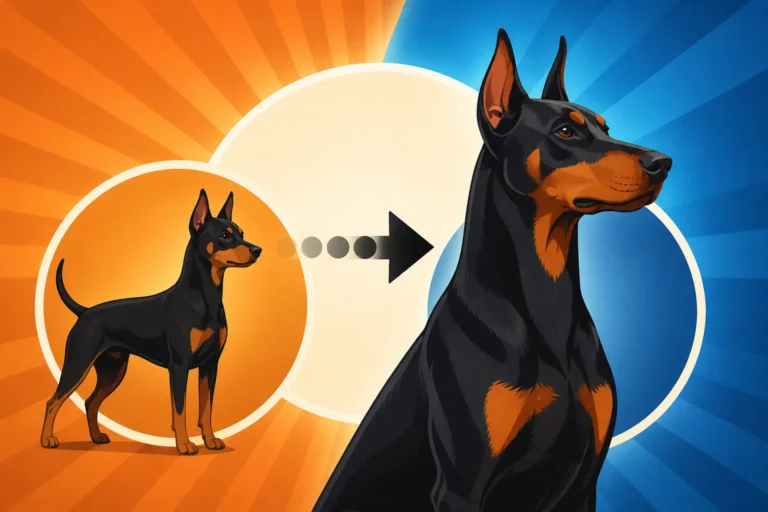
Many dog breeds began in a similar fashion – a local individual or group of people, with a specific need, selecting and breeding dogs for desired working traits. The formalization of breeds, with written standards and detailed pedigrees, often came later, once a distinct type had emerged and gained recognition. The 1900 German Doberman Standard only came into being well after Karl Dobermann's initial efforts, largely thanks to the work of others like Otto Goeller, who helped stabilize and popularize the breed.
Karl Dobermann laid the groundwork, but it was subsequent breeders who solidified the Doberman Pinscher as a distinct breed and began the process of formal record-keeping. By that point, the exact details of Karl Dobermann's original crosses were already lost to time and memory. It’s like trying to trace the precise recipe for a beloved regional dish from a century ago – you know the core ingredients and the general method, but the exact measurements and specific substitutions might be gone forever. This early, less formal stage of development is a key reason why the paper trail from Dobermann himself is so faint, if not nonexistent.
Speculation vs. Documentation: Tracing the Doberman's Ancestry
Given the scarcity of direct records from Karl Dobermann himself, much of our understanding of the Doberman's early lineage relies on a combination of historical accounts, educated guesses, and inferences based on the physical and temperamental traits of the early Dobermans. It's a fascinating puzzle, but one that largely lacks definitive proof.
The Commonly Believed Contributing Breeds
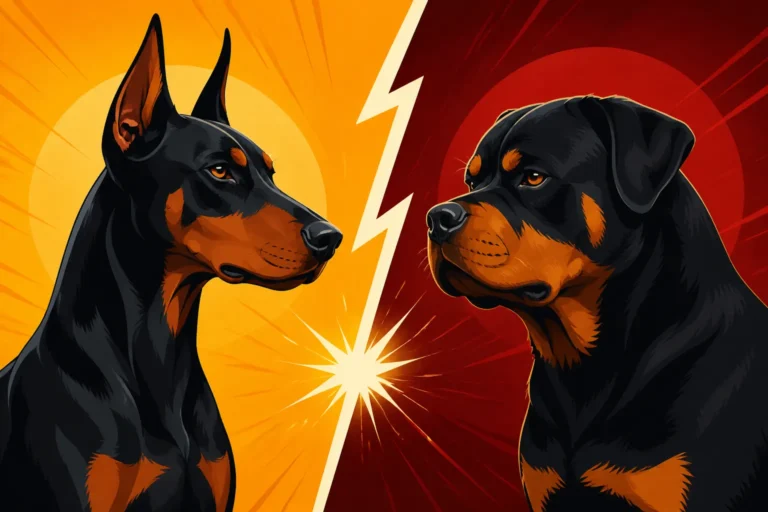
While Dobermann didn't leave us a comprehensive list, historical consensus, based on observations of early Dobermans and knowledge of regional dogs available, points to several breeds that likely contributed to the Doberman's genetic makeup. These often include the German Pinscher, the Rottweiler, the Black and Tan Terrier (or Manchester Terrier), and possibly even a dash of Greyhound for its sleekness and speed. Which Breeds Went Into the Doberman is a question that fascinates many.
For instance, the Rottweiler is often cited for its guarding instincts and strong build, traits that were undoubtedly crucial to Dobermann's vision. The German Pinscher and Black and Tan Terrier likely contributed to the Doberman's alertness, quick reflexes, and distinctive coat color and markings. Even breeds like the Greyhound are thought to have influenced the Doberman's athletic build and speed. This isn't based on Dobermann's notes, but on the characteristics of the finished product and the available 'ingredients' in 19th-century Germany. Without his meticulous records, we are left to connect the dots using the dogs of the time and the eventual Doberman standard.
The Role of Early Doberman Enthusiasts and Their Observations
The work of people like Otto Goeller, a significant early Doberman breeder and the founder of the first Doberman club, was instrumental in shaping the breed and beginning the process of documentation. Otto Goeller and the First Doberman Club aimed to stabilize the breed, both in terms of appearance and temperament, and to establish a standard. Goeller and his contemporaries would have worked with dogs descended from Dobermann's stock, and their observations would have formed the basis of early pedigree charts and breed descriptions.
These individuals, often working closely with the dogs, documented their lineages as best they could, relying on their own experience and the accounts of others. This is where the historical record starts to become more formalized. However, even these early enthusiasts were building on an existing foundation, and the precise initial crosses remained largely conjectural. Their efforts helped solidify the Doberman type, but they couldn't conjure historical records that never existed.
How Lack of Records Fuels Debate and Legend
The absence of definitive records from Karl Dobermann's time has naturally led to much speculation and even myth-making. There are various theories about which breeds contributed most, and precisely how Dobermann conducted his program. Some stories emphasize the fierce, aggressive nature of the early dogs, reflecting Dobermann's need for a formidable protector, while others focus on the cleverness and adaptability of the crosses.
This lack of concrete evidence means that certain claims or "legends" about the Doberman's origins can persist, sometimes without strong factual backing. It creates a romanticized, almost mythical aura around the breed's inception, but it also means that definitive answers about specific genetic contributions are unlikely to ever be found. It’s part of the Doberman’s charm, in a way – a testament to its somewhat mysterious beginnings. This is also why Whether Dobermann Kept Records of His Crosses remains such a compelling question for enthusiasts.
What the Absence of Records Means for Modern Doberman Owners
While the lack of direct records from Karl Dobermann's time can be a source of historical frustration, it doesn't leave modern Doberman owners completely in the dark. Instead, it highlights the importance of the work done by subsequent breeders and the genetic knowledge we possess today. Understanding this historical context helps us appreciate the efforts that have gone into preserving and improving the Doberman breed over the last century.
Understanding the Breed's Foundation Temperament
Despite the fuzzy historical details, the core essence of what Karl Dobermann sought to create is undeniably present in the modern Doberman. The breed's intelligence, loyalty, courage, and protective nature are hallmarks that have been deliberately selected for over generations. Even without a precise list of every ancestor, we can observe the cumulative result of his initial vision and the continued work of dedicated breeders.
The Doberman is renowned for its "Velcro dog" personality, its desire to be constantly near its human companions, a trait that surely stemmed from Dobermann's need for a steadfast partner. While Why the Doberman Softened After the 1950s is a topic of discussion, the fundamental characteristics remain. Modern Dobermans are still inherently alert and watchful, a testament to their origins as guardians. Understanding this historical drive can help owners appreciate their dog's inherent traits and provide appropriate training and socialization. For example, a quality obedience course might be a great addition, and you can find resources like training books or specific gear for your Doberman on sites like Chewy.
Genetic Legacy and Inherited Traits
The lack of early records means we can't pinpoint the exact moment certain genetic predispositions entered the Doberman gene pool. However, the subsequent generations of breeding have revealed certain health challenges that are now closely associated with the breed. Conditions like Dilated Cardiomyopathy (DCM), Von Willebrand Disease, Wobbler Syndrome, and others are a significant part of the Doberman's genetic legacy. The Heart Disease That Reaches Most Dobermans is a serious concern for any owner.
Modern Doberman breeders, recognizing these challenges, go to great lengths to conduct comprehensive health testing and maintain detailed pedigrees. This is a stark contrast to the initial, unrecorded crosses. Today, we have the tools to screen for genetic markers and assess health risks that Karl Dobermann could never have imagined. This contemporary focus on health testing and transparency in breeding helps mitigate the historical unknowns.
The Importance of Modern Health Testing and Pedigrees
For any prospective Doberman owner, the emphasis should always be on acquiring a puppy from a reputable breeder who conducts extensive health testing on their breeding stock and provides transparent documentation. This includes OFA certifications for hips and elbows, thyroid testing, eye clearances, and crucially, regular cardiac evaluations like Holter monitoring and echocardiograms. The Health Testing a Doberman Breeder Must Show is non-negotiable.
When you're looking for a Doberman, a breeder will provide a pedigree that goes back many generations, detailing health clearances and titles. This modern record-keeping is our best defense against the historical gaps. It ensures that while we may not know every dog that went into the very first Dobermans, we can be confident in the health and lineage of our current companions. This commitment to documentation is a modern necessity that helps us honor the spirit of Dobermann's creation while striving for a healthier future for the breed. You can also research reputable breeders and their health testing practices by looking up breed clubs and educational resources, some of which may even be found on pet supply sites like Chewy, which often feature articles and guides on breed-specific care and considerations.
In conclusion, while Karl Dobermann's personal records of his crosses are essentially non-existent, the legacy of his vision lives on in every Doberman. Understanding this unwritten history allows us to appreciate the journey of the breed and the critical importance of responsible breeding and comprehensive health testing in the modern era. We might not have his notebooks, but we have the Doberman, a testament to his ambition.
| Historical Period | Key Breeding Practices | Record-Keeping Status | Impact on Understanding |
|---|---|---|---|
| Late 19th Century | Informal, goal-driven crosses for utility (Dobermann's era) | Minimal to non-existent personal records | Leads to speculation, reliance on historical accounts |
| Early 20th Century | Formalization of breed, selection for standard (Goeller's era) | Basic pedigrees and stud books begin | Establishes initial lines, but early crosses remain vague |
| Mid-20th Century | Increased focus on show traits, expanding gene pool | More structured pedigrees, breed clubs emerge | Develops breed type, but health issues start appearing |
| Late 20th – Present | Scientific health testing, genetic databases, breed preservation | Comprehensive health clearances, detailed online pedigrees | Allows for informed breeding decisions, addresses inherited diseases |
Disclaimer
This article is for general informational purposes only and does not constitute professional advice. Laws, prices and regulations vary by location and change over time. Consult a qualified professional for guidance on your specific situation.