Whether Fawn Dobermans Are the Rarest Color
One of the most common questions I hear from aspiring Doberman owners is about coat colors, particularly the more unusual shades like fawn. There's a lot of fascination and sometimes confusion around what colors are truly rare, what's accepted by breed standards, and what potential health implications might come with certain pigments. This guide will take a deep dive into Doberman coat colors, specifically addressing whether fawn Dobermans are indeed the rarest, dispelling myths, and providing a clear picture of what these beautiful dogs are all about.
Understanding Doberman Coat Colors
When you first picture a Doberman, you likely envision that sleek, glossy black and rust coat, right? It's the classic look, the one most commonly seen in media and at dog shows. But the Doberman breed actually comes in a handful of recognized colors, and understanding these can help clarify the conversation around rarity.
The Standard Four: Black, Red, Blue, and Fawn
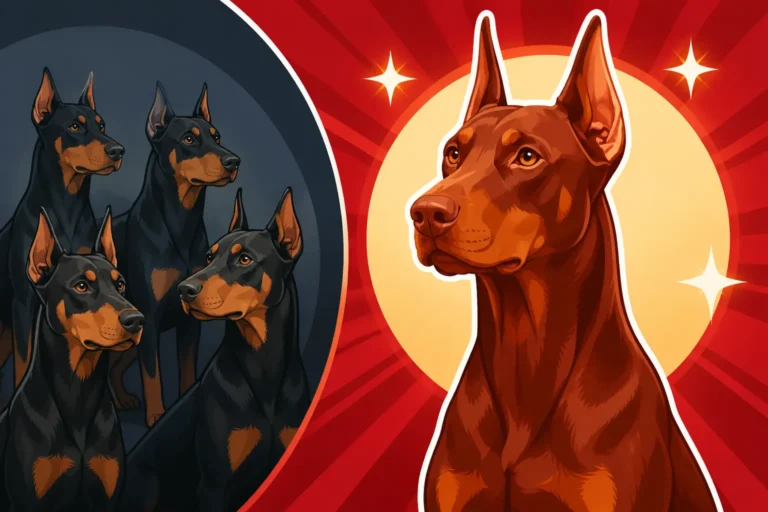
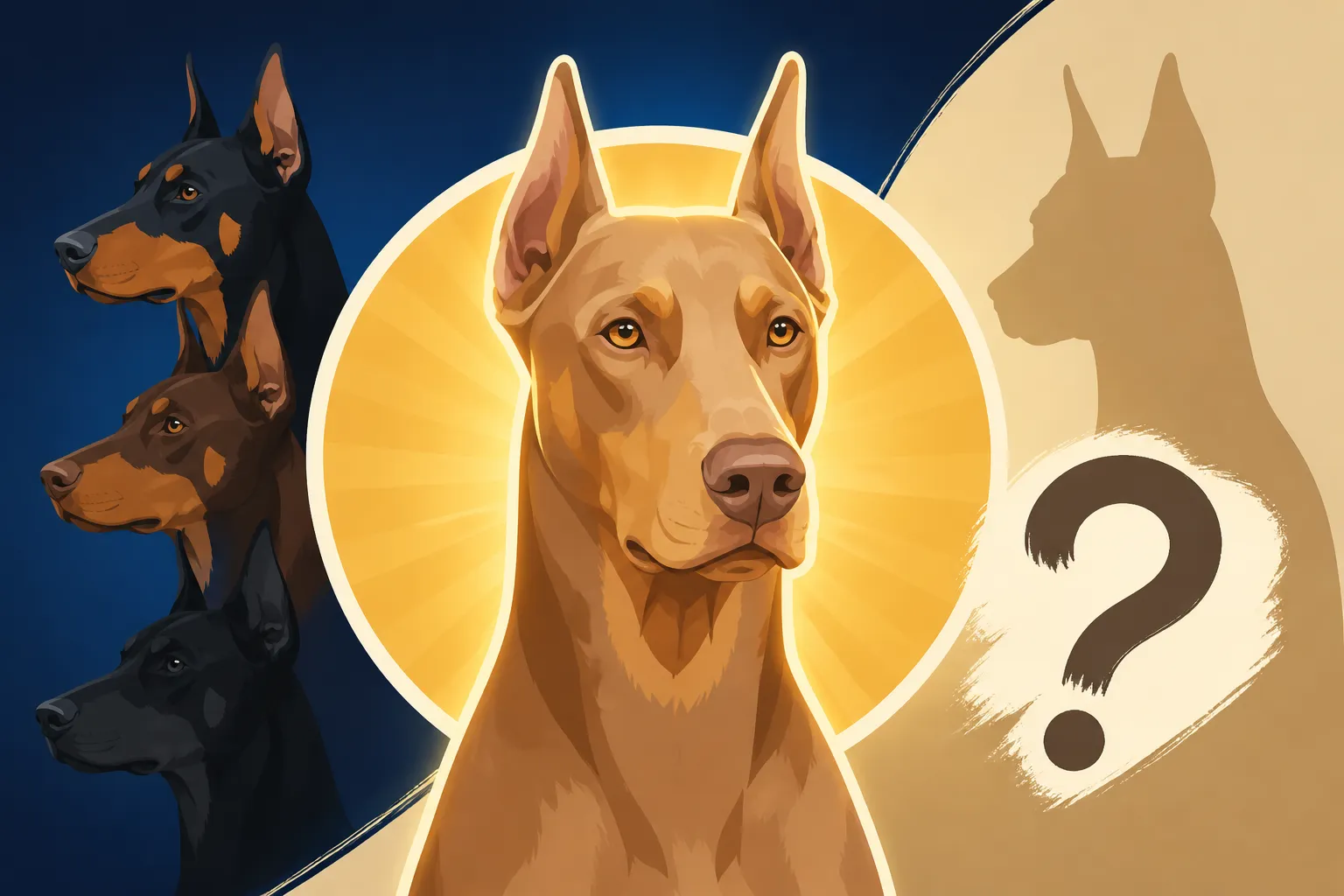
The American Kennel Club (AKC) officially recognizes four Doberman colors: black, red, blue, and fawn (also known as Isabella). All of these colors are accompanied by "rust" markings, which are distinct tan or reddish-brown points appearing on specific areas of the dog's body, such as above the eyes, on the muzzle, throat, chest, legs, and under the tail.
- Black and Rust: This is the most prevalent and iconic Doberman color. The dog's base coat is a deep, rich black, contrasting sharply with the rust markings. It's truly a striking combination. You can learn more about The Black and Rust Doberman.
- Red and Rust: Often simply called "red," this color can range from a deep, rich chocolate brown to a lighter, almost copper hue. It's a gorgeous color, and sometimes people mistake a very dark red Doberman for a black one under certain lighting. Read more about The Red Doberman.
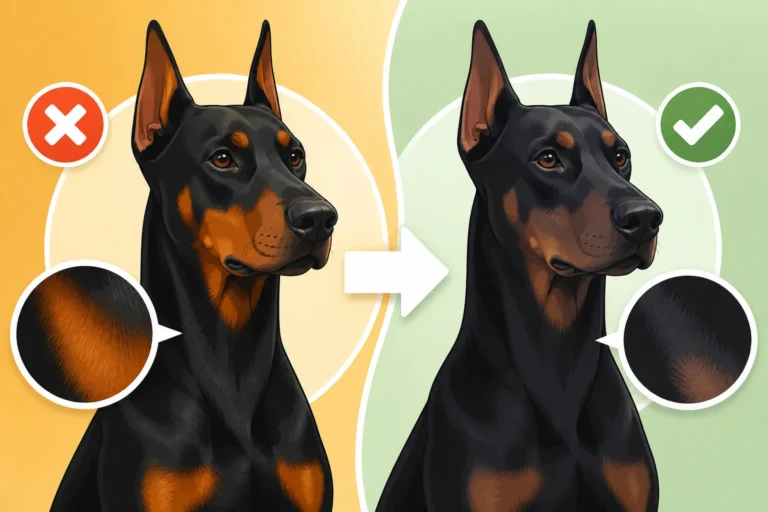
- Blue and Rust: This is where we start getting into diluted colors. A blue Doberman isn't actually blue in the way we think of a crayon. It's a dilution of black, appearing as a dark, charcoal gray, sometimes with a metallic sheen. The rust markings are present, but they also tend to be lighter, often a muted tan.
- Fawn and Rust (Isabella): This is a dilution of the red gene, and it appears as a light, sandy beige or grayish-tan color. Like the blue, the fawn Doberman's rust markings are also diluted and appear as a very pale tan, sometimes almost indistinguishable from the main coat color.
It's important to remember that all these colors are genetically derived from either black or red base coats, with dilution genes modifying their appearance. This genetic interplay is fascinating and crucial for understanding why certain colors appear less frequently.
The Role of Rust Markings
Regardless of the base coat color, those distinctive rust markings are a hallmark of the Doberman. They're not just random patches; their placement is precisely described in the breed standard. These markings contribute significantly to the Doberman's characteristic look, providing depth and definition to their lean, muscular physique. Even in diluted colors like blue or fawn, the rust markings, though paler, are still expected to be present in the same locations.
The Dilution Gene and Its Impact
The reason we have blue and fawn Dobermans at all comes down to a specific genetic factor: the dilution gene. This gene acts on the primary pigments (black and red) to lighten them, creating these distinct, softer shades.
How Blue and Fawn Colors Are Created
The dilution gene, often denoted as 'd', is recessive. This means a Doberman needs two copies of this gene (dd) to express a diluted color. If a Doberman inherits one copy of the dilution gene and one copy of the dominant gene for full color (Dd), they will be a full-colored Doberman (black or red), but they will carry the dilution gene and can pass it on to their offspring.
- Blue Dobermans: A black Doberman has the genotype BBDD or BbDD (B for black, D for full color). To become blue, they need the dilution gene: BBdd or Bbdd. The 'd' gene literally "dilutes" the black pigment, turning it into that steel grey we call blue.
- Fawn Dobermans: Similarly, a red Doberman has the genotype bbDD or bbDd (b for red, D for full color). To become fawn, they need the dilution gene: bbdd. Here, the 'd' gene dilutes the red pigment, resulting in the pale, sandy fawn color.
This genetic explanation clarifies that neither blue nor fawn is inherently a different "color" from black or red; they are simply modified versions due to the presence of the recessive dilution gene. This is why you often hear them referred to as "diluted colors." If you're really interested in the nitty-gritty, you can look into Blue and Fawn Dobermans and the Dilution Gene.
Health Considerations with Diluted Colors
While genetically interesting, the dilution gene isn't just about aesthetics. It's linked to a specific dermatological condition known as Color Dilution Alopecia (CDA). This condition is almost exclusively seen in blue and fawn Dobermans, though not every blue or fawn Doberman will develop it.
CDA manifests as hair loss (alopecia), often starting on the back or flanks, and can be accompanied by dry, flaky skin, itching, and recurrent skin infections. The diluted pigment makes the hair shafts weaker and more prone to breakage, leading to thinning or complete baldness over time. This isn't just a cosmetic issue; it can be quite uncomfortable for the dog and requires ongoing management. For more details on this, check out Color Dilution Alopecia in Blue and Fawn Dobermans. Owners often have to invest in specialized shampoos and conditioners, sometimes even prescription medications, to manage the skin and coat. Products designed for sensitive skin or those with moisturizing properties are often needed, which can be found at pet supply stores like Chewy.
Rarity vs. Acceptance in Doberman Colors
Now, to the core question: are fawn Dobermans the rarest color? The answer isn't a simple yes or no, as "rarity" can mean different things, and it often gets confused with breed standard acceptance and general prevalence within the Doberman population.
Prevalence in the Doberman Population
Statistically, black and rust Dobermans are by far the most common, followed by red and rust. Blue and fawn Dobermans are significantly less common than their full-pigmented counterparts. This is because the dilution gene is recessive; two carriers must be bred together, or a carrier bred to a dilute, to produce dilute offspring. Many breeders actively try to avoid producing blue or fawn Dobermans due to the associated health risks of CDA, meaning there are fewer dilute Dobermans being intentionally bred.
So, while fawn Dobermans are certainly less common than black or red, determining if they are the absolute rarest between blue and fawn can be tricky and may vary by specific breeding lines or regions. Generally, blue Dobermans might be slightly more prevalent than fawn, but both are considered much less common than black or red.
Breed Standard Acceptance and "Rarity"
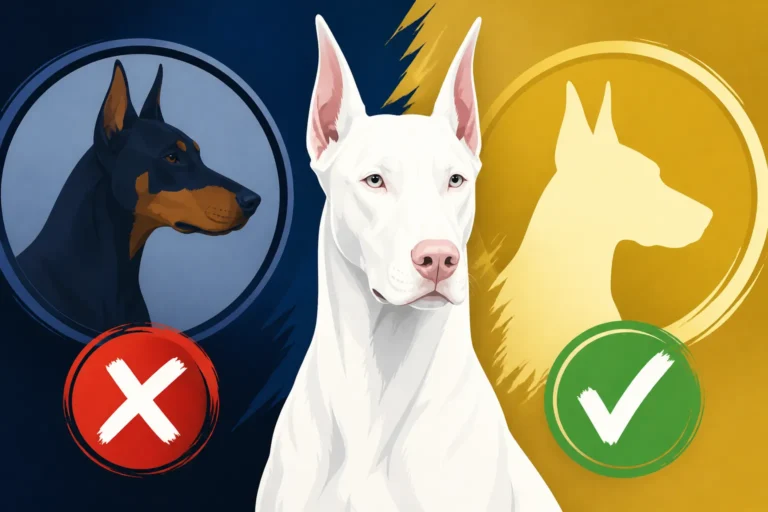
All four colors—black, red, blue, and fawn—are recognized by the AKC standard. This means a fawn Doberman, if it meets all other physical and temperament requirements, can be shown in conformation and earn titles. This is different from "white" or "albino" Dobermans, which are not considered a color but a genetic mutation that results in a lack of pigment, and are generally disqualified from conformation showing. So, fawn Dobermans aren't "rare" in the sense of being an unaccepted or exotic deviation from the breed standard. They are simply less frequently seen.
Many ethical breeders, even those who might occasionally produce a dilute-colored puppy from carrier parents, will often educate prospective owners about the potential for CDA. They prioritize health and temperament over color. So, you won't often find breeders specializing in fawn Dobermans as a primary goal, specifically because of the increased likelihood of skin issues.
The True "Rare" Dobermans
If we're talking about true rarity, and stepping outside the recognized colors, then white Dobermans are often considered "rare" in a controversial sense. They are not a true color, but albinos, lacking all pigment. This is associated with severe health issues beyond just skin problems, including extreme light sensitivity and an increased risk of certain cancers. These dogs are generally not bred ethically, and reputable Doberman clubs worldwide condemn their breeding. So, while you might hear of "rare white Dobermans," it's a very different situation from the less common fawn Doberman.
| Doberman Color | Genetic Basis | Commonality | AKC Recognition | Associated Health Concerns |
|---|---|---|---|---|
| Black and Rust | Full pigment, black gene (B) | Very Common | Yes | Typical Doberman health concerns |
| Red and Rust | Full pigment, red gene (b) | Common | Yes | Typical Doberman health concerns |
| Blue and Rust | Diluted black (dd) | Less Common | Yes | Color Dilution Alopecia (CDA) |
| Fawn and Rust | Diluted red (bbdd) | Least Common (of recognized colors) | Yes | Color Dilution Alopecia (CDA) |
| White (Albino) | Albinism (genetic mutation) | Very Rare | No | Severe light sensitivity, skin cancer, behavioral issues |
This table illustrates that while fawn Dobermans are recognized, their genetic make-up does put them at the lower end of commonality among the acceptable colors, making them the "rarest" recognized color.
Fawn Dobermans: Health Considerations and Ownership
Bringing home any Doberman is a significant commitment, but choosing a fawn Doberman, or any dilute color, means you're signing up for a slightly different set of considerations, particularly concerning their health and daily care.
Living with Color Dilution Alopecia (CDA)
The primary concern for fawn Doberman owners is the potential for Color Dilution Alopecia. While not every fawn Doberman will develop severe CDA, the predisposition is always there. This means being vigilant from the start. You might notice Thinning Coat on a Blue Doberman Puppy or a fawn puppy at a young age, or it might develop later as they reach adulthood.
Managing CDA involves a multi-pronged approach:
- Specialized Grooming: Regular bathing with medicated or moisturizing shampoos is often necessary to prevent skin infections and keep the skin hydrated. You'll need gentle brushes, and thorough but careful drying to avoid irritation. My personal go-to for many of these specialized products is Chewy, where you can often find a good selection of vet-recommended skin care items.
- Environmental Management: Fawn Dobermans with thinning coats are more susceptible to sunburn and cold. Sunscreen for dogs and protective clothing like sweaters or coats in cooler weather become essential. Sun Protection for a Thin-Coated Doberman is not just a suggestion, it's a necessity.
- Dietary Support: Some owners find that supplementing with Omega-3 and Omega-6 fatty acids can improve skin and coat health. A high-quality diet, perhaps one formulated for sensitive skin, can also be beneficial. Always discuss dietary changes and supplements with your vet.
- Veterinary Care: Regular check-ups with your veterinarian, especially a dermatologist if skin issues are persistent, are crucial. Early intervention for skin infections can prevent them from becoming more severe.
It's a misconception to think that CDA means a fawn Doberman can't live a full, happy life. With proper care and attention, they absolutely can. It just requires an owner who is prepared for the unique needs these dogs might have. For some, the Daily Skin Routine for a Thinning Blue Doberman (which applies equally to fawn) becomes a loving ritual.
The Cost of Fawn Doberman Care
Because of the potential for ongoing skin and coat issues, owning a fawn Doberman can sometimes incur higher veterinary and grooming expenses than owning a black or red Doberman. Medications for skin infections, specialized shampoos, supplements, and dermatologist visits can add up over time. It's wise for prospective owners to budget for these potential costs. Skin Care Costs for a Blue Doberman can give you a clearer picture of what you might be facing, as the issues are very similar for fawn Dobermans. This is something to seriously consider before you bring one home.
Temperament and Living with a Fawn Doberman
The color of a Doberman's coat has no bearing on its temperament. A fawn Doberman, like any other Doberman, should embody the breed's characteristic intelligence, loyalty, and protective instincts. They are alert, energetic, and bond deeply with their families, often earning them the nickname "Velcro dogs."
What's vital for any Doberman, regardless of color, is early socialization and consistent, positive reinforcement training. This helps build a confident, well-adjusted dog. While some myths persist about dilute Dobermans being "softer" or more prone to shyness, these are generally unfounded and more likely related to individual genetics or inadequate socialization than to coat color itself. The breed's inherent temperament, as described in Doberman Temperament as the Standard Describes It, remains true across all recognized colors.
Ultimately, choosing a fawn Doberman means embracing a beautiful, less common color, while being fully aware and prepared for the specific health challenges that can come with that dilution gene. It’s a decision that requires research, an understanding of genetics, and a commitment to providing the best possible care for their unique needs.
Disclaimer
This article is for general informational purposes only and does not constitute professional advice. Laws, prices and regulations vary by location and change over time. Consult a qualified professional for guidance on your specific situation.