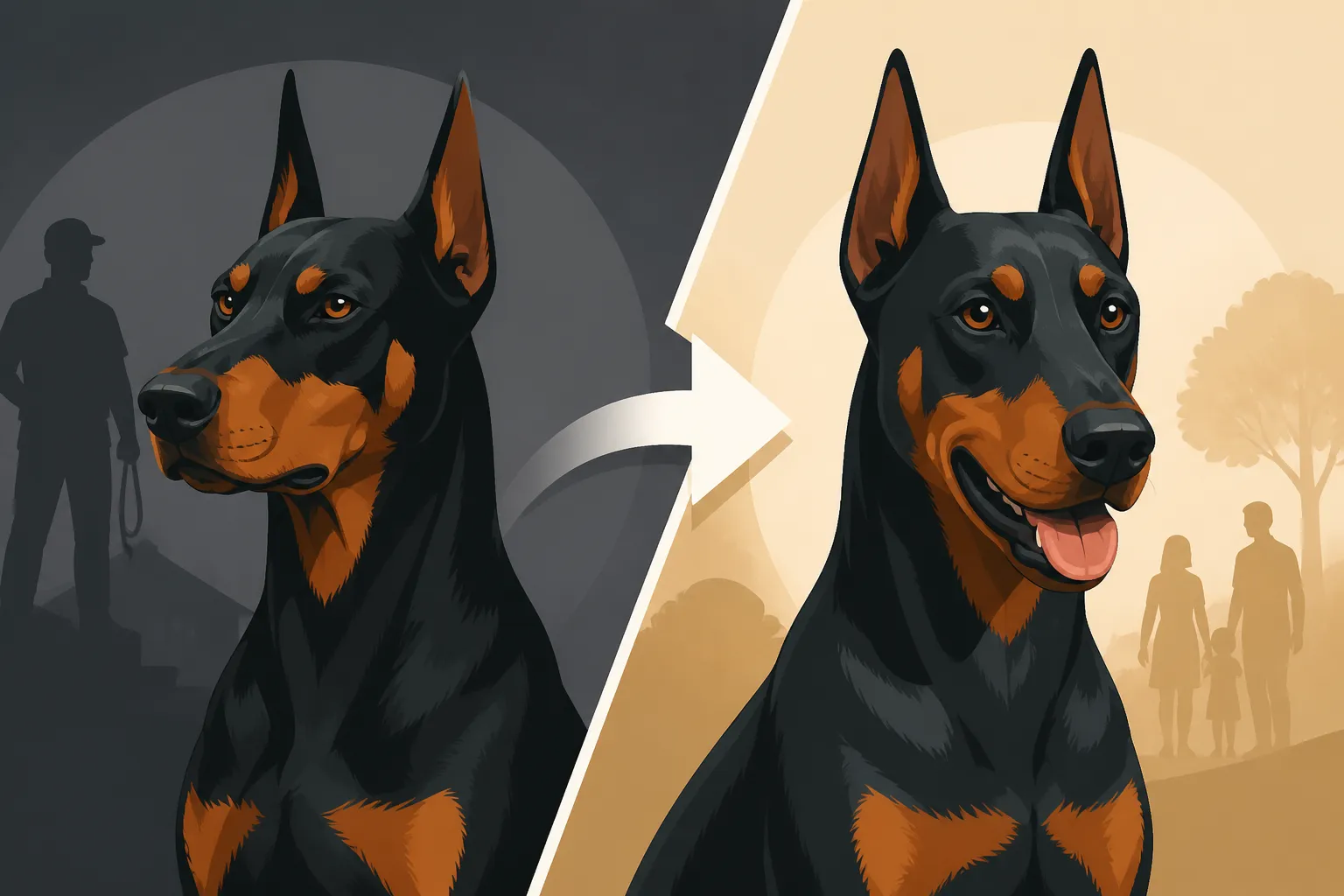
Why the Doberman Softened After the 1950s
It's a common observation, isn't it? Many people envision the Doberman as this fierce, unapproachable guard dog, a picture often painted by movies and older stories. But if you've spent any time with a Doberman today, you'll know that while they are protective, many are also incredibly sweet, affectionate, and even goofy family companions. This guide will explore the fascinating shift in the Doberman's temperament and public image, specifically looking at why the breed "softened" after the 1950s.
The Original Doberman: Built for a Purpose
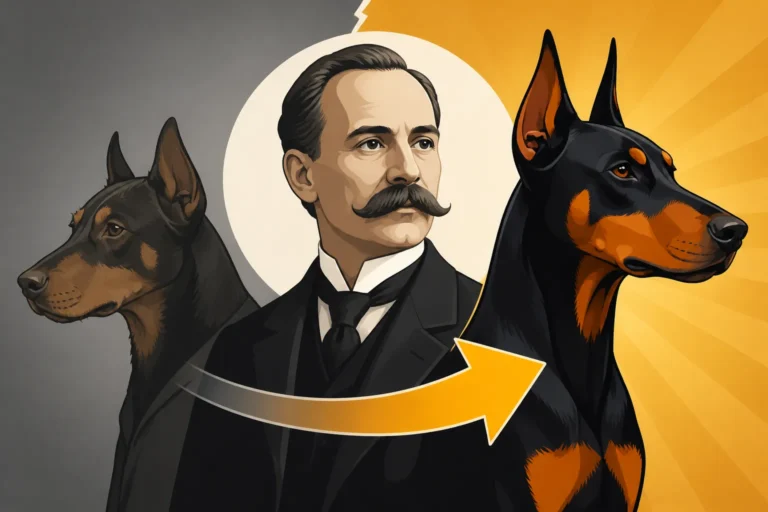
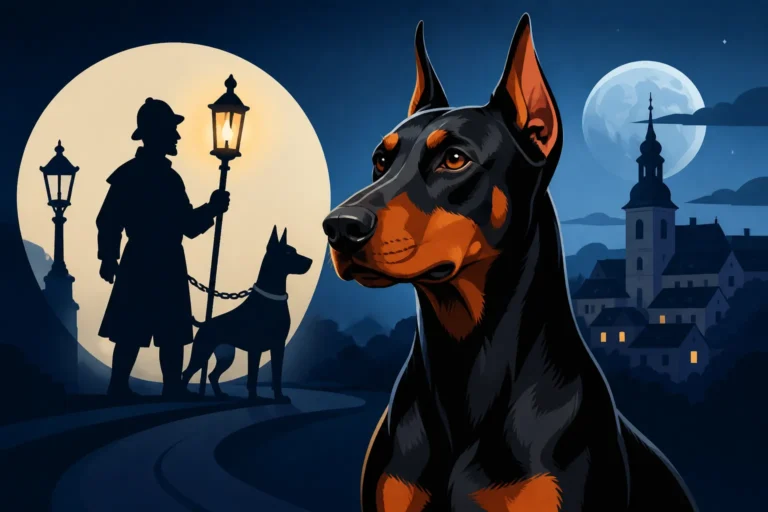
To understand how the Doberman changed, we first have to appreciate where it came from. The breed wasn't simply a happy accident; it was a deliberate creation born out of a specific need. Karl Friedrich Louis Dobermann, a tax collector and dog catcher in Apolda, Germany, in the late 19th century, needed a dog that could accompany him on his rounds, protecting him from bandits and anyone unhappy about paying their taxes.
Karl Dobermann's Vision and Purpose
Imagine a man in a less-than-safe profession, venturing through dark streets and rural areas, collecting money. He needed more than just a companion; he needed a fearless, formidable deterrent. Karl Dobermann wasn't breeding for beauty pageants or obedience trials. He was breeding for utility and protection. He used various local dogs, likely including Rottweilers, German Pinschers, and even some Greyhounds for speed, to craft the ultimate personal protection dog. His focus was on creating a dog that was intelligent, brave, and utterly devoted to its owner, with a strong natural instinct to guard. This was a dog meant for serious work, where hesitation or excessive friendliness would be a liability. The history of Karl Dobermann and the Dogs He Needed truly underlines this foundational purpose.
Early Breed Characteristics: Fearless and Formidable
The early Dobermans were renowned for their sharp intelligence, incredible courage, and an almost unwavering intensity. They weren't just alert; they were always on guard. This meant they could be quite wary of strangers and intensely focused on their owner. Their temperament was often described as "sharp" – quick to react, powerful in their defense, and with a strong presence that commanded respect, or often, fear. They were truly working dogs, used by police, military, and individuals needing robust protection. Their public image reflected this: a serious, no-nonsense dog that you wouldn't want to cross. This made them highly effective for their intended roles, but perhaps not the ideal choice for every family home looking for a docile pet. They embodied the traits described in What Went Into the First Dobermans.
Shifting Public Perception and Breeder Goals
The period after World War II brought about significant societal changes, and with them, a shift in how people viewed dogs, especially powerful breeds like the Doberman. The widespread use of Dobermans in military roles during the war had cemented their image as powerful, courageous, and capable animals, which, while admirable, also added to their intimidating aura. As soldiers returned home and families grew, the demand for dogs evolved.
Post-War Desire for Family Companions
After the hardships of war, many families sought comfort and companionship in their homes. While the Doberman's protective instincts were still valued, there was a growing desire for dogs that could also be integrated seamlessly into family life, coexisting peacefully with children and being more approachable to friendly visitors. This marked a turning point. Breeders began to recognize that a dog too sharp or too wary might not appeal to this new market of pet owners. The emphasis slowly started to shift from pure, unadulterated working drive to a more balanced temperament that blended protectiveness with a calmer, more amiable disposition indoors. It was about creating a dog that could be a formidable guardian when needed, but a gentle, loving companion the rest of the time. This desire for integration really began to redefine the breed's future.
The Rise of the Pet Market
As economies boomed and suburban life became the norm, more people had the means and the desire for purebred dogs as pets, not just as working animals. This expansion of the pet market meant breeders had to consider a broader audience. No longer was their primary customer a tax collector or a police officer. Now, it was a family in a suburban home. This broader appeal meant that extremes in temperament, while once prized for specific working roles, became less desirable for the average family looking for a loyal companion. The sheer volume of demand also led to more breeding operations, not all of which were focused solely on preserving the original working traits. This opened the door for selecting for traits that made the dogs more adaptable to pet life, leading to the gradual softening we observe today. This period saw the beginnings of Why the Doberman Was Bred Calmer Over Time.
The Influence of Show Rings and Pet Ownership
The emergence of dog shows and kennel club standards played an enormous role in shaping the Doberman's development post-1950s. While these venues certainly highlighted the breed's elegance and athleticism, they also inadvertently pushed for specific traits that, over time, favored a softer temperament.
Prioritizing Temperament in the Show Ring
Conformation shows judge dogs based on how well they adhere to a written "standard" for their breed, which includes not just physical appearance but also temperament. While the Doberman standard still calls for an "alert, courageous, and fearless" dog, it also emphasizes a stable, steady, and obedient disposition. Judges in the show ring, dealing with many dogs in a bustling environment, naturally favored dogs that were confident, yet manageable, and that didn't show aggression or excessive shyness towards handlers or other dogs. A dog that lunged or snarled in the ring, no matter how physically perfect, would quickly be excused.
This selective pressure meant that breeders aiming for success in the show ring started prioritizing dogs that exhibited composure and trainability, rather than the raw "sharpness" that might have been dominant in earlier working lines. Over generations, this emphasis on a more biddable and outwardly friendly dog for public appearances undoubtedly contributed to the softening of the breed's general temperament. Breeders would often boast about their dog's "good temperament" meaning it was well-adjusted and easy to handle in various situations, which is a far cry from the formidable watchdog of yesteryear. The standard, as described in The Doberman the AKC Standard Describes, subtly guided this evolution.
The Impact of Mass Production and Puppy Mills
Unfortunately, with the increased popularity of the Doberman as a family pet, not all breeding practices remained ethical or focused on breed health and temperament. The rise of large-scale commercial breeding operations, often referred to as puppy mills, saw dogs bred for profit rather than adherence to responsible standards. In these environments, temperament and health often took a backseat to sheer volume. Puppies from these operations might be poorly socialized, leading to either extreme shyness or unpredictable aggression, but more commonly, a lack of the intense drive and confidence characteristic of the original Doberman. They often simply lacked the genetic heritage of carefully selected working dogs.
When prospective owners are looking for supplies for their new Doberman, whether from a reputable breeder or a rescue, they'll find essentials like high-quality food, toys, and bedding readily available on platforms like Chewy. However, no amount of quality products can compensate for a dog with a poorly bred temperament. This period also highlighted the need for careful selection of a breeder, as discussed in posts like How Long a Tested Doberman Litter Is Booked Out. The sheer volume of Dobermans entering homes meant that many of these dogs, while still identifiable as Dobermans, might not have carried the same innate guarding instincts or robust mental fortitude of their ancestors.
Health Considerations and Breeding Practices
Beyond temperament and appearance, the health of the Doberman has always been a significant concern, influencing breeding decisions and, by extension, the overall characteristics of the breed. As veterinary medicine advanced and our understanding of genetics grew, breeders faced new challenges and opportunities.
Focus on Longevity and Health
Dobermans, unfortunately, are prone to a number of serious health issues, particularly dilated cardiomyopathy (DCM), a devastating heart condition. This reality forced many responsible breeders to shift their focus towards health testing and selecting breeding stock with better longevity. While this is absolutely crucial for the welfare of the breed, it can also have an indirect impact on temperament. A breeder heavily focused on health may prioritize dogs from lines known for longevity and clear health tests, potentially overlooking some of the sharper, more intense working temperaments in favor of a generally healthier, and often calmer, animal.
The extensive health testing required for Dobermans, such as cardiac screenings and genetic tests, is a significant investment, as outlined in The Health Testing a Doberman Breeder Must Show. Responsible breeders spend a considerable amount of time and money trying to produce healthier puppies, and sometimes this means moving away from the "harder" temperaments if those lines are also riddled with health problems. It's a delicate balance, and breeders often walk a tightrope between preserving desired traits and ensuring the well-being of their dogs.
Genetic Diversity and Temperament
The size of the Doberman gene pool, and how it has been managed over the decades, also plays a role in temperament. When breeding becomes too focused on a narrow set of traits or a small number of popular breeding animals, genetic diversity can decrease. This can lead to a phenomenon where certain temperamental characteristics become more widespread, either by design or by accident. If the most successful show dogs or popular sires were consistently those with a more mellow disposition, then those genes would become more prevalent throughout the breed.
Furthermore, the very traits that made the early Dobermans so formidable—their intense drive, territoriality, and sometimes extreme wariness—could also be challenging for the average pet owner. As breeders aimed to produce dogs that were easier to live with for the wider public, they naturally selected away from these more extreme characteristics. This doesn't mean modern Dobermans aren't protective; it means their protective instincts are often channeled and expressed in a more controlled, less overtly aggressive manner, suitable for a domestic setting. Understanding Doberman Temperament as the Standard Describes It helps contextualize this evolution.
The Modern Doberman: What We're Left With Today
So, where does all this leave us? The Doberman of today is, in many ways, a different animal from its late 19th-century ancestors. While the core intelligence, loyalty, and protective instincts remain, the intensity and sharpness have, for the most part, been dialed down to create a more adaptable companion.
The "Velcro" Doberman Reputation
One of the most endearing and well-known characteristics of the modern Doberman is its "Velcro" nature. These dogs are famous for wanting to be right by their owner's side, often leaning, nudging, and following them from room to room. This strong bond and desire for closeness are a testament to the breed's evolution towards a more companion-focused temperament. While they might still be watchful of strangers, their primary mode of interaction with their family is one of deep affection and constant presence. This close bonding makes them incredible family pets, though it can sometimes lead to separation anxiety if not managed properly. If you've ever had a Doberman, you know exactly what I mean by Living With a Doberman That Follows You Everywhere!
This "Velcro" trait also aligns perfectly with the desire for a family dog that is deeply involved in daily life, rather than merely patrolling the perimeter. It’s a trait that has been implicitly, if not explicitly, selected for by breeders responding to pet owner demand for loyal, affectionate companions. Providing good quality food and enrichment from trusted brands found on sites like Chewy ensures these devoted companions stay healthy and happy.
Finding a Balance: Preservation and Progress
Today's Doberman breeders face the ongoing challenge of balancing the breed's historical purpose and traits with the demands of modern pet ownership and the imperative of improving health. There are still dedicated working lines that strive to maintain the original intensity and drive, but these are often distinct from the lines bred primarily for conformation and companionship.
The majority of Dobermans available today, especially those from reputable breeders focused on health and temperament, are wonderful companions. They are intelligent, trainable, protective without being overtly aggressive, and deeply devoted to their families. They retain an impressive presence and a natural guarding instinct, making them excellent family protectors, but they are also capable of being calm and gentle within the home. The "softening" of the Doberman after the 1950s wasn't a decline, but rather an adaptation driven by societal changes, breeding goals, and a growing understanding of what makes a successful family pet. It's a story of evolution, resulting in the magnificent, multi-faceted Doberman we know and love today.
Here's a quick comparison of general traits:
| Trait Aspect | Pre-1950s Doberman (General Tendency) | Post-1950s Doberman (General Tendency) |
|---|---|---|
| Primary Role | Working dog, personal protector | Family companion, guardian |
| Stranger Reaction | Highly wary, suspicious, sharp | Reserved, watchful, often accepting of friendly strangers (with owner present) |
| Family Bond | Deeply loyal, owner-focused | Intense, "Velcro" nature, family-oriented |
| Temperament | Intense, fearless, formidable | Confident, biddable, intelligent, affectionate |
| Trainability | High drive, requires experienced handler | Highly intelligent, eager to please, good for various training levels |
| Public Image | Fearsome, intimidating | Elegant, protective, loyal family dog |
| Breeding Focus | Working ability, guarding instinct | Conformation, health, balanced temperament |
Disclaimer
This article is for general informational purposes only and does not constitute professional advice. Laws, prices and regulations vary by location and change over time. Consult a qualified professional for guidance on your specific situation.