Whether the Manchester Terrier Shaped the Doberman
It’s a question that many of us Doberman enthusiasts ponder when we look at our sleek, intelligent companions: where did they really come from? The Doberman's origins are steeped in a bit of mystery, largely because the man credited with creating the breed, Karl Dobermann, wasn't exactly keeping meticulous breeding records like a modern geneticist. This guide will delve into the fascinating history, exploring the possibility that the lively and alert Manchester Terrier played a role in shaping the Doberman we know and love today.
The Mystery of the Doberman's Ancestry
When you delve into the Doberman’s past, you quickly realize it’s not as neatly documented as we might wish for a breed with such a distinctive presence. Karl Dobermann, a tax collector from Apolda, Germany, in the late 19th century, wasn't working with a precise genetic blueprint or a well-established kennel of purebreds. He had a very practical, immediate need: a loyal, fearless protector to accompany him on his rounds.
Karl Dobermann's "Recipe" and the Lack of Records
Imagine being Karl Dobermann, traveling through late 19th-century Germany with pockets full of collected taxes. You’d want a dog by your side that was formidable, alert, and utterly devoted. This practical requirement was the driving force behind his breeding project. He wasn't aiming for a show ring champion or a specific aesthetic at first; he needed a working partner. As such, his breeding decisions were based more on available dogs in his region that possessed desirable traits like courage, intelligence, and protective instincts, rather than on documented pedigrees or scientific selection. We delve into his life in more detail in Who Karl Friedrich Louis Dobermann Was and Why a Tax Collector Bred the First Dobermans.
Unfortunately for us modern breed historians, Dobermann didn't leave behind detailed written records of his crosses. He was essentially creating a landrace type, pulling from various local dogs he had access to, including butcher's dogs, farm dogs, and watchdogs. This lack of precise documentation is a real frustration for those of us who love the breed and want to understand every thread of its tapestry. It leaves much to speculation and historical accounts passed down through the early Doberman clubs, rather than solid evidence. So, while we can confidently say What Went Into the First Dobermans, the exact proportions and specific breeds remain a delightful puzzle.
Common Speculations and Early Influences
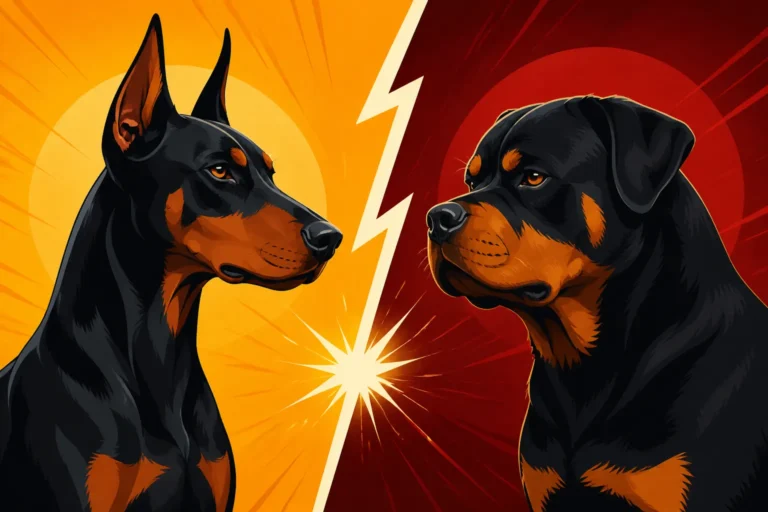
Despite the lack of concrete records, early Doberman fanciers and historians have put forth several breeds as likely contributors to the Doberman's genetic makeup. The Rottweiler, with its formidable guarding instinct and robust build, is almost universally accepted as a primary influence, lending the Doberman much of its power and courage. The German Pinscher is another frequently cited ancestor, probably contributing to the Doberman's sleek coat, intelligent expression, and agile build. You can read more about one of these likely ancestors in Whether the Rottweiler Is in the Doberman.
Other breeds often mentioned include the Weimaraner, perhaps for its hunting prowess and distinctive head shape, and various types of old German Shepherds or farm dogs for their working drive. However, one of the most intriguing and persistent theories involves the black and tan terrier type, which leads us directly to the Manchester Terrier. The idea is that these terriers, known for their sharp minds and keen watchfulness, would have provided that characteristic "edge" Dobermann was seeking.
The Manchester Terrier Connection: Fact or Fancy?
The suggestion that the Manchester Terrier played a role in the Doberman's development isn't without its merits. When you compare certain traits, it's easy to see why this theory has endured among breed enthusiasts and historians.
Tracing the Black and Tan Terrier Line
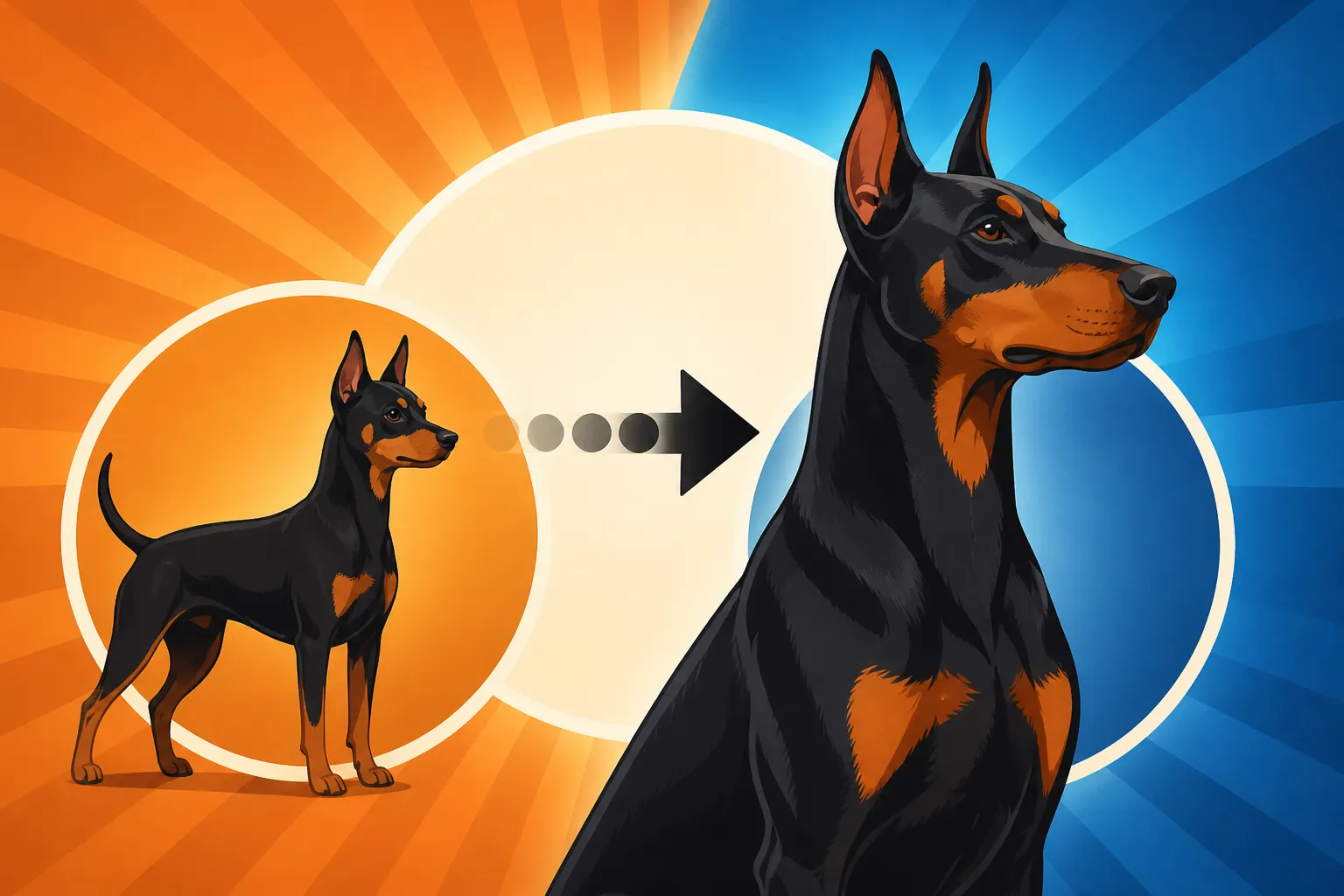
To understand the potential connection, we need to consider the "black and tan terrier" that existed in Germany during Karl Dobermann's time. This wasn't necessarily the highly refined Manchester Terrier we see in the show ring today, but rather its earlier, more rustic ancestors. These were robust, versatile dogs, prized for their vermin-hunting skills, quick reflexes, and unwavering loyalty. They were compact, muscular, and possessed a distinctive black coat with rich rust markings—a color pattern that is, of course, iconic to the Doberman.
These early black and tan terriers, much like what we recognize in the Manchester Terrier today, were known for their intelligence and quick wit. They were alert to their surroundings, not easily intimidated, and possessed a strong prey drive, making them excellent watchdogs. These are precisely the traits that a man like Karl Dobermann, needing a protective companion for his risky work, would have found incredibly valuable. Imagine a smaller, feistier version of what Dobermann was trying to create; these terriers could have provided the sharpness and keen senses he desired to inject into his developing breed. Many Doberman owners still appreciate these traits today, often seeking puzzle toys or engaging in brain games, which you can easily find on platforms like Chewy, to keep their intelligent dogs occupied.
Physical and Temperamental Similarities
When you look at a Doberman and then at a Manchester Terrier, some striking similarities, beyond just color, become apparent. Both breeds share that sleek, short, hard coat that requires minimal grooming. Their body structures, while vastly different in size, share an elegance and athleticism. Both possess deep chests and a somewhat tucked-up abdomen, indicating speed and agility. Their heads, while the Doberman's is often described as a "blunt wedge," share a certain refined quality and intelligent expression. If you've ever seen a Manchester Terrier in person, you'll know they carry themselves with a confident, almost regal air, much like a Doberman.
Temperamentally, the parallels are even more compelling. Manchester Terriers are known for being incredibly intelligent, alert, and fiercely devoted to their families. They are watchful and can be reserved with strangers, traits highly valued in a guardian breed. They possess a keen sense of hearing and a quick反应, much like a Doberman. The "Doberman intensity" we often speak of—that focused, watchful gaze and readiness to act—could certainly have roots in the terrier temperament. While the Doberman is much larger and more powerful, that underlying drive and intelligence might well have come from the smaller, sharper black and tan terriers. The challenge, of course, is that Telling a Doberman From a Manchester Terrier purely on looks would be impossible for many, but the shared spirit is evident.
The Genetic Lens: What Modern Science Suggests
In this age of genetic testing, many people hope for definitive answers about breed origins. While modern DNA analysis can tell us a lot about the genetic relationships between established breeds, it's a much harder task to pinpoint the exact contributions of ancestral "types" or individual, undocumented crosses from over a century ago. Genetic studies have certainly confirmed that Dobermans belong to the broader "Pinscher" and "Terrier" groups, which lends credence to the idea of terrier influence.
However, these tests often can't say, "Yes, exactly X% of Doberman DNA comes from the Manchester Terrier." The lines between various black and tan terrier types were blurred in the 19th century, and without DNA samples from Dobermann's original foundation stock or the specific "terriers" he used, it remains challenging to draw a direct, scientifically unassailable link to the modern Manchester Terrier. What genetics does confirm is a general heritage that aligns with historical speculation, placing the Doberman firmly within a lineage of alert, working dogs that often included terrier stock.
Why This Ancestry Matters to Doberman Owners Today
Understanding the Doberman's rich, if somewhat ambiguous, ancestry isn't just an academic exercise. It gives us deeper insight into the breed's characteristics, helping us appreciate and manage our Dobermans more effectively.
Understanding Doberman Traits Through Its Ancestors
If we accept the strong possibility of terrier influence, it helps explain certain Doberman traits that might otherwise seem contradictory. Their intense focus and alert nature, coupled with their intelligence and drive, are hallmarks of the terrier group. The combination of the formidable Rottweiler's strength, the German Pinscher's elegance, and the terrier's sharp wit created a dog that is both powerful and precise. This mixed heritage contributed to the Doberman's ability to learn quickly and adapt, but also to its need for consistent mental stimulation. This is why Why a Clever Doberman Is Harder to Train isn't about difficulty, but about needing a smarter approach from the owner.
The Doberman's protective instincts, often described in Doberman Temperament as the Standard Describes It, can be seen as a blend of these ancestral influences. The Rottweiler brought the raw power and unwavering loyalty; the Pinscher contributed the alertness and quick reflexes; and the terrier, perhaps, added that tenacious, never-give-up attitude. When you observe your Doberman's intense gaze or how quickly they pick up on subtle cues, you're seeing a legacy of purposeful breeding designed to create a supreme protector.
Debunking Myths and Valuing a Rich History
Understanding the Doberman's true history, even with its gaps, helps us debunk myths that sometimes surround the breed. For instance, the Doberman isn't just a brute force guardian; its intelligence and sensitivity are deeply ingrained, likely from breeds like the Pinscher and various terriers. This rich, multi-faceted ancestry explains why the Doberman is often described as both strong-willed and deeply attached to its family. This deep bond is a hallmark of the breed, a direct result of being bred to be a personal protector, always by its owner's side.
By appreciating the journey of the Doberman from a humble mix of local working dogs to the refined breed recognized by standards like The Doberman the AKC Standard Describes, we gain a fuller picture. It's a testament to Karl Dobermann's vision and the subsequent efforts of breeders like Otto Goeller that a breed with such a powerful yet elegant presence emerged. This complex history reminds us that even with modern breeding science, the magic of instinct and purpose remains paramount. Keeping our Dobermans happy and healthy, with all their historical traits, often means carefully selected nutrition and enrichment, which is something many owners rely on suppliers like Chewy for, ensuring their beloved dogs get everything they need.
Beyond the Manchester Terrier: Other Key Contributors
While the Manchester Terrier's potential role is fascinating, it’s important to remember that the Doberman is a mosaic of several distinct influences, each contributing vital pieces to its unique character.
The Enduring Influence of the Rottweiler and German Pinscher
The Rottweiler's contribution to the Doberman's courage, power, and guarding instinct is well-documented and widely accepted. These "butcher's dogs" of the era were formidable, known for their strength and protective nature. Their physical substance and mental fortitude were crucial in establishing the Doberman as a serious guardian. Without the Rottweiler, the Doberman likely wouldn't possess the sheer presence and underlying power that defines the breed.
Similarly, the German Pinscher is considered another foundational pillar. These dogs, smaller but equally sharp and elegant, contributed to the Doberman's sleek build, shorter coat, and refined head. They also brought an intelligence and alertness that complemented the Rottweiler's raw power. The Pinscher influence helped shape the Doberman into the agile, intelligent, and elegant protector we know, rather than merely a heavy-set guardian. The blend of these two strong influences, plus others, created a truly unique breed.
The Unknowns and the Ongoing Fascination
Ultimately, the exact "recipe" Karl Dobermann used to create his ideal protector remains partially shrouded in the mists of time. We know he selected dogs for specific traits: courage, intelligence, loyalty, and a strong protective instinct. Whether the Manchester Terrier, or a similar black and tan terrier type, was directly involved or simply represents the kind of dog that contributed certain characteristics, the influence of sharp, agile terriers cannot be entirely dismissed.
This enduring mystery is part of what makes the Doberman's history so captivating. It reminds us that breed creation, especially in its early stages, was often a pragmatic, hands-on process, rather than a scientific one. What we have today is a magnificent breed, a testament to its creator's vision, and a living legacy of its diverse, working-class origins. And whether or not a specific breed like the Manchester Terrier directly shaped our Dobermans, the characteristics that define them – their alertness, intelligence, and protective nature – resonate with the qualities of many working dogs of that era. Finding the right gear for these athletic, intelligent dogs, from durable toys to specialized training equipment, is something Chewy excels at providing, offering a huge range of options for discerning Doberman owners.
| Ancestral Breed (Likely) | Potential Contributions to Doberman | Key Characteristics |
|---|---|---|
| Rottweiler | Power, Courage, Loyalty, Guarding Instinct | Strong, muscular, formidable, deep-chested |
| German Pinscher | Elegance, Alertness, Intelligence, Agility | Sleek, refined head, watchful, energetic |
| Black & Tan Terrier | Sharpness, Tenacity, Quick Reflexes, Coat Color | Agile, keen senses, devoted, distinctive markings |
| Weimaraner (Speculated) | Scenting ability, Distinctive Head, Sleekness | Athletic, intelligent, good temperament |
| Old Shepherds/Farm Dogs | Working Drive, Herding Instincts, Endurance | Versatile, trainable, robust |
Disclaimer
This article is for general informational purposes only and does not constitute professional advice. Laws, prices and regulations vary by location and change over time. Consult a qualified professional for guidance on your specific situation.