The Four Doberman Colors the AKC Allows
Many prospective Doberman owners are captivated by their sleek, powerful appearance, but when it comes to coat color, there's often a surprising amount of confusion and misinformation. It’s not just about what looks appealing; understanding the genetics behind Doberman colors is vital, especially since some variations come with inherent health considerations. This guide will walk you through the specific coat colors recognized by the American Kennel Club (AKC) for Dobermans, delving into what makes each one unique, the genetics involved, and why some colors, though striking, aren't part of the official breed standard.
The Foundation: Black and Rust Dobermans
When most people picture a Doberman Pinscher, they envision that iconic, striking silhouette in black and rust. This isn't just a coincidence; it's the most prevalent and historically recognized color combination for the breed, embodying much of the powerful and elegant image the Doberman projects. For many, it's the quintessential Doberman look, and it certainly holds a special place in the hearts of breed enthusiasts and judges alike.
The Dominance of Black and Its Rich Markings
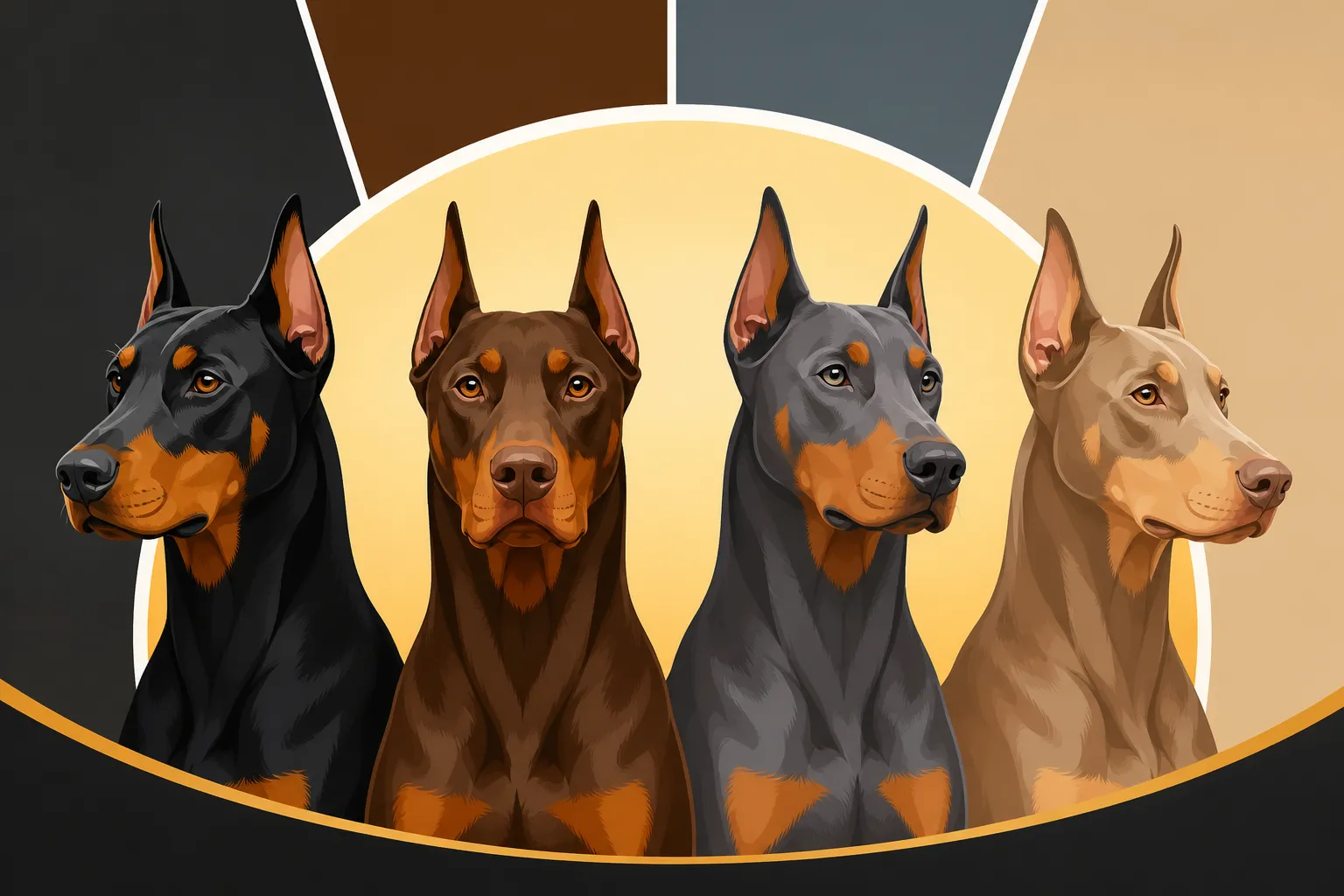
The black coat of a Doberman isn't just a flat, dull black; it should be a deep, lustrous, almost patent-leather black that gleams in the sunlight. This intense dark hue provides a stunning contrast to the "rust" markings, which are a rich, reddish-brown. These rust points are not random splashes but appear in very specific locations: above each eye, on the muzzle, throat, and forechest, on all four legs and feet, and beneath the tail. The combination creates a visually harmonious and powerful presentation.
Genetically, the black color in Dobermans is dominant. This means that a Doberman only needs one copy of the "black" gene from either parent to express a black coat. If a Doberman inherits two copies of the black gene, it will still be black. This genetic prevalence is a significant reason why The Black and Rust Doberman is so commonly seen and why it has become the standard for the breed. Breeders often strive for this rich, deep pigmentation in both the black and the rust, as it speaks to the overall quality and health of the coat.
Beyond Aesthetics: Temperament and the Classic Color
It’s worth noting that while color is a physical trait, some people mistakenly associate specific colors with temperament. There's no scientific evidence to suggest that a black and rust Doberman behaves any differently, or is inherently "better" or "worse" than Dobermans of other recognized colors. However, because the black and rust is so common and often produced by long-standing, reputable breeders who prioritize health and stable temperaments, you might encounter well-adjusted dogs of this color more frequently.
The importance of the black and rust color in the breed standard lies in its historical significance and its contribution to the Doberman's overall distinctive appearance. It represents the original vision for the breed set forth by its creator, Karl Dobermann, and subsequent breed clubs. Maintaining this standard helps preserve the breed's identity and ensures that future generations continue to exhibit the traits that make the Doberman so recognizable and admired.
The Warmth of Red and Rust Dobermans
While black and rust might be the most common image, the red and rust Doberman is equally stunning and fully recognized by the AKC. These dogs offer a warmer, often equally intense visual appeal, with coats that can range from a deep, rich mahogany to a lighter, more coppery hue. They are truly beautiful animals, and for many Doberman enthusiasts, the red is a preferred choice for its striking elegance.
The Spectrum of Red and Its Genetic Blueprint
A red Doberman's coat isn't just "brown"; it’s a vibrant, often lustrous red that truly stands out. Just like their black counterparts, red Dobermans also display the distinct "rust" markings in the same specific locations—above the eyes, on the muzzle, throat, chest, legs, and under the tail. The contrast here is between the red base coat and the rust markings, which are typically a slightly lighter or more golden shade of red, creating a beautiful tonal effect. The depth and richness of the red can vary quite a bit, from a dark chocolate cherry to a brighter, fiery copper, and all are acceptable under the breed standard.
Genetically speaking, the red color in Dobermans is recessive. This means that a Doberman must inherit two copies of the "red" gene (one from each parent) to express a red coat. If a Doberman inherits one red gene and one black gene, it will appear black but will "carry" the red gene, meaning it can pass it on to its offspring. This is why you can have black Dobermans who, when bred together, can surprise their owners with a litter containing The Red Doberman puppies, provided both parents carry the recessive red gene.
Red Dobermans in the Show Ring and as Companions
Red Dobermans are just as competitive in the show ring and just as beloved as companions as their black and rust cousins. There are no inherent differences in health or temperament based solely on this color, assuming the dog comes from responsible breeding. They possess the same intelligent, loyal, and protective traits that define the Doberman breed. Many owners appreciate the unique warmth and slightly softer look that the red coat can convey, making their Doberman just as commanding yet perhaps a touch less intimidating to casual observers.
When selecting a red Doberman, it's always important to look for a reputable breeder who focuses on health, temperament, and adherence to The Doberman the AKC Standard Describes. Just like with black Dobermans, the quality of the rust markings and the overall condition of the coat are indicators of good breeding and care. Regardless of color, a healthy, well-socialized Doberman from sound lines will be an incredible addition to any family.
The Dilute Colors: Blue and Fawn Dobermans
Beyond the classic black and red, the AKC recognizes two additional, more unique Doberman colors: blue and fawn. These colors are often called "dilutes" because they result from a specific gene that dilutes the pigment of either a black or red coat. While undeniably beautiful and striking, these dilute colors come with their own set of considerations, particularly regarding coat health, which potential owners need to understand.
The Enigmatic Blue Doberman
The blue Doberman is a truly striking sight, with a coat that appears as a dark steel-grey, often with a metallic sheen. In some lighting, it can even be mistaken for black, but upon closer inspection, the distinct grey hue becomes apparent. The rust markings on a blue Doberman are typically a lighter, more muted tan or grey-beige, providing a subtle contrast to the overall slate color. This is not a "true" blue in the sense of a bright navy, but rather a sophisticated, subdued grey that many find incredibly elegant.
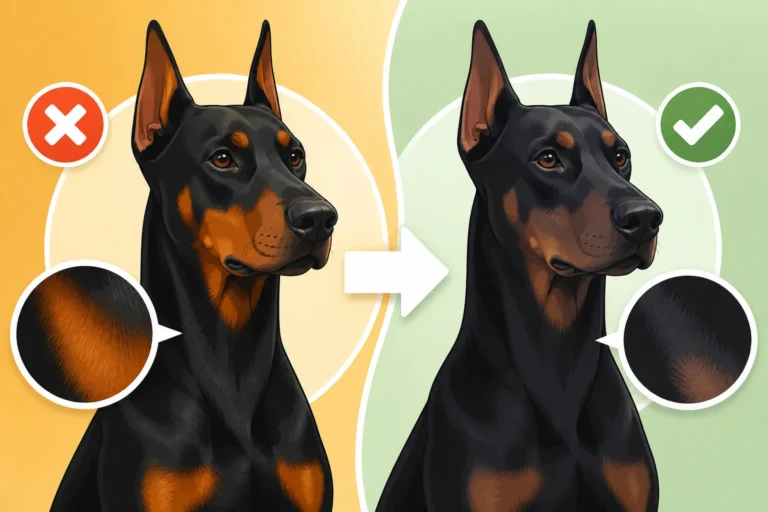
This unique color is caused by the dilution gene (d/d) acting on a black coat. Essentially, the gene "dilutes" the black pigment, turning it grey. While stunning, blue Dobermans are significantly more prone to a condition called Color Dilution Alopecia (CDA). This genetic condition can cause progressive hair thinning and loss, often starting with a dull, dry, and brittle coat that eventually breaks and falls out. It can lead to extensive bald patches and chronic skin infections because the compromised hair follicles create a breeding ground for bacteria. Owners of blue Dobermans must be particularly vigilant about skin and coat care, often requiring specialized shampoos, conditioners, and dietary supplements. If you’re considering a blue Doberman, it's crucial to understand these potential challenges. Hair Loss on a Blue Doberman is a very real concern, and it's something responsible breeders and owners prepare for.
The Gentle Fawn Doberman
The fawn Doberman, sometimes referred to as "Isabella," is perhaps the softest and lightest of the recognized Doberman colors. This coat is a beautiful, pale reddish-tan or light brown, often resembling a deer's coat. The rust markings are present but typically very light, almost blending into the fawn base coat, creating a subtle, monochromatic effect. Fawn Dobermans possess a delicate beauty that sets them apart from their darker counterparts.
Like the blue Doberman, the fawn color is also a dilute, but in this case, the dilution gene (d/d) acts on a red coat. The red pigment is lightened to produce that distinctive pale fawn hue. Similar to blue Dobermans, fawn Dobermans are also susceptible to Color Dilution Alopecia (CDA). While the severity can vary, many fawn Dobermans will experience some degree of coat thinning, breakage, and susceptibility to skin issues over their lifetime. This means extra attention to grooming, environmental protection (like sun exposure), and potentially veterinary dermatological care. For more in-depth information, you can read about Color Dilution Alopecia in Blue and Fawn Dobermans.
| Doberman Color | Base Color Genetic Code | Dilution Gene Present? | Common Health Consideration |
|---|---|---|---|
| Black and Rust | B_ D_ | No | Typically robust coat health |
| Red and Rust | bb D_ | No | Typically robust coat health |
| Blue and Rust | B_ dd | Yes | Color Dilution Alopecia (CDA) |
| Fawn and Rust | bb dd | Yes | Color Dilution Alopecia (CDA) |
Note: The genetic codes are simplified for illustrative purposes. 'B' represents dominant black, 'b' recessive red. 'D' represents no dilution, 'd' represents dilution.
When you're looking for specialized shampoos, soothing balms, or even specific low-copper diets if you have a Doberman with sensitivities that might be linked to their overall health, online retailers like Chewy often have a broader selection than local stores. It's important to consult your vet for specific recommendations, but then sites like Chewy can be a convenient source.
Unacceptable Colors and the Importance of the Breed Standard
While the blue and fawn Dobermans are recognized, there are other color variations that appear from time to time that are not accepted by the AKC breed standard. The most notable of these is the "white" Doberman, which is actually an albino. Understanding why these colors are considered unacceptable by the official breed standard is crucial for anyone interested in preserving the health and integrity of the Doberman breed.
The Specificity of Rust Markings
Regardless of the base coat color (black, red, blue, or fawn), the rust markings must always appear in very specific locations. These are: sharply defined markings above each eye, on the muzzle, throat, and forechest, on all four legs and feet, and beneath the tail. The clarity and placement of these markings are part of what defines the Doberman's distinct appearance. Any Doberman lacking these markings, or having them in unusual places, would be considered a fault in the show ring. For a deeper dive, you can explore Where Rust Markings Belong on a Doberman.
The quality of these markings can be an indicator of overall pigment health. A Doberman with faded, muddy, or incomplete rust markings might suggest a broader issue with pigment production. This is often less about health and more about meeting the aesthetic standards that judges look for.
The White Doberman: Not a Color, But an Albino
Perhaps the most controversial and widely misunderstood "color" is the so-called "white" Doberman. These dogs are not a distinct color variation like blue or fawn; they are actually albinos. Albinism is a genetic condition characterized by a complete or partial absence of pigment in the skin, hair, and eyes. This results in a creamy white or very pale coat, pink skin, and often blue or light-colored eyes that can sometimes appear red in certain lighting due to the blood vessels showing through.
The AKC specifically disqualifies white (albino) Dobermans from the show ring and registers them with a "Z" preceding their registration number, indicating their albino status. This isn't just an aesthetic preference; albinism comes with significant health challenges. These dogs are extremely sensitive to sunlight, prone to severe sunburn and skin cancer, and often have impaired vision due to the lack of pigment in their eyes. They may squint constantly outdoors and have difficulty seeing in bright light. Their lack of pigment also offers no protection from UV rays, making them highly vulnerable to various health issues. To learn more about this, it’s worth reading Why a White Doberman Is Really an Albino and The White Doberman and Where It Came From. Responsible breeders will never intentionally breed for albino Dobermans due to these serious health and welfare concerns.
Why the AKC Standard is So Important
The AKC breed standard for Dobermans, including its specifications for color, isn't just about superficial appearances. It's a blueprint designed to preserve the breed's unique characteristics, ensure health, and maintain its functional purpose. When breeders adhere to the standard, they are aiming to produce Dobermans that are not only beautiful but also sound in health and temperament. Deviations from the standard, especially those related to genetics like albinism, often bring with them predictable health problems that responsible breeding aims to avoid.
Before acquiring any Doberman puppy, it's critical to review Reading a Doberman Puppy's Test Certificates and ensure you are working with a breeder who is transparent about their lines and committed to health testing, not just interesting colors. A reputable breeder will always prioritize the health and well-being of their dogs over novelty or rarity, ensuring that you bring home a companion that is genetically sound and well-suited for a long, happy life. When looking for products for your Doberman, from high-quality food to comfortable beds, remember that places like Chewy offer a wide range of options, but always prioritize what's best for your Doberman's specific needs, especially if they have sensitive skin or other health considerations related to their coat color.
Disclaimer
This article is for general informational purposes only and does not constitute professional advice. Laws, prices and regulations vary by location and change over time. Consult a qualified professional for guidance on your specific situation.